Why did a Pious Baptist Preacher Give Thomas Jefferson a Mammoth Cheese?

On January 1, 1802 an unusual gift arrived for the new president, Thomas Jefferson. It was a 1,235 pound hunk of cheese from the Elder John Leland and the Cheshire Baptists. Why would this devout Baptist preacher bestow such a conspicuous gift on the deistic Jefferson? The answer is simple: Leland saw Jefferson as one his ablest allies in the struggle for democracy and religious liberty. Delivering the cheese personally, Leland recited a message from a committee of five influential citizens from Cheshire, declaring that they were presenting him with the enormous cheese:

“as a token of the esteem we bear to our chief Magistrate and of the sense we entertain of the singular blessings that have been derived from the numerous services you have rendered to mankind in general and more especially to this favored nation, over which you preside. It is not the last stone of the Bastille, nor is it an article of great pecuniary worth, but as a freewill offering we hope it will be favorably received.”

From all accounts the cheese was “favorably received.” One account recalls that the cheese was carved “in the presence of the president and cabinet, foreign diplomats and many distinguished men and women of ancient note…and that it was the object of great curiosity.” Leland received special thanks and was “introduced person, by person by the president, to the entire gathering.” The celebration for Leland did not end with the ceremony; he celebrated all the way home in what “resembled a triumphant march.” (1) This little known event is a reminder of the great alliance between rationalists such as Jefferson, and the pious dissenters who helped establish religious liberty in the new nation.
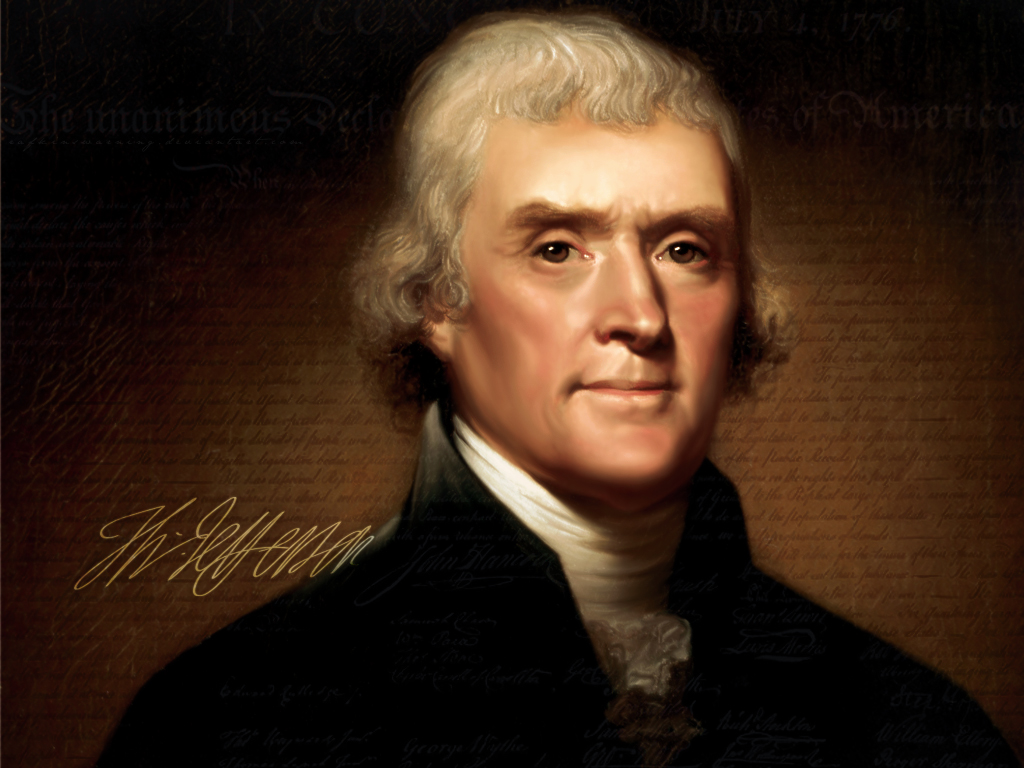
thomasjefferson

John Leland grew up in New England, but he spent his early career in Virginia, where he came to admire Jefferson and Madison. In a popular sermon given soon after Jefferson’s inauguration in 1801, he declared, in reference to Jefferson:

Continue reading

Why did a Pious Baptist Preacher Give Thomas Jefferson a Mammoth Cheese?

On January 1, 1802 an unusual gift arrived for the new president, Thomas Jefferson. It was a 1,235 pound hunk of cheese from the Elder John Leland and the Cheshire Baptists. Why would this devout Baptist preacher bestow such a conspicuous gift on the deistic Jefferson? The answer is simple: Leland saw Jefferson as one his ablest allies in the struggle for democracy and religious liberty. Delivering the cheese personally, Leland recited a message from a committee of five influential citizens from Cheshire, declaring that they were presenting him with the enormous cheese:

“as a token of the esteem we bear to our chief Magistrate and of the sense we entertain of the singular blessings that have been derived from the numerous services you have rendered to mankind in general and more especially to this favored nation, over which you preside. It is not the last stone of the Bastille, nor is it an article of great pecuniary worth, but as a freewill offering we hope it will be favorably received.”

From all accounts the cheese was “favorably received.” One account recalls that the cheese was carved “in the presence of the president and cabinet, foreign diplomats and many distinguished men and women of ancient note…and that it was the object of great curiosity.” Leland received special thanks and was “introduced person, by person by the president, to the entire gathering.” The celebration for Leland did not end with the ceremony; he celebrated all the way home in what “resembled a triumphant march.” (1) This little known event is a reminder of the great alliance between rationalists such as Jefferson, and the pious dissenters who helped establish religious liberty in the new nation.

thomasjefferson

John Leland grew up in New England, but he spent his early career in Virginia, where he came to admire Jefferson and Madison. In a popular sermon given soon after Jefferson’s inauguration in 1801, he declared, in reference to Jefferson:

Continue reading

“Two steps forward, one step back: how World War II changed how we do human research” | History News Network

James Bradley examines how medical research has changed since WWII and he cautions us against “portray[ing] World War II as a major turning point in the history of medical ethics. But it’s a portrayal we should resist because it blinds us to the troubles that persist to this day in matters of informed consent.” Read his thought-provoking piece on this important subject here:

History News Network | Two steps forward, one step back: how World War II changed how we do human research.

auschwitz mengle experiments

“The History & Legacy of Magna Carta Explained in Animated Videos by Monty Python’s Terry Jones” | History News Network

Do you need to brush up on your Magna Carta history? The British Museum has made a short video on the Magna Carta. It’s a great overview of the basic story of the document and its legacy.

History News Network | The History & Legacy of Magna Carta Explained in Animated Videos by Monty Python’s Terry Jones.

“Review of Godfrey Hodgson’s ‘JFK and LBJ: The Last two Great Presidents’” |History News Network

Murray Polner reviews JFK and LBJ: The Last two Great Presidents by Godfrey Hodgson:

History News Network | Review of Godfrey Hodgson’s “JFK and LBJ: The Last two Great Presidents”.

JFK and LBJ

I Believe in Freedom of Choice

dianeravitch's avatarDiane Ravitch's blog

Parents should be able to send their children to the school of their choice. And they do, but the public should not be expected to pay for their private choices.

The public has a civic obligation to support public education. Even if you don’t have children, you pay taxes to educate the children of the community. Even if your children are grown, you pay school taxes. Even if you send your children to private school, you pay school taxes. Public schools are a public responsibility.

If you don’t like the public schools, you are free to choose a private school, a charter school, a religious school, or home school. That’s your choice. But you must pay for it yourself.

We all pay for police and firefighters. If you want a private security guard, pay for it yourself. We all pay for public schools, even if we don’t patronize them. They…

View original post 151 more words

“Why It’s Time to Remember Waterloo for a Different Reason” | History News Network

Christine Haynes suggests that we remember the Battle of Waterloo for the peace building process that followed it. “This battle deserves to be celebrated not as the end of the first “total war,” but as the beginning of a “total peace,” which following two more world-wide conflicts, came to fruition after 1945 but is facing new challenges today.” Read his argument here:

History News Network | Why It’s Time to Remember Waterloo for a Different Reason.

battle-of-waterloo-william-holmes-sullivan

“Battle of Waterloo” by William Holmes Sullivan

“Just What Exactly Are People Commemorating on the 200th Anniversary of Waterloo?” | History News Network

The Battle of Waterloo is one of the most famous battles in history since it marks Napoleon’s ultimate and final defeat. Escaping from the island of Elba, where he had been exiled after his first defeat, Napoleon took power once again of the French empire only to be defeated by the British and Prussians a few months later at Waterloo.
But as the 200th Anniversary of this battle approaches, its commemoration poses a dilemma for those countries involved in the conflict, France in particular. Alan Forrest, author of Great Battles: Waterloo, examines the difficulties presented by this commemoration. He asks, “Is it appropriate, in the twenty-first century, to celebrate, joyously, an engagement that resulted in the deaths of so many soldiers in a single day? Should we not remember Waterloo more for the scale of the sacrifice it demanded of the men who fought and the families they left behind, or for the fact that it ushered in a century of relative peace following the Congress of Vienna? Or is it more about the colour of the military spectacle – as will doubtless be exemplified in the re-enactments of the battle that will take place on 18 June and the days following?”
Read his thoughtful examination of the commemoration here:

History News Network | Just What Exactly Are People Commemorating on the 200th Anniversary of Waterloo?

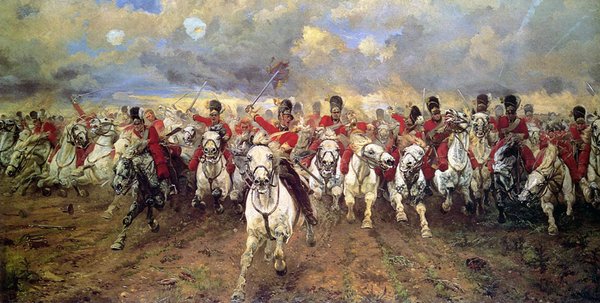
Painting of the Scots famous cavalry charge at the Battle of Waterloo by Elizabeth Butler: Scotland for Ever!, 1881

Painting of the Scots famous cavalry charge at the Battle of Waterloo by Elizabeth Butler: Scotland for Ever!, 1881

“Showing Pictures of Muhammad Is Ok” |History News Network

The historian Timothy R. Furnish examines the history of Islamic thought concerning images of Muhammad and concludes that the current “iconophobia” is not representative of all Islamic traditions. He also argues that the best way to confront the current radical reaction to drawings of Muhammad “might be to eschew modern drawings of Muhammad (and certainly intentionally insulting ones) and, rather, stage exhibits with examples of ISLAMIC paintings of him.  That would make the point more historically and legitimately, and less provocatively, in my opinion.” I agree!
Read his review of the history here:

History News Network | Showing Pictures of Muhammad Is Ok.

Mohammed and Jesus

Mohammed and Jesus

The Forgotten Hero of the American Revolution: The Marquis de Lafayette

Today Americans think of the French as effeminate snobs who are lazy and weak. This caricature was in part inherited from the British, but it has been allowed to flourish in the absence of a historically informed citizenry. This distorted view of the French is unfortunate given the significant role the French played in the American Revolution. And one Frenchman in particular stands out as a forgotten American hero: the Marquis de Lafayette. During his lifetime he was treated like a rock star by grateful Americans, who were very much aware of the key role he played in the American victory. But since then he has faded from historical memory as the complexities of the revolution gave way to a simplified heroic narrative.

At the HNN, Thomas Fleming recalls Lafayette’s valiant heroism at Yorktown: “The Marquis de Lafayette played a crucial role in the final attack. His Americans captured one key redoubt, while French troops captured another one. The allies soon had cannon in the two redoubts, enabling them to fire directly into the rest of the British defense line. Cornwalliis [sic] decided it was time to surrender.” This victory was also made possible by Lafayette’s servant, and former slave, known as James. He infiltrated the British camp pretending to be a runaway, and came away with crucial information that led to the victory at Yorktown.

Read Fleming’s account of Lafayette’s heroism here:

History News Network | How Lafayette’s Arrival on the Hermione Made Yorktown Possible.

Marquis da Lafayette

Marquis da Lafayette

James Armistead

James Armistead