This is a great interview with Rachel Swaby, author of Headstrong: 52 Women Who Changed Science – and the World.

This is a great interview with Rachel Swaby, author of Headstrong: 52 Women Who Changed Science – and the World.
Rick Shinkman has an interesting proposal to deal with our natural lack of empathy for those we consider outsiders:
Source: History News Network | Ted Cruz’s Stone-Age Brain and Yours


 “Archaeologists in Cambridgeshire uncover Britain’s ‘Pompeii’ with what they describe as the “best-preserved Bronze Age dwellings ever found.'”
Source: Bronze Age houses uncovered in Cambridgeshire are Britain’s ‘Pompeii’ – BBC News
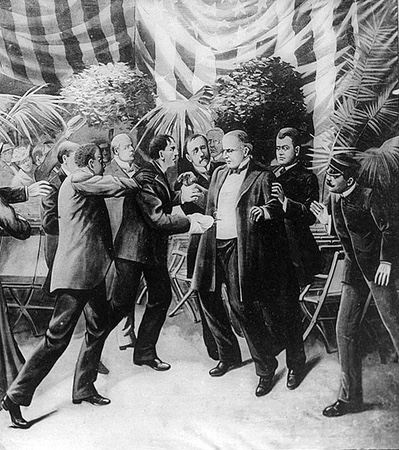
I agree with Ronald L. Feinman that the threat of political assassination is very high, but I think it’s been extremely high during Obama’s entire presidency.
Source: History News Network | Why This Historian Is Worried for His Country

This is an interesting article suggesting that we can get out of the ideological polarization that is destroying our country. Research shows that if given enough information people will form their positions inline with the evidence. Therefore, the solution is to solve the ignorance problem. As Shenkman shows this is a difficult task. But even more of an obstacle beyond just ignorance is that what they do know is false. Fox News and other media sources have been filling people with nonsense for years, so that now they aren’t even open to considering evidence that is contrary to what they already believe.
So, how do we solve this ignorance problem? Shenkman offers the Scandinavian model, but has doubts that it can work here. He lists some attempts to create a civic-minded culture, but these have all failed. Now what? He offers no other possible solutions and leaves readers hanging as if he had given up on achieving any meaningful change.
Shenkman’s ambivalence is understandable, but giving up all hope is not an option. We are facing incredible challenges, such as climate change, and we need an educated, rational population that will elect real leaders whose actions and beliefs are grounded in reason and evidence not ideology.
While the frenzy to rename building and tear town statues is understandable and sometimes justified (such as the leaders of the Confederacy, whose legacies were solely based on their willingness to use violence to defend the institution of slavery), the students who are now targeting Thomas Jefferson, Woodrow Wilson, and other national icons have probably gone too far. The historian David Greenberg explains “[w]hy we shouldn’t let a worthy examination of our country’s troubled past become a wholesale condemnation of our troubled forebears.”
“In ruling out of order any consideration of these men’s other historic contributions, a race-only approach more or less guarantees negative verdicts; given the racism that permeates the American past, virtually all of our leaders will necessarily come up short. And ironically, a race-only approach to judging figures from the past also reinforces a “great man” view of history that lays the blame for our failures at the feet of a few individuals while minimizing the role of society as a whole in perpetuating racist practices and institutions.”
One thing the students have done is to force us to confront the past. We can’t continue to ignore or whitewash our checkered past.

Read the entire review here: History News Network | Review of Eric Rauchway’s “The Money Makers: How Roosevelt and Keynes Ended the Depression, Defeated Fascism, and Secured a Prosperous Peace”


Juan Cole lays out some desperately needed foreign policy suggestions, most of which are solidly grounded in evidence and experience. Unfortunately, many of them would be difficult politically to implement, particular his suggestions concerning Israel. However, the consequences of remaining on the same path are dire. Obama needs to do the right thing, and let the political chips fall where they may!
Source: History News Network | Top 7 Middle East Foreign Policy Challenges in 2016
 “As Hitler’s infamous book enters the public domain, its history shows that censorship can’t stop dangerous ideas.” Censorship has never worked (Exhibit A: The Catholic Church’s Index of Forbidden Books, Index Librorum Prohibitorum ).
The concern about public access to Mein Kampf is understandable, but unfounded. Those who are inclined towards those ideas already have access to the text via the Internet. And the ideas contained in Mein Kampf have spread so extensively there is no way to prevent access to them (unless we’re willing to take drastic measures in violation of our own values).
As Abraham Foxman, author of the introduction to Houghton Mifflin reprint of Mein Kampf, described the book this way: “Its theories are extremist, immoral, and seem to promise war and catastrophe if taken seriously.” (xxi) This is not a call to ban it but instead to take it seriously. He noted that the first time around we ignored it, resulting in “a tragedy of unprecedented proportions.” The lesson, he continues, is “the lesson of vigilance and responsibility, of not closing our eyes to the evil around us.” Ignoring it will not make “the evil” go away.
As far as I’m concerned the more people who read Mein Kampf the better. The ideas found in this work are so horrific and extreme that I’m confident (barring extraordinary circumstances) most people will reject the hateful and destructive ideas contained in it. Those who are unfamiliar with the ideas advanced by Hitler are more susceptible to falling under their spell. Rather than trying to deny access to such ideas, we should counter them with reason and evidence.
And, as the author of The Atlantic article points out: “In today’s environment, it is better to discuss Mein Kampf openly and critically in the classroom than to have curious students seek it out on the Internet, where teachers will have no chance of influencing them.”
If you haven’t read Hitler’s despicable work, I would highly recommend it. I say this confident that you won’t be persuaded by his sentiments.
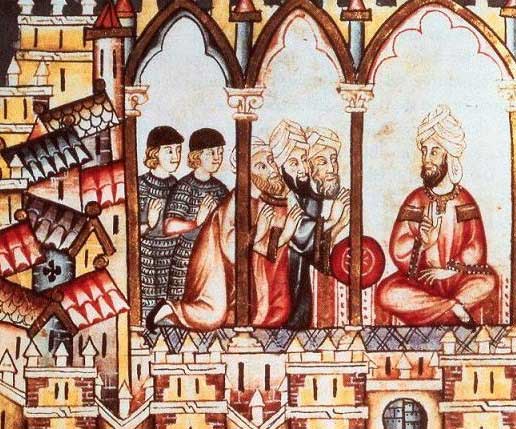
hat the rise and fall of a 12th-century Islamic empire does (and doesn’t) tell us about the rise (and fall?) of ISIS.” Before comparing the vastly different Islamic movements, Fromherz reviews the history of the Almohads, a radical Berber sect which briefly ruled in Muslim Spain (A great history lesson in its own right).
He is careful to note the many differences between the groups, but notes one important “possible comparison.” He observes that it is likely that “the process of routinization—that is, the process of ideological compromise and moderation needed to practically govern as state—will probably begin soon. There is no reason to believe ISIS will not follow the path of so many religious and millenarian movements before it. In this case, the best long-term strategy for ISIS’s would-be targets and victims may be to wait for ISIS to destroy itself.” I like this option!
Fromherz is not the only to note this trend toward routinization as a factor in bringing down radical movements. Rationally, based on a cost-benefit analysis, this is probably our best strategy. But, realistically, this is not emotionally or psychologically appealing, and therefore it is unlikely to be adopted. But we should heed Fromherz’s warning: “If parties and politics in the West become increasingly intolerant and nativist in their reaction to ISIS, the West may indeed inflict more harm on itself than anything the charismatically apocalyptic minds behind ISIS could imagine.”
 History Chick in AZ