John Leland’s Speech on the Fourth of July 1824: Continuing the Struggle for Religious Liberty

As one of the most significant religious dissenters in the fight against all religious establishments the Baptist preacher John Leland’s speech at Pittsfield, Massachusetts is particularly revealing. Almost two hundred years later his insights are just as relevant as they were in 1824. In the speech he attacked the remaining religious establishments in Massachusetts (a tax for the support of religion, Sunday laws, and other discriminations in law that privileged one religion or denomination over another). He, therefore, proposed the following amendment into the Massachusetts Declaration of Rights:

“The legislature have no right, and shall assume no power, to establish any religion – force any man to support any — give one religious sect any preference to another – proscribe any man for heresy – appoint any holy days for worship – compel any man to attend public worship, or cease from labor – give any legal reward for religious services, or require any religious test to qualify for office.”

In conclusion he reviewed Massachusetts sad history of religious oppression to support his claims against religious establishments:

“Almost two centuries past Roger Williams was ejected from Salem, and banished from Massachusetts, for contending for the same doctrine – that rulers, in their official capacity, had nothing to do with religion. The contrary opinion prevailed in the colony [Massachusetts]– that legislatures had a divine right to prescribe religion of the people; and, that magistrates had the same right to judge of doctrines and their tendencies. This claim occasioned the Baptists to be whipped, the Quakers to be hanged, and the witches to be gibbeted. Admit of the principle, that religious opinions are objects of civil government, or in any way under its control, and the broad stair is laid in the case that leads to the inquisition. Admit of the principle, and the rights of the people rest upon the good will of the legislature, and the benevolence of towns; whereas, they ought to rest upon a footing, out of the reach of the ill will of the legislature, and the malevolence of towns. Though the tree may be hewn down, yet, the just liberty of the people is not secure, while the stump is preserved with a band of iron and brass.
….
I close, by observing that here is an arm seventy years old, which, as long as it can rise to heaven in prayer, or wield a pen on earth, shall never be inactive, when the religious rights of men are in jeopardy.”

For more on Leland see my early post on him.

John Leland

John Leland, The Writings of the Late Elder John Leland: Including Some Events in His Life, edited by L.F. Greene (N.Y. 1845), pp. 506-7.

“Give Me Back My Legions! Discovery of Gold Coins Confirm Battle of Teutoburg Forest Site” – Forbes

This is an exciting find!

“New discoveries at the archaeological site of Kalkriese in Germany point to where many Roman legionaries were massacred. Sarah Bond and ancient historian Adrian Murdoch explore the discovery.”

Source: Give Me Back My Legions! Discovery of Gold Coins Confirm Battle of Teutoburg Forest Site – Forbes

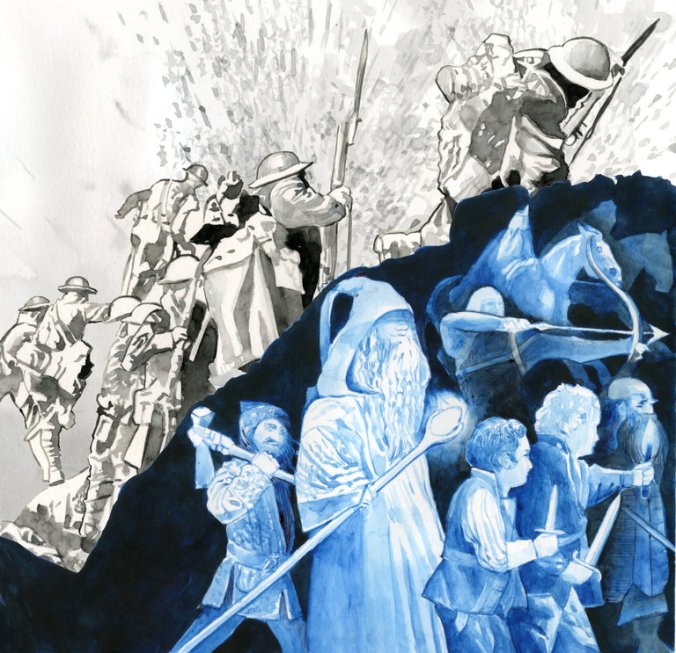
How J.R.R. Tolkien Found Mordor on the Western Front – The New York Times

“Tolkien used the language of myth not to escape the world, but to reveal a mythic and heroic quality in the world as we find it. Perhaps this was the greatest tribute he could pay to the fallen of the Somme.”

Read the entire article here: How J.R.R. Tolkien Found Mordor on the Western Front – The New York Times

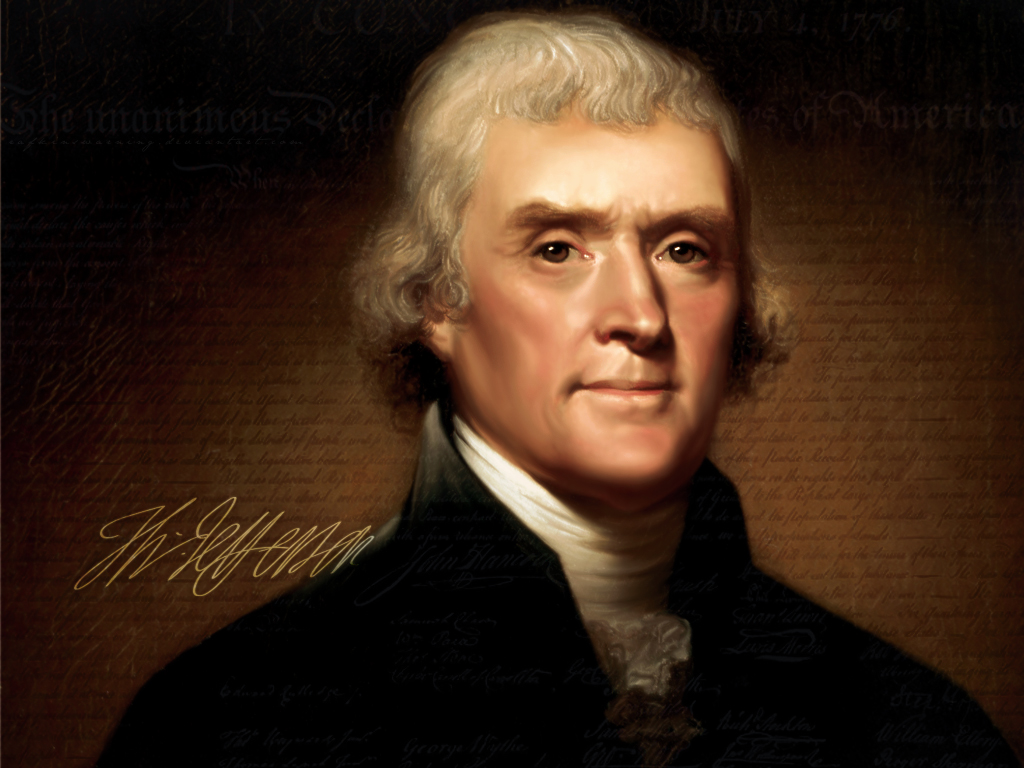
Why did a Pious Baptist Preacher Give Thomas Jefferson a Mammoth Cheese?

On January 1, 1802 an unusual gift arrived for the new president, Thomas Jefferson. It was a 1,235 pound hunk of cheese from the Elder John Leland and the Cheshire Baptists. Why would this devout Baptist preacher bestow such a conspicuous gift on the deistic Jefferson? The answer is simple: Leland saw Jefferson as one his ablest allies in the struggle for democracy and religious liberty. Delivering the cheese personally, Leland recited a message from a committee of five influential citizens from Cheshire, declaring that they were presenting him with the enormous cheese:

“as a token of the esteem we bear to our chief Magistrate and of the sense we entertain of the singular blessings that have been derived from the numerous services you have rendered to mankind in general and more especially to this favored nation, over which you preside. It is not the last stone of the Bastille, nor is it an article of great pecuniary worth, but as a freewill offering we hope it will be favorably received.”

From all accounts the cheese was “favorably received.” One account recalls that the cheese was carved “in the presence of the president and cabinet, foreign diplomats and many distinguished men and women of ancient note…and that it was the object of great curiosity.” Leland received special thanks and was “introduced person, by person by the president, to the entire gathering.” The celebration for Leland did not end with the ceremony; he celebrated all the way home in what “resembled a triumphant march.” (1) This little known event is a reminder of the great alliance between rationalists such as Jefferson, and the pious dissenters who helped establish religious liberty in the new nation.

thomasjefferson

John Leland grew up in New England, but he spent his early career in Virginia, where he came to admire Jefferson and Madison. In a popular sermon given soon after Jefferson’s inauguration in 1801, he declared, in reference to Jefferson:

Continue reading

“A Real War Story, in Drawings” – The New York Times

“A Lakota warrior’s drawings tell us much about not only Custer’s Last Stand, but also the eternal brutality of war.”

This is an interesting article with an important message about how we conduct war: A Real War Story, in Drawings – The New York Times

“Ancient French warriors took limbs as trophies in 6,000-year-old massacre, researcher believes” – The Washington Post

This gruesome practice has been all too common in human history.

Source: Ancient French warriors took limbs as trophies in 6,000-year-old massacre, researcher believes – The Washington Post

“Animals as Weaponry” by Tonio Andrade

“Before guided missiles, humans had few ways to attack their enemies remotely, so they tried using animals. The Chinese were enthusiastic practitioners of this art.”

This is an interesting blog post on using animals as weapons: Tonio Andrade: Animals as Weaponry

“The Historian Whitewashing Ukraine’s Past “| Foreign Policy

This is indicative of another troubling trend across the globe: “When it comes to politics and history, an accurate memory can be a dangerous thing. In Ukraine, as the country struggles with its identity, that’s doubly true. While Ukrainian political parties try to push the country toward Europe or Russia, a young, rising Ukrainian historian named Volodymyr Viatrovych has placed himself at the center of that fight. Advocating a nationalist, revisionist history that glorifies the country’s move to independence — and purges bloody and opportunistic chapters — Viatrovych has attempted to redraft the country’s modern history to whitewash Ukrainian nationalist groups’ involvement in the Holocaust and mass ethnic cleansing of Poles during World War II. And right now, he’s winning.”

Read the entire article here: The Historian Whitewashing Ukraine’s Past | Foreign Policy

“A Conversation with Nathaniel Philbrick” | History News Network

Nathaniel Philbrick has written a new book about Benedict Arnold. In it he challenges some of the myths that have endured about Arnold and his treachery. I have not read it yet, but based on this interview at the HNN and one on NPR it sounds like a very interesting read.