“Review of Eric Rauchway’s “The Money Makers: How Roosevelt and Keynes Ended the Depression, Defeated Fascism, and Secured a Prosperous Peace” | History News Network

Robert Brent Toplin gives Eric Rauchway’s new book a thumbs up: “There are so many books in print about President Franklin D. Roosevelt’s handling of the depression and war that it seems difficult to break new ground. Yet historian Eric Rauchway does just that in this intriguing analysis that combines familiarity with recent scholarship, impressive work in diverse archives, and original insights.”
Rauchway focuses on the relationship between FDR and Keynes and in particular the gold standard. As Toplin notes, the issues that FDR dealt with are still relevant today, especially as some on the Right are trying to return to the gold standard.

Read the entire review here: History News Network | Review of Eric Rauchway’s “The Money Makers: How Roosevelt and Keynes Ended the Depression, Defeated Fascism, and Secured a Prosperous Peace”

The Money Makers

“Top 7 Middle East Foreign Policy Challenges in 2016″| History News Network

Juan Cole lays out some desperately needed foreign policy suggestions, most of which are solidly grounded in evidence and experience. Unfortunately, many of them would be difficult politically to implement, particular his suggestions concerning Israel. However, the consequences of remaining on the same path are dire. Obama needs to do the right thing, and let the political chips fall where they may!

Source: History News Network | Top 7 Middle East Foreign Policy Challenges in 2016

Should we be concerned about the dangerous ideas in Hitler’s Manifesto? “Mein Kampf Enters the Public Domain” – The Atlantic

“As Hitler’s infamous book enters the public domain, its history shows that censorship can’t stop dangerous ideas.” Censorship has never worked (Exhibit A:  The Catholic Church’s Index of Forbidden Books, Index Librorum Prohibitorum ).

The concern about public access to Mein Kampf is understandable, but unfounded.  Those who are inclined towards those ideas already have access to the text via the Internet. And the ideas contained in Mein Kampf have spread so extensively there is no way to prevent access to them (unless we’re willing to take drastic measures in violation of our own values).

As Abraham Foxman, author of the introduction to Houghton Mifflin reprint of Mein Kampf, described the book this way: “Its theories are extremist, immoral, and seem to promise war and catastrophe if taken seriously.” (xxi) This is not a call to ban it but instead to take it seriously. He noted that the first time around we ignored it, resulting in “a tragedy of unprecedented proportions.” The lesson, he continues, is “the lesson of vigilance and responsibility, of not closing our eyes to the evil around us.” Ignoring it will not make “the evil” go away.

As far as I’m concerned the more people who read Mein Kampf the better. The ideas found in this work are so horrific and extreme that I’m confident (barring extraordinary circumstances) most people will reject the hateful and destructive ideas contained in it. Those who are unfamiliar with the ideas advanced by Hitler are more susceptible to falling under their spell.  Rather than trying to deny access to such ideas, we should counter them with reason and evidence.

And, as the author of The Atlantic article points out: “In today’s environment, it is better to discuss Mein Kampf openly and critically in the classroom than to have curious students seek it out on the Internet, where teachers will have no chance of influencing them.”

If you haven’t read Hitler’s despicable work, I would highly recommend it. I say this confident that you won’t be persuaded by his sentiments.

Source: Mein Kampf Enters the Public Domain – The Atlantic

“ISIS vs. History” – The American Interest

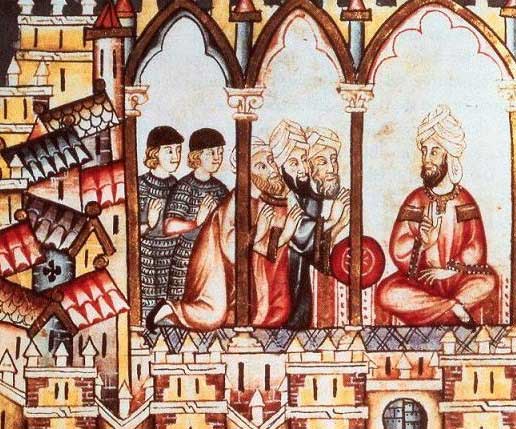
hat the rise and fall of a 12th-century Islamic empire does (and doesn’t) tell us about the rise (and fall?) of ISIS.” Before comparing the vastly different Islamic movements, Fromherz reviews the history of the Almohads, a radical Berber sect which briefly ruled in Muslim Spain (A great history lesson in its own right).

He is careful to note the many differences between the groups, but notes one important “possible comparison.” He observes that it is likely that “the process of routinization—that is, the process of ideological compromise and moderation needed to practically govern as state—will probably begin soon. There is no reason to believe ISIS will not follow the path of so many religious and millenarian movements before it. In this case, the best long-term strategy for ISIS’s would-be targets and victims may be to wait for ISIS to destroy itself.” I like this option!

Fromherz is not the only to note this trend toward routinization as a factor in bringing down radical movements. Rationally, based on a cost-benefit analysis, this is probably our best strategy. But, realistically, this is not emotionally or psychologically appealing, and therefore it is unlikely to be adopted. But we should heed Fromherz’s warning: “If parties and politics in the West become increasingly intolerant and nativist in their reaction to ISIS, the West may indeed inflict more harm on itself than anything the charismatically apocalyptic minds behind ISIS could imagine.”

Source: ISIS vs. History – The American Interest

A well tried strategy: Dividing through violence: “In Retrospect: A Year of Sharpening Contradictions” |History News Network

This is the lesson we can never seem to learn: “Extremism thrives on other people’s extremism, and is inexorably defeated by tolerance.”

In contrast to the hyped up rhetoric of politicians, and Mr. Trump in particular, Juan Cole rationally analyzes the goals and purposes of the terrorists. We only play into to the hands of the terrorists when we demonize and blame Muslims as a whole. They want to divide us. In that way they can bring the disgruntled formerly moderate Muslims into their camp. The clash of civilizations becomes a self-fulfilling prophecy.

Unfortunately, political leaders will continue to play into the hands of the terrorists because the rhetoric of “strength” and nationalism proves too useful in pursuit of political power.

Read Cole’s astute observations here: History News Network | In Retrospect: A Year of Sharpening Contradictions

Paris-attacks 2015

Paris Attacks 2015

“Egyptian pharaoh Tutankhamun’s wet nurse might have been his sister” | Culture | The Guardian

“Carvings on the wall of the tomb of Maia, the boy king’s wet nurse, have led archaeologists to suspect she may have been his sister Meritaten”

Very interesting!

Source: Egyptian pharaoh Tutankhamun’s wet nurse might have been his sister | Culture | The Guardian

“Coming to Terms on Japan’s Wartime Sex Slaves” – The New York Times

“Prime Minister Abe now says he is genuinely sorry for Japan’s terrible abuse of South Korea’s “comfort women” before and during World War II.” This is a surprising, but great turn of events! Abe surely didn’t do it for the right reasons, but at least he did it!

Source: Coming to Terms on Japan’s Wartime Sex Slaves – The New York Times

“Killing the Islamic State Softly” | Foreign Policy

The interesting question is this: What would a smart power campaign directed against the challenges represented by the Islamic State (which are of course broader than just that group) look like? What are the techniques; levels of resources; and strategies of cooperation, collaboration, and communication?” James Stavridis offers some suggestions: Killing the Islamic State Softly | Foreign Policy

“A Harvard Medical School professor makes the case for the liberal arts and philosophy” – The Washington Post

“David Silbersweig, of Brigham and Women’s Hospital and Harvard Medical School, says today’s multidisciplinary world needs liberal arts — and philosophy in particular — more than ever.” Silberweig is right. Unfortunately, just as we desperately need the skills and knowledge that comes from studying the humanities, politicians and business leaders are devaluing these fields. As a result, students view their humanities courses as an unnecessary obstacle in pursuit of their careers, and student disinterest then provides the justification for defunding these fields.

As a successful medical scientist who studied philosophy in college, Silbersweig is the perfect advocate for the liberal arts. He attributes his diverse educational background with his success. He notes, “I discovered that those without a liberal arts foundation, while often brilliant, generally had a narrower perspective. Their path to and through outstanding universities was more vocational.”

He argues that “[i]f we are to remain at the forefront of knowledge creation in this changing, globalizing world, then our students must be the next generation of explorers. We have a sacred obligation as educators, role models and mentors to ensure a system that promotes the attributes conducive to their success. A broad yet rigorous education will best equip them to go forth into uncharted territory to address issues of import to humanity in a creative fashion.”

“We need to foster and protect academic environments in which a broad, integrated, yet still deep education can flourish. They are our national treasure and a strategic asset, whether some politicians would recognize that, or not — and philosophy is foundational, whether my old dentist would appreciate it or not.”

Read the entire article here: A Harvard Medical School professor makes the case for the liberal arts and philosophy – The Washington Post

“Beyond ISIS” | History News Network

In the aftermath of the Paris and San Bernardino attacks more and more Americans are in favor of sending troops to destroy ISIS and a “do whatever it takes” strategy to completely destroy ISIS and other terrorist threats. But do they know exactly what they are advocating? It’s unlikely!

It is not completely their fault. Many on the Right (pundits, politicians, and intellectuals) are advocating this strategy in the face of what they claim is an existential threat. Many of those who are pushing for this all in approach either don’t understand the level of commitment they are promoting, or have not fully thought through what it would take to achieve such a goal.

In light of this disconnect, Andrew J. Bacevich challenges the proposal by laying out in no uncertain terms what it would take to execute this strategy. He concludes that the costs (in terms of lives, treasure, and values) would be great! “By sowing fear and fostering impossible expectations of perfect security, it would also compromise American freedom in the name of protecting it. The nation that decades from now might celebrate VT Day — victory over terrorism — will have become a different place, materially, politically, culturally, and morally.”

“For a rich and powerful nation to conclude that it has no choice but to engage in quasi-permanent armed conflict in the far reaches of the planet represents the height of folly. Power confers choice. As citizens, we must resist with all our might arguments that deny the existence of choice. Whether advanced forthrightly by Cohen or fecklessly by the militarily ignorant, such claims will only perpetuate the folly that has already lasted far too long.”

Read the entire piece here: History News Network | Beyond ISIS

terrorism