Book Review: Pachacuti: World Overturned

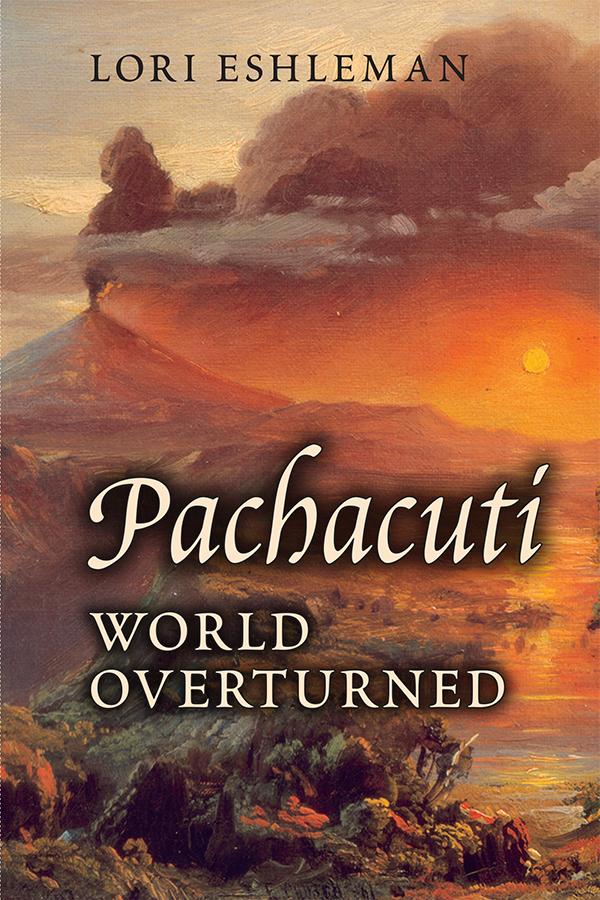
The San Fransisco Book Review offers a compelling review of Lori Eshleman’s Pachacuti. Jason Lang writes: “Pachacuti is a gloriously written book that brings the mix of cultures in a small city in the heart of South America alive. Marvelously detailed, with characters that are endlessly torn between their people, their pasts, and their obligations. It is perfect reading for a long, slow rainy day, where you can take your time and revel in the texture and color that has been set out for you.”

I highly recommend it, especially if you like historical fiction.

Pachacuti World Overturned


Comments on the Rising Cost of Higher Ed: “Check, Please! An Itemized Tuition Bill for College”

As a response to the high cost of tuition Erik C. Banks proposes offering “parents a transparent itemized tuition bill that shows them exactly where their money goes and how much of it is spent on things having nothing to do with education.” I think it’s a great idea! We need some way of making it very clear where money is being spent in our institutions of higher education. Despite popular perceptions that excessive tuition costs are the result of the bloated salaries of professors (there may be some examples of excessive salaries, but they are the exception, not the rule. Trust me!), the main culprits are the combination of decreased state funding and higher administrative costs.

But if we’re going to have a productive debate about the costs of higher education, we also need to make sure that we address the motivations that are driving both of these trends. Banks points out one of the driving factors behind the administrative bloat: “college presidents and administrators embarking on massive spending programs to hype their ratings and impress students and parents with extras which do not directly add to education.” (see also an early post for more on this problem )

The other problem of decreased funding for public education is the result of irresponsible tax cuts and ideological movements to privatize education (see posts about Scott Walker’s campaign in Wisconsin and the struggles at the University of North Carolina).

Please read Banks informed discussion on this very important topic! I would also recommend reading the “2015 Ohio Education Report” that Banks provides at the bottom of his post. It breaks down the increased costs of higher education in Ohio (the trends are similar across the nation) and the decreasing state funding. It also gives a compelling defense of the value of higher education.

Check, Please! An Itemized Tuition Bill for College.

education higher costs

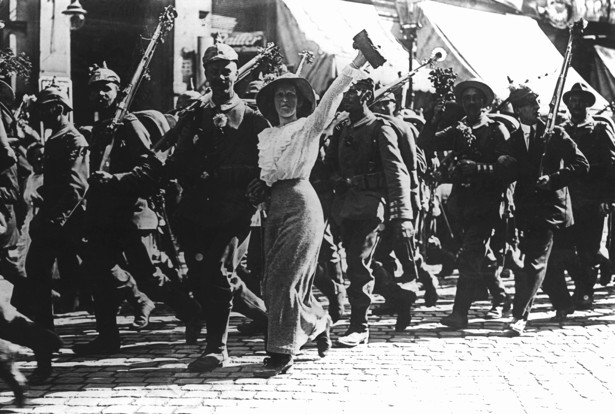
“Yes, It Could Happen Again…the trigger points for World War III are in place.” – The Atlantic

Optimism is all the rage today, but Roger Cohen reminds us that pessimism can be “a useful prism through which to view the affairs of states.” The problem with optimism is that it often blinds us to the warning signs of looming catastrophes. Too much pessimism has its dangers as well, but today we seem to be wearing rose colored glasses when considering the possibility of another major world war. Not to mention that the fear of terrorism has consumed all our attention when it comes to world affairs. But this is a mistake. It is important, but it is not existential threat that it has been made out to be. There are events in other parts of the world that are more concerning in terms of their destabilizing potential across the globe. The potential for large-scale land wars has not disappeared, despite appearances.

You’re probably tired of me ranting about nationalism, but the threat it poses is real and deserves our attention. I’m glad to see that Cohen has taken it seriously. As he points out, “It is already clear that the nationalist fervor unleashed by Putin after a quarter century of Russia’s perceived post–Cold War decline is far from exhausted. Russians are sure that the dignity of their nation has been trampled by an American and European strategic advance to their border dressed up in talk of democracy, the rule of law, and human rights. Whether this is true is irrelevant; they believe it. National humiliation, real or not, is a tremendous catalyst for war.” And this type of national fervor and perceived humiliation is not limited to Russia. It can be found across the globe from Japan to Israel and eastern Europe.

I would recommend reading Cohen’s thoughtful consideration of this very important topic. I somewhat disagree with his solution concerning the need for U.S. power projection, but overall his diagnosis of the problem is well-grounded in historical precedent. Read the entire piece here: Yes, It Could Happen Again – The Atlantic.

WWI

“India and Israel Start to See Enemies Within” – Bloomberg View

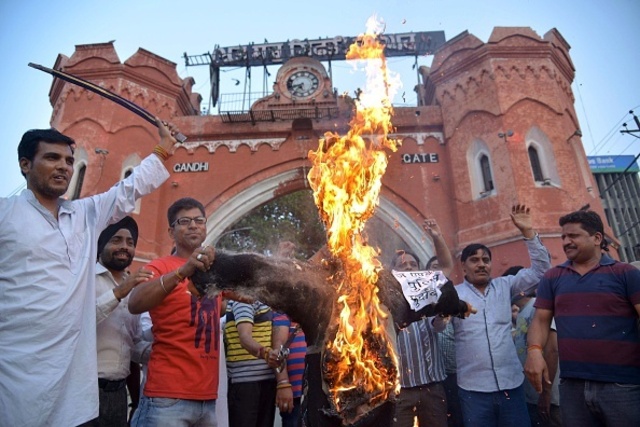
Nationalism has been on the rise lately. I’ve written previously about the new nationalism in Russia and Japan, but the rise of nationalism in India and Israel may even be more concerning. Pankaj Mishra describes the current situation in these two countries: “There are eerie similarities between the Hindu thugs who assault Muslim males marrying Hindu women and followers of the far-right Israeli group Lehava (Flame), who try to break up weddings between Muslims and Jews…The new ruling classes seem obsessed with moral and patriotic education, reverence for national symbols and icons (mostly right-wing), and the uniqueness of national culture and history.” These leaders were brought to power by tapping into the resentment and discontent of their respective populations. This “politics of resentment,” as Mishra calls it, is powerful, and astute politicians know how to exploit it. As human beings we seem to have an affinity for nationalism. It gives us an identity, a purpose, a community, a compelling narrative, and a scapegoat for our woes. Unfortunately, it more often than not devolves into violence and oppression. How many times do we have to go down this road? Will we ever learn?

“It would be nice to hope that India and Israel’s emboldened hotheads are different, and will lead their countries to stability, prosperity and peace through their special mix of right-wing economics and the politics of ressentiment. It is already clear, however, that they find more thrilling the prospect of perpetual warfare with their perceived enemies, especially the ones within.” I’m afraid that Mishra is right.

Read Mishra’s important reporting on the situation in India and Israel: India and Israel Start to See Enemies Within – Bloomberg View.

"Playing with fire? Photographer: NARINDER NANU/AFP/Getty Images"

“Playing with fire? Photographer: NARINDER NANU/AFP/Getty Images”

“Secret Catholics at Jamestown” – The Atlantic

No one could have predicted that! Archaeologists found Catholic relics in the coffin of one of the most important leaders of the Jamestown settlement: Captain Gabriel Archer. The history of Jamestown was already interesting but it just got a whole lot more interesting.

Read about the discovery here: Secret Catholics at Jamestown – The Atlantic.

Jamestown burial

“The US Is the Only Advanced Country on Earth that Doesn’t Guarantee Paid Maternity Leave. Why Is that?” | History News Network

Nancy Woloch, author of A Class By Herself, explores this important topic at the History News Network:  The US Is the Only Advanced Country on Earth that Doesn’t Guarantee Paid Maternity Leave. Why Is that?

A class by herself

“Gruesome Find: 100 Bodies Stuffed into Ancient House” – Yahoo News

In a five-thousand year old house in northeast China the remains of 97 people were found. Anthropologists believe that they were most likely victims of disease, but they don’t have enough evidence at this time to definitively determine the cause.

Read the fascinating story here:  Gruesome Find: 100 Bodies Stuffed into Ancient House – Yahoo News.

hamin-mangha-remains

“Five Myths About Emperor Hirohito” | History News Network

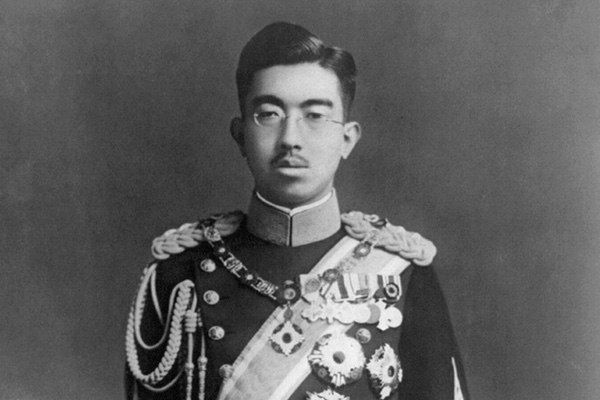
Emperor Hirohito, as the infamous leader of Japan during WWII, is a fascinating figure, and therefore one would assume that an article discussing five myths about him would be very interesting. At least that’s what I thought when I saw this post at the HNN. It turns out that the brief article is interesting, but not for its enlightening exposé of the former emperor. Instead, it turned out to be a puzzling commentary that didn’t live up to the hype. The last three “myths” seem irrelevant given the fact that very few people know about or believe in them. What’s the point of debunking myths that no one believes? There may be some Japanese that believe them, but I’m not aware that these are myths of any note in the English-speaking world.

The first two myths are interesting and relevant to the debate over the dropping of the atomic bomb, however, the author of this piece, Francis Pike, doesn’t really achieve his goal of debunking them. Instead his own essay actually confirms the first myth (Emperor Hirohito was a God), unless he’s actually claiming that people believe that he actually was a god. But that is clearly not what he means. He is referring to the fact that during the war many Japanese believed that he was a god. His own essay confirms that this “myth” is actually not a myth: “Japan’s new regime re-emphasized the role of the Emperor as a living God, making it the heart of an ideological indoctrination taught in the new state school education system,” and “the Meiji Constitution granted him absolute power – he was after all enshrined as a God.” So much for debunking the first myth!

His attempted take down of his second so-called myth (Hirohito was simply a constitutional monarch forced into war by his generals) is also unconvincing. He uses several incidences where Hirohito “demonstrated his absolute powers” (which in itself doesn’t actually address the myth), including, most famously, his intervention to end the war in August 1945 as evidence debunking this myth. But all Pike has demonstrated is that Hirohito occasionally stepped beyond the boundaries of his assigned role as a figurehead of the state.

Emperor Hirohito

Was Jefferson a Pessimist?

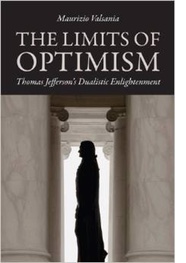
This is the contention of Maurizio Valsania in his new book The Limits of Optimism. Anyone familiar with Jefferson would probably find this a dubious claim, including myself. It is an interesting thesis, but after careful examination of Valsania’s argument M. Andrew Holowchak, an expert on Jefferson, concludes: “Valsania’s Jefferson is a figure unrecognizable to one amply acquainted with Jefferson’s writings.”

Valsania’s thesis may be a dud, but Holowchak’s considered review of the book is worthwhile if you’re at all interested in Jefferson: History News Network | Review of Maurizio Valsania’s “The Limits of Optimism: Thomas Jefferson’s Dualistic Enlightenment (Jeffersonian America)”

Here is an excerpt from the review: “Valsania’s imprecise usage of language throughout the book lends itself to vagueness, or at least, ambiguity. Many times he seems to sanction a strong thesis—namely, every Jeffersonian utterance of optimism betrays plainly an equal (or nearly so) amount of pessimism. At other times, he seems to countenance a weak thesis—namely, utterances of optimism often (or sometimes) betrays plainly an equal (or nearly so) amount of pessimism. Valsania never unequivocally settles on one thesis or the other throughout the book—everything rides on him doing so—therefore, at day’s end, chary readers are confounded.”

The limits of optimism