“Did Obama Really ‘Cut and Run’ and ‘Abandon’ Iraq to ISIS?” | History News Network

Our political discourse is dominated by hyperbolic discourse that simplifies the world in an emotionally appealing way. Therein lies its power. It is emotionally gratifying and makes us feel like we’re in the know when we’re not. We would like the world to be black and white, but it isn’t. Unfortunately, theses false and/or deceptive narratives harden into “facts” as they are perpetuated via the media, the blogosphere, and social media. This rhetoric has poisoned our political discourse and has hampered our efforts to deal with our problems.

Some of the most despicable rhetoric has been reserved for President Obama. Once the rhetoric has established the general feeling that Obama is “incompetent” and “weak” (or “tyrannical” depending on the context) all further charges against him then “ring true” (no fact checking needed!). One of the recent charges against Obama accuses him of “cutting and running” from Iraq, leading directly to the creation of ISIS. With extensive knowledge of the situation, Brian Glyn Williams takes on this claim and concludes that “Maliki’s anti-Sunni policies directly led to the rise of ISIS. He, along with Paul Bremer, is the man most responsible for creating ISIS.” But he doesn’t let Obama off the hook completely.
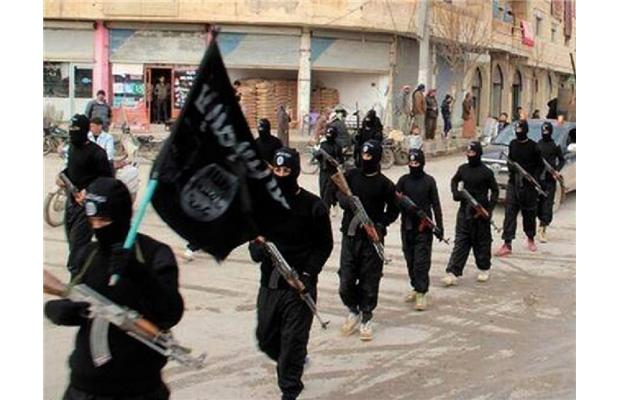
Read Williams’ well-researched examination of the rise of ISIS here: History News Network | Did Obama Really “Cut and Run” and “Abandon” Iraq to ISIS?
ISIS

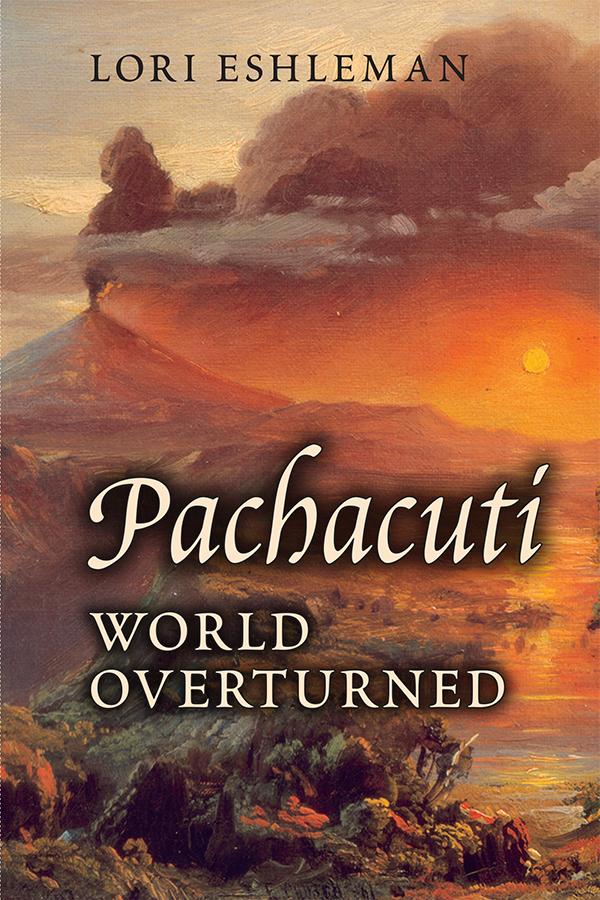
Recommendation: The Historical Novel “Pachacuti: World Overturned”

I know that many of you enjoy historical novels, therefore I would like to recommend Lori Eshleman’s Pachacuti: World Overturned. The novel is set in the eighteenth-century Kingdom of Quito (now Ecuador), at the time the Spanish Empire was on the decline thus raising the hopes of the indigenous population for a Pachacuti (“world-turning” in the Quichua language). Having spent a lot of time in Ecuador, Eshleman is able to capture the spirit of the peoples of Quito.

She wants her readers “to have an unforgettable experience: to be drawn into the hopes, passions, friendships, betrayals and spiritual seeking of the characters. To be enthralled by the rich setting – full of plants, animals, fog, and volcanoes – and the fascinating South American myths and legends the novel relates.” You won’t be disappointed!

If you’re interested please read her interview at ASU Magazine.

Pachacuti World Overturned

“Training for Neoliberalism” | Boston Review

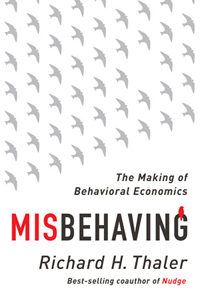
In his review of Richard H. Thaler’s Misbehaving: The Making of Behavioral Economics, John McMahon takes to task behavioral economics for its complicity in propagating the neoliberal project (i.e. promoting limited government and free-market capitalism), rather than questioning its dehumanizing assumptions. “The implications of behavioral research are constantly constrained so that they actually buttress foundational assumptions about markets. Why? Thaler disavows the role of the ‘moral philosopher,’ refusing to ‘render judgment about what ‘is’ or ‘should be’ fair’, because economics is supposed to be a ‘purely descriptive exercise’—and thereby preempts interrogation of the fairness of the market itself.”

Read Thaler’s trenchant review here: Training for Neoliberalism | Boston Review.

The Making of Behavioral Economics misbehaving-web

“Accidental Find: Scientists Stumble on Centuries-Old Shipwreck” – Yahoo News

How exciting! They found a late 18th- or early 19th-century shipwreck in the Atlantic.

Accidental Find: Scientists Stumble on Centuries-Old Shipwreck – Yahoo News.

van-dover-shipwreck

“This is One Reason the World Is on Fire” | History News Network

I don’t think “the world is on fire,” but Lawrence Davidson’s essay does hold some relevance to the violence that we see in some parts of the world. He argues that “there are millions of people, Muslims, Jews and Christians and others who not only still idealize a religiously imagined past, but want, in one way or another, to import that past into the present – and not only their present but everyone else’s as well.” This desire for some kind of mythical, ideal past is not new. These kind of golden age myths can be found throughout history, indicating a human affinity for them. They are particularly appealing in times of trouble, and Davidson is right to call them “downright dangerous.”
The problem is that while appealing, these mythical pasts never existed. They were created by scrubbing the particular period of interest of all its blemishes while embellishing the good. All attempts to recreate a mythical past have ended in human tragedy. Just as Procrustes was made to fit his bed by chopping off his legs, humanity is made to fit in an unattainable utopian box by destroying all that does not fit the ideal.
While Davidson focuses solely on the religious versions that are particularly prevalent at the moment, but this kind of golden age thinking can be found in other types of ideologies such as nationalism. We must all resist the siren song of these kinds of golden age narratives no matter how enticing they are.

History News Network | This is One Reason the World Is on Fire.

ISIS

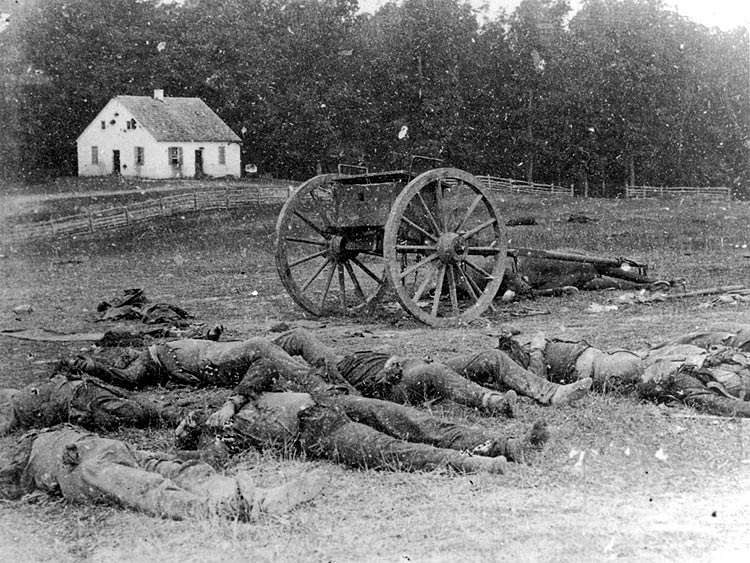
“Why Are So Many Distraught to Learn that Slavery Was the Cause of the Civil War?” |History News Network

I think that most of us would agree with Dale Schlundt’s answer to this question: “Because who in the middle of the twentieth century wanted to admit great grandpa fought for something other than an honorable and admirable ideology.” The motive is understandable. However, the deception comes at a cost. We cannot understand the present if we do not understand the past, and by denying the crime we dishonor the thousands who suffered and died as a result of the despicable institution of slavery. If we want to live up to our own values and learn from the past we must confront the history of the Civil War honestly.
Civil-War

“What Libertarianism Means Today” |History News Network

In Richard Striner’s final post on the history of Libertarianism, he examines the influence of Ayn Rand and Friedrich Hayek. Then he briefly examines the rise of the current movement in the U.S. from Barry Goldwater to the present. In conclusion, he questions the viability of the rigid libertarian worldview that is based on an extreme form of individualism: “We prize our own liberty, true, and we will obviously struggle to defend it —— fiercely if we must —— when it is threatened. But to elevate government above all other possible threats to our liberty is hard to do when push comes to shove. When a natural disaster devastates the region in which we are living and reduces our homes to a shambles —— what then? If vicious thugs invade our homes, what instincts take over as we rush to respond to the invasion? Do we immediately think of warning all the agents of government to watch their step and avoid messing with us? Or do we call 911 and hope the agents of government arrive just as quickly as they can?”

Leif  Parsons, The New York Times http://opinionator.blogs.nytimes.com/2012/04/08/the-taint-of-social-darwinism/

Leif Parsons, The New York Times


“Russia must not be allowed to rewrite Srebrenica’s history” | Natalie Nougayrede | The Guardian

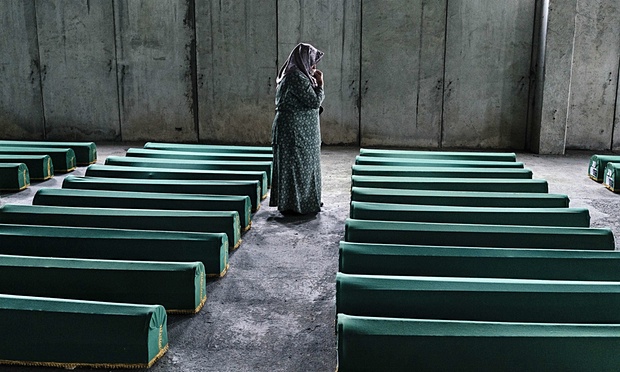
We all want to belong. We all want to think that we are good. We all want to be proud of our heritage, community, and history. We all want to have purpose and meaning in our lives. These are all genuine human desires that are by themselves positive sentiments, but they ultimately leave us vulnerable to manipulation by ambitious political leaders. Because nationalism fulfills all of these desires it has been the ideal political weapon for leaders like Slobodan Milosević, who unleashed the forces of Serbian nationalism as a way to rise to power. But more than fulfilling Milosević’s political ambitions it also released the forces of hatred that tore apart the former Yugoslavia of which the massacre of Srebrenica was a part of. Nationalism rests on an “us versus them” narrative that is more myth than actual history. All past nationals sins must be swept under the rug as a way to make the nation worthy of glory. If it just engendered pride in one’s past, nationalism would not be such a destructive force. Unfortunately, the end result is usually arrogance and hatred.

Natalie Nougayrede’s article at The Guardian reminds us that Putin is playing with the same fire for his own political purposes. This is not to say that Putin is planning to commit genocide or ethnic cleansing, but that his use of nationalism will, and already has, bring great suffering to many. Putin’s veto of the UN resolution is only a small part of his overall power play, but as Nougrayrede reminds us, it is still significant if we value peace and justice. “Some will argue that Russia’s latest veto should be seen as just another snub to the west. But the rewriting of the history of the Bosnian war and the unravelling of the mechanisms that the west tried to put in place to prevent more violence are something that Europeans would do well not to minimise. If only because of those unarmed 8,000 men and boys who were killed just because of who they were: Bosnian and Muslim.”

Russia must not be allowed to rewrite Srebrenica’s history | Natalie Nougayrede | Comment is free | The Guardian.

Srebrenica mourning

“Why Aren’t Pro-Life Evangelical Christians Appalled by America’s Record of Gun Violence?”|History News Network

Lawrence Wittner’s answer: “The embrace of guns by many white Protestants is bolstered by a number of arguments linked to their religious assumptions. One contention is that the United States was established by God and, therefore, the Second Amendment to the Constitution (which they allege guarantees individual gun ownership) is sacred. Another is that depriving people of ‘self-defense’ deprives them of a God-given right. In addition, they tend to believe that corrupt, un-Christian values, rather than the easy availability of guns, lie behind the frequency of gun massacres.” This sounds about right to me. But now what? There is no amount of reasoning or evidence that would convince them to change their mind on gun control.
Wittner also speculates on the reason why the U.S. has such a high gun death rate.
Read the entire article here:

History News Network | Why Aren’t Pro-Life Evangelical Christians Appalled by America’s Record of Gun Violence?

guns_god_country_flag


Happy Bastille Day! Vive la Revolution!

On this day in 1789, the French revolutionaries in search of arms stormed the Bastille, the former prison that stood as a symbol of tyranny, and in the process killed the governor of the Bastille, Bernard-Rene Jourdan de Launey. The Bastille was then dismantled brick by brick. It remains a symbol of the Revolution!

Bastille II