Ideologies
“This is One Reason the World Is on Fire” | History News Network
History News Network | This is One Reason the World Is on Fire.

“What Libertarianism Means Today” |History News Network
In Richard Striner’s final post on the history of Libertarianism, he examines the influence of Ayn Rand and Friedrich Hayek. Then he briefly examines the rise of the current movement in the U.S. from Barry Goldwater to the present. In conclusion, he questions the viability of the rigid libertarian worldview that is based on an extreme form of individualism: “We prize our own liberty, true, and we will obviously struggle to defend it —— fiercely if we must —— when it is threatened. But to elevate government above all other possible threats to our liberty is hard to do when push comes to shove. When a natural disaster devastates the region in which we are living and reduces our homes to a shambles —— what then? If vicious thugs invade our homes, what instincts take over as we rush to respond to the invasion? Do we immediately think of warning all the agents of government to watch their step and avoid messing with us? Or do we call 911 and hope the agents of government arrive just as quickly as they can?”

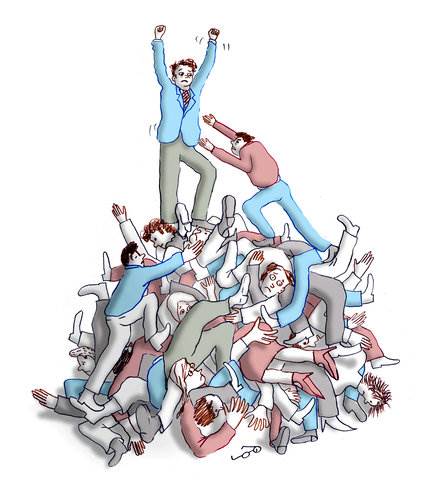
Leif Parsons, The New York Times
“The Lesson of the Fall of the Roman Republic We Ignore at Our Peril” History News Network
History News Network | The Lesson of the Fall of the Roman Republic We Ignore at Our Peril.
Social Darwinism: “When Libertarianism Became an Excuse for Plutocrats” Part II, History News Network
History News Network | When Libertarianism Became an Excuse for Plutocrats.
“This Is Where Libertarianism Gets Its Ideas from” | History News Network
In the first of a three-part series, the historian Richard Striner traces the roots of libertarian ideology. He writes, “The cultural, intellectual, and political history of libertarianism spans at least two centuries. And several of the twists in the emergence of this ideology are surprising —— even strange.”
Based on Striner’s summary of the origins libertarianism, he’s right that some sources are “surprising,” but I don’t know about “strange.” Read the first part in this series here: History News Network | This Is Where Libertarianism Gets Its Ideas from.
“The Long Campaign by White Supremacists to ‘Take Our Country Back’” |History News Network
History News Network | The Long Campaign by White Supremacists to “Take Our Country Back”.
“The Hoax of Climate Denial” | History News Network
The Revenge of History: Dealing with Historical Memory
In today’s The New York Times Roger Cohen wrote a thoughtful piece on memory and forgetting (“The Presence of the Past”). Given the role that the manipulation of historical memory has played in past and present violence this article brings up a topic that deserves more attention, especially as nationalism is on the rise. Despite the importance of this topic, it is rarely publicly discussed. Part of the problem is the complexity of the subject, not to mention that it calls into question the cherished identities of many. But if we’re going to stave off the violence that is the product of certain kinds of historical memory we must discuss it.
History is a double-edged sword, as Cohen points out: “History illuminates. It can also blind.” History is illuminating when it is confronted honestly and in all its complexity. It is blinding when it is used to serve ideological or political ends. This is where historical memory comes in. “History” is often abused in the service of ideology or political power.
“New Documentary on Nazi Propaganda Films to Debut” |History News Network
Many of the propaganda films produced by the Nazis have never been shown in the U.S. or Europe over fears that they may incite hatred, particularly against Jews. But a new documentary (Forbidden Fruit: The Hidden Legacy of Nazi Film), which opens today in N.Y., takes excerpts from the forty films that had been considered too offensive to show publicly and compiles them into one film. The director, Felix Moeller, is unsure about the consequences of the film. He wonders, “Are they nothing but historical documents at this point or still effective ideological messages?”
I think this documentary will be of interest to many, but rather than hatred, I hope this documentary prompts us to reflect on our own susceptibility as human beings to hate other who are different from us. It’s easy to criticize the Germans for being duped by Nazi propaganda, but must remember that we have the same vulnerabilities and that we could just as easily be duped. The same human dynamics that played out in Nazi Germany continue to fuel hatred and violence all across the globe. If we are to learn anything from this period of history, we should be skeptical of claims that inspire us to hate others. We should be wary of negative stereotypes and dubious claims that vilify others. If some one or some group asks us to hate, we should say “no”!
Read Bruce Chadwick’s review of the film here:
History News Network | New Documentary on Nazi Propaganda Films to Debut.