History News Network | Conservatives go after UCLA’s historian James Gelvin

Does anyone else find this disturbing? An organization called Campus Watch audits the courses of professors who teach in the area of Middle Eastern studies to ensure that they align with their pro-Israeli perspective. On their website they claim that their organization “reviews and critiques Middle East studies in North America with an aim to improving them. The project mainly addresses five problems: analytical failures, the mixing of politics with scholarship, intolerance of alternative views, apologetics, and the abuse of power over students. Campus Watch fully respects the freedom of speech of those it debates while insisting on its own freedom to comment on their words and deeds.” A review of their activities show that they are only perpetuating the “problems” they profess to be fighting against. While they do have the right to free speech their efforts to harass professors with views that are different from their own goes beyond their right to criticize those they disagree with. It is a very dangerous trend that I believe does not actually serve their real purpose (promote Israel as innocent of all wrong doing). James Gelvin, professor of history at ACLU, is their latest victim. One of Campus Watch’s representatives, Cinnamon Stillwell, attacked Gelvin in an article entitled “UCLA Prof Assigns Pro-Israel Book in Order to Trash It.” In one of his courses, Gelvin had required his students to read Alan Dershowitz’s The Case for Israel in order to critique it. Stillwell claims that this critique was not extended to other assigned material. But Gelvin pointed out that he also assigned a book with the opposite perspective and that “the assignment explicitly states that significant errors from both books must be cited, critiqued, and corrected.” For the full debate go to:

History News Network | Conservatives go after UCLA’s historian James Gelvin.

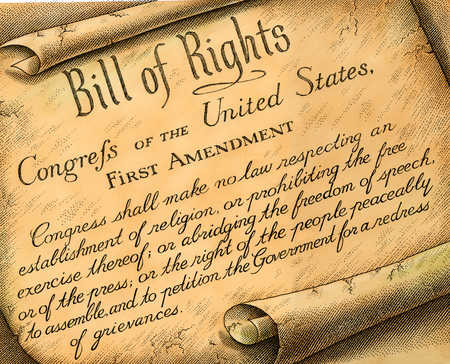
The goals and practices of Campus Watch go beyond the right to free speech, it amounts to harassment with the goal of stamping out all view points on campuses across America that do not conform to their ideological viewpoint. I believe that this trend is dangerous to not only to academic freedom but also to the prospects of peace in the Middle East. It serves only to perpetuate hatred and undermines any real attempts to solve the Israeli-Palestinian conflict.

palistinian isreali conflict

History News Network | Every 30 or 40 Years We See Flagrant Attacks on Free Speech. Here We Go Again.

While the present attack on academics who speak out against Israel is not as egregious as those that happened during the McCarthy Era, they are just as damaging to free speech. The critics are usually denounced as anti-Semitic and under that guise they are discredited as racist. On those grounds those defending Israel feel justified in their efforts to destroy the careers of those academics (the Salaita case is just the most prominent). The problem is that this is to confuse antisemitism with actions of the state of Israel (some may have done so intentionally as a way to shut down opinions that they do not like). One doesn’t have to be an anti-Semite to object to the actions of the state of Israel.  I find antisemitism abhorrent (and I have said so often), but I also find some of the actions of the Israeli government abhorrent as well. And there have been many Jews who have spoken out against the Israeli government on this topic as well. One of the most powerful statements comes from Theodore Bikel, who wrote in the Jewish Journal against “the death of Arab children.” “People see suffering and unless it is Jewish suffering they are silent. How dare they?” We should follow Theodore’s example and take a stand against injustice no matter who is committing it.
The Israeli government does not and should not get a free pass just because of the long history of antisemitism.
The historian Lawrence Davidson points out that attempts to shut down speech is a historical pattern that is unlikely to end. But he believes that we can “minimize the consequences of these repeated assaults” if we “continuously defy them. In other words, only by maintaining a counter-pattern of vigorously defending and using the right of free speech and academic freedom can space be sustained for critical voices. If at any time we fail to sustain this space we risk the possibility of being overwhelmed by a combination of closed-minded ideologues and the mass indifference of the majority.” Please read his article at the HNN:

History News Network | Every 30 or 40 Years We See Flagrant Attacks on Free Speech. Here We Go Again..

See also: “Did Salaita Cross the Line of Civility?” The New York Times

first-amendment

History News Network | Letter to My Friends: Why We Can’t Expect to Win a Religious War in the Middle East

William R. Polk’s great advice at the HNN that we unfortunately won’t follow:

“Adding up these points, I argue that the more they are attacked, the stronger the salafis become.  Even if we kill their leadership, cut off their supplies of arms and food and overwhelm their followers, we cannot destroy their movement.  I believe that the history of religious movements proves two things:

The first it that, religious wars are never “won.” That is the “bad news.”

Second, the “good news” is that even violent, radical, ugly religious movements “mature.”  That is, they are forced by their followers and even by some of their leaders to become “civilized.”  This is a process, slow to be sure, we can see in all radical movements.

Thus, what we need to do, in my opinion, is to ease our pressure to enable internal changes — those that are beneficial to them and to us — to take place.

Admittedly that is a long-time strategy.  It is far less popular than attacking:  most people love war, soldiers like to win glory and promotion and arms dealers want to sell their goods.  So our leaders may not have the strength or the courage to try a long-term strategy, but I think it is far and away the most likely to accomplish our objectives.”

Please read his entire post at:

History News Network | Letter to My Friends: Why We Can’t Expect to Win a Religious War in the Middle East.

isis flag