“Essay on being accused of being an anti-Israel professor” | Inside Higher Ed

Jonathan Judaken is just the latest victim in a concerted effort by a well-organized group united in defense of Israel. I have written on this topic several times (Pro-Israeli Groups Continue their Assault on Academic Freedom and Conservatives go after UCLA’s historian James Gelvin). It is a troubling trend that threatens academic freedom and the progress that flows from it.

Judaken opens with an explanation of his situation: “Let me tell you how I ended up on Jihad Watch. This is a tale of the new red scare wending its way across college campuses. More than an account of my own travails, this is an anatomy of how critical thought about Islam and Judaism, the Arab-Israeli conflict, anti-Semitism and anti-Muslim racism is today monitored in the academy with the goal of chilling reflection.”

I noticed a common theme in the comments section. (Of course, going to the comments section of any online forum is a bit like going to the Twilight Zone. You enter at your own risk.) Many of the commenters accused Judaken of being the McCarthyites, not the minions of Campus Watch. The strategy of flipping an argument on its head as a way of taking down your opponent is not new. It has proven to be an effective strategy on the right. Someone calls you a racist, you respond by claiming that they are the real racist. Someone calls you intolerant, you respond by calling them intolerant, and so on.

The problem with their argument is that they fail to make the appropriate distinction between McCarthyism and criticism. What McCarthy did was attempt to silence people that he disagreed with through intimidation and bullying tactics, not debate. Judaken was not trying to silence those associated with the Middle East Forum and Campus Watch, but expose what they were doing. And the analogy is appropriate because they use the tactics of intimidation to bully those in academia whose account of Middle East history does not agree with theirs (the Israeli government is always innocent and anyone who says otherwise is an anti-Semite).

What Caschetta did was not criticism for the purpose of advancing the debate, but an intentional distortion of Judaken’s lecture and intentions. The Middle East Forum was founded to promote a particular ideology. And the way they have chosen to further that ideology is through intimidation, not academic debate. The academic world is built on the principle of debate and criticism. This is what fuels progress in all academic fields of knowledge. If the real goal of Campus Watch was the advancement of knowledge, there are multiple avenues available to critique Judaken’s position in a constructive and professional manner. Every academic has to face criticism as they engage in their own field. This is not the kind of criticism that Caschetta engaged in. He intentionally distorted Judaken’s lecture as a way to intimidate him. This was the way of McCarthy, and therefore the label is apt in the case of Campus Watch, but not the other way around.

Essay on being accused of being an anti-Israel professor | InsideHigherEd.

 academic freedom

“Could Scientists Be Wrong About Global Warming?” | History News Network

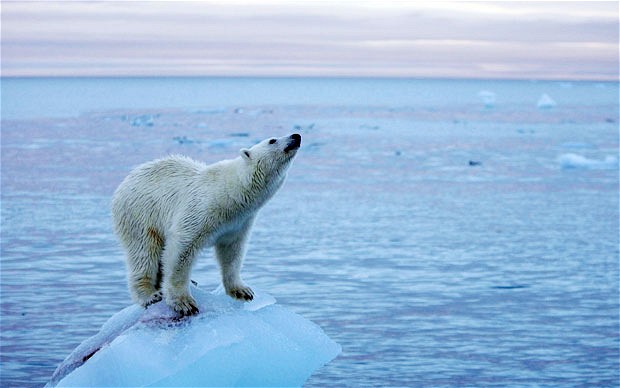
Using examples from the history of science Dr. James Powell explains why it is unlikely that climate scientists are wrong about global warming. However his final consideration is probably the most apropos in the current debate over climate change: the possibility “that scientists are deliberately wrong, engaged in a global conspiracy,” and concludes that “this notion, [is] the intellectual equivalent of believing that the Earth is flat or that men did not land on the Moon. To claim conspiracy is to prefer a blatant absurdity over scientific fact and only because accepting global warming does not happen to suit people. But the implacable laws of science remain unaffected by what suits us.”

Read his useful review of the history of mistaken theories in science:

History News Network | Could Scientists Be Wrong About Global Warming?

polar bear

“The Hoax of Climate Denial” | History News Network

Naomi Oreskes, historian of science, discusses her experience testifying before the Committee on Natural Resources last month. She explains, “In preparing my testimony, however, I realized that something far larger was at stake: the issue of politically driven science itself.  It’s often claimed that environmental science done in federal agencies is “politically driven” and therefore suspect.  It was, I realized, time to challenge the presumption that such science is bad science. While widely held, the idea is demonstrably false. Moreover, the suggestion that “government science” is intrinsically problematic for Republicans who eschew big government ignores the simple fact that most of the major contributions of the twentieth century, at least in the physical sciences, came from just such government science.”
Besides defending “government science,” Oreskes reviews the history of the current climate denialism, as well as the political and economic forces that are driving it. Read her important exposé here:

History News Network | The Hoax of Climate Denial.

Merchants of Doubt

“By the Bizarre Logic of Anti-Gay Marriage Zealots, the Supreme Court Should Allow Businesses to Discriminate Against Interracial Couples” | History News Network

At the History News Network the legal scholar Robert J. McWhirter calls out the “anti-gay zealots” for their rhetorical tricks, which they use as a cover for their bigotry.  Here’s an excerpt from his incisive piece:

“’Marriage is one of the ‘basic civil rights of man,’ fundamental to our very existence and survival. . . . To deny this fundamental freedom on so unsupportable a basis as the racial classifications embodied in these statutes, [is] … directly subversive … [to] the 14th Amendment . . ..’ Opponents of same-sex marriage can’t attack this head on.  So the first play is to argue definitions.  After all, said George W. Bush, ‘marriage is between a man and a woman.’  Subtext: ‘We don’t deny gay people a fundamental right, we just define them out of it.’” 
Read the entire article here:

History News Network | By the Bizarre Logic of Anti-Gay Marriage Zealots, the Supreme Court Should Allow Businesses to Discriminate Against Interracial Couples.

Bills, Quills, and Stills McWhirter

Why did a Pious Baptist Preacher Give Thomas Jefferson a Mammoth Cheese?

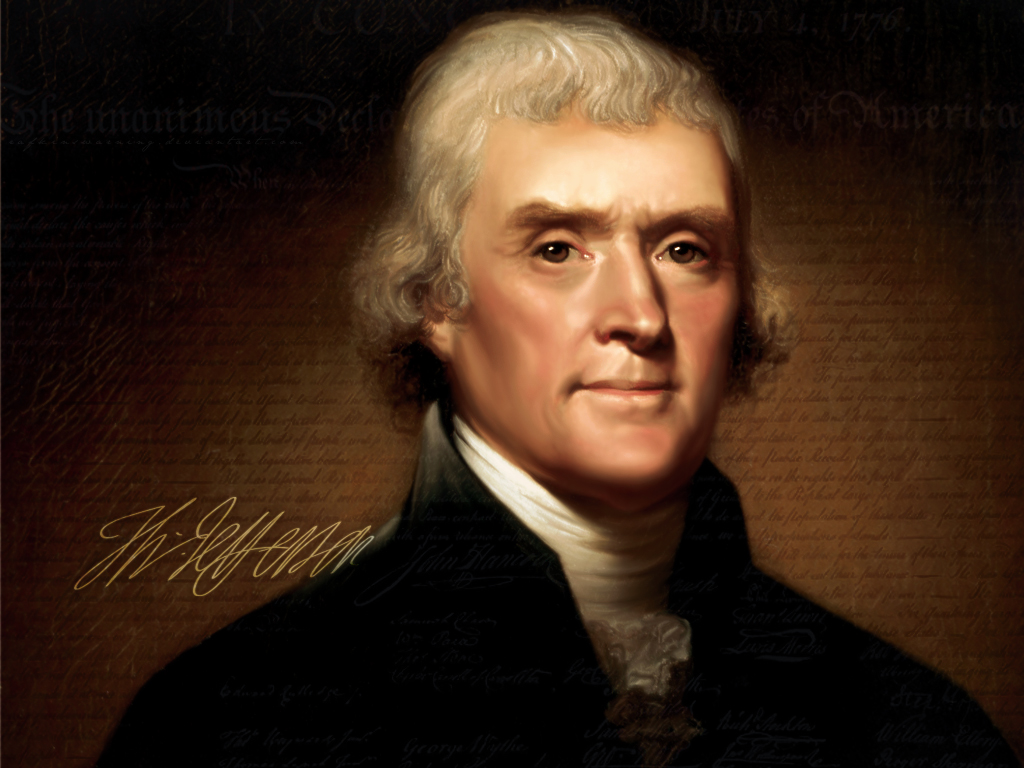
On January 1, 1802 an unusual gift arrived for the new president, Thomas Jefferson. It was a 1,235 pound hunk of cheese from the Elder John Leland and the Cheshire Baptists. Why would this devout Baptist preacher bestow such a conspicuous gift on the deistic Jefferson? The answer is simple: Leland saw Jefferson as one his ablest allies in the struggle for democracy and religious liberty. Delivering the cheese personally, Leland recited a message from a committee of five influential citizens from Cheshire, declaring that they were presenting him with the enormous cheese:

“as a token of the esteem we bear to our chief Magistrate and of the sense we entertain of the singular blessings that have been derived from the numerous services you have rendered to mankind in general and more especially to this favored nation, over which you preside. It is not the last stone of the Bastille, nor is it an article of great pecuniary worth, but as a freewill offering we hope it will be favorably received.”

From all accounts the cheese was “favorably received.” One account recalls that the cheese was carved “in the presence of the president and cabinet, foreign diplomats and many distinguished men and women of ancient note…and that it was the object of great curiosity.” Leland received special thanks and was “introduced person, by person by the president, to the entire gathering.” The celebration for Leland did not end with the ceremony; he celebrated all the way home in what “resembled a triumphant march.” (1) This little known event is a reminder of the great alliance between rationalists such as Jefferson, and the pious dissenters who helped establish religious liberty in the new nation.

thomasjefferson

John Leland grew up in New England, but he spent his early career in Virginia, where he came to admire Jefferson and Madison. In a popular sermon given soon after Jefferson’s inauguration in 1801, he declared, in reference to Jefferson:

Continue reading

Why did a Pious Baptist Preacher Give Thomas Jefferson a Mammoth Cheese?

On January 1, 1802 an unusual gift arrived for the new president, Thomas Jefferson. It was a 1,235 pound hunk of cheese from the Elder John Leland and the Cheshire Baptists. Why would this devout Baptist preacher bestow such a conspicuous gift on the deistic Jefferson? The answer is simple: Leland saw Jefferson as one his ablest allies in the struggle for democracy and religious liberty. Delivering the cheese personally, Leland recited a message from a committee of five influential citizens from Cheshire, declaring that they were presenting him with the enormous cheese:

“as a token of the esteem we bear to our chief Magistrate and of the sense we entertain of the singular blessings that have been derived from the numerous services you have rendered to mankind in general and more especially to this favored nation, over which you preside. It is not the last stone of the Bastille, nor is it an article of great pecuniary worth, but as a freewill offering we hope it will be favorably received.”

From all accounts the cheese was “favorably received.” One account recalls that the cheese was carved “in the presence of the president and cabinet, foreign diplomats and many distinguished men and women of ancient note…and that it was the object of great curiosity.” Leland received special thanks and was “introduced person, by person by the president, to the entire gathering.” The celebration for Leland did not end with the ceremony; he celebrated all the way home in what “resembled a triumphant march.” (1) This little known event is a reminder of the great alliance between rationalists such as Jefferson, and the pious dissenters who helped establish religious liberty in the new nation.

thomasjefferson

John Leland grew up in New England, but he spent his early career in Virginia, where he came to admire Jefferson and Madison. In a popular sermon given soon after Jefferson’s inauguration in 1801, he declared, in reference to Jefferson:

Continue reading

“Was Robert Kennedy Really the Dove He and Arthur Schlesinger Jr. Made Him Out to Be During the Cuban Missile Crisis?” | History News Network

This might be of interest to some of you:

History News Network | Was Robert Kennedy Really the Dove He and Arthur Schlesinger Jr. Made Him Out to Be During the Cuban Missile Crisis?.

The Cuban Missle Crisis in American Memory

“Gaza: Killing Gets Easier by David Shulman” | NYRblog | The New York Review of Books

David Shulman comments on a report released by Breaking the Silence, an organization of Israeli ex-soldiers. The report is the culmination of an investigation of the Israeli campaign in Gaza last summer. Shulman explains that “the findings of the report—including the results of the fighting and the orders that brought them about—are nothing very new. What is more striking is how they suggest the impressive persistence and, indeed, continual intensification of practices that have occurred over the last three or four decades. Significant change lies only in the fact that the acts in question now reflect deliberate and explicit policy of a systemic nature coming down from the top. The Israel army once claimed to hold, nominally at least, to moral considerations of an entirely different order than those officially adopted last summer. Now, even that pretense seems to be gone.” Read more on this report and Shulman’s insightful commentary:

 Gaza: Killing Gets Easier by David Shulman | NYRblog | The New York Review of Books.

palistinian isreali conflict

Is Britain Exceptional?

All nations have some form of “exceptional” narrative that extols their special place in the world. Creating such a narrative is simple. All you need to do is highlight the wonderful or unique contributions made by your nation,  ignore any similar contributions from other nations, and sweep under the rug all embarrassing or negative events. Exceptionalism narratives are really a form of nationalism pretending not to be. Usually historians shun these types of distorted histories, but not always.

Currently a group of historians in Britain (Historians for Britain) are playing the exceptionalism card in order to mobilize the population in an effort to disengage from the European Union. In response, “Hundreds of British historians” are challenging the claims made by “Historians for Britain” in an open letter. They argue that “Britain’s past is neither so exalted nor so unique.” They “challenge this narrative, because it does not fit with the evidence we have encountered in our own research, and this approach, because it does not provoke debate but rather presents a foregone conclusion. We think that a history that emphasises Britain’s differences and separation from Europe (or elsewhere) narrows and diminishes our parameters, making our history not exceptional but undernourished. Britain’s past – and, therefore, its future – must be understood in the context of a complex, messy, exciting, and above all continuous interaction with European neighbours and indeed with the rest of the world.”

In The Guardian, Rebekah Higgit also challenges the narrative of British exceptionalism: “Historians and readers of history both need to be aware of the biases of our education and literature. Accounts of British exceptionalism, especially those that lump the rest of Europe or the world into an amorphous group of also-rans, are more the result of national tradition and wishful thinking than a careful reading of the sources.” The same could be said of American Exceptionalism narratives. These narratives tend to breed arrogance and undermine the benefits of historical perspective.

Whether or not Britain should remain in the European Union should be informed in light of the reality of Britain’s past, not the romanticized versions of British Exceptionalism. The stakes are too high.

History News Network | Hundreds of British historians challenge assumptions of “Historians for Britain” campaign.

Beware Eurosceptic versions of history and science| Rebekah Higgitt | Science | The Guardian.

british nationalism

“This Is What Happens When You Slash Funding for Public Universities” | The Nation

In Arizona the state legislature cut $99 million dollars from the higher education budget, and it is even worse in places like Wisconsin and Louisiana. This trend has been going on for some time, but the economic crisis prompted even more severe cuts to higher education. As Michelle Goldberg notes, many states have begun restoring funding, but “[e]ight Republican-dominated states, however, have kept cutting. Among them are North Carolina, Wisconsin, Arizona, Louisiana, and South Carolina.”

What is driving this trend? It is partly political (animus towards the “liberal” academia), partly ideological (absolute devotion to privatization and taxing cutting), and partly financial (the opportunity to make money off of education).

What are the consequences? 1) Higher tuition that will increasingly make college accessible only to the wealthy. 2) University’s are turning to solutions that will harm the long-term quality of education, such as larger class sizes and corporate partnerships that put the focus on making money rather than educating students. 3) There will be less time and money for faculty to do the research that is vital to the health and wealth of our nation. 4) Higher education will start to become more of a job-training program, rather than an educational institution that creates well-rounded and thoughtful citizens in addition to preparing them for their careers. 5) Inequality will increase.

Please read the entire article here:

This Is What Happens When You Slash Funding for Public Universities | The Nation.

Arizona-State-University