“Two Things You Don’t Know About Roe v. Wade that Will Surprise You” | History News Network

James Robenalt, in his new book January 1973, argues “that this controversial change in how the case was decided had a dramatic impact on American politics. The Roe decision activated the so-called Religious Right. But more importantly, because abortion is an issue about which many will not compromise—it is a life and death decision to some—the whole concept of “no compromise” as a political strategy entered our political bloodstream. Along with the other great events of January 1973—Truman’s death, end of the Vietnam War for the US, Watergate burglars’ trial, Nixon’s Second Inaugural, Roe and the death of Lyndon Johnson (on the same day as Roe)—the conditions set up for a government of deadlock.” To find out the two things about Roe that will surprise you, read his article:

History News Network | Two Things You Don’t Know About Roe v. Wade that Will Surprise You.

January 1973

History News Network | Why Indiana Republicans Blundered so Badly on Gay Rights

The legal scholar Victoria Saker Woeste evaluates the Indiana RFRA law (Religious Freedom Restoration Act) and concludes: “They relied only on the legal opinion that portrayed religious liberty as under attack. But most people across Indiana—and indeed the nation—do not believe that it is. That is why the backlash was so swift, so furious, and so scalding.This is a classic case of winning the battle and losing the war. A balanced approach to civil rights should prevail at the state level, but Indiana’s RFRA “fix” stops short of guaranteeing equal civil rights to individuals regardless of sexual orientation or gender identity. Until that oversight is addressed, Governor Pence should spend some time improving his Captain Renault impersonation.” Read the entire article here:

History News Network | Why Indiana Republicans Blundered so Badly on Gay Rights.

Indiana protests against RFRA 2015

“One nation under God”? Not when it comes to distributing Gideon Bibles to public schools – Salon.com

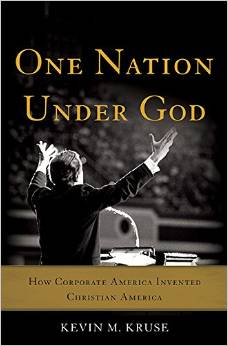
Author of “One Nation Under God: How Corporate America Invented Christian America” Kevin M. Kruse reviews the history of Gideon bibles from their origins to their distribution in public schools. Based on this history, Kruse concludes that “[t]he concept of ‘one nation under God’ had seemed a simple, elegant way to bring together the citizens of a broadly religious country, but at the local level, as the Gideons had discovered, Americans were anything but united.” Read the entire article here:

“One nation under God”? Not when it comes to distributing Gideon Bibles to public schools – Salon.com.

gideon-bible_5

What Is Deism? | Patheos.com

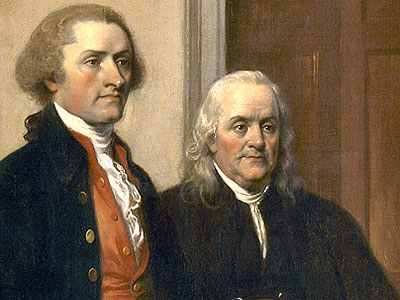
In a recent blog post at Patheos, Thomas Kidd argues that during the eighteenth century “[m]ost deists really did consider themselves serious theists, and…devotees of Jesus and his teachings” and therefore “[t]heir deism was not just a convenient cloak for atheism.” From that assumption he concludes, “The deists’ closest descendants today are not the ‘new atheists’ who have stirred up so much media chatter in recent years.”  Instead, “Their closest descendants are probably liberal mainline Christians who see Jesus as their model but who eschew (or even deny) the particular, exclusive doctrines that have been associated with Christian orthodoxy for millennia.”

In defending this position Kidd overstates the Deists’ connection to Christianity in order to claim that they were theists. They believed in God, otherwise they would not have been Deists, but their god was not the theistic god of Christianity, even if they had an affinity for the moral precepts of the man Jesus as Jefferson did. (For a more in-depth discussion of Jefferson’s religious beliefs and whether or not he was a Deist see my previous post on the subject: Was Jefferson a Christian?). But once Kidd establishes their theistic credentials he believes that therefore they could not possibly have been the forerunners of the “new atheists.”

Thomas Jefferson & Benjamin Franklin

Thomas Jefferson & Benjamin Franklin


Continue reading

A Christian Nation? Since When? – NYTimes.com

Kevin M. Kruse traces the evolution of the myth that America was founded as a Christian nation from the 1920s through the Cold War. As he points out, “During these years, Americans were told, time and time again, not just that the country should be a Christian nation, but that it always had been one. They soon came to think of the United States as ‘one nation under God.’ They’ve believed it ever since.” I’ll post a review of the book as soon as I read it, but if you want a brief summary of his argument you can find it here:

A Christian Nation? Since When? – NYTimes.com.

One Nation, Under God

A Letter Concerning Muslim Toleration – NYTimes.com

Mustafa Akyol  argues in The New York Times that it is time for Muslims to have their own Letter Concerning Toleration. I couldn’t agree more! He points out that many Muslims support harsh punishments for “heresy,” “blasphemy,” and other practices that are deemed offenses against Islam. However, within Western Christendom it took more than Locke’s influential Letter. Locke was only one (albeit an important one) of hundreds who wrote passionately against intolerance, both before and after him. And it took years of bloodshed, violence, and oppression before the idea of toleration took hold, and then only begrudgingly at first. This is not to say that Muslims should not take up the cause of toleration, but to say that it is going to take more than a Muslim John Locke. It will take a determined movement over a long period of time. I hope some Muslims will take up the challenge! Thanks for the suggestion Akyol!

A Letter Concerning Muslim Toleration – NYTimes.com.

Locke A Letter Concerning Toleration

History News Network | “So Help Me God” and the Presidential Oath

In an article at the History News Network David B. Parker debunks the “so help me God” myth. He notes that it was created “[t]o shore up our Godly credentials.” And this is only one of the Cold War inventions to shore up our religious bona fides in our battle with the godless Soviet Union. “It joined “one nation, under God” and “In God we trust” to create a trinity of Cold War religious phrases. And like several other legacies of our Cold War heritage, this one has stuck with us.”

History News Network | “So Help Me God” and the Presidential Oath.

George_Washington_taking_oath_crNA

Voltaire’s 250-year-old book on tolerance climbs French best-seller lists after terror attacks | Star Tribune

I am happy to see a renewed interest in Voltaire’s Treatise on Toleration. Although the worst of religious violence in Europe had waned by the time of Voltaire was born, he witnessed plenty of religious oppression and discrimination. We need to relearn the lessons that Enlightenment thinkers learned from the religious violence that plagued Europe in the aftermath of the Reformation and Voltaire’s book is a great place to start. Unfortunately, those who most need to learn these lessons are probably not the ones reading Voltaire.

Voltaire: “It does not require great art, or magnificently trained eloquence, to prove that Christians should tolerate each other. I, however, am going further: I say that we should regard all men as our brothers. What? The Turk my brother? The Chinaman my brother? The Jew? The Siam? Yes, without doubt; are we not all children of the same father and creatures of the same God?”

Voltaire’s 250-year-old book on tolerance climbs French best-seller lists after terror attacks | Star Tribune.

voltaire

In Seven States, Atheists Push to End Largely Forgotten Ban – NYTimes.com

The fact that these religious tests still exist is shameful given that they are discriminatory and banned by the Constitution (see Torcaso v. Watkins). Thanks to Laurie Goodstein for reminding Americans of the existence of these religious tests in Maryland, Arkansas, Mississippi, North Carolina, South Carolina, Tennessee and Texas.

Goodstein writes in The New York Times that “there has been no political will to rescind these articles. “Which politician was going to get up and say, ‘We’re really going to clean this up’?” he said.”‘ Continue reading at:

In Seven States, Atheists Push to End Largely Forgotten Ban – NYTimes.com.

states with religious tests

Book Review (Part I): Thomas Jefferson: Roots of Religious Freedom by John Harding Peach Was Jefferson a Christian?

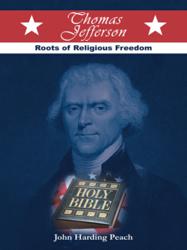
In Thomas Jefferson: Roots of Religious Freedom, John Harding Peach claims that Thomas Jefferson was a Protestant Christian whose vision of religious liberty was grounded in his passionate desire to protect religion. Peach can perhaps defend this misleading portrayal of Jefferson under the guise that it is “a biographical novel,” but given that he also insists that “all historical events and places were provided as they factually occurred” (xii) this excuse is not credible. He may wish Jefferson was the person that he presents in his “novel” but he cannot honestly claim that Jefferson was that person. Unfortunately, his followers, who, no doubt, also want to believe that Jefferson was the Christian in Peach’s narrative, will uncritically accept his version of events. These distortions of history are not innocent ventures; they are part of a larger movement intent on re-writing history to support their claim that the United States is a Christian nation.
9781462720521_cover.indd

The wannabe historian David Barton has been at the forefront of this movement. His book (The Jefferson Lies) is the latest in a series of books dedicated to the goal of making this a Christian nation. But Jefferson’s well-known “infidelism” doesn’t fit this narrative, so rather than ignore the writer of the Declaration of Independence Barton and others have decided to remake Jefferson into a devout Christian. This is not an easy task and the only way to achieve it is through deception, dishonesty, and willful ignorance. In fact, Barton’s book is so egregiously dishonest that it was discontinued by his publisher after a group of conservative historians exposed it as misleading and “unsupportable.”1 Unlike Barton, Peach may not have gone as far as Barton, but it is still a dishonest and misleading portrayal of Jefferson. In his desire to see Jefferson as an upstanding Christian, Peach has cherry-picked, distorted, and misinterpreted the evidence.

Peach’s “novel” begins with Jefferson’s education with his childhood teacher the Rev. James Maury, who Peach claims “lit his fire,” (1) and ends with Jefferson’s death in 1826. The book highlights events in Jefferson’s life, large and small, which serve to present Jefferson as “practice[ing] his core conviction of basic Protestantism.” (xiii) This book review will challenge Peach’s portrayal of Jefferson. This post will be dedicated to Jefferson’s religious beliefs in general before turning to the Declaration of Independence and Jefferson’s views on religious liberty in future posts.

Continue reading