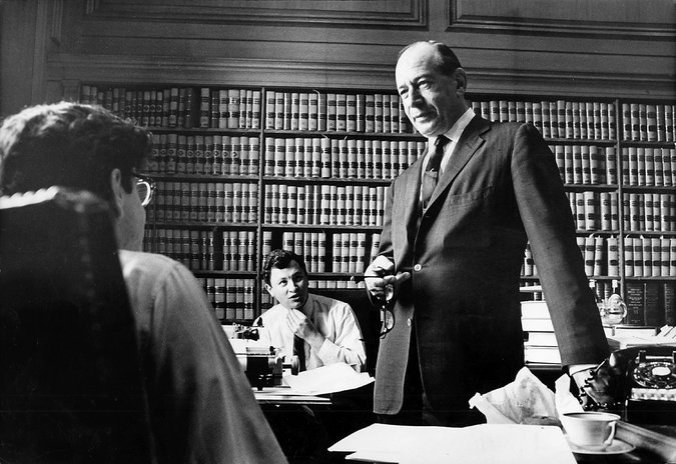
“Should Obama Pick Nominee? Your Answer May Depend on How Much History You Know” – The New York Times

“The more people are informed about Supreme Court nominations, a poll shows, the more they agree that the Senate should consider a nomination.”

Source: Should Obama Pick Nominee? Your Answer May Depend on How Much History You Know – The New York Times

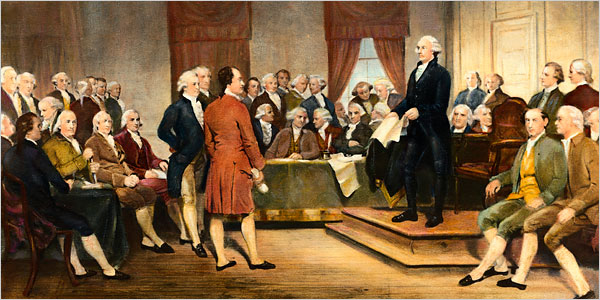
“‘Advice & Consent’? No One Really Knows What the Founders Had in Mind.” | History News Network

Ray Raphael briefly reviews the history of the “advice and consent” clause of the Constitution at the HNN.

Afterwards he notes that “[t]he current Senate is more than eager to question ‘the judgment of the Chief Magistrate,’ and the avowed aim of Republican senators is to undermine the administration, not provide ‘stability.’ Nor, in this age of unrelenting media buzz, is there much interest in ‘a silent operation.’ Ironically, those who call themselves Originalists, and who hang on the framers’ every word, loudly broadcast their intention to thwart the Chief Executive at this and at every turn.”

Source: History News Network | “Advice & Consent”? No One Really Knows What the Founders Had in Mind.

Garry Wills: “The Next Justice? It’s Not Up to Us” | History News Network

“One thing the framers of the Constitution set out to prevent was a popular say in who should be a Supreme Court justice. The aim of the document was to ensure there would be an independent judiciary—independent of Congress (by ensuring justices’ salaries), independent of changing administrations (by granting them life tenure), and not subject to popular election.”

Source: History News Network | The Next Justice? It’s Not Up to Us

founding-fathers

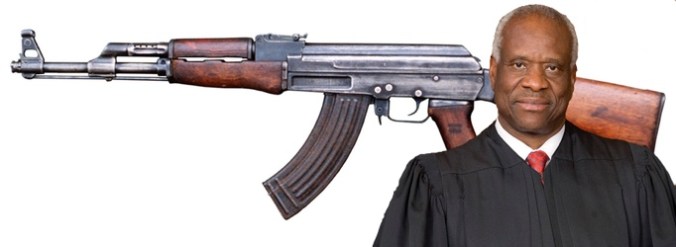
“Justice Thomas Needs a Lesson in the History of the 2nd Amendment” | History News Network

“The overall point to be made is the Seventh Circuit did not relegate the Second Amendment to a “second-class right” as Justice Thomas claims. History refutes such a conclusion. The fact of the matter is the modern perception of the Second Amendment as guaranteeing broad firearm rights in both public and private is just that—modern.”

Source: History News Network | Justice Thomas Needs a Lesson in the History of the 2nd Amendment

Why the Claim that the Obergefell Decision is Undemocratic is Wrong

Does the Court ruling in Obergefell v. Hodges violate the principle of democracy as those writing in dissent (Chief Justice John Roberts and the Justices Scalia, Thomas, and Alito) have claimed? James Madison, the Father of the Constitution and Bill of Rights, would say no.

Bolstered by the legal arguments of the dissenting justices, those opposed to the Court’s decision will continue to campaign against same-sex marriages, even though they lost. It is therefore important that we examine the merits of the arguments from the dissenting justices. (1) One of the main charges brought against the majority is the claim is that this opinion is a threat to democracy and religious liberty. This allegation is based on a misunderstanding of the relationship between rights and majorities in a democracy. On this subject, James Madison had the greatest insights, and he is primarily responsible for our current understanding of how to best protect rights in a democracy.

first-amendment

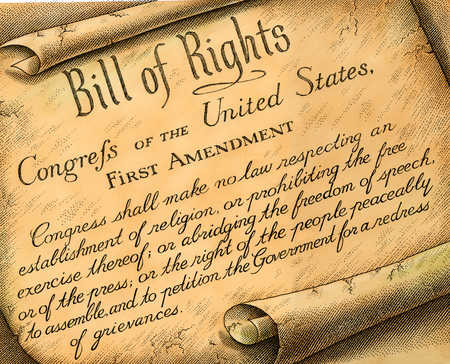
In his fight against religious establishments in Virginia, James Madison learned many lessons, one of the most significant of these lessons was that bills of rights were “parchment barriers” when facing overbearing majorities. Acting through their representatives, majorities will inevitably push through legislation that will violate the rights of others, even when expressly prohibited by a bill of rights as happened in Virginia when an attempt was made to pass a general assessment for the support of teachers of the Christian religion. The general assessment bill failed but it prompted Madison to reconsider the assumption that legislatures are the best protectors of the rights of the people. In his Vices of the Political System of the United States (1787), which was written in response to the failures of the Articles of Confederation, Madison questioned “the fundamental principle of republican Government, that the majority who rule in such Governments, are the safest Guardians both of public Good and of private rights.” In exploring the root of this problem, he concluded that the cause lay “in the people themselves.” It was for this reason that Madison originally opposed adding a bill of rights to the Constitution, although he later changed his mind and became the primary author and mover of the amendments that became our Bill of Rights. Even though he changed his mind and pushed the amendments through, Madison never changed his mind about the relationship between majorities and violation of individual rights. Continue reading

The Obergefell Ruling is a Victory for the LGBT Community, but it’s Also a Victory for James Madison and Religious Liberty

Does the Court ruling in Obergefell v. Hodges violate the principle of democracy as those writing in dissent (Chief Justice John Roberts and the Justices Scalia, Thomas, and Alito) have claimed? James Madison, the Father of the Constitution and Bill of Rights, would say no.

Bolstered by the legal arguments of the dissenting justices, those opposed to the Court’s decision will continue to campaign against same-sex marriages, even though they lost. It is therefore important that we examine the merits of the arguments from the dissenting justices. (1) One of the main charges brought against the majority is the claim is that this opinion is a threat to democracy and religious liberty. This allegation is based on a misunderstanding of the relationship between rights and majorities in a democracy. On this subject, James Madison had the greatest insights, and he is primarily responsible for our current understanding of how to best protect rights in a democracy.

James Madison

James Madison

In his fight against religious establishments in Virginia, James Madison learned many lessons, one of the most significant of these lessons was that bills of rights were “parchment barriers” when facing overbearing majorities. Acting through their representatives, majorities will inevitably push through legislation that will violate the rights of others, even when expressly prohibited by a bill of rights as happened in Virginia when an attempt was made to pass a general assessment for the support of teachers of the Christian religion. The general assessment bill failed but it prompted Madison to reconsider the assumption that legislatures are the best protectors of the rights of the people. In his Vices of the Political System of the United States (1787), which was written in response to the failures of the Articles of Confederation, Madison questioned “the fundamental principle of republican Government, that the majority who rule in such Governments, are the safest Guardians both of public Good and of private rights.” In exploring the root of this problem, he concluded that the cause lay “in the people themselves.” It was for this reason that Madison originally opposed adding a bill of rights to the Constitution, although he later changed his mind and became the primary author and mover of the amendments that became our Bill of Rights. Even though he changed his mind and pushed the amendments through, Madison never changed his mind about the relationship between majorities and violation of individual rights. Continue reading

The Obergefell Ruling is a Victory for the LGBT Community, but it’s Also a Victory for James Madison and Religious Liberty

Does the Court ruling in Obergefell v. Hodges violate the principle of democracy as those writing in dissent (Chief Justice John Roberts and the Justices Scalia, Thomas, and Alito) have claimed? James Madison, the Father of the Constitution and Bill of Rights, would say no.

Bolstered by the legal arguments of the dissenting justices, those opposed to the Court’s decision will continue to campaign against same-sex marriages, even though they lost. It is therefore important that we examine the merits of the arguments from the dissenting justices. (1) One of the main charges brought against the majority is the claim is that this opinion is a threat to democracy and religious liberty. This allegation is based on a misunderstanding of the relationship between rights and majorities in a democracy. On this subject, James Madison had the greatest insights, and he is primarily responsible for our current understanding of how to best protect rights in a democracy.

James Madison

James Madison

In his fight against religious establishments in Virginia, James Madison learned many lessons, one of the most significant of these lessons was that bills of rights were “parchment barriers” when facing overbearing majorities. Acting through their representatives, majorities will inevitably push through legislation that will violate the rights of others, even when expressly prohibited by a bill of rights as happened in Virginia when an attempt was made to pass a general assessment for the support of teachers of the Christian religion. The general assessment bill failed but it prompted Madison to reconsider the assumption that legislatures are the best protectors of the rights of the people. In his Vices of the Political System of the United States (1787), which was written in response to the failures of the Articles of Confederation, Madison questioned “the fundamental principle of republican Government, that the majority who rule in such Governments, are the safest Guardians both of public Good and of private rights.” In exploring the root of this problem, he concluded that the cause lay “in the people themselves.” It was for this reason that Madison originally opposed adding a bill of rights to the Constitution, although he later changed his mind and became the primary author and mover of the amendments that became our Bill of Rights. Even though he changed his mind and pushed the amendments through, Madison never changed his mind about the relationship between majorities and violation of individual rights. Continue reading

“By the Bizarre Logic of Anti-Gay Marriage Zealots, the Supreme Court Should Allow Businesses to Discriminate Against Interracial Couples” | History News Network

At the History News Network the legal scholar Robert J. McWhirter calls out the “anti-gay zealots” for their rhetorical tricks, which they use as a cover for their bigotry.  Here’s an excerpt from his incisive piece:

“’Marriage is one of the ‘basic civil rights of man,’ fundamental to our very existence and survival. . . . To deny this fundamental freedom on so unsupportable a basis as the racial classifications embodied in these statutes, [is] … directly subversive … [to] the 14th Amendment . . ..’ Opponents of same-sex marriage can’t attack this head on.  So the first play is to argue definitions.  After all, said George W. Bush, ‘marriage is between a man and a woman.’  Subtext: ‘We don’t deny gay people a fundamental right, we just define them out of it.’” 
Read the entire article here:

History News Network | By the Bizarre Logic of Anti-Gay Marriage Zealots, the Supreme Court Should Allow Businesses to Discriminate Against Interracial Couples.

Bills, Quills, and Stills McWhirter

Are the Supreme Court Justices Roberts, Scalia, Alito, and Thomas Qualified to be Justices?

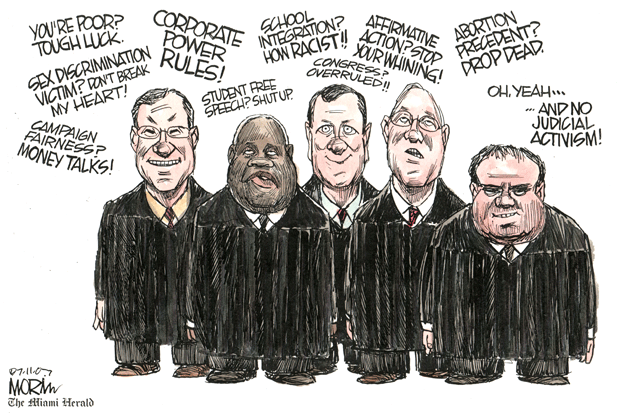
Alan J. Singer says “no.” In an interview at Education News, Singer told Michael F. Shaughnessy that these four should never have been elected Supreme Court Justices  “because Justices swear an oath to defend the United States Constitution as the first law of the land…In decision after decision they placed ideology and personal values above the Constitution and the law. They decided corporations have the same rights as people and then defended the rights of the world’s wealthiest companies over the rights of ordinary people, are still considering undermining a national health insurance plan, and denounce crime and violence while ensuring the maximum distribution of deadly weapons. However they eventually decide on the same-sex marriage issue, I do not trust them.” Neither do I! Read the entire interview here:

Alan J. Singer: Comments about the Supreme Court Justices Comments | Education News.

Alito, Thomas, Roberts, Kennedy, and Scalia

Alito, Thomas, Roberts, Kennedy, and Scalia

“Open Letter to Anthony Kennedy” |History News Network

Another historian scolds the Supreme Court and Anthony Kennedy in particular:

History News Network | Open Letter to Anthony Kennedy.

Anthony Kennedy