“Original sound of Japan emperor’s war-end speech released” – Yahoo News

This is interesting: Original sound of Japan emperor’s war-end speech released – Yahoo News.

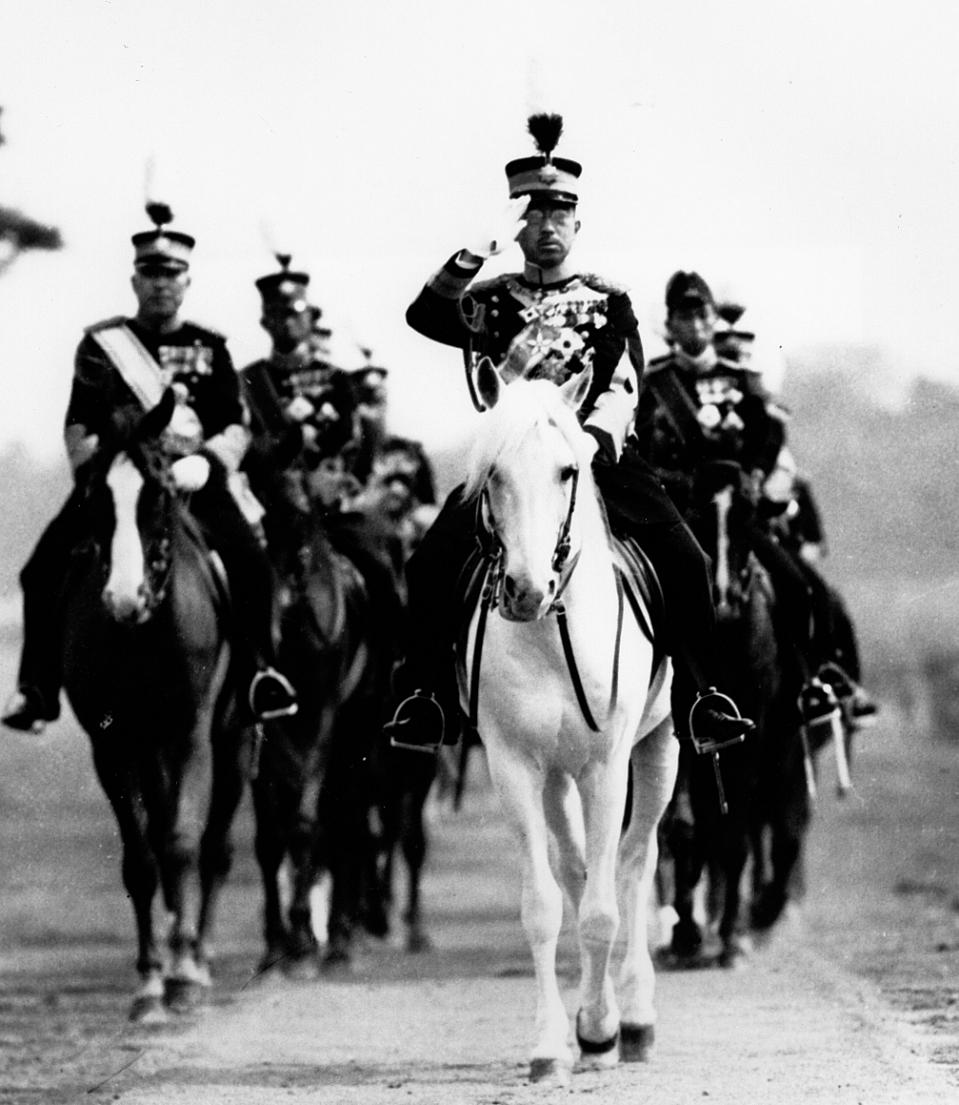
FILE - In this 1937 file photo, Japan's Emperor Hirohito salutes from his mount, his favorite white horse, during a military review in Tokyo. The original recording of Japan's Emperor Hirohito's war-ending speech has come back to life in digital form. The original sound was released Saturday, Aug. 1, 2015 by the Imperial Household Agency in digital format, ahead of the 70th anniversary of the speech and the war's end. (AP Photo/File)

FILE – In this 1937 file photo, Japan’s Emperor Hirohito salutes from his mount, his favorite white horse, during a military review in Tokyo. The original recording of Japan’s Emperor Hirohito’s war-ending speech has come back to life in digital form. The original sound was released Saturday, Aug. 1, 2015 by the Imperial Household Agency in digital format, ahead of the 70th anniversary of the speech and the war’s end. (AP Photo/File)

“Five Myths About Emperor Hirohito” | History News Network

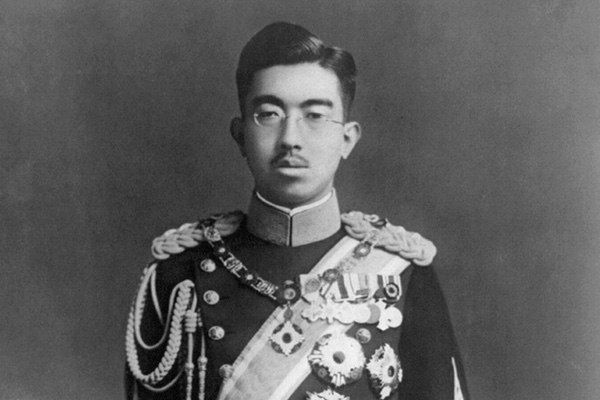
Emperor Hirohito, as the infamous leader of Japan during WWII, is a fascinating figure, and therefore one would assume that an article discussing five myths about him would be very interesting. At least that’s what I thought when I saw this post at the HNN. It turns out that the brief article is interesting, but not for its enlightening exposé of the former emperor. Instead, it turned out to be a puzzling commentary that didn’t live up to the hype. The last three “myths” seem irrelevant given the fact that very few people know about or believe in them. What’s the point of debunking myths that no one believes? There may be some Japanese that believe them, but I’m not aware that these are myths of any note in the English-speaking world.

The first two myths are interesting and relevant to the debate over the dropping of the atomic bomb, however, the author of this piece, Francis Pike, doesn’t really achieve his goal of debunking them. Instead his own essay actually confirms the first myth (Emperor Hirohito was a God), unless he’s actually claiming that people believe that he actually was a god. But that is clearly not what he means. He is referring to the fact that during the war many Japanese believed that he was a god. His own essay confirms that this “myth” is actually not a myth: “Japan’s new regime re-emphasized the role of the Emperor as a living God, making it the heart of an ideological indoctrination taught in the new state school education system,” and “the Meiji Constitution granted him absolute power – he was after all enshrined as a God.” So much for debunking the first myth!

His attempted take down of his second so-called myth (Hirohito was simply a constitutional monarch forced into war by his generals) is also unconvincing. He uses several incidences where Hirohito “demonstrated his absolute powers” (which in itself doesn’t actually address the myth), including, most famously, his intervention to end the war in August 1945 as evidence debunking this myth. But all Pike has demonstrated is that Hirohito occasionally stepped beyond the boundaries of his assigned role as a figurehead of the state.

Emperor Hirohito

“Two steps forward, one step back: how World War II changed how we do human research” | History News Network

James Bradley examines how medical research has changed since WWII and he cautions us against “portray[ing] World War II as a major turning point in the history of medical ethics. But it’s a portrayal we should resist because it blinds us to the troubles that persist to this day in matters of informed consent.” Read his thought-provoking piece on this important subject here:

History News Network | Two steps forward, one step back: how World War II changed how we do human research.

auschwitz mengle experiments

Update: Japanese Denial of WWII Crimes

Joyman Lee wrote an article at the HNN titled, “The Conservatives in Japan Who Are Refusing to Acknowledge the Crimes of World War II Think They’re Helping Their Country. They are Sabotaging It.” But rather than explaining why Japanese denialism is harming Japan, he explores the reasons why Japan has been able to engage in such denial. Nevertheless, it is an interesting perspective on Japan’s WWII denialism.
He writes, “The Cold War stands among the central reasons as to why Japan has not been compelled to address the war issue with more conviction. Whereas the political goal of European integration has helped to move forward Germany’s reconciliation with its European neighbors, no similar motive exists for Japan. The U.S.-Japan alliance and America’s reluctance to be directly involved in disputes over war memory further eliminates pressure “from above” for Japan to placate its Asian neighbors.” Read the entire article here:

History News Network | The Conservatives in Japan Who Are Refusing to Acknowledge the Crimes of World War II Think They’re Helping Their Country. They Are Sabotaging It.

japanese-troops WWII

“50 photos de la Libération de Paris”

Here’s the link to all of the creative photos merging the past with the present:

50 photos de la Libération de Paris se fondent dans le présent : golem13.

Liberation-paris-1944-2014-2

“Haunting World War II Photos of Paris, Then and Now” – Yahoo

This is a really creative way to view these WWII pics! The enormity of what happened there comes to life. See the pictures at:

Haunting World War II Photos of Paris, Then and Now – Yahoo.

Champs-Elysees WWII and now

“Jewish Soldiers Battled Nazi Germany” | History News Network

Alan Singer  reminds us that we need to remember the times when the Jews rose up to defend themselves. The most well-known case is the Warsaw Ghetto Uprising. But Singer thinks we need to also remember the 500,000 Russian Jewish soldiers who fought in WWII against the Nazis. Read the entire article here:

History News Network | Jewish Soldiers Battled Nazi Germany.

Warsaw Ghetto Uprising

Warsaw Ghetto Uprising

“Open Letter in Support of Historians in Japan Signed by Hundreds Including John Dower and Herbert Bix” | History News Network

I’m happy to see this open letter from historians in support of the historians in Japan who are committed to confronting the past honestly. Because, as they conclude: “The process of acknowledging past wrongs strengthens a democratic society and fosters cooperation among nations. Since the equal rights and dignity of women lie at the core of the “comfort women” issue, its resolution would be a historic step toward the equality of women and men in Japan, East Asia and the world. In our classrooms, students from Japan, Korea, China and elsewhere discuss these difficult issues with mutual respect and probity. Their generation will live with the record of the past that we bequeath them. To help them build a world free of sexual violence and human trafficking, and to promote peace and friendship in Asia, we must leave as full and unbiased an accounting of past wrongs as possible.”

Please read the entire letter here:

History News Network | Open Letter in Support of Historians in Japan Signed by Hundreds Including John Dower and Herbert Bix.

Robert G. Fresson, The New York Times

Robert G. Fresson, The New York Times

“What Was on the Minds of the Big Three at Potsdam?” |History News Network

Michael S. Neiberg argues that it was the failures of the Paris Peace Conference (1919) rather than the issues around what became the Cold War. Read the summary of his argument here:

History News Network | What Was on the Minds of the Big Three at Potsdam?

Potsdam