North Carolina Wages War Against Public Education

North Carolina may be one of the worst cases, but what is happening in NC is happening in other Republican-controlled states. If you care about public education please read James D. Hogan’s description of the state of education in NC.

dianeravitch's avatarDiane Ravitch's blog

James D. Hogan, a former high school AP English teacher who now works for a liberal arts college in North Carolina, spells out the dramatic changes in his state over the past few years. He reaches a considered and dire conclusion: “North Carolina is waging war against public education.”

He describes in horrifying detail how the state legislature and Governor has systematically attacked the teaching profession, literally driving experienced teachers out of the state, and opened every possible avenue for privatization and profiteering.

At a time when public education is under attack in many states (often with the silent assent or the active approval of the Obama administration), North Carolina may well be the worst and meanest state in the nation.

In this brilliant article, Hogan writes:


Let me begin by saying that I am often no fan of hyperbole. We live in an era in which blog titles like…

View original post 1,456 more words

“Why historians are fighting about ‘No Irish Need Apply’ signs — and why it matters” – Vox

I’m Irish-American and a historian, and I’m embarrassed to admit that I was unaware of this controversy over Irish-American immigrants.

The controversy began after the historian Richard J. Jensen published the article “No Irish Need Apply: A Myth of Victimization” in 2002. In it, Jensen argued that  the Irish victimization narrative in America was based on a myth about “No Irish Need Apply” signs. He claimed that “there is no evidence for any printed NINA signs in America, or for their display at places of employment other than private homes.”

At the time some historians pushed back against Jensen’s claims, but no serious challenge was mounted against his claims. Although the historian Kerby Miller tried to mount an attack, he realized that it was “an unwinnable fight when he went to New Zealand to present some work and he was bombarded with questions on why he didn’t believe Jensen.” (The Daily Beast)

It took a 14-year-old student, Rebecca Fried, to debunk Jensen’s claim about the nonexistence of the NINA signs. She diligently searched through many newspaper databases and found plenty of evidence that these signs in-fact existed. (I want to add that there is plenty other evidence for the persecution of Irish Americans in the nineteenth and twentieth centuries. Maybe there was some exaggeration of the persecution the Irish faced but it was most definitely real.)

I question Jensen’s motives for his thesis. As historians we strive to be objective, but sometimes our bias get the better of us. This is why the study of history is a collective endeavor. We are all responsible for keeping other historians in check. In this case a curious student did what a fellow historian should have done. Great job Rebecca!

Read the interesting story here:  Why historians are fighting about “No Irish Need Apply” signs — and why it matters – Vox.

No help wanted Irish

“Goliath Gates: Entrance to Famous Biblical Metropolis Uncovered” – Yahoo News

Archeologists have uncovered the gates of the Philistine city of Gath. They have only begun the excavation process and “[b]ecause the remaining walls are so massive, it may take several seasons to fully uncover them.”

Read the story here:  Goliath Gates: Entrance to Famous Biblical Metropolis Uncovered – Yahoo News.

goliath excavation Israel 2015

“The Long History of Political Idiocy” – The New York Times

Hyperbole in political discourse may seem to be a recent phenomenon, but as the historian Joanne B. Freeman reminds us “none of this is new. Politicians have always resorted to dumb claims, blatant insults, bold exaggerations and baldfaced lies to gain press coverage and win votes.” And we can’t just blame politicians or the media for this sad state of affairs. The truth is, we the people love it. Just as now, in the nineteenth century “Legislators who went to extremes were virtually guaranteed press coverage.”

Read Freeman’s entertaining history of “political idiocy” here: The Long History of Political Idiocy – The New York Times.

Roman Muradov

Roman Muradov

Jonas Persson Explores the History of School Choice: What He Finds Isn’t Pretty

After reviewing the history of vouchers, Jonas Persson at PR Watch concludes “‘choice’ was always predicated on parents choosing private—sometimes even segregated—schools. Vouchers were not proposed with equity in mind; they were cooked up out of an ideological disdain for public schools and teachers’ unions.”

Persson article is enlightening, if not sad. We all need to understand the real motives and purposes of the school choice movement if we want to save our public education system. Here’s an excerpt from Persson informative piece:

“As if hit by a collective wake-up call, voucher advocates suddenly realized that the pipe dream of a free market “utopia,” where public schools and democratic school boards were consigned to the dustheap of history, could actually be realized. All it took was some posturing and a great deal of cynicism.

‘In today’s world,’ the rightwing quarterly The Public Interest suggested in a 1988 article, ‘those who would expand choice programs face many legal and political obstacles. Linking choice programs and integration may be their best bet.’ The New Right had, as The Black Commentator eloquently explained in a 2004 article, found its missing link:

Former Reagan Education Secretary William Bennett understood what was missing from the voucher political chemistry: minorities. If visible elements of the Black and Latino community could be ensnared in what was then a lily-white scheme, then the Right’s dream of a universal vouchers system to subsidize general privatization of education, might become a practical political project. More urgently, Bennett and other rightwing strategists saw that vouchers had the potential to drive a wedge between Blacks and teachers unions, cracking the Democratic Party coalition. In 1988, Bennett urged the Catholic Church to “seek out the poor, the disadvantaged…and take them in, educate them, and then ask society for fair recompense for your efforts”–vouchers. The game was on.

In the late ’80s, conservative think tanks and advocacy groups across the nation launched massive whitewashing campaigns; they started churning out policy reports and books purporting to show how school vouchers would actually benefit minority students. Examples include: We Can Rescue Our Children: The Cure for Chicago’s Public School Crisis (Heartland Institute, 1988) and Liberating Schools: Education in the Inner City (Cato Institute, 1990).

By proposing schemes with vouchers weighted to boost racial diversity, or restricted to children from low-income families, the organizations pushing vouchers were able to kill two birds with one stone. They made them acceptable by obscuring the segregationist history, and, crucially, they could now cast themselves as the ‘new’ civil rights movement.”
"Participants hold up signs during an Americans For Prosperity "Tallahassee Days Rally" March 3, 2014 at the Capitol in Tallahassee, Fla. Participants hope to meet with their elected officials this week to discuss issues including tax cuts, pension reform, school choice and accountability for education spending. The 2014 Florida legislative session starts Tuesday. (AP Photo/Phil Sears)"

(AP Photo/Phil Sears)

“This Research Suggests Why Historians Have to Begin Acknowledging that Biology Is a Key Factor in a Person’s Politics” | History News Network

Two political scientists, John R. Hibbing and Kevin B. Smith, propose that historians acknowledge “that biology is a key factor in a person’s politics.” There has been a lot of recent research that confirms this. But the real issue is not whether historians should acknowledge these findings (they should if the evidence supports them), it is whether or not this knowledge is useful to them in understanding the past. I’m not convinced that it is. While history may be useful in confirming (or dis-confirming) the pattern of conflicts “between innovation and tradition, between stability and progress” that is an expression of these biological predispositions, it offers little help to the historian in understanding particular historical events. And it may even lead us to misleading and false conclusions without any tools, beyond a person’s behavior, to determine someone’s biological predispositions. Given the type of evidence that we have, a person’s social, cultural, and political environment is more useful  when it comes to understanding human motivations and behaviors.

This is not to dismiss the grow body of evidence that supports a biological component in human politics as useless. But it seems to be more relevant for human behavior today. This knowledge may be useful to changing human behavior, if it leads us to recognize that “[p]eople are different; they experience the world differently; they do not see, feel, and sense identical stimuli in the same way.” An appreciation of this could possibly “soften the edges of political disputes that are so detrimental.” One can only hope!

History News Network | This Research Suggests Why Historians Have to Begin Acknowledging that Biology Is a Key Factor in a Person’s Politics.

republican and democratic brain

“Original sound of Japan emperor’s war-end speech released” – Yahoo News

This is interesting: Original sound of Japan emperor’s war-end speech released – Yahoo News.

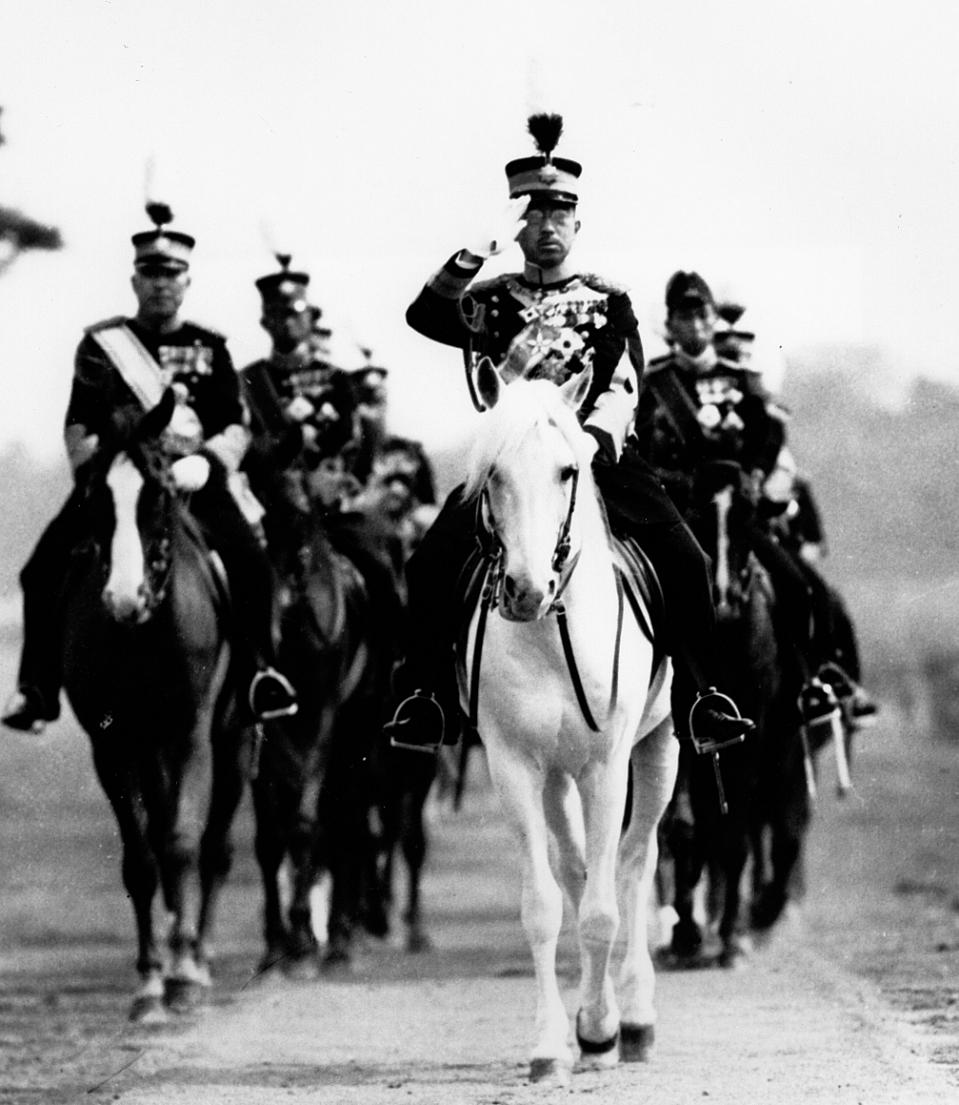
FILE - In this 1937 file photo, Japan's Emperor Hirohito salutes from his mount, his favorite white horse, during a military review in Tokyo. The original recording of Japan's Emperor Hirohito's war-ending speech has come back to life in digital form. The original sound was released Saturday, Aug. 1, 2015 by the Imperial Household Agency in digital format, ahead of the 70th anniversary of the speech and the war's end. (AP Photo/File)

FILE – In this 1937 file photo, Japan’s Emperor Hirohito salutes from his mount, his favorite white horse, during a military review in Tokyo. The original recording of Japan’s Emperor Hirohito’s war-ending speech has come back to life in digital form. The original sound was released Saturday, Aug. 1, 2015 by the Imperial Household Agency in digital format, ahead of the 70th anniversary of the speech and the war’s end. (AP Photo/File)

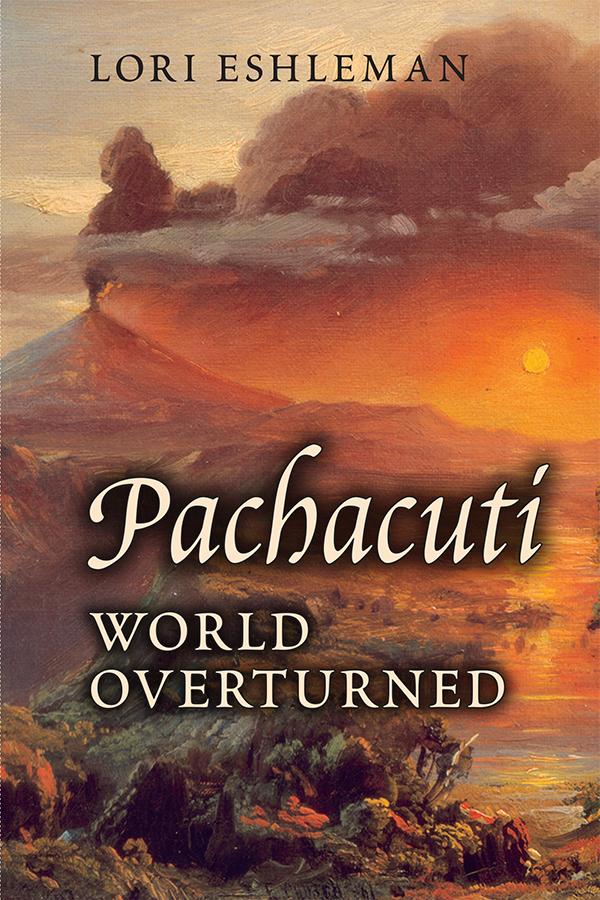
Book Review: Pachacuti: World Overturned

The San Fransisco Book Review offers a compelling review of Lori Eshleman’s Pachacuti. Jason Lang writes: “Pachacuti is a gloriously written book that brings the mix of cultures in a small city in the heart of South America alive. Marvelously detailed, with characters that are endlessly torn between their people, their pasts, and their obligations. It is perfect reading for a long, slow rainy day, where you can take your time and revel in the texture and color that has been set out for you.”

I highly recommend it, especially if you like historical fiction.

Pachacuti World Overturned


Comments on the Rising Cost of Higher Ed: “Check, Please! An Itemized Tuition Bill for College”

As a response to the high cost of tuition Erik C. Banks proposes offering “parents a transparent itemized tuition bill that shows them exactly where their money goes and how much of it is spent on things having nothing to do with education.” I think it’s a great idea! We need some way of making it very clear where money is being spent in our institutions of higher education. Despite popular perceptions that excessive tuition costs are the result of the bloated salaries of professors (there may be some examples of excessive salaries, but they are the exception, not the rule. Trust me!), the main culprits are the combination of decreased state funding and higher administrative costs.

But if we’re going to have a productive debate about the costs of higher education, we also need to make sure that we address the motivations that are driving both of these trends. Banks points out one of the driving factors behind the administrative bloat: “college presidents and administrators embarking on massive spending programs to hype their ratings and impress students and parents with extras which do not directly add to education.” (see also an early post for more on this problem )

The other problem of decreased funding for public education is the result of irresponsible tax cuts and ideological movements to privatize education (see posts about Scott Walker’s campaign in Wisconsin and the struggles at the University of North Carolina).

Please read Banks informed discussion on this very important topic! I would also recommend reading the “2015 Ohio Education Report” that Banks provides at the bottom of his post. It breaks down the increased costs of higher education in Ohio (the trends are similar across the nation) and the decreasing state funding. It also gives a compelling defense of the value of higher education.

Check, Please! An Itemized Tuition Bill for College.

education higher costs

“Yes, It Could Happen Again…the trigger points for World War III are in place.” – The Atlantic

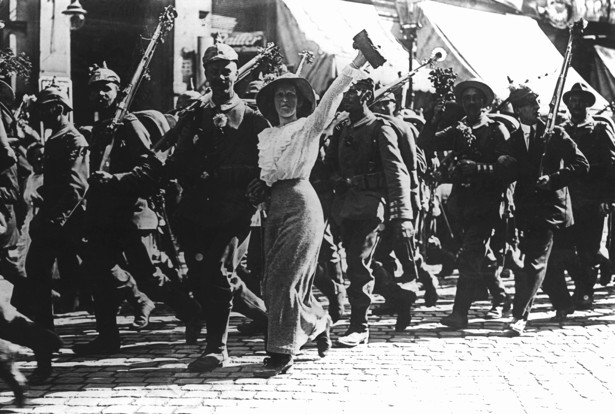
Optimism is all the rage today, but Roger Cohen reminds us that pessimism can be “a useful prism through which to view the affairs of states.” The problem with optimism is that it often blinds us to the warning signs of looming catastrophes. Too much pessimism has its dangers as well, but today we seem to be wearing rose colored glasses when considering the possibility of another major world war. Not to mention that the fear of terrorism has consumed all our attention when it comes to world affairs. But this is a mistake. It is important, but it is not existential threat that it has been made out to be. There are events in other parts of the world that are more concerning in terms of their destabilizing potential across the globe. The potential for large-scale land wars has not disappeared, despite appearances.

You’re probably tired of me ranting about nationalism, but the threat it poses is real and deserves our attention. I’m glad to see that Cohen has taken it seriously. As he points out, “It is already clear that the nationalist fervor unleashed by Putin after a quarter century of Russia’s perceived post–Cold War decline is far from exhausted. Russians are sure that the dignity of their nation has been trampled by an American and European strategic advance to their border dressed up in talk of democracy, the rule of law, and human rights. Whether this is true is irrelevant; they believe it. National humiliation, real or not, is a tremendous catalyst for war.” And this type of national fervor and perceived humiliation is not limited to Russia. It can be found across the globe from Japan to Israel and eastern Europe.

I would recommend reading Cohen’s thoughtful consideration of this very important topic. I somewhat disagree with his solution concerning the need for U.S. power projection, but overall his diagnosis of the problem is well-grounded in historical precedent. Read the entire piece here: Yes, It Could Happen Again – The Atlantic.

WWI