“India and Israel Start to See Enemies Within” – Bloomberg View

Nationalism has been on the rise lately. I’ve written previously about the new nationalism in Russia and Japan, but the rise of nationalism in India and Israel may even be more concerning. Pankaj Mishra describes the current situation in these two countries: “There are eerie similarities between the Hindu thugs who assault Muslim males marrying Hindu women and followers of the far-right Israeli group Lehava (Flame), who try to break up weddings between Muslims and Jews…The new ruling classes seem obsessed with moral and patriotic education, reverence for national symbols and icons (mostly right-wing), and the uniqueness of national culture and history.” These leaders were brought to power by tapping into the resentment and discontent of their respective populations. This “politics of resentment,” as Mishra calls it, is powerful, and astute politicians know how to exploit it. As human beings we seem to have an affinity for nationalism. It gives us an identity, a purpose, a community, a compelling narrative, and a scapegoat for our woes. Unfortunately, it more often than not devolves into violence and oppression. How many times do we have to go down this road? Will we ever learn?

“It would be nice to hope that India and Israel’s emboldened hotheads are different, and will lead their countries to stability, prosperity and peace through their special mix of right-wing economics and the politics of ressentiment. It is already clear, however, that they find more thrilling the prospect of perpetual warfare with their perceived enemies, especially the ones within.” I’m afraid that Mishra is right.

Read Mishra’s important reporting on the situation in India and Israel: India and Israel Start to See Enemies Within – Bloomberg View.
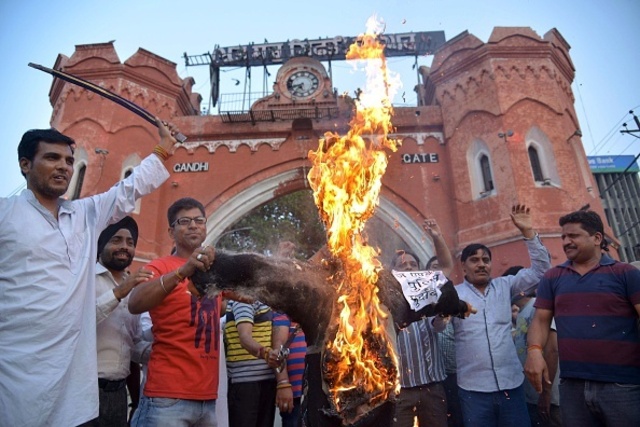
"Playing with fire? Photographer: NARINDER NANU/AFP/Getty Images"

“Playing with fire? Photographer: NARINDER NANU/AFP/Getty Images”

“Secret Catholics at Jamestown” – The Atlantic

No one could have predicted that! Archaeologists found Catholic relics in the coffin of one of the most important leaders of the Jamestown settlement: Captain Gabriel Archer. The history of Jamestown was already interesting but it just got a whole lot more interesting.

Read about the discovery here: Secret Catholics at Jamestown – The Atlantic.

Jamestown burial

“The US Is the Only Advanced Country on Earth that Doesn’t Guarantee Paid Maternity Leave. Why Is that?” | History News Network

Nancy Woloch, author of A Class By Herself, explores this important topic at the History News Network:  The US Is the Only Advanced Country on Earth that Doesn’t Guarantee Paid Maternity Leave. Why Is that?

A class by herself

“Gruesome Find: 100 Bodies Stuffed into Ancient House” – Yahoo News

In a five-thousand year old house in northeast China the remains of 97 people were found. Anthropologists believe that they were most likely victims of disease, but they don’t have enough evidence at this time to definitively determine the cause.

Read the fascinating story here:  Gruesome Find: 100 Bodies Stuffed into Ancient House – Yahoo News.

hamin-mangha-remains

“Five Myths About Emperor Hirohito” | History News Network

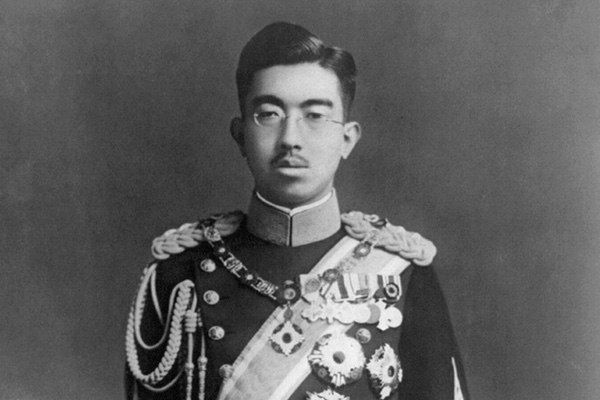
Emperor Hirohito, as the infamous leader of Japan during WWII, is a fascinating figure, and therefore one would assume that an article discussing five myths about him would be very interesting. At least that’s what I thought when I saw this post at the HNN. It turns out that the brief article is interesting, but not for its enlightening exposé of the former emperor. Instead, it turned out to be a puzzling commentary that didn’t live up to the hype. The last three “myths” seem irrelevant given the fact that very few people know about or believe in them. What’s the point of debunking myths that no one believes? There may be some Japanese that believe them, but I’m not aware that these are myths of any note in the English-speaking world.

The first two myths are interesting and relevant to the debate over the dropping of the atomic bomb, however, the author of this piece, Francis Pike, doesn’t really achieve his goal of debunking them. Instead his own essay actually confirms the first myth (Emperor Hirohito was a God), unless he’s actually claiming that people believe that he actually was a god. But that is clearly not what he means. He is referring to the fact that during the war many Japanese believed that he was a god. His own essay confirms that this “myth” is actually not a myth: “Japan’s new regime re-emphasized the role of the Emperor as a living God, making it the heart of an ideological indoctrination taught in the new state school education system,” and “the Meiji Constitution granted him absolute power – he was after all enshrined as a God.” So much for debunking the first myth!

His attempted take down of his second so-called myth (Hirohito was simply a constitutional monarch forced into war by his generals) is also unconvincing. He uses several incidences where Hirohito “demonstrated his absolute powers” (which in itself doesn’t actually address the myth), including, most famously, his intervention to end the war in August 1945 as evidence debunking this myth. But all Pike has demonstrated is that Hirohito occasionally stepped beyond the boundaries of his assigned role as a figurehead of the state.

Emperor Hirohito

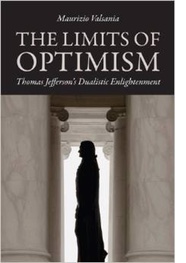
Was Jefferson a Pessimist?

This is the contention of Maurizio Valsania in his new book The Limits of Optimism. Anyone familiar with Jefferson would probably find this a dubious claim, including myself. It is an interesting thesis, but after careful examination of Valsania’s argument M. Andrew Holowchak, an expert on Jefferson, concludes: “Valsania’s Jefferson is a figure unrecognizable to one amply acquainted with Jefferson’s writings.”

Valsania’s thesis may be a dud, but Holowchak’s considered review of the book is worthwhile if you’re at all interested in Jefferson: History News Network | Review of Maurizio Valsania’s “The Limits of Optimism: Thomas Jefferson’s Dualistic Enlightenment (Jeffersonian America)”

Here is an excerpt from the review: “Valsania’s imprecise usage of language throughout the book lends itself to vagueness, or at least, ambiguity. Many times he seems to sanction a strong thesis—namely, every Jeffersonian utterance of optimism betrays plainly an equal (or nearly so) amount of pessimism. At other times, he seems to countenance a weak thesis—namely, utterances of optimism often (or sometimes) betrays plainly an equal (or nearly so) amount of pessimism. Valsania never unequivocally settles on one thesis or the other throughout the book—everything rides on him doing so—therefore, at day’s end, chary readers are confounded.”

The limits of optimism

“Did Obama Really ‘Cut and Run’ and ‘Abandon’ Iraq to ISIS?” | History News Network

Our political discourse is dominated by hyperbolic discourse that simplifies the world in an emotionally appealing way. Therein lies its power. It is emotionally gratifying and makes us feel like we’re in the know when we’re not. We would like the world to be black and white, but it isn’t. Unfortunately, theses false and/or deceptive narratives harden into “facts” as they are perpetuated via the media, the blogosphere, and social media. This rhetoric has poisoned our political discourse and has hampered our efforts to deal with our problems.

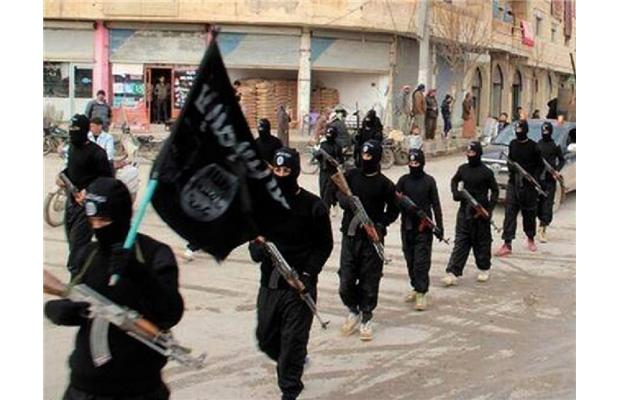
Some of the most despicable rhetoric has been reserved for President Obama. Once the rhetoric has established the general feeling that Obama is “incompetent” and “weak” (or “tyrannical” depending on the context) all further charges against him then “ring true” (no fact checking needed!). One of the recent charges against Obama accuses him of “cutting and running” from Iraq, leading directly to the creation of ISIS. With extensive knowledge of the situation, Brian Glyn Williams takes on this claim and concludes that “Maliki’s anti-Sunni policies directly led to the rise of ISIS. He, along with Paul Bremer, is the man most responsible for creating ISIS.” But he doesn’t let Obama off the hook completely.

Read Williams’ well-researched examination of the rise of ISIS here: History News Network | Did Obama Really “Cut and Run” and “Abandon” Iraq to ISIS?
ISIS

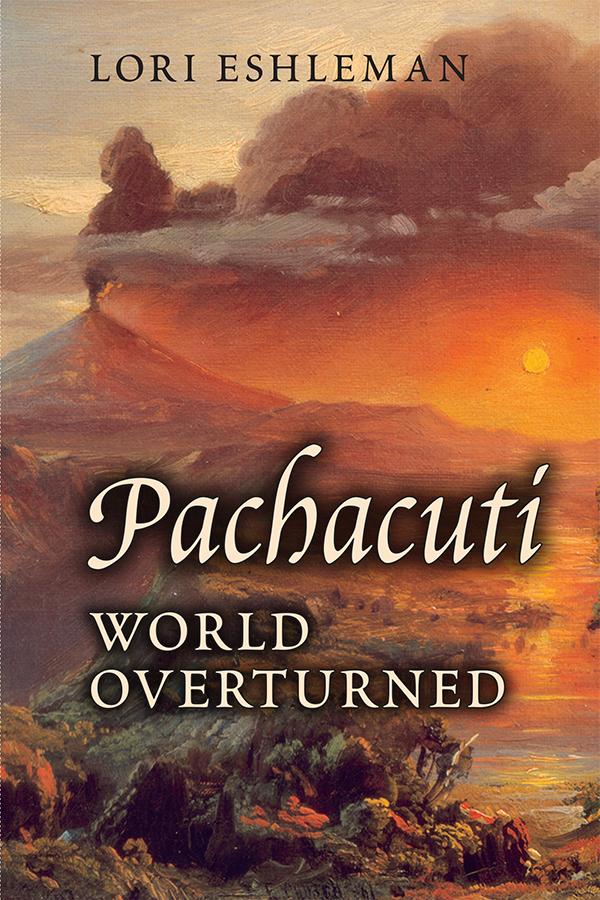
Recommendation: The Historical Novel “Pachacuti: World Overturned”

I know that many of you enjoy historical novels, therefore I would like to recommend Lori Eshleman’s Pachacuti: World Overturned. The novel is set in the eighteenth-century Kingdom of Quito (now Ecuador), at the time the Spanish Empire was on the decline thus raising the hopes of the indigenous population for a Pachacuti (“world-turning” in the Quichua language). Having spent a lot of time in Ecuador, Eshleman is able to capture the spirit of the peoples of Quito.

She wants her readers “to have an unforgettable experience: to be drawn into the hopes, passions, friendships, betrayals and spiritual seeking of the characters. To be enthralled by the rich setting – full of plants, animals, fog, and volcanoes – and the fascinating South American myths and legends the novel relates.” You won’t be disappointed!

If you’re interested please read her interview at ASU Magazine.

Pachacuti World Overturned

“Training for Neoliberalism” | Boston Review

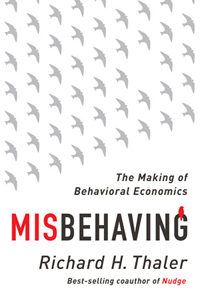
In his review of Richard H. Thaler’s Misbehaving: The Making of Behavioral Economics, John McMahon takes to task behavioral economics for its complicity in propagating the neoliberal project (i.e. promoting limited government and free-market capitalism), rather than questioning its dehumanizing assumptions. “The implications of behavioral research are constantly constrained so that they actually buttress foundational assumptions about markets. Why? Thaler disavows the role of the ‘moral philosopher,’ refusing to ‘render judgment about what ‘is’ or ‘should be’ fair’, because economics is supposed to be a ‘purely descriptive exercise’—and thereby preempts interrogation of the fairness of the market itself.”

Read Thaler’s trenchant review here: Training for Neoliberalism | Boston Review.

The Making of Behavioral Economics misbehaving-web