“The Venice of the Sands in Peril by G.W. Bowersock” | NYRblog | The New York Review of Books

Sowing a path of death and destruction, ISIS has taken another ancient city. The world looks on helplessly as they continue to slaughter all who do not meet their ideological standards, including women and children. And it is not enough for them to destroy the present, they feel that they must destroy the past as well. While there is no evidence of damage yet, it is likely that the magnificent ancient city of Palmyra will meet the same fate as Nimrud and Hatra.

In contemplating this possibility, G.W. Bowersock acknowledges the extensive archeological excavations of the site, but argues that “it would be folly to believe that the survival of archaeological reports and photographs could in any way compensate for the destruction or looting of the ancient remains. The preservation of buildings and objects that managed to survive for two thousand years of Palmyra’s history has to be a priority wherever civilization is cherished. The Arabs at Palmyra today, and undoubtedly many Arabs everywhere, know that the city belongs to them and their past.” Read his summary of the history of this splendid ancient city here:


The Venice of the Sands in Peril by G.W. Bowersock | NYRblog | The New York Review of Books.

palmyra-triumphal-arch

Is Britain Exceptional?

All nations have some form of “exceptional” narrative that extols their special place in the world. Creating such a narrative is simple. All you need to do is highlight the wonderful or unique contributions made by your nation,  ignore any similar contributions from other nations, and sweep under the rug all embarrassing or negative events. Exceptionalism narratives are really a form of nationalism pretending not to be. Usually historians shun these types of distorted histories, but not always.

Currently a group of historians in Britain (Historians for Britain) are playing the exceptionalism card in order to mobilize the population in an effort to disengage from the European Union. In response, “Hundreds of British historians” are challenging the claims made by “Historians for Britain” in an open letter. They argue that “Britain’s past is neither so exalted nor so unique.” They “challenge this narrative, because it does not fit with the evidence we have encountered in our own research, and this approach, because it does not provoke debate but rather presents a foregone conclusion. We think that a history that emphasises Britain’s differences and separation from Europe (or elsewhere) narrows and diminishes our parameters, making our history not exceptional but undernourished. Britain’s past – and, therefore, its future – must be understood in the context of a complex, messy, exciting, and above all continuous interaction with European neighbours and indeed with the rest of the world.”

In The Guardian, Rebekah Higgit also challenges the narrative of British exceptionalism: “Historians and readers of history both need to be aware of the biases of our education and literature. Accounts of British exceptionalism, especially those that lump the rest of Europe or the world into an amorphous group of also-rans, are more the result of national tradition and wishful thinking than a careful reading of the sources.” The same could be said of American Exceptionalism narratives. These narratives tend to breed arrogance and undermine the benefits of historical perspective.

Whether or not Britain should remain in the European Union should be informed in light of the reality of Britain’s past, not the romanticized versions of British Exceptionalism. The stakes are too high.

History News Network | Hundreds of British historians challenge assumptions of “Historians for Britain” campaign.

Beware Eurosceptic versions of history and science| Rebekah Higgitt | Science | The Guardian.

british nationalism

Wisconsin: Legislature Wants to Privatize Low-Performing Public Schools

This is outrageous!

dianeravitch's avatarDiane Ravitch's blog

A radical privatization proposal has been inserted into the Wisconsin state budget and approved by the budget-writing committee. The plan initially applies to Milwaukee (where the public schools outperform voucher schools and get similar test scores to charter schools), but it could be extended to Madison, Racine and other “large, racially diverse” school districts. Under the plan, a commissioner would be appointed and have the power to fire all staff, both teachers and administrators, and hand the school off to a private operator to run as a charter or voucher school. In other words, public assets, schools paid for by the community, will be given away to private operators.

Under the plan, an independent commissioner appointed by the county executive would take control of three of the lowest-performing schools in the district after the 2015 school year. Everyone who works at the school would be fired and forced to reapply…

View original post 267 more words

“The Conservative War on the Humanities” | History News Network

What would happen if we completely abandoned the humanities in higher education? The world would be very bleak! (see interview with Michael S. Roth)

This subject is related to my previous post on public education, but here the focus is on the humanities since much of the animus towards higher education is directed at the humanities. Conservatives insist that they are a luxury that we can no longer afford. This is a new stance in the conservative platform as pointed out by Andrew Hartman, author of A War for the Soul of America. Hartman thinks that new conservative position is “not only because most conservatives now dismiss the value of the humanities,” but  as a product of “the traumatic culture wars, when left and right angrily battled over radically different visions of a humanities education.” Read Hartman’s discussion of this topic here:

History News Network | The Conservative War on the Humanities.

The Culture Wars A Battle for the Soul of America

“This Is What Happens When You Slash Funding for Public Universities” | The Nation

In Arizona the state legislature cut $99 million dollars from the higher education budget, and it is even worse in places like Wisconsin and Louisiana. This trend has been going on for some time, but the economic crisis prompted even more severe cuts to higher education. As Michelle Goldberg notes, many states have begun restoring funding, but “[e]ight Republican-dominated states, however, have kept cutting. Among them are North Carolina, Wisconsin, Arizona, Louisiana, and South Carolina.”

What is driving this trend? It is partly political (animus towards the “liberal” academia), partly ideological (absolute devotion to privatization and taxing cutting), and partly financial (the opportunity to make money off of education).

What are the consequences? 1) Higher tuition that will increasingly make college accessible only to the wealthy. 2) University’s are turning to solutions that will harm the long-term quality of education, such as larger class sizes and corporate partnerships that put the focus on making money rather than educating students. 3) There will be less time and money for faculty to do the research that is vital to the health and wealth of our nation. 4) Higher education will start to become more of a job-training program, rather than an educational institution that creates well-rounded and thoughtful citizens in addition to preparing them for their careers. 5) Inequality will increase.

Please read the entire article here:

This Is What Happens When You Slash Funding for Public Universities | The Nation.

Arizona-State-University


“‘Defending the Faith’ in the Middle East” – NYTimes.com

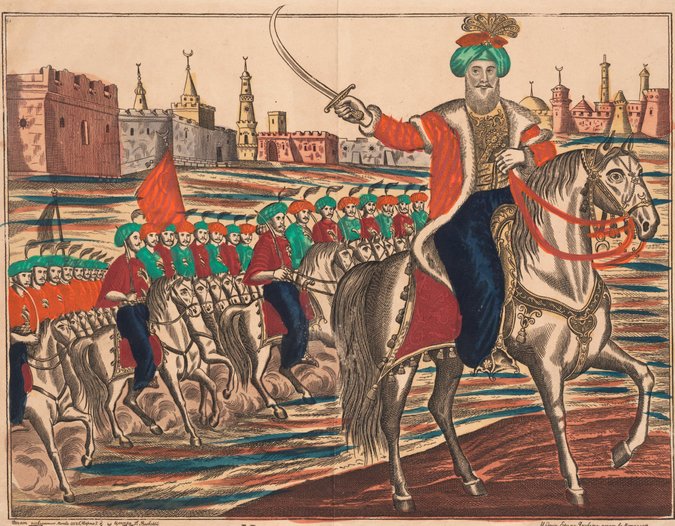
In a New York Times article David Motadel examines the role of religious protectorates past and present to help shed light on current events in the Middle East.  Several powers during the eighteenth and nineteenth centuries declared themselves protectorates of coreligionists in other states. For example, Russia declared itself the protector of Orthodox Christians within Ottoman territories and then used this as leverage to intervene in Ottoman affairs. As Motadel points out this type of “politics of religion…subverted states, fueled divisions within them — and often ended in violence.”

Currently in the Middle East it is Iran and Saudi Arabia who are engaging in the politics of religion. Motadel argues that “Iran’s attempts to become the global defender of Shiite Muslims and Saudi Arabia’s efforts to lead the Sunnis have become central in their battle for mastery of the Middle East, transforming the region’s international system from an order of states to an order of faiths.” And just as in the past this political maneuvering is destabilizing the region and fueling the violence. Obviously the causes of instability in the region are many, but I think Motadel has indicated an important contributor to the current unrest.  Read the entire article here:

‘Defending the Faith’ in the Middle East – NYTimes.com.

"An anonymous painting of Turkish Emperor Mahmud II leading his troops. Credit Fine Art Images/Heritage Images/Getty Images "

“An anonymous painting of Turkish Emperor Mahmud II leading his troops. Credit Fine Art Images/Heritage Images/Getty Images “

“Could a Movie Help Lead to the Departure of Scotland from the UK?” | History News Network

More proof that movies have more influence than historians, even when the movie is mostly myth!

History News Network | Could a Movie Help Lead to the Departure of Scotland from the UK?

Braveheart

Update: Japanese Denial of WWII Crimes

Joyman Lee wrote an article at the HNN titled, “The Conservatives in Japan Who Are Refusing to Acknowledge the Crimes of World War II Think They’re Helping Their Country. They are Sabotaging It.” But rather than explaining why Japanese denialism is harming Japan, he explores the reasons why Japan has been able to engage in such denial. Nevertheless, it is an interesting perspective on Japan’s WWII denialism.
He writes, “The Cold War stands among the central reasons as to why Japan has not been compelled to address the war issue with more conviction. Whereas the political goal of European integration has helped to move forward Germany’s reconciliation with its European neighbors, no similar motive exists for Japan. The U.S.-Japan alliance and America’s reluctance to be directly involved in disputes over war memory further eliminates pressure “from above” for Japan to placate its Asian neighbors.” Read the entire article here:

History News Network | The Conservatives in Japan Who Are Refusing to Acknowledge the Crimes of World War II Think They’re Helping Their Country. They Are Sabotaging It.

japanese-troops WWII

Memorial Day 2015

While we’re having fun barbecuing and spending time with our friends and family, don’t forget to take a moment to remember the true purpose of Memorial Day: Remembering those who made the ultimate sacrifice for their country.

memorial-day

Amazing! Atlanta TV Exposes ALEC

ALEC got a lot of attention because of the Stand Your Ground laws were linked to them, but in the end nothing changed. Please watch the clip linked to in this blog post! Thanks for sharing this story Diane!

dianeravitch's avatarDiane Ravitch's blog

Just when you thought that the mainstream media had forgotten how to do investigative journalism, along comes a surprise.

In Atlanta, local NBC channel 11 station did an exposé of the secretive far-right group called the American Legislative Exchange Council, ALEC. Under the aegis of ALEC, Georgia legislators met in a posh resort with corporate lawyers to decide their priorities for the next session.

Except for Bill Moyers on PBS, this is a topic the mainstream media won’t touch.

For a thorough and chilling review of ALEC’s plans to privatize education, see ALEC Exposed. ALEC loves charters and vouchers, hates unions, loves profits.

ALEC has model legislation, which legislators introduce into their states. It even has tax credit legislation, similar to the one that Governor Cuomo introduced in Néw York. It has already been adopted by several states to benefit private and religious schools.

View original post