This incredible footage of Berlin in the aftermath of WWII!
Here’s amazing color footage of Berlin from just after the Nazis were defeated – Yahoo Finance.
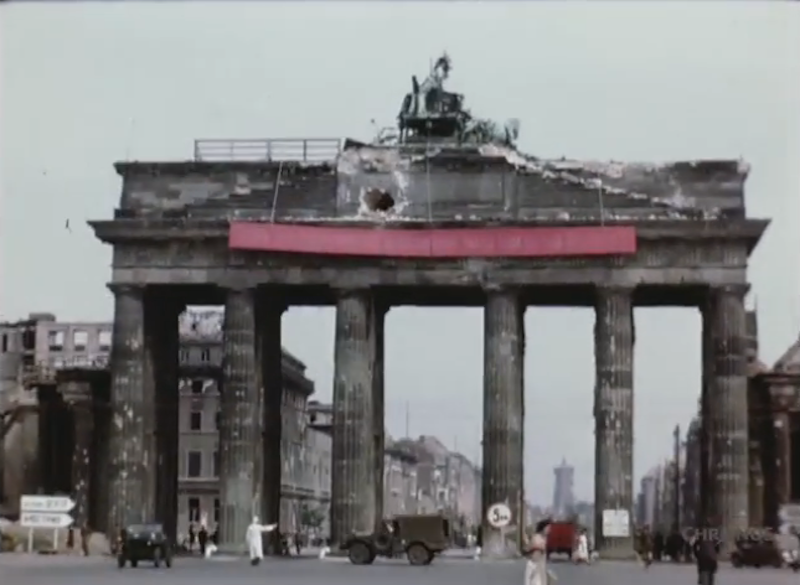
This incredible footage of Berlin in the aftermath of WWII!
Here’s amazing color footage of Berlin from just after the Nazis were defeated – Yahoo Finance.
History News Network | Remembering our Greatest Mission.

What has been the impact of the “Stand your Ground” laws since their enactment? This is the subject of an article in The New York Times today. After examining several new studies on the subject, Robert J. Spitzer concludes that “[n]ot only have these laws failed to increase public safety, they have also turned the clock back to the mythologized mayhem of the Wild West.” And he points out, “We’ve learned this lesson before, in our own violent past, when strict regulation of concealed gun carrying was the near-universal and successful response to gun violence. As early as 1686, New Jersey enacted a law against wearing weapons because they induced ‘great Fear and Quarrels.’ Massachusetts followed in 1750. In the late 1700s, North Carolina and Virginia passed similar laws. In the 1800s, as interpersonal violence and gun carrying spread, 37 states joined the list. Tennessee’s 1821 law fined ‘each and every person so degrading himself’ by carrying weapons in public. Alabama’s 1839 law was titled ‘An Act to Suppress the Evil Practice of Carrying Weapons Secretly.’ Why must we relearn a lesson we codified centuries ago? How dumb are we?” It’s unlikely that these laws will be repealed any time soon. Evidence means little to the NRA and its zealous followers.
Stand Your Ground Makes No Sense – NYTimes.com.

John-Patrick Thomas, The New York Times (May 4, 2015)
History News Network | Two Things You Don’t Know About Roe v. Wade that Will Surprise You.

This is interesting:
History News Network | How Did Asians, Long Reviled, Become America’s Model Immigrants?.

Examining the history of the Ottoman Empire, Eugene Rogan concludes: “With the fall of the Ottomans after the First World War, the Arab world entered a century of conflict. Caught between foreign domination and the rival appeals of nationalism and Islamism, the Middle East has yet to emerge from the shadow of jihad. But perhaps there is a caution in this narrative. In a striking parallel to events a century ago, the threat of far-reaching jihad — most recently in the name of the Islamic State — continues to play on the minds of Western leaders. But it does so far beyond any evidence of wide appeal among a vast majority of the globe’s Muslims. So Western leaders can learn from the experience of a century ago. When they overreact to the threat of religious war, they concede power to the very enemies they seek to overcome, with consequences impossible to predict.” Read the entire article here:
A War to End Jihad – NYTimes.com.

Reflecting on the current trial of the Nazi Oskar Gröning, who is accused of complicity in the murder of 300,000 people at Auschwitz, Anna Sauerbrey wonders, “How will he understand his own responsibility, as a German, to combat ideologies of hatred and prevent crimes against humanity?” And concludes that “[w]e must find a new narrative, a new way to ensure “never again.” Not through ideology, but through action — for example by more generously helping the refugees that seek asylum in our country. Instead of trying to transfer a vague feeling of inherited guilt to yet another generation, we should change from remembering what we must never forget to knowing why.” Read her thoughtful piece here:
What Old Nazis Make Us Remember – NYTimes.com.

The Origins of the Early Medieval State | History Today.

The Sacking of Rome (5th century)
In his new book, Taylor Downing, writes about the unsung heroes of WWI. He recounts the stories of the spies, scientists, and code breakers who changed the world through their work. “[T]hese ‘secret warriors,’” he declares, “were a remarkable group and their stories deserve to be rediscovered. The First World War was not just a war of trenches, slaughter and sacrifice. It changed the scientific and technological landscape of the century to follow.” Read his summary of the book at:
History News Network | Secret Warriors of the First World War.

History News Network | There Is One More Thing We Need to Remember About the Civil War.

Band of the 10th Veteran Reserve Corps. Washington, D.C. April, 1865 — Wikipedia
 History Chick in AZ