“The Lesson of the Fall of the Roman Republic We Ignore at Our Peril” History News Network

Comparisons between Rome and the West (or the United States) are ubiquitous. Most are based on simplistic, superficial analogies used to warn of the demise of the West. These comparisons are almost always undertaken to serve ideological ends. A quick review of the youtube videos on this topic confirm this assertion. This type of speculation isn’t very surprising coming from non-experts bent on confirming their ideological predilections, but such superficial comparisons are not expected from experts. Historians cringe at the simplistic comparisons frequently found in popular culture. Unfortunately, the historian Richard Alston is not one of those historians (at least not in this article). Based on a simplistic reading of imperial Rome, Alston concludes, “In our modern attempts at state building, we must remember that for most people, the issue is not so much whether you like the rulers, but whether the regime will feed you and protect you. In the modern West, we assume loyalty to the state and thus fail to consider how states can secure the loyalty of their people. Rome’s revolutionaries reduced politics to its simplest form. They killed their enemies and rewarded their supporters; they fed the people and paid the soldiers. It is a recipe for success that we would do well to relearn.” What a sad, cynical, and ultimately incorrect assessment of the human condition. If things are really bad this kind of regime may be, and usually is, a welcome change, but I don’t think this kind of regime is one that human beings will ultimately settle for. I know I won’t!

History News Network | The Lesson of the Fall of the Roman Republic We Ignore at Our Peril.

rome

“Could a Movie Help Lead to the Departure of Scotland from the UK?” | History News Network

More proof that movies have more influence than historians, even when the movie is mostly myth!

History News Network | Could a Movie Help Lead to the Departure of Scotland from the UK?

Braveheart

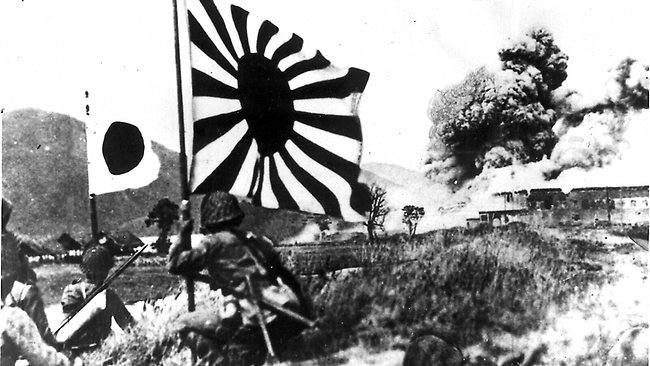
Update: Japanese Denial of WWII Crimes

Joyman Lee wrote an article at the HNN titled, “The Conservatives in Japan Who Are Refusing to Acknowledge the Crimes of World War II Think They’re Helping Their Country. They are Sabotaging It.” But rather than explaining why Japanese denialism is harming Japan, he explores the reasons why Japan has been able to engage in such denial. Nevertheless, it is an interesting perspective on Japan’s WWII denialism.
He writes, “The Cold War stands among the central reasons as to why Japan has not been compelled to address the war issue with more conviction. Whereas the political goal of European integration has helped to move forward Germany’s reconciliation with its European neighbors, no similar motive exists for Japan. The U.S.-Japan alliance and America’s reluctance to be directly involved in disputes over war memory further eliminates pressure “from above” for Japan to placate its Asian neighbors.” Read the entire article here:

History News Network | The Conservatives in Japan Who Are Refusing to Acknowledge the Crimes of World War II Think They’re Helping Their Country. They Are Sabotaging It.

japanese-troops WWII

History Wars: “Fight over AP U.S. History framework lands in N.J.” | The Auditor | NJ.com

Republican state Sen. Joe Kyrillos proposed a resolution (SR128) that would encourage the College Board to alter the AP U.S. history framework, because “the framework the College Board adopted in 2012 ‘reflects a seemingly biased view of American history, overemphasizing the negative aspects of our nation’s history while omitting and minimizing many of the positive aspects,'” and that “the new test’s framework ‘does not adequately discuss America’s Founding Fathers, the principles of the Declaration of independents the religious influences on our nation’s history.'” Even though this non-binding resolution is unlikely to pass, the efforts to teach our students a distorted patriotic version of history is troubling. We should be educating and challenging our students, not indoctrinating them. Progress requires an educated and thoughtful citizenry. And it is only by confronting the past honestly that we can actually live up to our ideals.

Fight over AP U.S. History framework lands in N.J. | The Auditor | NJ.com.

apush

The Revenge of History: Dealing with Historical Memory

In today’s The New York Times Roger Cohen wrote a thoughtful piece on memory and forgetting (“The Presence of the Past”). Given the role that the manipulation of historical memory has played in past and present violence this article brings up a topic that deserves more attention, especially as nationalism is on the rise. Despite the importance of this topic, it is rarely publicly discussed. Part of the problem is the complexity of the subject, not to mention that it calls into question the cherished identities of many. But if we’re going to stave off the violence that is the product of certain kinds of historical memory we must discuss it.

History is a double-edged sword, as Cohen points out: “History illuminates. It can also blind.” History is illuminating when it is confronted honestly and in all its complexity. It is blinding when it is used to serve ideological or political ends.  This is where historical memory comes in. “History” is often abused in the service of ideology or political power.

Continue reading

“Open Letter in Support of Historians in Japan Signed by Hundreds Including John Dower and Herbert Bix” | History News Network

I’m happy to see this open letter from historians in support of the historians in Japan who are committed to confronting the past honestly. Because, as they conclude: “The process of acknowledging past wrongs strengthens a democratic society and fosters cooperation among nations. Since the equal rights and dignity of women lie at the core of the “comfort women” issue, its resolution would be a historic step toward the equality of women and men in Japan, East Asia and the world. In our classrooms, students from Japan, Korea, China and elsewhere discuss these difficult issues with mutual respect and probity. Their generation will live with the record of the past that we bequeath them. To help them build a world free of sexual violence and human trafficking, and to promote peace and friendship in Asia, we must leave as full and unbiased an accounting of past wrongs as possible.”

Please read the entire letter here:

History News Network | Open Letter in Support of Historians in Japan Signed by Hundreds Including John Dower and Herbert Bix.

Robert G. Fresson, The New York Times

Robert G. Fresson, The New York Times

“The History Wars in Ukraine Are Heating Up” |History News Network

What happened to the Ukraine that wanted to look West? The Ukrainian parliament just passed legislation regulating historical truth.  The first law (“On Condemning the Communist and National Socialist (Nazi) Totalitarian Regimes and Prohibiting the Propagation of their Symbols) outlaws “the public denial, particularly in the mass media, of the criminal nature of the Communist totalitarian regime of 1917-1991 in Ukraine and the National-Socialist regime”as well as Soviet and Nazi symbols.

The second law (“On the Legal Status and Honoring of the Memory of the Fighters for the Independence of Ukraine in the 20th Century”) bans publicly insulting those who fought for Ukrainian independence as well as questioning the legitimacy of the struggle for independence. The law justifies these restrictions by claiming that they “insult[] the dignity of the Ukrainian people.” As Christopher Gilley and Per Anders Rudling point out that there is no punishment included in the legislation.
Gilley and Rudling explain the contradictions and possible consequences of this legislation here:

History News Network | The History Wars in Ukraine Are Heating Up.

Ukrainian Independence Day Parade

Ukrainian Independence Day Parade

Ronald Reagan Would Have Loved Rory Kennedy’s “Last Days in Vietnam” |History News Network

Last month PBS aired a documentary on the evacuation of Saigon as the North Vietnamese closed in. I just recently watched it and I was captivated by this part of the Vietnam era that I knew so little about. But knowing so little about this episode I wasn’t sure how accurate the story was. The reviews were mostly positive. The New York Times called it “concise and gripping.” Stephani Merry from The Washington Post described the documentary as being “like an intricate piece of woodwork. It’s painstakingly crafted, sturdy and incredible to look at.”
But Ron Briley, reviewing the documentary for the History News Network, took a more critical view of film. He claims that it as a heroic version of events, missing the broader context of American brutality. He ruefully declares that “the harsh reality of the Vietnam War was far more complex, and commemorating the conflict by depicting the war as a noble cause in which Americans were saving the Vietnamese people from communism does little to help the nation cope with what really happened to America and its ideas in the jungles of Southeast Asia. Last Days in Vietnam is an intriguing look at the fall of Saigon, but it is often quite misleading in its larger depiction of the Vietnam War and its meaning.”
I agree that the larger context is important, but I would still recommend watching the documentary. It raises important questions about how we engage with the world, especially in the places where we bear some level of responsibility for the chaos and violence. In Saigon the Americans were forced to leave behind many Vietnamese who had loyally served them. This is the same issue that we in Iraq and Afghanistan, in addition to many others. What obligation do we owe to those foreign nationals that have made great sacrifices and risked their own lives to help us?

History News Network | Ronald Reagan Would Have Loved Rory Kennedy’s “Last Days in Vietnam”.

Last Days in Vietnam

The Cost of Turkey’s Genocide Denial – NYTimes.com

The historian Ronald Grigor Suny offered a potent lesson, not just for Turkey, but for all peoples in The New York Times this past week. Assaulting historical truth in the service of political ends is nothing new. However, a recent rise in nationalism in places like Russia and Japan has brought this issue to the forefront as a potential destabilizing force. Suny persuasively explains why this is a concern and why Turkey should admit to the genocide. “It is well known that each nation feels its own pain and has difficulty feeling that of others. Yet reconciliation of Armenians, Kurds and Turks — who are fated to live next to each other — will require both an acceptance of their shared history and mutual suffering and a hard look backward in order to move forward. Acknowledging who set the fire and directed it against the most vulnerable population must be part of the healing.” Read the entire article here:

The Cost of Turkey’s Genocide Denial – NYTimes.com.

armenian_genocide protest

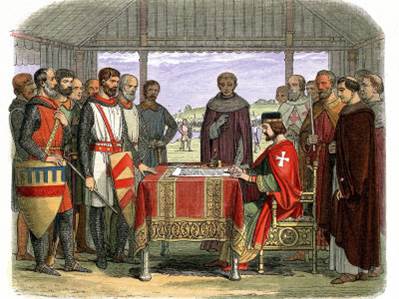
The Magna Carta Myth – The New Yorker

The Magna Carta has reached sacred status in the U.S., but its status has been built upon mythic foundations. The purposes it has served have generally been positive, illustrating that not all myth making is bad.  Jill Lepore explores this history in The New Yorker. She observes that “[i]t would not be quite right to say that Magna Carta has withstood the ravages of time. It would be fairer to say that, like much else that is very old, it is on occasion taken out of the closet, dusted off, and put on display to answer a need. Such needs are generally political. They are very often profound.” Read the entire story here:

The Magna Carta Myth – The New Yorker.

King John at Runnymede (1215) signing the Magna Carta

King John at Runnymede (1215) signing the Magna Carta