“Why It’s Time to Remember Waterloo for a Different Reason” | History News Network

Christine Haynes suggests that we remember the Battle of Waterloo for the peace building process that followed it. “This battle deserves to be celebrated not as the end of the first “total war,” but as the beginning of a “total peace,” which following two more world-wide conflicts, came to fruition after 1945 but is facing new challenges today.” Read his argument here:

History News Network | Why It’s Time to Remember Waterloo for a Different Reason.

battle-of-waterloo-william-holmes-sullivan

“Battle of Waterloo” by William Holmes Sullivan

“Kissinger Memo from 1972: Make the North Vietnamese think Nixon and I are crazy” | History News Network

This is interesting!

History News Network | Kissinger Memo from 1972: Make the North Vietnamese think Nixon and I are crazy.

Kissinger memo 1972

Kissinger memo 1972

“Was Robert Kennedy Really the Dove He and Arthur Schlesinger Jr. Made Him Out to Be During the Cuban Missile Crisis?” | History News Network

This might be of interest to some of you:

History News Network | Was Robert Kennedy Really the Dove He and Arthur Schlesinger Jr. Made Him Out to Be During the Cuban Missile Crisis?.

The Cuban Missle Crisis in American Memory

“Could a Movie Help Lead to the Departure of Scotland from the UK?” | History News Network

More proof that movies have more influence than historians, even when the movie is mostly myth!

History News Network | Could a Movie Help Lead to the Departure of Scotland from the UK?

Braveheart

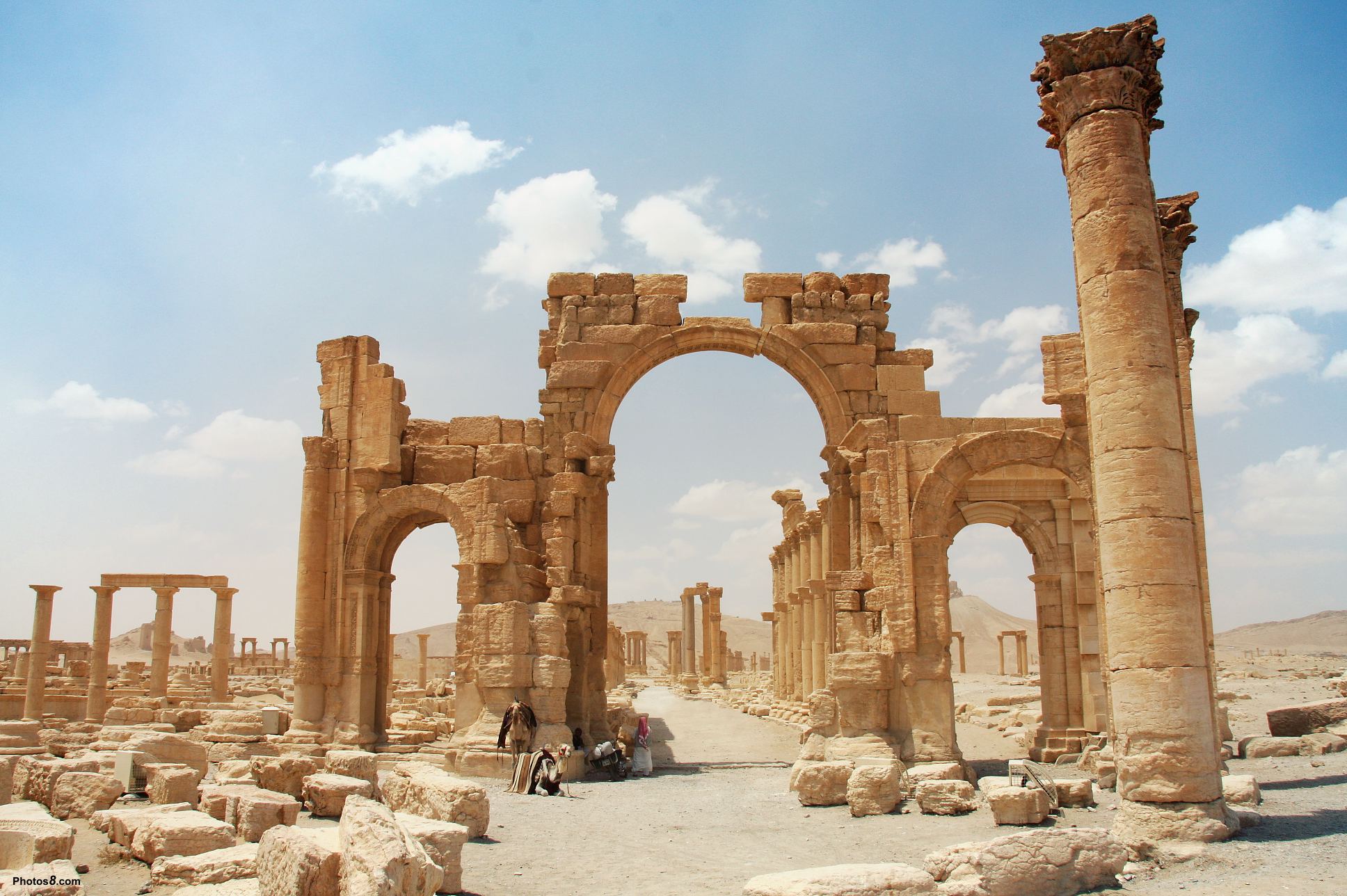
“ISIS is threatening Palmyra, the Venice of Syria” | History News Network

Another ancient treasure is under threat from ISIS. Once these treasures are gone, they are gone forever! This is sickening!!

History News Network | ISIS is threatening Palmyra, the Venice of Syria.

Palmyra

Palmyra

“Talking Honestly About Islamic Hate Speech” | History News Network

The debate between the “religion is the culprit” camp and the “circumstances” camp continues. As I’ve said before I don’t think it’s an either/or problem. Particular circumstances drive people toward certain kinds of beliefs. Or, to put it another way, certain circumstances, such as lack of opportunity, perceived or real oppression, etc., make certain ideas appealing. This does not mean that those who take up those beliefs do not hold them wholeheartedly. For example, the post-war conditions in Germany made Nazi ideology appealing. Without the Great Depression, the Nazis may have remained a fringe group.

But unfortunately the current debate over Islamic terrorism is driven by the it’s either religion or its circumstances narrative. Those putting forward the circumstances are rightly concerned that some will blame all Muslims if we attribute the violence to religion. But the solution to this problem is not to ignore the evidence that those associated with terrorist organizations like ISIS are not motivated by a particular interpretation of Islam (one that most Muslims reject!). Instead we must make it clear that it is wrong to indict an entire group of people based on the actions of a few of them.

At the History News Network, Timothy R. Furnish describes the polemics between these two camps at a recent conference (“Apocalyptic Hopes, Millennial Dreams and Global Jihad”). In doing so, he gave some great advice on how to deal with the problem of the eschatological thinking characteristic of the current Islamic terrorist groups. He argues that “modern attempts to de-fang apocalyptic groups (overt ones like ISIS; quasi-eschatological ones like Syria’s Jabhat al-Nusrah) need to emulate the Ottoman example: that is, actually employ Islamic religious texts (Qur’an, hadiths, scholarly works) to undermine eschatological jihadists (as I first called for in August 2014). Simply labeling them “non-Muslim” will not do the trick.” Read the entire article here:

History News Network | Talking Honestly About Islamic Hate Speech.
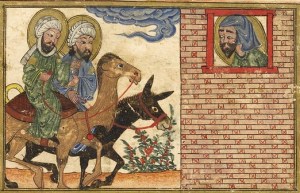
mohammed and jesus

Review of Barry Eichengreen’s “Hall of Mirrors: The Great Depression, the Great Recession, and the Uses – and Misuses – of History” |History News Network

Robert Brent Toplin reviews Barry Eichengreen’s Hall of Mirrors and concludes, “He makes that valuable contribution by addressing the subject uniquely, asking what we have learned and failed to learn from the record of the Great Depression. His investigation offers many useful hints about ways policymakers can avoid repeating the mistakes of the past.” Read the entire review here:

History News Network | Review of Barry Eichengreen’s “Hall of Mirrors: The Great Depression, the Great Recession, and the Uses – and Misuses – of History”.

Hall of Mirrors Great Depression

“What Was on the Minds of the Big Three at Potsdam?” |History News Network

Michael S. Neiberg argues that it was the failures of the Paris Peace Conference (1919) rather than the issues around what became the Cold War. Read the summary of his argument here:

History News Network | What Was on the Minds of the Big Three at Potsdam?

Potsdam

“Open Letter to Anthony Kennedy” |History News Network

Another historian scolds the Supreme Court and Anthony Kennedy in particular:

History News Network | Open Letter to Anthony Kennedy.

Anthony Kennedy

“Is Vladimir Putin an Ideologue, Idealist, or Opportunist?” | History News Network

The answer might surprise you. Walter G. Moss argues that Putin is more of an opportunist, but that he also “hold[s] some basic conservative beliefs and is willing to use various means to trumpet them.” Read his entire article here:

History News Network | Is Vladimir Putin an Ideologue, Idealist, or Opportunist?

"Putin laying wreaths at a monument to the defenders of Sevastopol in World War II, 9 May 2014 (www.kremlin.ru)"

“Putin laying wreaths at a monument to the defenders of Sevastopol in World War II, 9 May 2014 (www.kremlin.ru)”