Is Britain Exceptional?

All nations have some form of “exceptional” narrative that extols their special place in the world. Creating such a narrative is simple. All you need to do is highlight the wonderful or unique contributions made by your nation,  ignore any similar contributions from other nations, and sweep under the rug all embarrassing or negative events. Exceptionalism narratives are really a form of nationalism pretending not to be. Usually historians shun these types of distorted histories, but not always.

Currently a group of historians in Britain (Historians for Britain) are playing the exceptionalism card in order to mobilize the population in an effort to disengage from the European Union. In response, “Hundreds of British historians” are challenging the claims made by “Historians for Britain” in an open letter. They argue that “Britain’s past is neither so exalted nor so unique.” They “challenge this narrative, because it does not fit with the evidence we have encountered in our own research, and this approach, because it does not provoke debate but rather presents a foregone conclusion. We think that a history that emphasises Britain’s differences and separation from Europe (or elsewhere) narrows and diminishes our parameters, making our history not exceptional but undernourished. Britain’s past – and, therefore, its future – must be understood in the context of a complex, messy, exciting, and above all continuous interaction with European neighbours and indeed with the rest of the world.”

In The Guardian, Rebekah Higgit also challenges the narrative of British exceptionalism: “Historians and readers of history both need to be aware of the biases of our education and literature. Accounts of British exceptionalism, especially those that lump the rest of Europe or the world into an amorphous group of also-rans, are more the result of national tradition and wishful thinking than a careful reading of the sources.” The same could be said of American Exceptionalism narratives. These narratives tend to breed arrogance and undermine the benefits of historical perspective.

Whether or not Britain should remain in the European Union should be informed in light of the reality of Britain’s past, not the romanticized versions of British Exceptionalism. The stakes are too high.

History News Network | Hundreds of British historians challenge assumptions of “Historians for Britain” campaign.

Beware Eurosceptic versions of history and science| Rebekah Higgitt | Science | The Guardian.

british nationalism

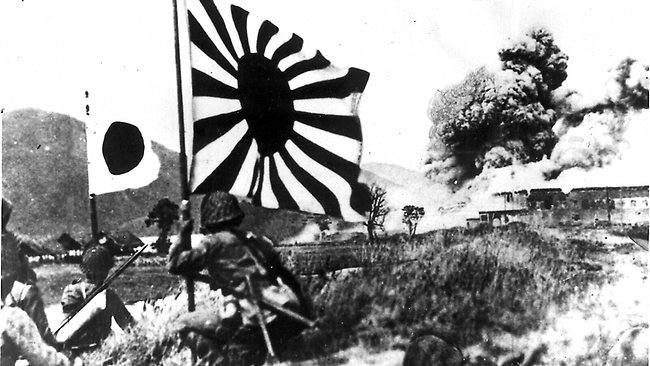
Update: Japanese Denial of WWII Crimes

Joyman Lee wrote an article at the HNN titled, “The Conservatives in Japan Who Are Refusing to Acknowledge the Crimes of World War II Think They’re Helping Their Country. They are Sabotaging It.” But rather than explaining why Japanese denialism is harming Japan, he explores the reasons why Japan has been able to engage in such denial. Nevertheless, it is an interesting perspective on Japan’s WWII denialism.
He writes, “The Cold War stands among the central reasons as to why Japan has not been compelled to address the war issue with more conviction. Whereas the political goal of European integration has helped to move forward Germany’s reconciliation with its European neighbors, no similar motive exists for Japan. The U.S.-Japan alliance and America’s reluctance to be directly involved in disputes over war memory further eliminates pressure “from above” for Japan to placate its Asian neighbors.” Read the entire article here:

History News Network | The Conservatives in Japan Who Are Refusing to Acknowledge the Crimes of World War II Think They’re Helping Their Country. They Are Sabotaging It.

japanese-troops WWII

The Revenge of History: Dealing with Historical Memory

In today’s The New York Times Roger Cohen wrote a thoughtful piece on memory and forgetting (“The Presence of the Past”). Given the role that the manipulation of historical memory has played in past and present violence this article brings up a topic that deserves more attention, especially as nationalism is on the rise. Despite the importance of this topic, it is rarely publicly discussed. Part of the problem is the complexity of the subject, not to mention that it calls into question the cherished identities of many. But if we’re going to stave off the violence that is the product of certain kinds of historical memory we must discuss it.

History is a double-edged sword, as Cohen points out: “History illuminates. It can also blind.” History is illuminating when it is confronted honestly and in all its complexity. It is blinding when it is used to serve ideological or political ends.  This is where historical memory comes in. “History” is often abused in the service of ideology or political power.

Continue reading

“Open Letter in Support of Historians in Japan Signed by Hundreds Including John Dower and Herbert Bix” | History News Network

I’m happy to see this open letter from historians in support of the historians in Japan who are committed to confronting the past honestly. Because, as they conclude: “The process of acknowledging past wrongs strengthens a democratic society and fosters cooperation among nations. Since the equal rights and dignity of women lie at the core of the “comfort women” issue, its resolution would be a historic step toward the equality of women and men in Japan, East Asia and the world. In our classrooms, students from Japan, Korea, China and elsewhere discuss these difficult issues with mutual respect and probity. Their generation will live with the record of the past that we bequeath them. To help them build a world free of sexual violence and human trafficking, and to promote peace and friendship in Asia, we must leave as full and unbiased an accounting of past wrongs as possible.”

Please read the entire letter here:

History News Network | Open Letter in Support of Historians in Japan Signed by Hundreds Including John Dower and Herbert Bix.

Robert G. Fresson, The New York Times

Robert G. Fresson, The New York Times

“The History Wars in Ukraine Are Heating Up” |History News Network

What happened to the Ukraine that wanted to look West? The Ukrainian parliament just passed legislation regulating historical truth.  The first law (“On Condemning the Communist and National Socialist (Nazi) Totalitarian Regimes and Prohibiting the Propagation of their Symbols) outlaws “the public denial, particularly in the mass media, of the criminal nature of the Communist totalitarian regime of 1917-1991 in Ukraine and the National-Socialist regime”as well as Soviet and Nazi symbols.

The second law (“On the Legal Status and Honoring of the Memory of the Fighters for the Independence of Ukraine in the 20th Century”) bans publicly insulting those who fought for Ukrainian independence as well as questioning the legitimacy of the struggle for independence. The law justifies these restrictions by claiming that they “insult[] the dignity of the Ukrainian people.” As Christopher Gilley and Per Anders Rudling point out that there is no punishment included in the legislation.
Gilley and Rudling explain the contradictions and possible consequences of this legislation here:

History News Network | The History Wars in Ukraine Are Heating Up.

Ukrainian Independence Day Parade

Ukrainian Independence Day Parade

“Is Vladimir Putin an Ideologue, Idealist, or Opportunist?” | History News Network

The answer might surprise you. Walter G. Moss argues that Putin is more of an opportunist, but that he also “hold[s] some basic conservative beliefs and is willing to use various means to trumpet them.” Read his entire article here:

History News Network | Is Vladimir Putin an Ideologue, Idealist, or Opportunist?

"Putin laying wreaths at a monument to the defenders of Sevastopol in World War II, 9 May 2014 (www.kremlin.ru)"

“Putin laying wreaths at a monument to the defenders of Sevastopol in World War II, 9 May 2014 (www.kremlin.ru)”

The Cost of Turkey’s Genocide Denial – NYTimes.com

The historian Ronald Grigor Suny offered a potent lesson, not just for Turkey, but for all peoples in The New York Times this past week. Assaulting historical truth in the service of political ends is nothing new. However, a recent rise in nationalism in places like Russia and Japan has brought this issue to the forefront as a potential destabilizing force. Suny persuasively explains why this is a concern and why Turkey should admit to the genocide. “It is well known that each nation feels its own pain and has difficulty feeling that of others. Yet reconciliation of Armenians, Kurds and Turks — who are fated to live next to each other — will require both an acceptance of their shared history and mutual suffering and a hard look backward in order to move forward. Acknowledging who set the fire and directed it against the most vulnerable population must be part of the healing.” Read the entire article here:

The Cost of Turkey’s Genocide Denial – NYTimes.com.

armenian_genocide protest

More on Putin’s abuse of history: “Vladimir Putin: History Man?” |History News Network

In his review of  Mr. Putin: Operative in the Kremlin, Walter G. Moss examines how Putin uses and abuses history for his own purposes. Fittingly, he concludes:
“Putin is far from unique among politicians, or even among professional historians, in attempting to manipulate history. But a true “history man” (or woman) is primarily a truth-seeker, one who puts discovering the truth before any political or personal causes, whether they are of an ideological, national, patriotic, class, ethnic, or gender nature. Philosopher and novelist Iris Murdoch in her The Sovereignty of Good writes of the “honesty and humility of the scholar who does not even feel tempted to suppress the fact which damns his theory.” Without denying that Putin believes much of what he says, he possesses neither the honesty nor humility of Murdoch’s hypothetical scholar. Politicians who do possess such virtues are rare—in any country. And even we professional historians must fight a constant battle to prevent our biases and causes from trumping truth-seeking.” Read the entire article here:

History News Network | Vladimir Putin: History Man?

Mr Putin Operative in the Kremlin

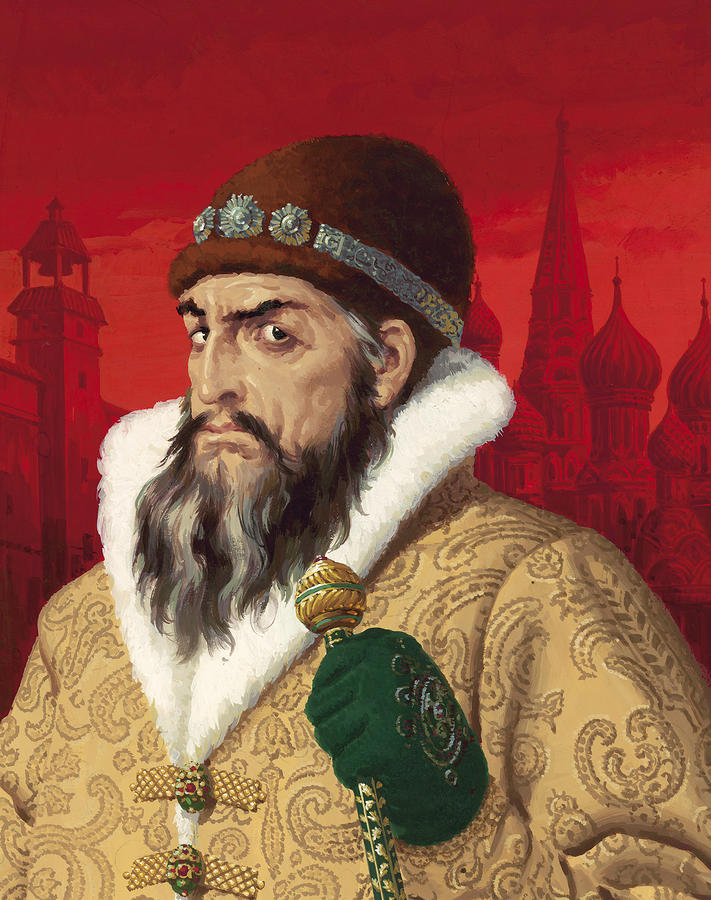
History as Propaganda: “Russian History Receives a Makeover That Starts With Ivan the Terrible” – NYTimes.com

Museums in Russia are collaborators in sparking the flames of nationalism.

“Irina Y. Velikanova, a former Moscow City Council member appointed to run the museum last year, said the mission of any historical museum should be rooted in patriotism. ‘We don’t hide the fact that we are interested in forming the patriotic and civic position of Russian youth,’ she said. ‘Our goal is that when leaving our museum, all Russians would feel proud of their country.’”

Pride is one thing but history has shown that nationalism is more likely to incite hatred, intolerance, and violence. And unfortunately Russia is not the only country where nationalism is on the rise.

Russian History Receives a Makeover That Starts With Ivan the Terrible – NYTimes.com.

Ivan the Terrible

Ivan the Terrible

Russia Fighting Information Wars with Borrowed Weapons | History News Network

More on Russia’s propaganda machine:

History News Network | Russia Fighting Information Wars with Borrowed Weapons.

Vladimir Putin