This gruesome practice has been all too common in human history.


This gruesome practice has been all too common in human history.

We all say we want peace, but at the same time we unwittingly engage in behaviors that perpetuate violence. As philosopher Simon Critchley notes, “we are all players on history’s bloody stage.” Human nature is in large part to blame. However, biology is not destiny. The purpose of civilization is to tame our wilder side. Yet, we still have not been able to end the violence.
Critchley offers an important insight into this intractable problem: “We live in a world framed by violence, where justice seems to be endlessly divided between claim and counterclaim, right and left, freedom fighter and terrorist, believer and nonbeliever, and so on. Each side appears to believe unswervingly in the rightness of its position and the wrongness, or indeed ‘evil,’ of the opposition. Such belief legitimates violence and unleashes counterviolence in return. We seem to be trapped in deep historical cycles of violence where justice is usually simply understood as vengeance or revenge.”
This is not a new insight, but it one that is difficult to sell. If we were reflective enough, we would see this trap we’ve set for ourselves. This insight also requires a broad and deep knowledge of history. It is much easier to offer simple solutions that satisfy our egos and our intuitions. The good vs. evil narrative is simple and it lets us off the hook for any wrongdoing. Savvy politicians know this and use it to their benefit.
Is there any hope then? Critchley offers art, and music in particular, as a solution. But I don’t think this is enough. It will take a much broader effort to convince enough people that we are in fact part of the problem. We also need leaders willing to take up the cause and inspire a new generation to see the world and our place in it differently.
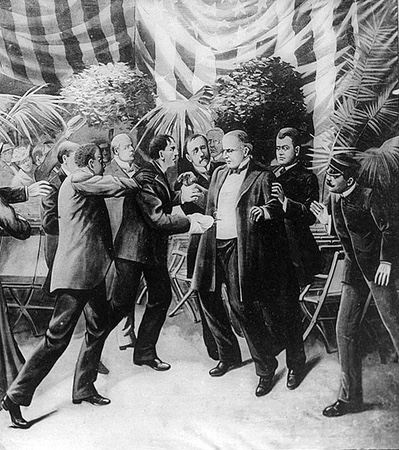
I agree with Ronald L. Feinman that the threat of political assassination is very high, but I think it’s been extremely high during Obama’s entire presidency.
Source: History News Network | Why This Historian Is Worried for His Country
The study of history is the study of human nature. However, it’s not the only way to understand human behavior. Science can also illuminate the mysteries of human behavior. Scientists may approach the problem in a different way, but they are also trying to understand human beings. So, I was thrilled when David Eagleman turned to the subject of ethnic/religious conflict in the third program in a series on the brain. And he used the War in Bosnia (something I’ve spent years studying) to illustrate the problem.
What have scientists found? That when people are confronted with people in our out group (however defined) our brains react as if they were objects, not human beings. The ability to empathize with those in their out group had been lost. How does this de-humanization happen? Usually, through propaganda.
I’ve spent years studying religious/ethnic conflict to come to the same conclusion. He also proposed the same solution: educate students to detect propaganda. In other words, we need to educate students to be good B.S. detectors and independent thinkers. This is one of the reasons why the humanities are so important, particularly philosophy and history.
Here’s the link to the website for the PBS program: The Brain with David Eagleman

History News Network | This is One Reason the World Is on Fire.

 History Chick in AZ