“Don’t study history, Lt. Gov. Jenean Hampton tells students”

The Lt. Governor’s comments are short-sighted and ignorant. Students, of course, should choose their careers carefully, but telling students to make that choice based solely on the likelihood of getting a job is irresponsible. The future job market is not always predictable.  The prospects for engineering students may look good at the moment, but by the time the students graduate things may look very different.

Students also need to consider their commitment to a career that they may not like or may not be suited to their talents. I have had many students who have returned to college because they hated their jobs (many of them engineers). They had returned to college to do what they actually loved, even though it meant they would have to live with a significantly smaller pay check. Money isn’t everything.

And just because it is difficult to get an academic job in history at this moment it doesn’t mean that there are no jobs or that the market won’t change. We still need historians. There are also many non-academic jobs for those with history degrees. History majors are often desirable employees because of their analytic skills and their informed perspective on the world.

More importantly, she should be encouraging all students, not just history majors, to study history. We desperately need an educated population!

Source: Don’t study history, Lt. Gov. Jenean Hampton tells students

Excellent Article on Race Relations by Quartz: “The scientific way to train white people to stop being racist — Quartz

No one wants to be called fragile. And if you’re white, what you feel reading the title of this article may be indicative of the term. “White fragility” refers to white people’s low emotional tolerance for discussing topics of race and racism. The term was coined by Dr. Robin DiAngelo in a 2011 article discussing…

via The scientific way to train white people to stop being racist — Quartz

Who’s Responsible for the Demise of America’s Public Research Universities? – The Atlantic

Jonathan R. Cole accurately calls out the main driver of this “demise”: “The withdrawal of state funds is often one of the direct causes of increased college tuition—not necessarily an increase in faculty size, spending on construction, or administrative costs.”

It is an unfortunate situation that affects all of us. As Cole points out, “A type of delusional thinking seems to convince American policymakers that excellent public colleges and universities can continue to be great without serious investment. As the former Secretary of State and Stanford University provost Condoleezza Rice and Joel Klein, the former New York City schools chancellor, wrote in a Council of Foreign Relations report, higher-education investments are a form of national security at least as important as direct investments in bombers, military drones, missiles, or warships. In other words, these education investments have a very high payoff for states, the nation, and the larger world.”

Read the entire article here: Who’s Responsible for the Demise of America’s Public Research Universities? – The Atlantic

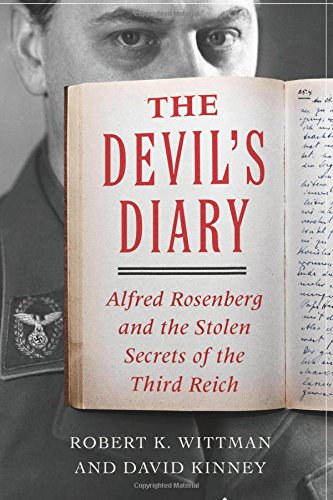
“Tracking an Elusive Diary From Hitler’s Inner Circle” – The New York Times

“A new book, The Devil’s Diary: Alfred Rosenberg and the Stolen Secrets of the Third Reich, reveals how two men uncovered a Nazi artifact.”

I haven’t read the book yet, but it sounds like a great read and all of the Amazon reviews except one gave it 5 stars. It’s on my reading list along with Rosenberg’s actual diary.

Read the brief article on the book here: Tracking an Elusive Diary From Hitler’s Inner Circle – The New York Times

The Devil's Diary Wittman and Kinney

History News Network | The Zionists Censor a Textbook – An Analysis

Lawrence Davidson takes McGraw-Hill to task (and rightly so) for taking “the extreme step of withdrawing from the market a published text, Global Politics: Engaging a Complex World, and then proceeded to destroy all the remaining books held in inventory.” This radical solution was the result of pressure from pro-Israel groups who didn’t like the story that the above map told. If it had been incorrect, McGraw-Hill’s actions might have been warranted, but as Davidson explains the maps are not “historically inaccurate.”

Did the group pressuring the publisher have any legitimate claims? No. In fact, as Davidson points out, their claims were “historically perverse – the sort of grasping at straws that reflects a biased and strained rewriting of history.”

“The sad truth is that the suborning of textbooks addressing culturally sensitive subjects has become a standard practice. Thus, the process of education is indeed threatened by incessant propaganda. This includes the culture war that swirls around American biology textbooks. It also includes the powerful Zionist drive to literally wipe the Palestinians off the map.”

Read Davidson’s detailed explanation of the whole sorry affair: History News Network | The Zionists Censor a Textbook – An Analysis

Counter-Terrorism Beyond Platitudes | commentary

“Donald Trump and Ted Cruz have embraced a shallow, platitudinous approach to counter-terrorism and anti-insurgency warfare.”

Max Boot effectively explains the flawed analogy (resulting from a lack of historical perspective) behind the simplistic approach to counter-terrorism espoused by Trump, Cruz, and many Americans. Their understanding of war is based on the crushing defeats inflicted on the Axis powers during WWII.

But as Boot points out, “The situation with the War on Terror today is very different. We are fighting insurgencies, not nation-states, even if some of the insurgents (the Taliban before 9/11, ISIS today) have taken on many of the attributes of nation-states. This is an unconventional conflict in which our enemies seldom wear uniforms or mass in the open. They prefer to hide among a civilian population and to strike with stealth and surprise, usually against civilian, not military, targets. As I argued in my book Invisible Armies, this is an ancient form of warfare that requires a different response from conventional conflicts. Using maximal force against terrorists and guerrillas can backfire, more often than not, by killing innocent civilians and thereby driving their friends and relatives into the insurgent camp.”

Read the entire article here: Counter-Terrorism Beyond Platitudes | commentary

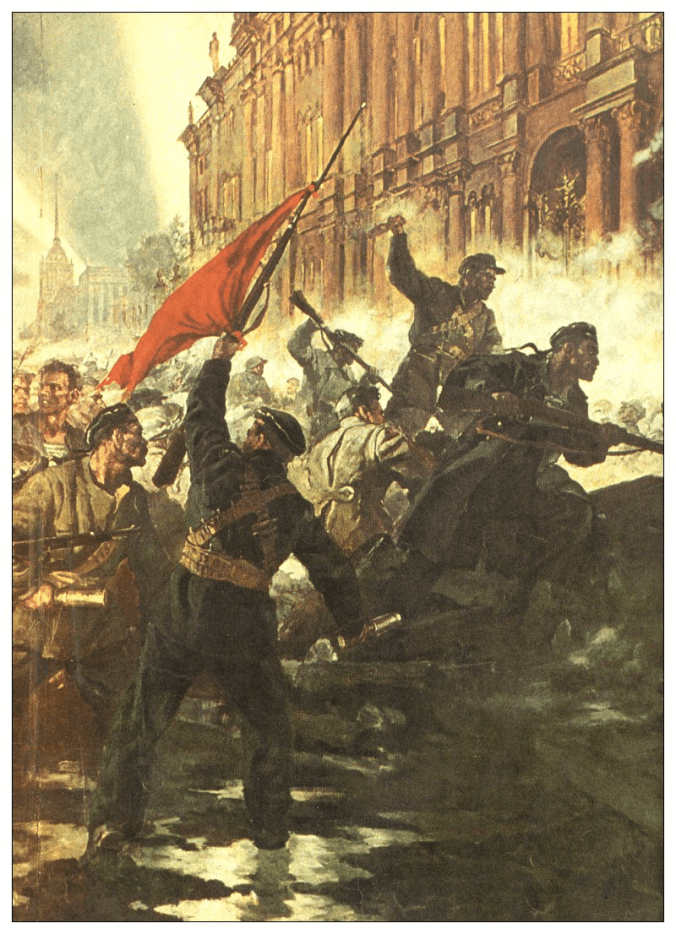
“Are Russians Really Long-Suffering” | History News Network

Christopher A. Lawrence contests the claim that Russians have had a particularly difficult history. I was shocked when I read his claim. How could this be?
As a graduate student one of my areas of specialization was Russian history (Imperial Russia and the Soviet Union). Therefore, I had to read a lot about the history of the Russian people in preparation for my comprehensive exams. One of the things that struck me was the constant stream of misfortunes endured by Russians. They never seemed to catch a break.
I thought maybe I mis-remembered  their history when I saw this article by a supposedly credible historian. But upon reading the essay I realized that it wasn’t my memory that was the problem, it was Lawrence’s argument. His argument focuses on their many political revolutions, the last of which he highlights as “fundamentally peaceful.” Now where does he discuss the actual suffering or explain why it wasn’t actually suffering. In fact his argument works by actually ignoring the real suffering of the Russian people (wars, famines, political oppression, purges, etc.). He only mentioned one, World War I, which he points out was short-lived and entailed fewer deaths than other nations. He forgets to mention that they left only to fight a civil war that killed millions, followed by famine, political purges, terror, and crushing poverty.  And that was all before the Second World War!
It’s easy to make an argument that the Russians  are not long-suffering, if you ignore the actual suffering!

Source: History News Network | Are Russians Really Long-Suffering

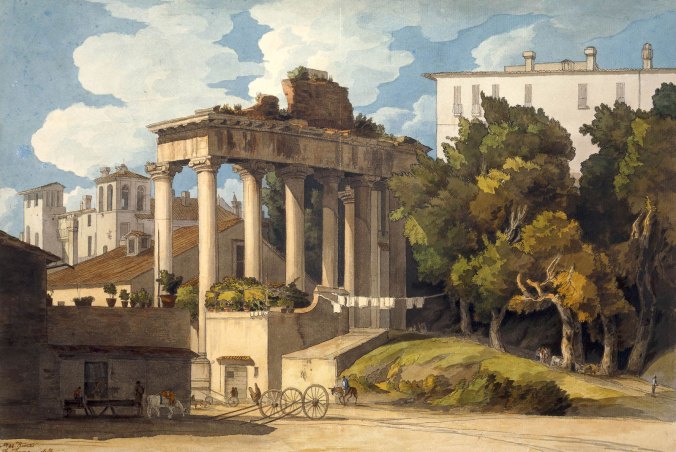
“Rome: Behind the Ruins by Jenny Uglow” | NYR Daily | The New York Review of Books

“After many years in the shadows, Francis Towne’s haunting paintings of Rome are back in the light, beautifully displayed—they may appear a mere sideshow in comparison to the blockbuster exhibitions of great names, but they offer a luminous vision of a civilization lost in time, a tribute to the genius of a quiet man.”

See the other paintings and read the article here: Rome: Behind the Ruins by Jenny Uglow | NYR Daily | The New York Review of Books

Book Review: “The Amazing Career of a Pioneer Capitalist by Martha Howell” | The New York Review of Books

Martha Howell’s review of The Richest Man Who Ever Lived: The Life and Times of Jacob Fugger provides an excellent overview of early capitalism in Europe. If you are interested in the history of capitalism you’ll find this review enjoyable.

Bringing the past to bear on the present, Howell points out a notable fact about capitalism:

“If Fugger was not the “first capitalist,” the story of his life perfectly exemplifies sixteenth-century capitalism and suggests a fundamental truth about many more forms of capitalism, one that was so monstrously embodied by the Dutch East India Company: wealth is won and preserved with the support of a state that is, in turn, dependent on the riches accumulated by the few who excel in commerce. In some periods, at some moments of technological history, the riches are typically extracted from ever more efficient production, invariably aided by ruthless exploitation of human labor and natural resources. In others the wealth comes principally from control of supplies, manipulation of demand, and management of distribution networks. But always the merchants grow rich because state power protects them or looks away when the time is right—and does so because in a world where commerce reigns, neither the state nor a powerful merchant class can exist without the other. We have Steinmetz’s book to thank not just for telling Fugger’s story so well but also for showing us how the partnership between state and commerce worked in the earliest days of European capitalism.”

Read the review here: The Amazing Career of a Pioneer Capitalist by Martha Howell | The New York Review of Books

“Israel: The Broken Silence by David Shulman” | The New York Review of Books

We can learn from history if we are willing to. We remember the Holocaust because of the important lessons it provides. “Never again” is the mantra. Unfortunately, we keep making the same mistakes.

If any peoples should have learned the lessons of exclusion and hate it should have been the Jews. Of course, many Jews have. Unfortunately, the leaders of the Israeli state have learned nothing from the past. This period does provides amble evidence of the dangers of nationalism and racism, especially when they become the guiding principles of authoritarian regimes.

Yet they are making the same mistakes with similar  (but not identical) consequences. This time they (the Israeli government and their right-wing supporters) are the victimizers. They may justify their behavior in the name of self-defense, but what they have actually done is locked themselves into a cycle of never-ending violence and revenge.

David Shulman explains the unfortunate situation in Israel today.

An excerpt: “But Israeli McCarthyism has an additional, distinctive element that deepens the madness. It is directly linked to Israel’s colonial project in the occupied Palestinian territories. Anyone who opposes the occupation in word or deed is now at risk. For the right, patriotism is synonymous with occupation and all that comes with it, above all the dispossession and expulsion of Palestinians and the theft of their lands. One can hear overtly racist rationalizations of this aim any day on the public radio talk shows. Put simply, the occupation system as a whole is ruled by the logic of stark division between the privileged Israeli occupiers and the Palestinian occupied, who are totally disenfranchised and stripped of all basic human rights.”

Source: Israel: The Broken Silence by David Shulman | The New York Review of Books