“Our Brain Dislikes Disorder.  That Explains a Lot.” | History News Network

“We abhor disorder and uncertainty.” We’ve known this for a long time, but what we haven’t figured out is how to get people to be rational in the face of disorder and uncertainty. The problem is that it is so much easier to react in ways that are emotionally and psychologically gratifying. But this shouldn’t deter us from trying to change people’s responses to fear. We would all be better off as a result!

Source: History News Network | Our Brain Dislikes Disorder.  That Explains a Lot.

The 3,000-Year-Old Wheel Found At ’Britain’s Pompeii’ On Farm Near Peterborough – Yahoo News

“Archaeologists have uncovered the most intact Bronze Age wheel ever found in the UK, at a site dubbed ‘Britain’s Pompeii’. ‘This remarkable but fragile wooden wheel is the earliest complete example ever found in Britain,’ said Duncan Wilson, chief executive of Historic England.”

Source: The 3,000-Year-Old Wheel Found At ’Britain’s Pompeii’ On Farm Near Peterborough – Yahoo News

Garry Wills: “The Next Justice? It’s Not Up to Us” | History News Network

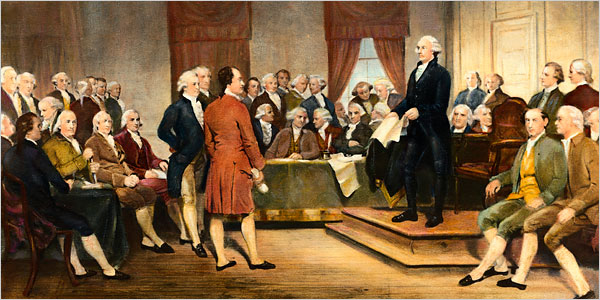
“One thing the framers of the Constitution set out to prevent was a popular say in who should be a Supreme Court justice. The aim of the document was to ensure there would be an independent judiciary—independent of Congress (by ensuring justices’ salaries), independent of changing administrations (by granting them life tenure), and not subject to popular election.”

Source: History News Network | The Next Justice? It’s Not Up to Us

founding-fathers

“Ted Cruz’s Phony Supreme Court ‘Tradition'” | History News Network

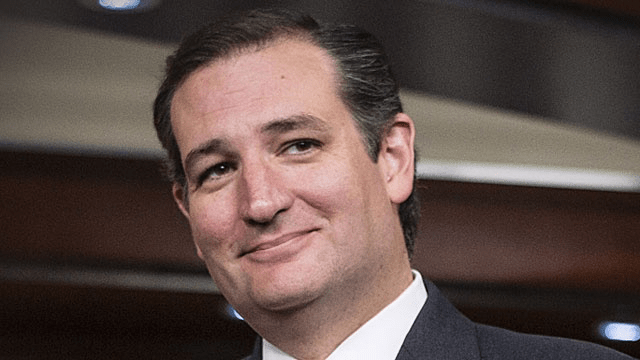
A history lesson for Cruz (not that the facts matter to him!): History News Network | Ted Cruz’s Phony Supreme Court “Tradition”

Mark Byrnes points out: “This tactic may well work politically. It has already had the effect of framing the debate as “Should Obama nominate someone?” That is truly extraordinary. The actual question should be “Should the Senate confirm Obama’s nominee?” That’s a legitimate debate, but it would put the focus on the nominee and that person’s qualifications. By hiding behind this phony “tradition,” Republicans are trying to avoid having to show that a given nominee should be rejected on the merits. In short, they don’t want to take responsibility for rejecting someone who—in all likelihood—will be eminently qualified for the job. That’s not statesmanship. It’s cowardice. – See more at: http://historynewsnetwork.org/blog/153732#sthash.cLVnCGsR.dpuf

“Russian Orthodox Church Blocks Funeral for Last of Romanov Remains” – The New York Times

This is really bizarre! “Despite mountains of evidence, the church says it doesn’t believe the remains are those of the last czar and his family.”  No one knows for sure why the Church would deny the scientific evidence for the identity of the Romanov remains. Not that denying scientific evidence isn’t unusual for the Church, but in most cases we know why (it contradicts theirs religious dogma). In this case, there are no religious principles on the line. So, what’s going on?

The most compelling explanation seems to indicate political motivations. “Rejecting the bones will anger some Orthodox adherents, particularly those outside Russia. Accepting them will incense a conservative domestic faction that believes the Soviet government somehow faked the burial.” But without actual evidence, this is only speculation.

Read the entire article here: Russian Orthodox Church Blocks Funeral for Last of Romanov Remains – The New York Times

“Russian Orthodox Church Blocks Funeral for Last of Romanov Remains” – The New York Times

This is really bizarre! “Despite mountains of evidence, the church says it doesn’t believe the remains are those of the last czar and his family.”  No one knows for sure why the Church would deny the scientific evidence for the identity of the Romanov remains. Not that denying scientific evidence isn’t unusual for the Church, but in most cases we know why (it contradicts theirs religious dogma). In this case, there are no religious principles on the line. So, what’s going on?

The most compelling explanation seems to indicate political motivations. “Rejecting the bones will anger some Orthodox adherents, particularly those outside Russia. Accepting them will incense a conservative domestic faction that believes the Soviet government somehow faked the burial.” But without actual evidence, this is only speculation.

Read the entire article here: Russian Orthodox Church Blocks Funeral for Last of Romanov Remains – The New York Times

History News Network | On President’s Day Let’s Remember Lincoln for This

James Tuten writes: “Candidate Ben Carson pointed out in a debate that the comments section for online articles revel in mean-spiritedness. I agree with him. They inevitably disappoint me, make me cringe, even anger me. It is clear that many people do not begin to read pieces in a fair or open way. They have an opinion of the writer, the publisher, the topic or at least boxes to put them in and toward which they direct disdain, rage or worse, genuine hatred. Abraham Lincoln had the temperament to make it a practice to behave differently. Not always, but frequently he practiced mercy.”

I can’t think of a better way to honor Lincoln, and to hopefully inspire the rest of us to be more charitably toward others, particularly online!  It would make us better as individuals and the world a better place for all of us.


Source: History News Network | On President’s Day Let’s Remember Lincoln for This

“The Surprising Reaction I Got When I Assigned Barbara Tuchman’s Popular History of World War 1 to College Students” | History News Network

I share B. C. Knowlton’s concerns about teaching college students to really read and understand works of history.  He first taught a group of students who needed remedial help in reading and writing. For them, the popular The Guns of August was too difficult. With some help they were able to get through the material but in the end he could not get them to a level of critically thinking about the subject and its significance. The other group of good students were able to read and write well, but they also seemed unmotivated to engage with works of history (or any other readings of substance) on any sustained level beyond their required courses.

His experience with these students led him to wonder whether or not “those who take required History courses as college freshmen become and remain literate and critical students of History? Once there are no more papers to write, will they see any reason to read? How, as they head into the future, will they engage with the past? When historic anniversaries approach, will they pay historical attention to them, or just watch the documentaries?”
Given the lack of interest in anything not related to their majors or future careers (at least in my experience), I’m guessing that they will “just watch the documentaries” (if even that!). But I always hope that as they mature they will change their minds.


Source: History News Network | The Surprising Reaction I Got When I Assigned Barbara Tuchman’s Popular History of World War 1 to College Students

“How the Rise of the Post Office Explains American Innovation”

“A new paper examines the importance of government in economic growth.”

Source: How the Rise of the Post Office Explains American Innovation