Author: Debbie
Splendors of the Dead by Garry Wills | NYR Daily | The New York Review of Books


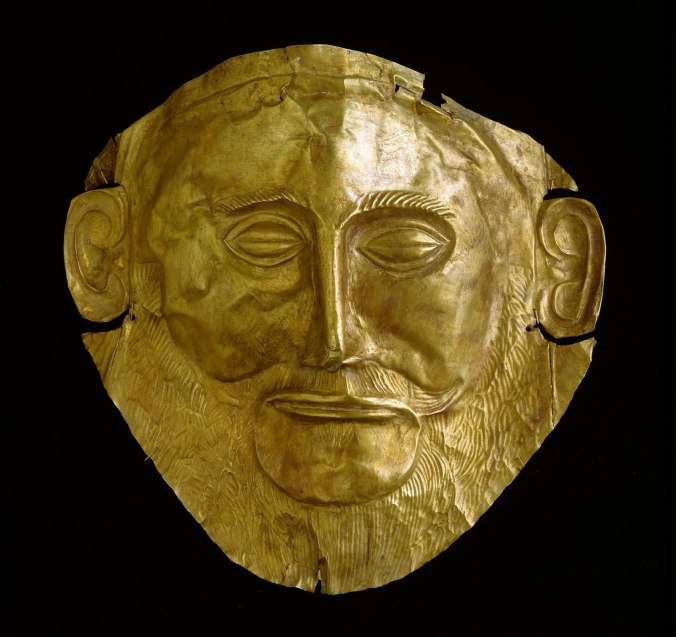
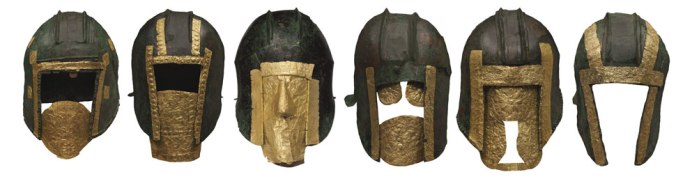
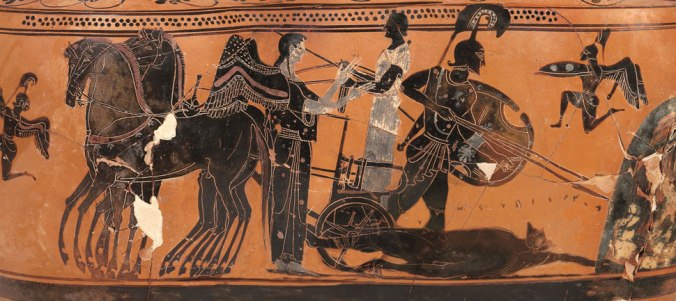
“The extraordinary exhibition ‘The Greeks: Agamemnon to Alexander the Great’ shows the extent to which the immensely privileged eased themselves into the afterlife with much of the booty that had cushioned their time on earth. It seems they aimed at taking along enough symbols of power and wealth to get whatever passes for honor in the underworld.” If you’re in a position to see this magnificent collection I’m jealous! It will be at the Field Museum in Chicago through April 10, and in May will be at the National Geographic Museum in Washington, D.C.
Source: Splendors of the Dead by Garry Wills | NYR Daily | The New York Review of Books
Jonathan Zimmerman: Thanks to right-wing deniers, schools still sow seeds of doubt over climate change | Dallas Morning News
“97 percent of climate scientists agree that human behavior is warming the earth. That’s not question or a controversy; it’s a fact. And surely we need to teach students the difference. Indeed, they can’t participate constructively in the real controversies of our time — about climate change, and everything else — unless they learn to distinguish fact from opinion, and knowledge from belief.” So far we haven’t done a very good job at teaching our students these skills. Given the significant challenges we face in our modern world, and the overwhelming amount of information found on the Internet (much of which is garbage), it is essential that we teach our students the skills necessary to evaluate truth claims.
“Suleiman the Magnificent’s tomb believed to have been found in Hungary” | Science | The Guardian
“Historian says ‘in all certainty’ remains found near Szigetvar in southern Hungary point to resting place of 16th-century sultan of Ottoman Empire.” I hope so! I’m convinced that it would be really interesting!
Source: Suleiman the Magnificent’s tomb believed to have been found in Hungary | Science | The Guardian
“The political aftermath of financial crises: Going to extremes” | VOX, CEPR’s Policy Portal
I was tempted to say “duh,” but a closer look at their research shows a much more nuanced finding that would not be obvious from a simple review of the history. What is particularly concerning to me is the fact that our instincts in the face of these crises (not just financial but security threats as well) are wrong. Our response usually makes things worse without solving the real underlying problems. When will we learn, a knee-jerk, fear based response is not the solution!
Source: The political aftermath of financial crises: Going to extremes | VOX, CEPR’s Policy Portal
“Historian Patricia Limerick: We can’t change history, but we can change how we understand it” | The Seattle Times
Historians need to do a better job explaining the complexities and vastness of history to non-historians. To many Americans, any change in familiar historical narratives amounts to revisionism (by which they basically mean a re-writing of history not based on evidence but on ideological preferences). Of course, we should all be concerned with false revisionism, but history is by its very nature is revisionist. We encounter new evidence, we expand what we know by including new perspectives (women, the poor, minorities, etc.), and through debates between historians. Early historical narratives are constructed with minimal evidence for purposes that have nothing to do with honest historical evaluation.
In her interview, Limerick, explained, “History doesn’t change, but a better understanding of it can change a person. And she said history is relevant to the problems we face today because good hindsight can lead to better foresight.” Hopefully Limerick’s message will be heard!
“America’s Reckless War Against Evil” | History News Network
Read Chernus’s trenchant piece here: History News Network | America’s Reckless War Against Evil
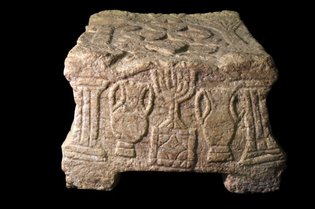
“A Carved Stone Block Upends Assumptions About Ancient Judaism” – The New York Times
“The Magdala Stone, found in Israel, is forcing scholars to revisit ideas about synagogues and their relationship to the Second Temple around the dawn of Christianity.” Very interesting find!
Source: A Carved Stone Block Upends Assumptions About Ancient Judaism – The New York Times
“Justice Thomas Needs a Lesson in the History of the 2nd Amendment” | History News Network
“The overall point to be made is the Seventh Circuit did not relegate the Second Amendment to a “second-class right” as Justice Thomas claims. History refutes such a conclusion. The fact of the matter is the modern perception of the Second Amendment as guaranteeing broad firearm rights in both public and private is just that—modern.”
Source: History News Network | Justice Thomas Needs a Lesson in the History of the 2nd Amendment
“The Return of History” – The New York Times
“From the Islamic State to Sri Lanka, modern people are looking to connect with an ancient past.”
This is nothing new. Golden Age myths have long been useful to ambitious demagogues. This narrative is at the heart of all nationalist movements. The basic formula consists of a simplistic narrative of a glorious past of a particular group (whether national, ethnic, or religious) whose decline must be explained. Someone must be responsible this decline. Enter scapegoat (usually a marginalized, feared, or hated minority). The same pattern can be seen from Nazi Germany, to Slobodan Milosevic’s Serbiain the 1990s, as well as the present movements from Donald Trump (“We’re going to take our country back”) to Vladimir Putin in Russia, to the Islamic State, etc.
The anecdote is not less history, but more history. The distortions of these white-washed histories and their purposes need to be exposed. The comforts these narratives provide do not justify their existence. The consequences are too dangerous.