
“Medieval Polish knights lived in wooden towers – remains of which have been found in the region of Silesia.”
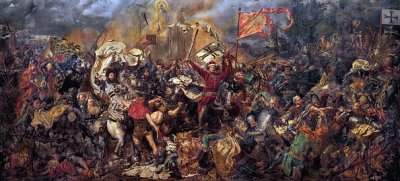
Source: Poland: Ancient remains of knights towers reveal life in the middle ages
“Medieval Polish knights lived in wooden towers – remains of which have been found in the region of Silesia.”
Source: Poland: Ancient remains of knights towers reveal life in the middle ages

Another awesome discovery!
“The first evidence from the era when Hellenistic culture held sway over the ancient city of Jerusalem has been uncovered by Israeli archaeologists; Acra, a citadel constructed by the Greeks more than two thousand years ago in the middle of old Jerusalem. Judea was conquered by Alexander the Great during the fourth century BCE.”
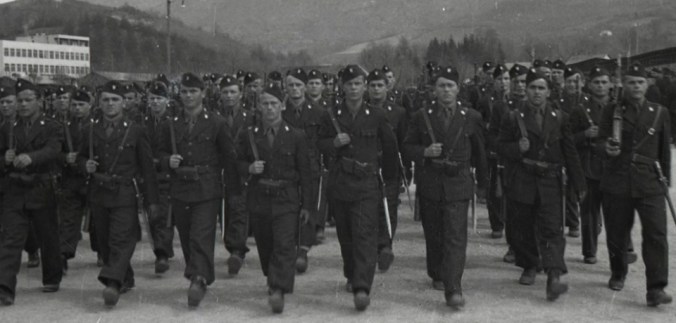
Unbelievable! How can Croats think that this is a good idea? Weren’t the first two times bad enough? This is also likely to provoke an equally nationalistic response from Serbia, which then will further provoke Croats leading to an ever-increasing radical nationalism. Let’s hope the story doesn’t end like it
“The EU’s newest member, Croatia, has an unabashed and strong-willed fascist in its new cabinet — one who makes the right-wingers in power in Hungary and Poland look like wimps.”
Source: Croatia’s Far Right Weaponizes the Past | Foreign Policy
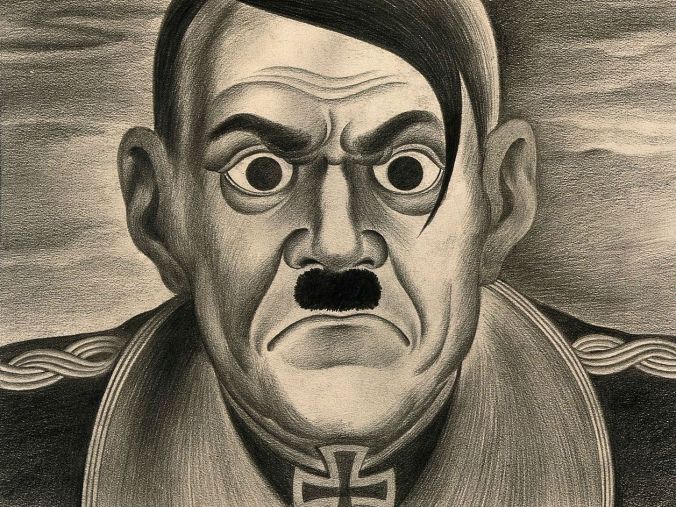 David A. Bell writes a much-needed rebuke against the popular tendency to compare everything with World War II and Hitler. As he explains, “Comparing modern threats with World War II is neocon nonsense.” It may seem like harmless drama, but this kind of hyperbole has real consequences. As Bell points out, “References that were already misleading a generation ago have become dangerously absurd. The putative lessons of history have become imprisoning, rather than enabling. In this sense, we really do suffer from an excess of it.”
His discussion of the Munich lesson is particularly noteworthy. “Ever since, it has been de rigueur for Americans to justify action against alleged foreign threats with Hitler analogies, and to denounce the alleged appeasement of such threats with Munich analogies. Sometimes, the comparisons have been laughably inappropriate.” We see almost all foreign events through this lens and it has made us particularly war prone. We have come to see violence (or the threat of violence) as the most effective tool of foreign policy.
To read the other dangers posed by using inappropriate WWII analogies go here: Not Everything Is Munich and Hitler | The National Interest
In conclusion Bell writes, “But it can still help if as many people as possible take the time to remember just how false the comparison actually is, and if they keep in mind that a keen sensitivity to the parallels between the past and the present is not always a good thing. When it comes to the moral lessons of the terrible years the world lived through between 1939 and 1945, particularly those of the Holocaust, we must always remember. But when it comes to the strategic lessons of that era, we might do well, sometimes, to forget.”
I agree with Bell’s overall analysis, but I have to disagree with his solution: forget history. The problem is a result of superficial knowledge, bad analogies, and a desire to inflate the importance of one’s own issues by associating them with extreme examples (Hitler, genocide, slavery, etc.).
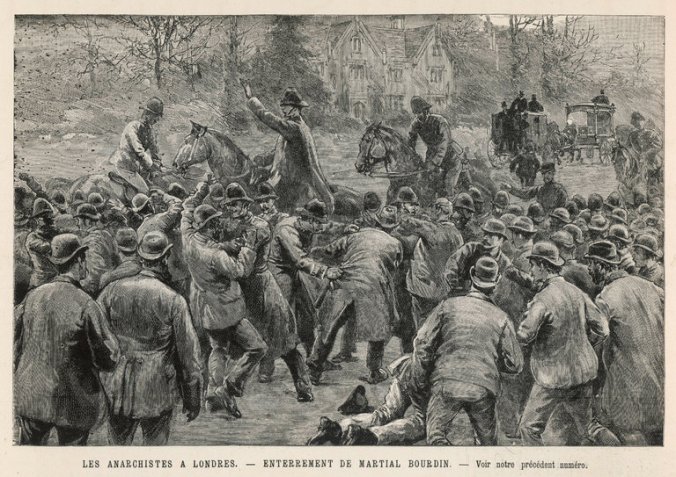
Maya Jasanoff reminds us of the time when anarchists terrorized Europe. The reaction to these acts of terrorism fit a familiar pattern: in response to fear we turn against the Other (immigrants, foreigners, minorities, etc.). The period examined by Jasanoff fits into this pattern, as she notes, “then as now, migrants and civil liberties paid the price.”
While history never repeats itself exactly, there are discernible patterns of human behavior that are instructive and this is one of them. To Jasanoff’s example we could add many others. Unfortunately, the knowledge gleaned from the past is by itself not enough to bring about change. The barrier to making this knowledge useful, as I see it, is also rooted in human behavior. To overcome this barrier we need to turn to psychology.
Here is just a few of the psychological barriers that prevent us from acting rationally:
And of course, we need an educated population with the skills and desire to do the hard work to have informed opinions.
Read the informative article on anarchists here: The First Global Terrorists Were Anarchists in the 1890s – The New York Times
The Museum of the Second World War may be a casualty of Poland’s rightward turn. Only a Polish-centered museum will do for this nationalist government. This would be unfortunate. As the historian Timothy Snyder points out, “the government’s concept of a museum focusing solely on Westerplatte and Poland’s military struggle in 1939 would result in a narrowly focused exhibit that would not appeal to a wider international audience.”

Read the entire story here: – Daily Reflector

Juan Cole lists some of Harriet Tubman’s amazing heroic acts. She truly was a “badass”!
Read the entire article here: Top 7 ways Harriet Tubman is the most Badass Spy & Warrior ever to be on US Currency?
 “The rhetoric of the rapidly growing Alternative for Germany party and its supporters indicates a potentially profound shift in German political culture: it is now possible to be an outspoken nationalist without being associated with—or, for that matter, without having to say anything about—the Nazi past.”
Jan-Werner Muller explains that “the AfD has fed off and in turn encouraged a radical street movement, the “Patriotic Europeans Against the Islamization of the West,” or Pegida, that has no equivalent elsewhere in Europe. And perhaps most important, the AfD’s warnings about the “slow cultural extinction” of Germany that supposedly will result from Chancellor Angela Merkel’s welcoming of more than a million refugees have been echoed by a number of prominent intellectuals. In fact, the conceptual underpinnings for what one AfD ideologue has called “avant-garde conservatism” can be found in the recent work of several mainstream German writers and philosophers. Never since the end of the Nazi era has a right-wing party enjoyed such broad cultural support. ”
This does not bode well for the future of Germany, or Europe as a whole, if things continue in this direction. But I think it is only if another major event (terrorist attack(s), severe economic downturn, another major wave of immigrants, etc.) befalls the German people will these groups be in a position to take power. Still, this is not good! Don’t they remember their own history?
Source: Behind the New German Right by Jan-Werner Müller | NYR Daily | The New York Review of Books
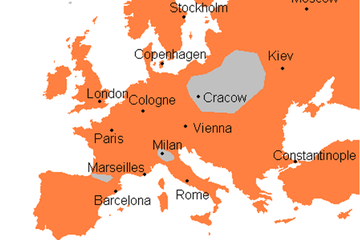
“It spread across Europe in just six years — and wiped out 60 percent of the European population.”
Read the entire article here: The Black Death’s utter destruction of 14th-century Europe, in one scary GIF – Vox
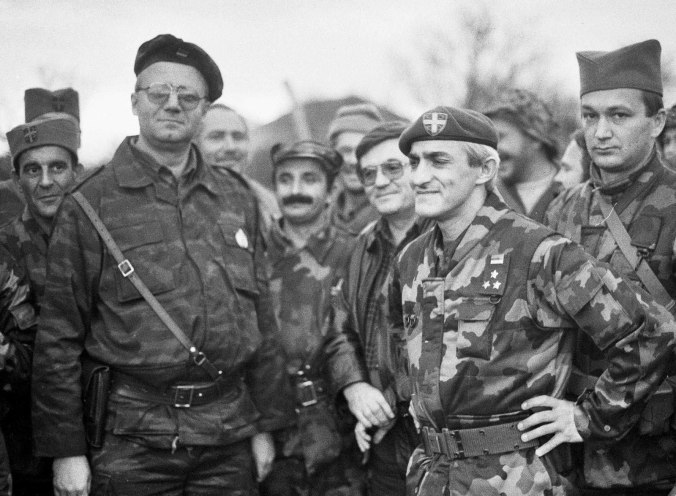
The horrific wars that tore Yugoslavia apart offer a window into the dark side of human nature. At a time when ethnic and religious violence has become widespread across the globe, revisiting these wars could prove useful. Just as the UN tribunals for war crimes committed during these Balkan wars wind down Tim Judah, a seasoned war correspondent who frequently reported on these wars, has chosen to reassess their legacy.
Last month (March 24) Radovan Karadzic, one of the Bosnian Serb leaders, was sentenced to forty years in prison for various war crimes and genocide. The UN tribunal has yet to declare a verdict in the case of Ratko Mladic, the leader of the Bosnian Serb army who led the killing of 7,000 men in Srebrenica. The biggest fish, Slobodan Milosevic, the former president of the Republic of Serbia who did much to stir up nationalist sentiments and hatred, died while his trial was still underway in March 2006.
Assessing the situation today Judah notes that “so much more could be done by Balkan leaders to address the legacies of these brutal conflicts, which have not yet really become history. Sometimes it looks like they are not capable of or interested in doing so and verdicts like the Karadžić one gave Serbian and Bosniak leaders an opportunity to beat nationalist drums again and remind their voters that they had better vote for them or the enemy would one day be back.” This is exactly the dilemma that perpetuates the violence in never-ending cycles of revenge. And it is not just demagogues who are to blame for this situation. They are only rewarded with power because ordinary people give it to them, because they are enamored with their nationalist rhetoric. They are made to feel special through national myths of past greatness and current innocence. They are not responsible for their present woes, it is “the other” who is responsible. It’s a powerful message. Many are unable, or unwilling, to resist the siren song of nationalism.
Source: Balkan Poison, Revisited by Tim Judah | NYR Daily | The New York Review of Books
 History Chick in AZ