Very interesting!
Source: Stonehenge Begins to Yield Its Secrets – The New York Times

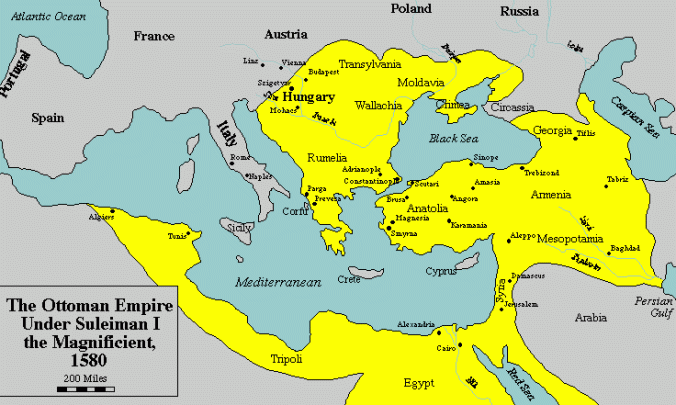
“Hungarian Prime Minister Viktor Orban not only continued to defend his anti-immigrant bigotry but went on to say that Islam has never been part of Europe. Mr. Orban not only is increasing the misery of largely Muslim refugees, but now he has erased 1300 years of European culture and politics, committing a sort of cliocide or mass killing of history.” Juan Cole explains why Orban is wrong: History News Network | Ottomans saved Hungarian PM Orban’s Ancestors; now he says Islam never part of Europe
Read the entire article here: History News Network | The Medieval Chastity Belt – Myth or Reality?

History News Network | Get Used to It Europe: Homogenous States Are a Thing of the Past

Watching the tragedy of Syrian refugees unfold makes me wonder if we’ve learned anything from the past refugee crises. It seemed that Europe had learned some lessons as they dealt with the refugee crisis from the wars in Bosnia and Kosovo during the 1990s. But the combination of economic crisis, anti-Islamic sentiments, and inter-E.U. bickering has set this latest crisis up to be a disaster. The U.S. response has been lackluster as well. We are better able to handle large numbers of refugees, and given the fact that we bear some responsibility for the crisis we have a moral obligation to help the victims fleeing Syria.
Maybe it’s too late, but for what it’s worth Alexander Betts, professor of Refugee and Forced Migration Studies, discusses the history of refugee crises and lays out five history lessons.

In preparing for a lecture on the Enlightenment, I was reminded of a little known work that “Changed Europe.” (from the title of the book: The Book that Changed Europe) What makes Ceremonies and Religious Customs of the Various Nations (1723) so special is its attempt to present all the world’s religions in an objective and fair way in a world that still largely believed that tolerance was a sin.
It was also a major intellectual achievement. It was written by the Huguenot (French Protestant) refugee in the relatively tolerant Dutch Republic. The project comprised seven volumes with more than 200 illustrations. The images rival the text as an intellectual achievement in its own right. (see two of the images below) Another Huguenot, Bernard Picart, designed all of the book’s illustrations.
It was a major victory for tolerance!
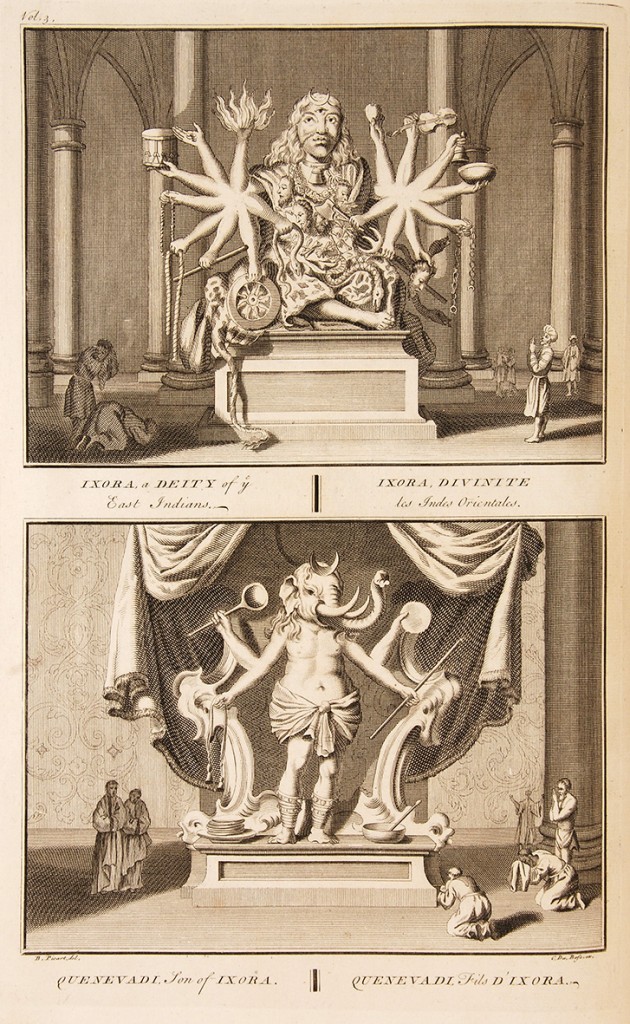
“Hindu deities, one holding recognisable European musical instruments.”
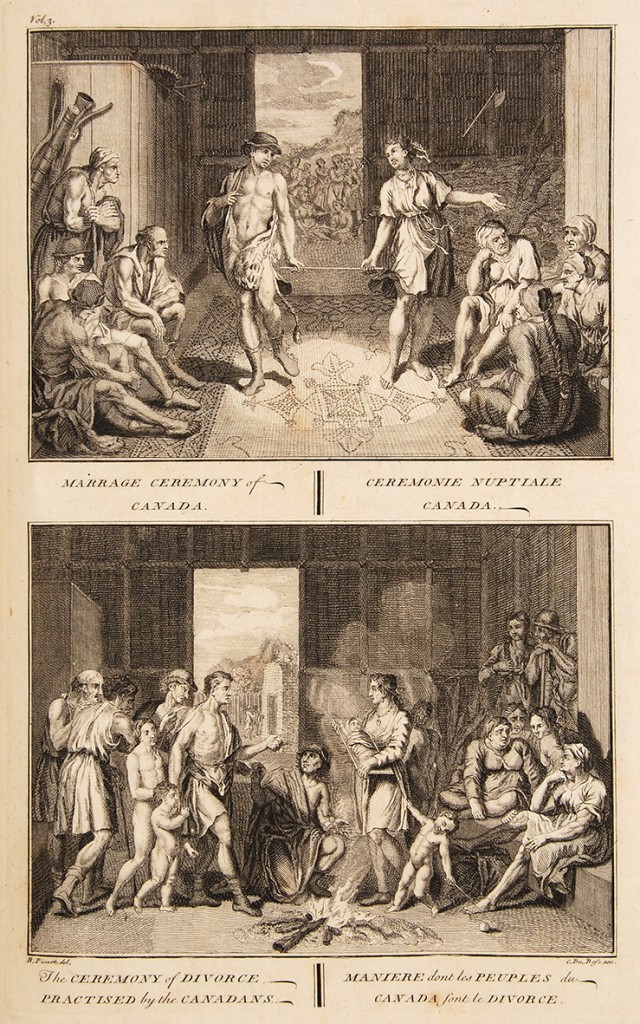
“Marriage and divorce ceremonies of the natives of Canada. Picart used the European style rug and classical poses to make this religion seem less foreign to European readers.”
The economist Thomas Piketty, who gained fame last year as the author of Capital in the Twenty-First Century, reminds Merkel, “It was in the 1950s, he notes, that Germany benefited from a massive — and, in those days, surprisingly common — round of debt forgiveness that catapulted its rise into a peaceful economic power. Greece was one of the nations forgiving Germany’s debts. In other words, Piketty suggested, when it comes to how to handle Greece in 2015, the best argument against Germany might be … Germany, circa 1953.” Piketty is right, of course, but I doubt Angela Merkel will change her stance. She seems determined to punish Greece even if it makes things worse not just for Greeks, but for all of Europe.
Read Piketty’s history lesson here: Thomas Piketty accuses Germany of forgetting history as it lectures Greece – The Washington Post.
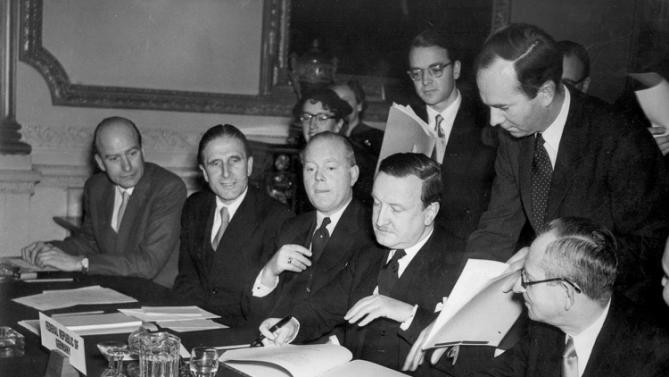
“FILE – In this Feb. 27, 1953 file photo, the German Debts Agreement is signed in London. Though Germany is resisting Greeces pleas for some relief, it should know better than most what it can achieve. After the hell of World War II, the Federal Republic of Germany – more commonly known as West Germany – got massive help from its former foes, among them Greece. The agreement, in which Greece and about 20 other countries effectively wrote off a large chunk of Germanys loans and restructured the rest, is a landmark case that shows how effective debt relief can be. It helped spark what became known as the German economic miracle. (AP Photo, file)”
In 1492 the Jews of Spain were given the choice of converting to Christianity or leaving. Many fled to the Ottoman Empire, where they were welcomed by the Sultan Bayezid II. At the time it was the Muslim world that was tolerant in contrast to Catholic Europe. Now the tables have turned. While the Sephardic Jews in Turkey are not under the same threat they faced in 15th century Spain, they are concerned in the face of a rising antisemitism. According to The New York Times, “[m]any Turks put the blame for the rise in anti-Jewish feelings on the actions of the Israeli government, particularly the killing of civilians during the Gaza war.” This is unfortunate. If anyone should be against generalizing from particular members of a group to the whole, it should be Muslims. It is a mistake to blame the Sephardic Jews in Turkey for what the Israeli government has done. The Israeli government does not represent all Jews or even all Israelis. Many Israelis disagree with the rhetoric and actions of the Israeli government. Similarly, it is a mistake to blame all Muslims for the actions of a few. This type of generalizing has been responsible for so much human suffering throughout human history. Will we ever learn?!
Sephardic Jews Feel Bigotry’s Sting in Turkey and a Pull Back to Spain – NYTimes.com.
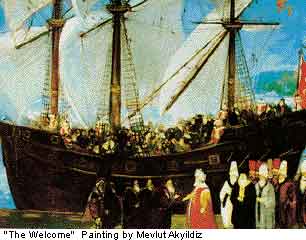
Sultan Bayazid II welcomes Jews expelled from Spain
All nations have some form of “exceptional” narrative that extols their special place in the world. Creating such a narrative is simple. All you need to do is highlight the wonderful or unique contributions made by your nation, ignore any similar contributions from other nations, and sweep under the rug all embarrassing or negative events. Exceptionalism narratives are really a form of nationalism pretending not to be. Usually historians shun these types of distorted histories, but not always.
Currently a group of historians in Britain (Historians for Britain) are playing the exceptionalism card in order to mobilize the population in an effort to disengage from the European Union. In response, “Hundreds of British historians” are challenging the claims made by “Historians for Britain” in an open letter. They argue that “Britain’s past is neither so exalted nor so unique.” They “challenge this narrative, because it does not fit with the evidence we have encountered in our own research, and this approach, because it does not provoke debate but rather presents a foregone conclusion. We think that a history that emphasises Britain’s differences and separation from Europe (or elsewhere) narrows and diminishes our parameters, making our history not exceptional but undernourished. Britain’s past – and, therefore, its future – must be understood in the context of a complex, messy, exciting, and above all continuous interaction with European neighbours and indeed with the rest of the world.”
In The Guardian, Rebekah Higgit also challenges the narrative of British exceptionalism: “Historians and readers of history both need to be aware of the biases of our education and literature. Accounts of British exceptionalism, especially those that lump the rest of Europe or the world into an amorphous group of also-rans, are more the result of national tradition and wishful thinking than a careful reading of the sources.” The same could be said of American Exceptionalism narratives. These narratives tend to breed arrogance and undermine the benefits of historical perspective.
Whether or not Britain should remain in the European Union should be informed in light of the reality of Britain’s past, not the romanticized versions of British Exceptionalism. The stakes are too high.
Beware Eurosceptic versions of history and science| Rebekah Higgitt | Science | The Guardian.

Here’s the link to all of the creative photos merging the past with the present:
50 photos de la Libération de Paris se fondent dans le présent : golem13.


 History Chick in AZ