Ronald Reagan Would Have Loved Rory Kennedy’s “Last Days in Vietnam” |History News Network

Last month PBS aired a documentary on the evacuation of Saigon as the North Vietnamese closed in. I just recently watched it and I was captivated by this part of the Vietnam era that I knew so little about. But knowing so little about this episode I wasn’t sure how accurate the story was. The reviews were mostly positive. The New York Times called it “concise and gripping.” Stephani Merry from The Washington Post described the documentary as being “like an intricate piece of woodwork. It’s painstakingly crafted, sturdy and incredible to look at.”
But Ron Briley, reviewing the documentary for the History News Network, took a more critical view of film. He claims that it as a heroic version of events, missing the broader context of American brutality. He ruefully declares that “the harsh reality of the Vietnam War was far more complex, and commemorating the conflict by depicting the war as a noble cause in which Americans were saving the Vietnamese people from communism does little to help the nation cope with what really happened to America and its ideas in the jungles of Southeast Asia. Last Days in Vietnam is an intriguing look at the fall of Saigon, but it is often quite misleading in its larger depiction of the Vietnam War and its meaning.”
I agree that the larger context is important, but I would still recommend watching the documentary. It raises important questions about how we engage with the world, especially in the places where we bear some level of responsibility for the chaos and violence. In Saigon the Americans were forced to leave behind many Vietnamese who had loyally served them. This is the same issue that we in Iraq and Afghanistan, in addition to many others. What obligation do we owe to those foreign nationals that have made great sacrifices and risked their own lives to help us?

History News Network | Ronald Reagan Would Have Loved Rory Kennedy’s “Last Days in Vietnam”.

Last Days in Vietnam

Lessons From History: “A War to End Jihad” – NYTimes.com

Examining the history of the Ottoman Empire, Eugene Rogan concludes:  “With the fall of the Ottomans after the First World War, the Arab world entered a century of conflict. Caught between foreign domination and the rival appeals of nationalism and Islamism, the Middle East has yet to emerge from the shadow of jihad. But perhaps there is a caution in this narrative. In a striking parallel to events a century ago, the threat of far-reaching jihad — most recently in the name of the Islamic State — continues to play on the minds of Western leaders. But it does so far beyond any evidence of wide appeal among a vast majority of the globe’s Muslims. So Western leaders can learn from the experience of a century ago. When they overreact to the threat of religious war, they concede power to the very enemies they seek to overcome, with consequences impossible to predict.” Read the entire article here:

A War to End Jihad – NYTimes.com.

The Ottoman Empire

The Cost of Turkey’s Genocide Denial – NYTimes.com

The historian Ronald Grigor Suny offered a potent lesson, not just for Turkey, but for all peoples in The New York Times this past week. Assaulting historical truth in the service of political ends is nothing new. However, a recent rise in nationalism in places like Russia and Japan has brought this issue to the forefront as a potential destabilizing force. Suny persuasively explains why this is a concern and why Turkey should admit to the genocide. “It is well known that each nation feels its own pain and has difficulty feeling that of others. Yet reconciliation of Armenians, Kurds and Turks — who are fated to live next to each other — will require both an acceptance of their shared history and mutual suffering and a hard look backward in order to move forward. Acknowledging who set the fire and directed it against the most vulnerable population must be part of the healing.” Read the entire article here:

The Cost of Turkey’s Genocide Denial – NYTimes.com.

armenian_genocide protest

History News Network | “Unconditional Surrender” in Iran

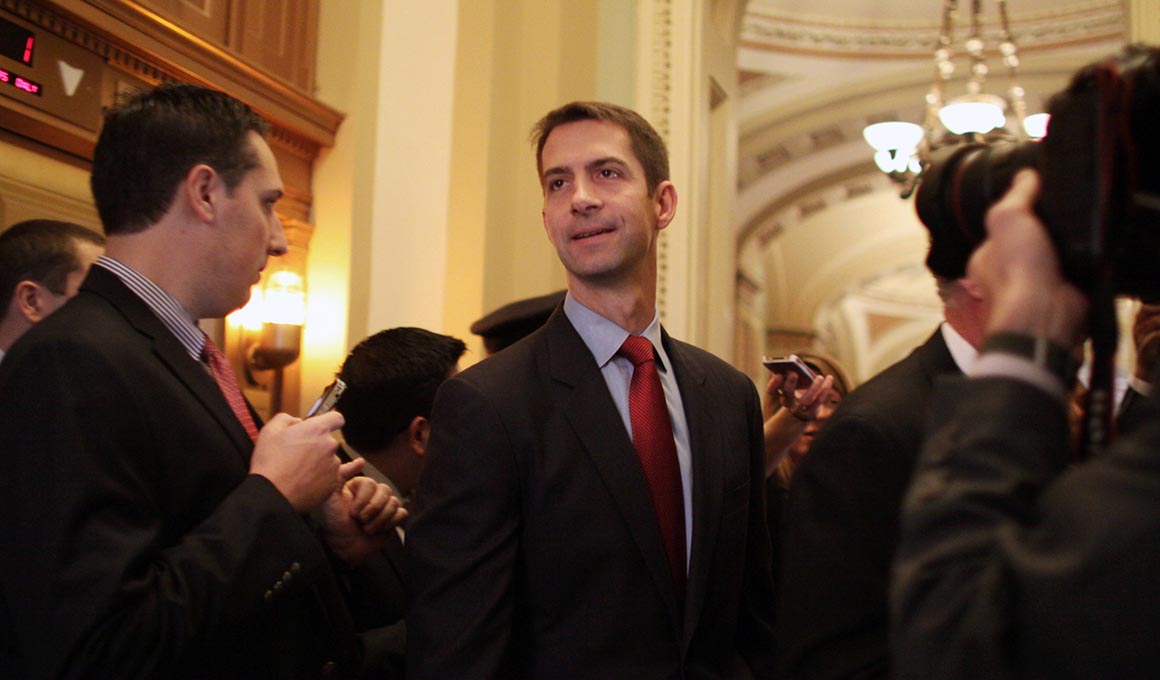
The historian Mark Byrnes warns against the “unconditional surrender” mentality that has taken hold on the right: “Like the uncompromising Tea Party Congressional caucus does with domestic issues, Cotton seems to think that in diplomacy, any kind of compromise with an adversary, anything less than total victory, is abject failure. As I’ve written before, this attitude is dangerous enough when it shuts down the U.S. government or blocks meaningful action in Congress. When it is brought to bear on the world stage, it can be catastrophic.” Read his entire article:

History News Network | “Unconditional Surrender” in Iran.

Arkansas Senator Tom Cotton

Arkansas Senator Tom Cotton

History News Network | Bombing Iran: What Would Happen If the Hawks Got Their Way?

Hopefully, even the hawks would not be so stupid as to pursue the policy of bombing Iran! Besides the fact that bombing doesn’t work, Juan Cole points out, “Leaving behind a relatively stable Afghanistan, forestalling a second march of Taliban into Kabul, and ousting ISIL from Sunni Iraq and trying to put the country back together are stated US military and foreign policy goals. They are profoundly imperiled by an Iran strike.” Read the full article at:

History News Network | Bombing Iran: What Would Happen If the Hawks Got Their Way?

US-war-syria bombing campaign

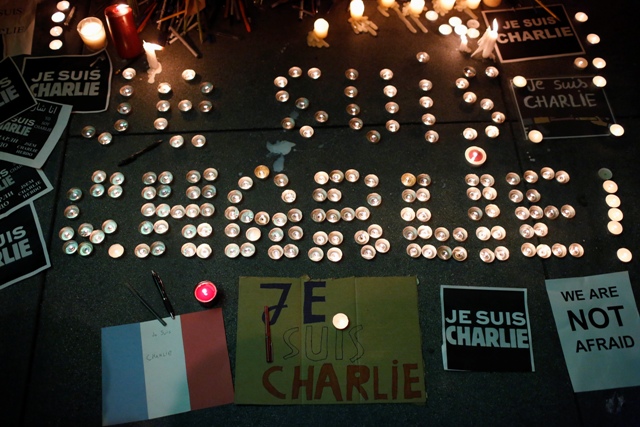
History News Network | Terror in Paris – An Analysis

The historian Lawrence Davidson offers a reasonable solution to the cycle of violence we are currently stuck in, but I’m afraid that he’s also correct that “there may be a perverse correlation between how much blood is shed and our eventual moment of self-examination.” If history is any guide there will be a lot more blood shed before begin to seriously self-reflect and commit to the hard choices that will end the vicious cycle.

History News Network | Terror in Paris – An Analysis.

How He and His Cronies Stole Russia by Anne Applebaum | The New York Review of Books

After reviewing Karen Dawisha’s Putin’s Kleptocracy, Anne Applebaum concludes: “Since 2000, Russia has been ruled by a revanchist, revisionist elite with origins in the old KGB. This elite had been working its way back to power since the late 1980s, using theft on a grand scale, taking advantage of the secrecy provided by Western offshore havens, and cooperating with organized crime. Once in power, the new elite sought to maintain control using the same methods that the KGB always used to maintain control: through the manipulation of public emotion, and by undermining the institutions of the West, and the ideals of the West, in any way that it can. Based on its record so far, it has every reason to expect continued success.” Read her full review at:

How He and His Cronies Stole Russia by Anne Applebaum | The New York Review of Books.

putin's kleptacracy

Pro-Israeli Groups Continue their Assault on Academic Freedom

Chip Gibbons reports that “some pro-Israel groups have now set their sights on a familiar target—Middle Eastern studies departments. A coalition of groups led by the Louis D. Brandeis Center for Human Rights Under Law and the AMCHA Initiative are leading a campaign to end federal funding for college Middle Eastern studies programs unless they adopt means to oversee and police the alleged ideological content of those programs.” If these groups get their way it would set a precedent for imposing ideological agendas by force in higher education. Knowledge does not advance through censorship, but through unfettered debate. If these groups disagree with certain claims about Israel they should engage in scholarly debate. Their agenda also threatens to undermine any hope for peace in the region. If we are to tackle the problem we need to face the situation honestly and JUSTLY. A one-sided perspective in which one group is completely innocent (Israelis) and the other is completely guilty (Palestinians) is not only not true, it will perpetuate the status quo of revenge/counter-revenge in the region.

Congress Under Pressure to Defund University Middle East Programs | Defending Dissent Foundation.

academic freedom

History News Network | Are We a Great Nation?

The historian Steve Hochstadt comments on the Senate Intelligence Committee Report and concludes: “It is noteworthy that those conservative Americans who insist most loudly that we should follow the founding documents literally, and who also insist that the US is an exceptional nation because of its moral virtue, defend torture because they believe it is effective. The rejection of torture as immoral has now become a “liberal” idea, just as it was in the 18th century, when the most liberal political leaders in the world founded our nation.” Read his assessment at:

History News Network | Are We a Great Nation?.

cia_torture_report_0

History News Network | How to Read the Senate Report on CIA Torture

Alfred McCoy, historian and author of the books Torture and Impunity and A Question of Torture, interprets the Senate Intelligence Committee report on CIA torture within the broader history of United States’ conflicted relationship with torture. In conclusion, he writes: “Despite its rich fund of hard-won detail, the Senate report has, at best, produced a neutral outcome, a draw in this political contest over impunity. Over the past forty years, there have been a half-dozen similar scandals over torture that have followed a familiar cycle—revelation, momentary sensation, vigorous rebuttal, and then oblivion. Unless we inscribe the lessons from this Senate report deeply into the country’s collective memory, then some future crisis might prompt another recourse to torture that will do even more damage to this country’s moral leadership.” Read his entire essay at:

History News Network | How to Read the Senate Report on CIA Torture.

Waterboarding