“Why Xi Jinping’s Campaign to Suppress Western Ideas Is Bound to Fail” |History News Network

To remain in power the Chinese government must not only use the threat of punishment, it must also control what its citizens think and believe. In a battle of ideas the authoritarian regime would likely lose against the ideals of liberty, natural rights, and democracy.  Knowing this, the regime has resorted to cordoning itself off from the ocean of ideas that flow freely outside its borders.

But as Peter Zarrow points out, “Because the entire family of notions associated with democracy, liberty, and rights has become Chinese, they are ineradicable. Indeed, the very categories of ‘Western values’ and ‘universal values’ are incoherent in our thoroughly globalized world. Furthermore, since the 1980s, Chinese have gotten used to freedoms that include the choice of where to live and what job to take, much less whom to marry—a particular focus of New Youth concern—and attempts to barricade off a sacred party-state from the realm of personal freedoms will require ever greater resources.” A problem that will only get worse. Let’s hope their eventual frustrated attempts to retain power will not require significant bloodshed!

Read Zarrow’s entire essay here: History News Network | Why Xi Jinping’s Campaign to Suppress Western Ideas Is Bound to Fail

A Book That Changed the Way Americans Saw the Poor: “How The Other Half Lives,” (1890) by Jacob Riis

Jacob Riis profoundly changed the image of poverty in New York City after he published his photographs in 1890. Photography was still in its infancy, so Riis actually had to invent a new method of lighting up the dark spaces in which the poor lived. His photos were so shocking that they actually brought about reforms that significantly improved the conditions of the working poor (mostly immigrants) living in New York City.

If you have not seen his photos, I would highly recommend doing so. They are shocking! I posted a few below.  How The Other Half Lives, by Jacob Riis:

How-the-Other-Half-Lives-Riis-Jacob-A

How the other half lives riis bayard-st-5-cent-lodging

how the other half lives riis children sleepin on the streets 1888


“Social sciences and humanities faculties to close in Japan after ministerial decree” | Times Higher Education

“Seventeen universities are to close liberal arts and social science courses.” The nationalist Japanese government has achieved what many conservatives in the U.S. would like to achieve.

This does not bode well for the future!

Source: | Times Higher Education

“4,000-Year-Old Egyptian Manuscript Found” – History in the Headlines

“A 4,000-year-old, approximately 8-foot long leather manuscript, the oldest and longest of its kind ever found, was rediscovered in a museum storage space in Cairo.” How exciting!!!

Source: 4,000-Year-Old Egyptian Manuscript Found – History in the Headlines

“Lawmakers fear Islamic ‘indoctrination’ in TN classes”

“A recent uproar over a Tennessee middle school history course that touches on Islam has federal and state lawmakers calling for changes.”

This is really sad! These politicians either don’t understand the difference between teaching the history of a particular religion and indoctrination,  or they’re exploiting this issue for political gain. Either way this type of bigotry and divisive politics is unacceptable!

They’re even railing against the “bias” in favor of Islam!! Seriously!

Source: Lawmakers fear Islamic ‘indoctrination’ in TN classes

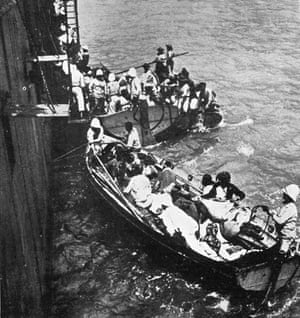
“What History Can Teach Us About The Worst Refugee Crisis Since WWII” The World Post

Watching the tragedy of Syrian refugees unfold makes me wonder if we’ve learned anything from the past refugee crises. It seemed that Europe had learned some lessons as they dealt with the refugee crisis from the wars in Bosnia and Kosovo during the 1990s. But the combination of economic crisis, anti-Islamic sentiments, and inter-E.U. bickering has set this latest crisis up to be a disaster.  The U.S. response has been lackluster as well. We are better able to handle large numbers of refugees, and given the fact that we bear some responsibility for the crisis we have a moral obligation to help the victims fleeing Syria.

Maybe it’s too late, but for what it’s worth Alexander Betts,  professor of Refugee and Forced Migration Studies, discusses the history of refugee crises and lays out five history lessons.

“Anti-gay ‘historian’ leading pro-Ted Cruz PAC says Bible forbids finding an AIDS vaccine”

The fake historian David Barton is at it again. He asserts, “The Bible says if you engage in homosexuality, your body will do things that penalize you…So if you can have a vaccine for AIDS, then you’re keeping your body from penalizing you. I don’t think they’ll ever find a vaccine for AIDS.”

No comment necessary!

Source: Anti-gay ‘historian’ leading pro-Ted Cruz PAC says Bible forbids finding an AIDS vaccine

“Honor the Past, Not the Racism” – Bloomberg View

“How far is too far in relabeling things named for great but flawed Americans?”

Stephen L. Carter argues that we’re making a mistake when we seek to rename events, buildings, etc. because they were named after some less than perfect Americans (i.e. they owned slaves, were racist, etc.).

He concludes, “Jefferson or Jackson, Truman or Wilson, Sanger or Faulkner — all held unworthy attitudes shaped by the values of particular eras. We should accept and explore our history, with all of its complexity and horror, including the possibility that we can admire some aspects of the greats of the past without endorsing everything for which they stood. If instead we’d rather spend time on erasure, there’s a nice domed memorial on the National Mall that needs a new honoree — in a capital city itself named for a man who owned 318 human beings.”

I have to agree with Carter. Let’s recognize (and abhor) their flaws, but we shouldn’t scrub all traces of them in the public square.

Source: Honor the Past, Not the Racism – Bloomberg View

“Did Jefferson Really Mean It When He Said Liberty Now and Then Requires the Shedding of Blood?” | History News Network

M. Andrew Holowchak challenges some popular interpretations of Jefferson’s contention that “[t]he tree of liberty must be refreshed from time to time with the blood of patriots and tyrants.”
After reviewing Jefferson’s thinking on the relationship between the people and the government, he concludes: “The people ‘preserve the spirit of resistance,’ and that spirit of resistance in turn preserves their rights and liberties. Governors cannot be trusted.  Yet Jefferson did not always appeal to hyperbole or rebellion to make his point apropos of acting on behalf of preserving liberty. He recognized that once a constitution was in place, there would be a limited role for rebellion. He says to C.W.F. Dumas (10 Sept. 1787), ‘Happy for us, that when we find our constitutions defective and insufficient to secure the happiness of our people, we can assemble with all the coolness of philosophers and set it to rights, while every other nation on earth must have recourse to arms to amend or to restore their constitutions.’”

“Review of Paul Moses’s ‘An Unlikely Union: The Love-Hate Story of New York’s Irish and Italians’” | History News Network

Read Robert D. Parmet’s review of Moses’ An Unlikely Union. It looks like a great book!

History News Network | Review of Paul Moses’s “An Unlikely Union: The Love-Hate Story of New York’s Irish and Italians”

An unlikely union