Why Republicans Reject the Iran Deal — and All Diplomacy – The New York Times

“Conservative hostility to this agreement is nothing new. G.O.P. hardliners denounced Nixon and Reagan’s diplomatic achievements too.”

In trying to understand the Republican rage against the Iran Deal I found this article very helpful. I don’t agree with it, but knowing this history helps to make sense of their hostility to all diplomacy. But I think this is only part of the story. Their hostility is so extreme I think there is something else going on to intensify their ideological stance: an irrational opposition to anything Obama does.

Source: Why Republicans Reject the Iran Deal — and All Diplomacy – The New York Times

Rhode Island Church Taking Unusual Step to Illuminate Its Slavery Role – The New York Times

This is real leadership! “The Episcopal Diocese of Rhode Island is establishing a slavery museum and reconciliation center in an old cathedral as part of an effort to acknowledge its own complicity in the slave trade.”

James DeWolf Perry VI, “a direct descendant of the most prolific slave-trading family in the United States’ early years,” astutely states: “I want my child to remember our family history, both good and bad,” he said. “I think this is how we need to approach our shared history as a nation, too.”

Source: Rhode Island Church Taking Unusual Step to Illuminate Its Slavery Role – The New York Times

The 200-year-old Cathedral of St. John in Providence, R.I., which will become a racial reconciliation center and a museum focused on the North's involvement in slavery. Credit Charlie Mahoney for The New York Times

The 200-year-old Cathedral of St. John in Providence, R.I., which will become a racial reconciliation center and a museum focused on the North’s involvement in slavery. Credit Charlie Mahoney for The New York Times

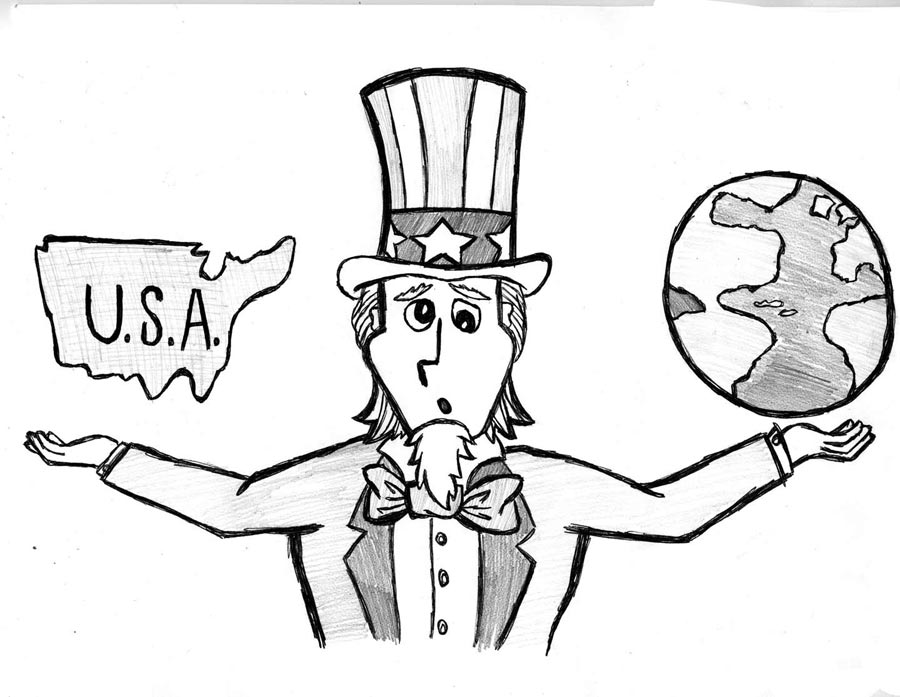
“Toward a National Strategy to Cope With a New World: Part 2” | History News Network

After listening to so much bluster (and idiocy) from The Donald on how he would solve the ISIS problem, it was really refreshing to read William R. Polk’s second essay on foreign policy. The essay is long, but I think well worth reading. His analysis reflects his experience and knowledge of history and U.S. foreign policy.
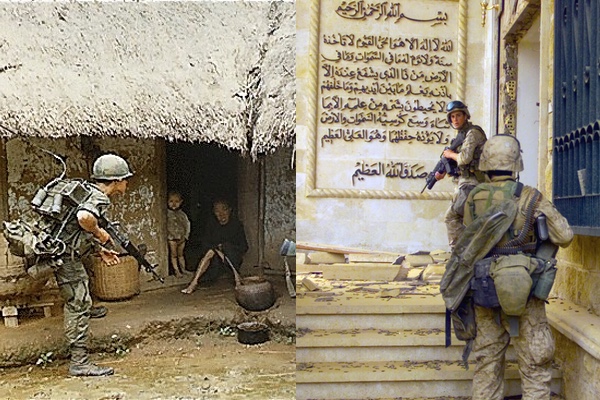
What most people miss in their deliberations on how the US should act in the world is any consideration for how other peoples see us and our actions. For a long time I have thought that one of the major flaws in our Realpoltik foreign policy has been its shortsightedness. We have been stoking hatred and desires for revenge for a long time and we’re paying the price for it now. In the short-term, Realpoltik may have served us, but in the long-term it has made us less safe. This strategy has also undermined our moral standing in the world, and exposed us as hypocrites. We have failed to live up to our own principles! I could go on, but I think Polk did an excellent job laying out some of my own grievances. I hope you read the entire essay, but if not I have put a few excerpts below that will hopefully provoke your interest, or at least provide food for thought.

“The “pacification” that counterinsurgency advocates claim is precisely what did not happen; rather anger intensified and desire for revenge grew.   Such activities are  not only self-defeating but also are self-propagating: strikes breed revenge which justify further strikes.  War becomes unending.”

“As I pointed out in the previous essay, Americans have carried out hundreds of military actions in other countries over the course of our history and in just the last 25 years have engaged in an average of six a year.[15] To Americans, such statistics mean something different from what they mean to others.  Leave aside such issues as legality, nationalism and purpose and consider only war itself.  The last time Americans personally suffered its reality – the destruction, the hunger, the draining fear – was the Civil War in the 1860s.     So when we read that we were complicit in Vietnam, Iraq and Afghanistan in the deaths of hundreds of thousands,  uncounted injured and the “stunting” of a whole generation of children, they are just statistics.  We cannot emotionally relate to them.  Many other peoples, of course, do relate to them. For some, the memories are fresh, intimate and painful.”

“Since they assumed and hoped that we would live in a republic where the opinion of citizens has some ability to control government decision making,[92] they believed, that to have a chance to combine liberty and responsibility, citizens needed to be educated.  Enhancing the intellectual quality of our citizenry thus became essential in securing of “\’The Blessings of Liberty to ourselves and our Posterity.’”

“In conclusion, we must come to terms with the reality that we live in a multicultural, multinational world.  Our assertion of uniqueness, of unipower domination and of military power has been enormously expensive and has created a world reaction against us; in the period ahead it will become unsustainable and is likely to lead precisely to what we should not want to happen — armed conflict.  Moderation, peace-seeking and open-mindedness  need to become our national mottos.”

History News Network | Toward a National Strategy to Cope With a New World: Part 2.

US and World


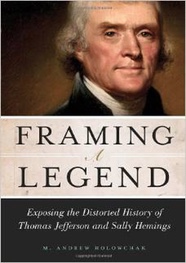
“Thomas Jefferson’s Campaign Against the Physicians of His Day” | History News Network

Another interesting story about the polymath Jefferson:

History News Network | Thomas Jefferson’s Campaign Against the Physicians of His Day.

Framing a Legend

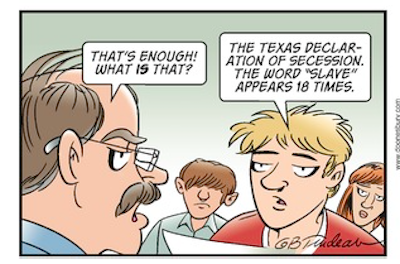
Poking Fun at the Texas Textbook Debacle: “Doonesbury as Documentary: Or, Comic Strip Imitates Life” | History News Network

This is great! You go Doonesbury!

History News Network | Doonesbury as Documentary: Or, Comic Strip Imitates Life.

doonberry Texas Textbook Civil War Controversy

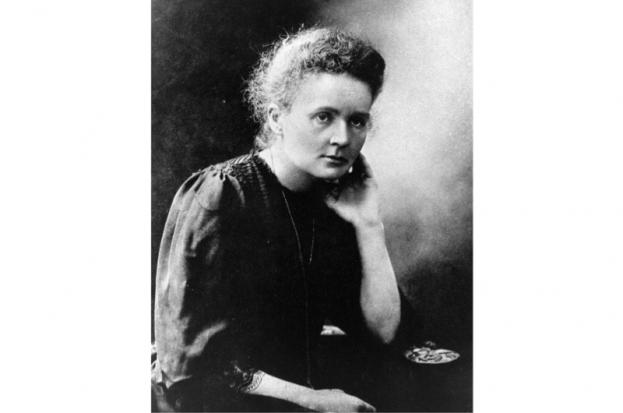
“Life of the Week: Marie Curie” | History Extra

If you don’t know anything about Marie Curie, I would recommend reading this article in History Extra. She really was a pioneer in science!

Life of the Week: Marie Curie | History Extra.

marie-curie

Quiz: “How much do you know about the American Revolution?” | OUPblog

Here’s a fun quiz on the American Revolution (although some of the questions seem obscure): How much do you know about the American Revolution? | OUPblog.

Good luck!

American-revolution

“Coping with the Sense of Drift and Disorder in World Affairs, Part 1” | History News Network

Yesterday was the first day of classes at ASU and I spent most of that day trying to explain to my students why studying history is important. Most of them are freshmen and are taking the course as a requirement, so I’m not sure how successful I was. But I’ll keep trying.

I know what you’re thinking. What does this have to do with “Drift and Disorder in World Affairs”?

In grappling with the issue of the U.S.’s lack of a coherent foreign policy William R. Polk points to an important factor that very few people acknowledge: us. Most citizens, and even many of the leaders, in this country are ignorant of the basic history and issues that impact their lives and the lives of others.
“Is this ignorance important? The French conservative philosopher, Josef de Maistre answered that it is because ‘every nation gets the government it deserves,’ If citizens are uneducated or passive, they can be controlled, as the Roman emperors controlled their peoples with bread and circuses, or as other dictatorships have with ‘patriotic’ demonstrations or manufactured threats. Indeed, a people can make themselves willing dupes as the Germans did when they voted Hitler into power in a free election. Ignorance and apathy are the pathogenes of representative government. Under their influence, constitutions are weakened or set aside, legislatures become rubber stamps, courts pervert the law and the media becomes a tool. So, even in a democracy, when we duck our civic duties in favor of entertainment and do not inform ourselves, the political process is endangered.” So true!

Polk identifies other important factors that contribute to the drift and disorder of the world, but I find this one particularly compelling. We cannot change what kind of leaders we get if we don’t first change ourselves. We all need to take our responsibilities as citizens of the U.S. and the world more seriously.

Please read Polk’s thought-provoking piece: History News Network | Coping with the Sense of Drift and Disorder in World Affairs, Part 1.

Iraq

Expert with new theory on Nefertiti’s tomb invited to Egypt – Yahoo News

Very interesting!

Expert with new theory on Nefertiti’s tomb invited to Egypt – Yahoo News.

FILE - In this Oct. 15, 2009 file photo, a 3,300-year-old bust of Queen Nefertiti is seen at the New Museum, in Berlin, Germany. Egypt's Antiquities Ministry announced Wednesday, Aug. 19, 2015, that it is inviting an Egyptologist behind a theory that the tomb of Queen Nefertiti may be located behind King Tutankhamun's 3,300-year-old tomb in the famed Valley of the Kings. British-educated expert Nicholas Reeves has been invited to Cairo in September to debate his theory with Egyptian colleagues. (AP Photo/Markus Schreiber, File)

FILE – In this Oct. 15, 2009 file photo, a 3,300-year-old bust of Queen Nefertiti is seen at the New Museum, in Berlin, Germany. Egypt’s Antiquities Ministry announced Wednesday, Aug. 19, 2015, that it is inviting an Egyptologist behind a theory that the tomb of Queen Nefertiti may be located behind King Tutankhamun’s 3,300-year-old tomb in the famed Valley of the Kings. British-educated expert Nicholas Reeves has been invited to Cairo in September to debate his theory with Egyptian colleagues. (AP Photo/Markus Schreiber, File)