“Climbing the Eye of God by Matt Donovan” | NYR Daily | The New York Review of Books

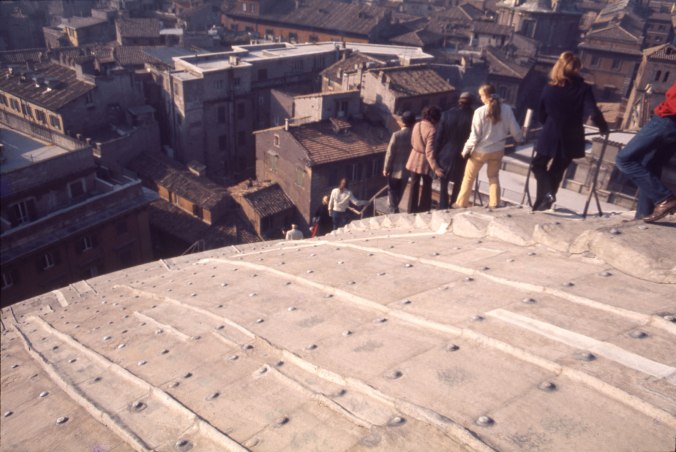
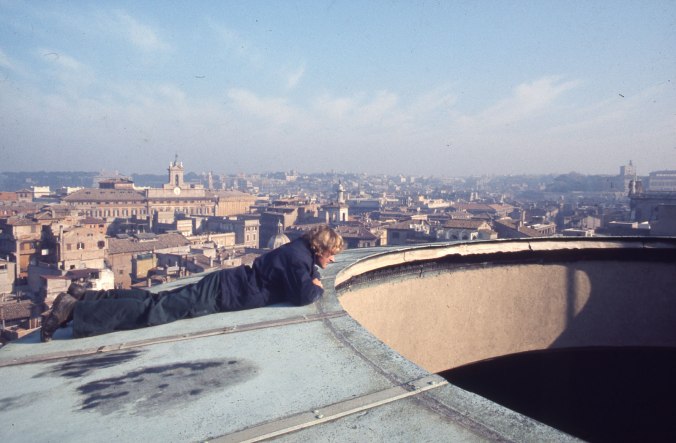
This engineering marvel was built between 118 and 126 AD by the Roman Emperor Hadrian. The oculus (“the eye of God”) sits about 140 ft. above the ground at the center of the dome of the Roman Pantheon. Until recently people would climb the building to get a glimpse from the oculus into the interior of the building. It must have been an incredible sight! When I was younger I probably would have done it. What an experience! But I understand why it has been banned.

For more on the history of this practice go here: Climbing the Eye of God by Matt Donovan | NYR Daily | The New York Review of Books


Ken Burns Jefferson Lecture | National Endowment for the Humanities

In a speech for the National Endowment for the Humanities earlier this month, the talented documentarian Ken Burns gave a powerful and compelling defense of the humanities. He mixes life lessons with insights into our current state of affairs gleaned from his immersion in the humanities. It’s really worth reading the entire speech.

Here’s and excerpt: “In a larger sense, the humanities helps us understand almost everything better–and they liberate us from the myopia our media culture and politics impose upon us. Unlike our current culture wars, which have manufactured a false dialectic just to accentuate otherness, the humanities stand in complicated contrast, permitting a nuanced and sophisticated view of our history, as well as our present moment, replacing misplaced fear with admirable tolerance, providing important perspective, and exalting in our often contradictory and confounding manifestations. Do we contradict ourselves? We do!”

Read the entire speech here: Ken Burns Jefferson Lecture | National Endowment for the Humanities

“Kublai Khaan’s Imperial Palace Discovered Under the Forbidden City” New Historian

“The Palace Museum in Beijing, best known as the Forbidden City, recently confirmed the discovery of porcelain pieces and broken tiles dating back to the Yuan Dynasty established by Kublai Khaan in the thirteenth century, thus solving one of China’s greatest mysteries; the location of the Yuan Palace.”

Source: Kublai Khaan’s Imperial Palace Discovered Under the Forbidden City

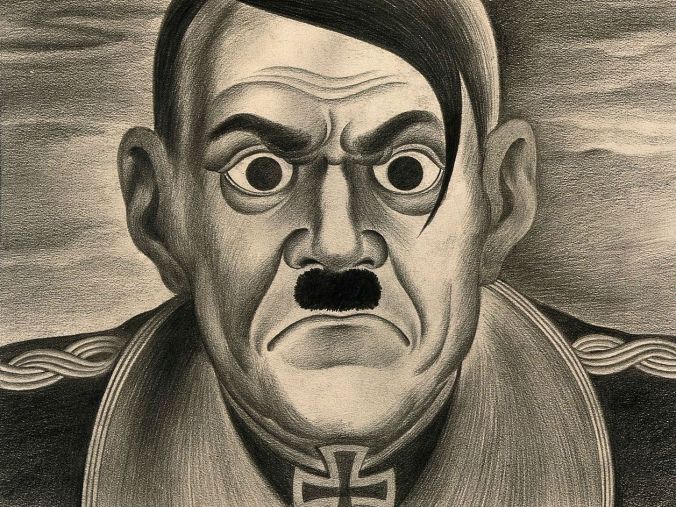
“Your Hitler analogy is wrong, and other complaints from a history professor” – Vox

The over use (and abuse) of historical analogies may seem innocent, but as the historian Linford D. Fisher points out, they are not harmless.  The main problem is that “they dumb down our political discourse, cheapen the actual realities of the past, and rob us of the opportunity to genuinely understand and learn from the past.” This outcome is the result of “comparisons [that] are shallow and not rooted in any depth of meaningful knowledge of the past. They rely on caricatures and selective historical tidbits in a way that, indeed, just about anyone can be compared to anyone else.” In other words, they are very bad analogies.

Some of these analogies are a product of ignorance, but too often they are trotted out to serve political ends. If your goal is to discredit Obama, then just keep calling him “Hitler,” “a fascist,” and/or “a communist” (the fact that this is incompatible with the other two is never considered). This kind of extreme rhetoric has been successful at turning a significant portion of the population against the president, making it easier for Congress to oppose him at every turn. Their effectiveness ensures that they’re not going anywhere anytime soon.

But there is hope. One way to combat against this abuse of history is through education. This is one reason why the humanities are particularly valuable. They provide the critical thinking skills needed to see through such crude analogies. And, of course, a broad and in-depth knowledge of history is also helpful.

Done correctly, historical analogies can be very useful. As Fisher notes, “history gives us perspective; it helps us gain a longer view of things. Through an understanding of the past we come to see trends over time, outcomes, causes, effects. We understand that stories and individual lives are embedded in larger processes. We learn of the boundless resilience of the human spirit, along with the depressing capacity for evil — even the banal variety — of humankind. The past warns us against cruelty, begs us to be compassionate, asks that we simply stop and look our fellow human beings in the eyes. All of us — grandstanding presidential candidates and partisan tweeting voters — could use a little more of this kind of history, not less.”

Read Fisher’s germane plea here: Your Hitler analogy is wrong, and other complaints from a history professor – Vox

Book Review: “A Different Guernica” by John Richardson | The New York Review of Books

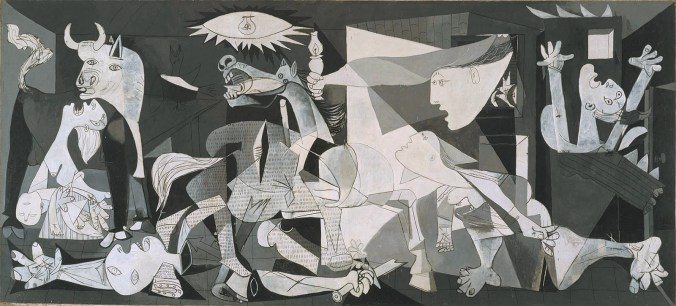
Art is at its best when it sends a powerful message, and this is exactly what Picasso’s famous Guernica painting does. The painting shocks and disturbs us, even when we don’t know the story behind it. It conveys a message of death, destruction, and a world gone mad. What horrible event could have provoked Picasso to paint such a disturbing scene?

The year was 1937. The Spanish Civil War was in full swing and General Franco, leader of the Nationalist forces, had powerful allies: Nazi Germany and fascist Italy. The war proved useful to the Nazis. It provided them with an opportunity to test new technologies and strategies of warfare. It was in pursuit of this goal that the Luftwaffe bombed the Basque town of Guernica. The goal was to break the morale of the people. It was psychological warfare against civilian populations.

Morale bombing was the brain child of the Italian General Giulio Douhet, whose influential The Command of the Air (1921) argued in favor of targeting civilian populations who  were assumed to be weak and would therefore if bombed would press their leaders to end the war, thus saving lives.

The strategy was based on a flawed assumption (civil populations are weak) and never lived up to its promise (an experiment that cost the lives of millions of civilians). But in 1937, Hitler was so enamored by its “successful” implementation in Guernica that he recommended its use on Poland two years later. This strategy was implemented not just by the Nazis in the Spanish Civil War, but also by the Allies during WWII.

While Picasso’s painting  is about a single event in Guernica, it has since taken on a much more significant role as an indictment of all war crimes and atrocities. For this reason, a replica of it is prominently placed  at the UN headquarters outside the Security Council chambers. Here it finds itself frequently the backdrop for press statements. As a result, it had to be covered up during a press conference in 2003. Collen Powell was set to speak about the war in Iraq. The message was inconvenient!

Read Richardson’s review of Gernika, 1937: The Market Day Massacre by Xabier Irujo here: A Different Guernica by John Richardson | The New York Review of Books

“Our gun myths are all wrong: The real history behind the Second Amendment clichés that have sustained our lethal gun culture” – Salon.com

Pamela Haag approaches the history of America’s gun culture from a unique perspective. By studying the history of the companies that manufactured and sold guns, she discovered that the gun culture was a product of clever marking. She insists that those who are promoting the idea that “America was born with a unique bond to gun culture,” are “peddling bad history.”

Here’s an excerpt from her informative article: “After World War I, saddled by massive wartime plant expansion and burdened by debt, the Winchester Repeating Arms Company (WRAC) had to push sales again, especially through what its executives shorthanded as an ambitious national “boy plan,” with a goal of reaching “3,363,537 boys” ages ten to sixteen. “When the boys and girls of your town arrive at the age of twelve years, they become your prospects,” the company’s internal sales letter explained. It was a new refrain in an old song. At this time the company announced the largest nationwide marketing campaign ever undertaken for guns “in the history of the world.” As it was in the beginning, so it was in 1922: gun markets and demand could never be taken for granted. It was the gun business’s business to create them.”

                                                      The Gunning of America by Pamela Haag

Source: Our gun myths are all wrong: The real history behind the Second Amendment clichés that have sustained our lethal gun culture – Salon.com

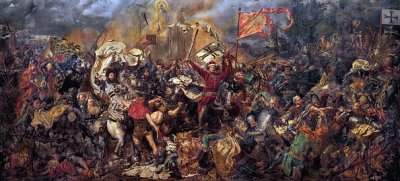
Poland: Ancient remains of knights towers reveal life in the middle ages

“Medieval Polish knights lived in wooden towers – remains of which have been found in the region of Silesia.”

Source: Poland: Ancient remains of knights towers reveal life in the middle ages

“Evidence of Greek Fortress Finally Discovered”

Another awesome discovery!

“The first evidence from the era when Hellenistic culture held sway over the ancient city of Jerusalem has been uncovered by Israeli archaeologists; Acra, a citadel constructed by the Greeks more than two thousand years ago in the middle of old Jerusalem. Judea was conquered by Alexander the Great during the fourth century BCE.”

Source: Evidence of Greek Fortress Finally Discovered

“Croatia’s Far Right Weaponizes the Past” | Foreign Policy

Unbelievable! How can Croats think that this is a good idea? Weren’t the first two times bad enough? This is also likely to provoke an equally nationalistic response from Serbia, which then will further provoke Croats leading to an ever-increasing radical nationalism. Let’s hope the story doesn’t end like it

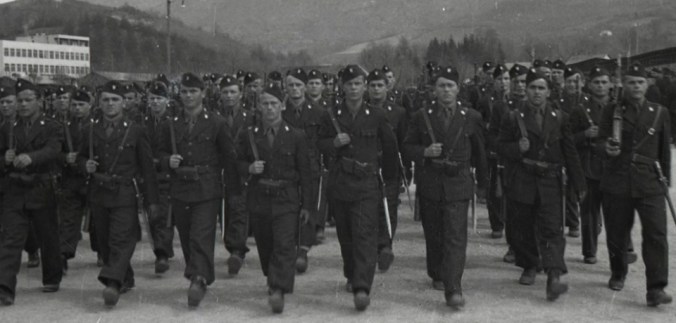
“The EU’s newest member, Croatia, has an unabashed and strong-willed fascist in its new cabinet — one who makes the right-wingers in power in Hungary and Poland look like wimps.”

Source: Croatia’s Far Right Weaponizes the Past | Foreign Policy

“Not Everything Is Munich and Hitler” | The National Interest

David A. Bell writes a much-needed rebuke against the popular tendency to compare everything with World War II and Hitler. As he explains, “Comparing modern threats with World War II is neocon nonsense.” It may seem like harmless drama, but this kind of hyperbole has real consequences. As Bell points out, “References that were already misleading a generation ago have become dangerously absurd. The putative lessons of history have become imprisoning, rather than enabling. In this sense, we really do suffer from an excess of it.”

His discussion of the Munich lesson is particularly noteworthy.  “Ever since, it has been de rigueur for Americans to justify action against alleged foreign threats with Hitler analogies, and to denounce the alleged appeasement of such threats with Munich analogies. Sometimes, the comparisons have been laughably inappropriate.” We see almost all foreign events through this lens and it has made us particularly war prone. We have come to see violence (or the threat of violence) as the most effective tool of foreign policy.

To read the other dangers posed by using inappropriate WWII analogies go here: Not Everything Is Munich and Hitler | The National Interest

In conclusion Bell writes, “But it can still help if as many people as possible take the time to remember just how false the comparison actually is, and if they keep in mind that a keen sensitivity to the parallels between the past and the present is not always a good thing. When it comes to the moral lessons of the terrible years the world lived through between 1939 and 1945, particularly those of the Holocaust, we must always remember. But when it comes to the strategic lessons of that era, we might do well, sometimes, to forget.”

I agree with Bell’s overall analysis, but I have to disagree with his solution: forget history. The problem is a result of superficial knowledge, bad analogies, and a desire to inflate the importance of one’s own issues by associating them with extreme examples (Hitler, genocide, slavery, etc.).