The New, More Patriotic AP History Test from Pat O’Brien and FOD News

This is a comical “More Patriotic AP history test” from Funny or Die. It’s just what the conservatives ordered! This is my favorite question:

It was okay to use civil disobedience tactics during the Boston Tea Party because:
a.) it was white people doing it
b.) just shut up, alright?
c.) hey, look over there! >>>>>>>>>>
d.) seriously, there’s this really cute dog doing something crazy! you’re missing it!!! >>>>>>>>>>>

To see the entire test go to:

The New, More Patriotic AP History Test from Pat O’Brien and FOD News.

american-flag

Rick Perry’s Wrong About Lincoln – Josh Zeitz – POLITICO Magazine

The historian Josh Zeitz takes Rick Perry to task over his claim that Lincoln loved the tenth amendment that limits the powers of the federal government. He even manages to get in a jab at the Texas Board of Education: “Maybe Rick Perry spent too much time reading from those widely disputed history and government standards that the Texas Board of Education, in its infinite wisdom, foisted on textbook publishers. Whatever the cause, he’s confusing Abraham Lincoln—erstwhile Whig and promoter of a strong central government—for a strict Tenth Amendment devotee. That, he certainly was not.”

Rick Perry’s Wrong About Lincoln – Josh Zeitz – POLITICO Magazine.

Rick Perry 2015

History News Network | Why It’s Time for a New Wave of Constitutional Amendments

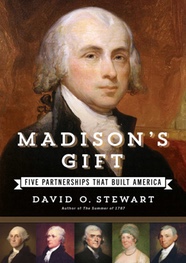
David O. Stewart rather than advocating a new constitution recommends a “new wave” of amendments to fix some of our current political woes. Here are some of his recommended amendments:
1) an amendment that would “require that House districts have compact, regular shapes that respect city and county lines, without regard to residences of incumbents.”
2) an amendment that would “restore to Congress and state legislatures the power to limit campaign spending.”
3) “An amendment should provide that the president shall be the candidate who wins a popular majority.”
4) “A constitutional amendment should establish that a citizen’s right to vote shall not be abridged unless that person is incarcerated for a crime.”
I think this is a great start! What do you think?

History News Network | Why It’s Time for a New Wave of Constitutional Amendments.

Madison's Gift Stewart

History News Network | “So Help Me God” and the Presidential Oath

In an article at the History News Network David B. Parker debunks the “so help me God” myth. He notes that it was created “[t]o shore up our Godly credentials.” And this is only one of the Cold War inventions to shore up our religious bona fides in our battle with the godless Soviet Union. “It joined “one nation, under God” and “In God we trust” to create a trinity of Cold War religious phrases. And like several other legacies of our Cold War heritage, this one has stuck with us.”

History News Network | “So Help Me God” and the Presidential Oath.

George_Washington_taking_oath_crNA

What’s the purpose of education in the 21st century? – The Washington Post

Governor Scott Walker’s attempt to change the mission statement of the University of Wisconsin by replacing “search for truth” and “improve the human condition” with “meet the state’s workforce needs” has provoked a backlash. Many Republicans like Walker see  higher education solely in terms of job training. This narrow and myopic view of education has gained traction recently and has made colleges and universities the target of increased criticism. There has already been some pressure on institutions of higher education to conform to this model, but for the most part the traditional model has prevailed, as it should. If the narrow, worker model of education triumphs we will all lose. To advocate for a broader intellectual education does not mean that we cannot also prepare students for the workforce. As Arthur H. Camins notes “it doesn’t have to be either-or.” Instead, he argues, “[e]ducation should prepare young people for life, work and citizenship.” Read Camins’ defense of higher education at:

What’s the purpose of education in the 21st century? – The Washington Post.

(AP Photo/The Sentinel, Dennis R.J. Geppert)

(AP Photo/The Sentinel, Dennis R.J. Geppert)


History News Network | President Obama, the National Prayer Breakfast, and Slavery

Obama’s recent remarks at the National Prayer Breakfast about the connection between Christianity and slavery may have been provocative given the setting (a setting that is of dubious constitutionality, I might add!), but they were not incorrect.  As the historian Joshua D. Rothman points out: “So vital was Christianity to the southern defense of slavery that some historians have estimated that ministers penned roughly half of all proslavery literature in the decades after 1830, though it was hardly only ministers like Baptist leader Richard Furman who one might have heard state that ‘the right of holding slaves is clearly established in the Holy Scriptures.’ Secular politicians drew upon such arguments as well. Jefferson Davis, for example, claimed that slavery ‘was established by decree of Almighty God’ and was ‘sanctioned in the Bible, in both Testaments, from Genesis to Revelation,’ while his contemporary, South Carolina Senator James Henry Hammond, blasted opponents of slavery by arguing that ‘the doom of Ham has been branded on the form and features of his African descendants’ and that ‘man cannot separate what God hath joined.'” Read the entire article here:

History News Network | President Obama, the National Prayer Breakfast, and Slavery.
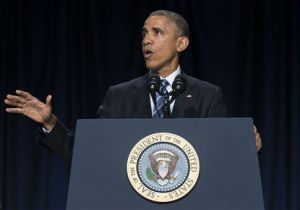
Obama-at-2015-National-Prayer-Breakfast

Should the US Constitution be sacred? – Daniel Lazare – Aeon

I have a lot of respect for the Constitution, but I think Daniel Lazare makes a great case for letting go of our Constitution worship. Lazare argues that “[n]othing could be sillier than the notion of strolling into the 21st century with a pre-modern plan of government. It’s like sending an 18th century man-of-war into battle against a guided-missile destroyer. The US political system’s age, in other words, is showing.” Read his entire argument here:

Should the US Constitution be sacred? – Daniel Lazare – Aeon.

us history we the people

Was Abolitionism a Failure? – NYTimes.com

In The New York Times Jon Grinspan argues that it was “the Northern moderates,” not the abolitionists, who ended slavery. According to Grinspan, we have credited the abolitionists with the victory because “[w]e like the idea of sweeping change, of an idealistic movement triumphing over something so clearly wrong.” While his article implies that these types of movements are ineffective, at the same time he seems to cheer them on concluding: “We can only wonder which of today’s unpopular causes will, in 150 years, be considered the abolitionism of 2015.”

Grinspan’s argument seems to rest on the assumption that only concrete changes count. It was the abolitionists who laid the moral foundation that made the actions of the Northern moderates possible. I count that as a victory!

Read the entire article here:

Was Abolitionism a Failure? – NYTimes.com.

Abolition in US

History News Network | Terror in Paris – An Analysis

The historian Lawrence Davidson offers a reasonable solution to the cycle of violence we are currently stuck in, but I’m afraid that he’s also correct that “there may be a perverse correlation between how much blood is shed and our eventual moment of self-examination.” If history is any guide there will be a lot more blood shed before begin to seriously self-reflect and commit to the hard choices that will end the vicious cycle.

History News Network | Terror in Paris – An Analysis.

History News Network | Europeans Need to Reconsider the Lessons of the Great Depression

Here is another perspective on the lessons from the Great Depression, but in this case the focus is Europe. Barry Eichengreen has some great insights into the current European situation, particularly in his observation that “Across Europe, anti-system parties of Left and Right are gaining political traction. That perverse policies and economic hard times feed political extremism is another important implication of the 1930s. It is still not too late for European policy makers – and historians – to get this lesson right.”

History News Network | Europeans Need to Reconsider the Lessons of the Great Depression.

Hall of Mirrors Great Depression