First Amendment Folly (Part II): The Virginia Dissenters Campaign Against Religious Establishments (1776-1778)

This is the third posting in a six part series evaluating Carl H. Esbeck’s “Protestant Dissent and the Virginia Disestablishment 1776-1786.” For the first two posts in the series click on the following links: Intro and Part I.

The Dunking of David Barrow… Oil on canvas by Sidney King, 1990Virginia Baptist Historical Society

The Dunking of David Barrow… Oil on canvas by Sidney King, 1990 Virginia Baptist Historical Society

After years of abuse and second class citizenship, the Declaration of Rights (DOR) gave the religious dissenters hope that they would finally become equal citizens. Standing in the way of this equality was the established Church of England, whose privileges could not be reconciled with the DOR. To remedy this situation, the dissenters sent a series of petitions to the newly created General Assembly in the fall of 1776. These petitions give us the opportunity to test Esbeck’s volunatryism principle to see how compatible it is with the dissenters’ sentiments.

Dissenting Petitions (1776): Exemplars of Voluntaryism?

As previously explained, Esbeck’s principle of voluntaryism included three related claims: the issue of free exercise of religion was separate from calls for disestablishment; questions about establishments were about the relationship between two centers of power (organized religion and government), not individual rights; and the goal was to limit government intervention in organized religion, but not the other way around. The dissenters pursued this arrangement, according to Esbeck, because they wanted “to protect the church from undue control by the government.” (103) (italics mine) As an archetype of the dissenting position, Esbeck offers the petition from the Hanover Presbytery – thus one would expect this petition to be an unambiguous representation of voluntaryism.

The Hanover petition was presented to the House of Delegates on October 24. An examination of the document reveals that its author, most likely the Presbytery clerk Caleb Wallace, chose to write the document in the language of the Enlightenment. Even the appeal to “the great Sovereign of the Universe” at the end of the document is a reflection of inclusive Enlightenment language of the Deists.

At the time, the Hanover Presbytery boasted a significant number of graduates of the College of New Jersey (Princeton), including Wallace. At that time, the college was a beacon of Enlightenment thought under the leadership of the Scottish Presbyterian minister John Witherspoon. Also among its most distinguished graduates was James Madison, who attended at the same time, but in different cohorts, as many of the Hanover Presbyterians. (1) Imbued with the same zeal for religious liberty and as steeped in the new Enlightenment learning as was Madison, Wallace would have been the ideal candidate to write the document. Therefore, it should not be surprising that the Hanover petition reads more like the work of an Enlightenment rationalist, than the work of a deeply pious minister, which Wallace certainly was. Given our current politics we tend to think of these two things as incompatible, but in late eighteenth-century America, Enlightenment rationality and religious piety were frequent companions within many dissenting communities. This should not be surprising given the fact that Enlightenment itself was largely the product of the fight waged by religious dissenters against intolerant governments that sought to impose religious uniformity upon them.

Turning to the petition Esbeck’s argument begins to break down from the start. The opening paragraph, which sets up their argument against religious establishments, makes a strong appeal to individual rights. Speaking for all “dissenters from the church of England [increasingly called the Protestant Episcopal Church],” the petitioners expressed gratitude for the Declaration of Rights (DOR), which they referred to “as the magna charta of our commonwealth.” This DOR was what they “rely[ed] upon” to secure their “free exercise of religion according to the dictates of our consciences.” (2) (italics in original) Now that they had secured these equal rights, they requested to be freed from “the religious grievances under which [they] have hitherto laboured.” Such a prominent place given to this review of their rights highlights their significance. Undermining Esbeck’s first two points separating rights from requests to disestablish religion, this paragraph alone illustrates the essential link between individual rights and disestablishment in the dissenters’ view.

This point is reinforced in the second paragraph, where they called attention to the fact that they had been subjected to “invidious, and disadvantageous restrictions” in support of “an establishment, from which their consciences and principles oblige them to dissent: all of which are confessedly so many violations of their natural rights; and in their consequences, a restraint upon freedom of inquiry, and private judgement.” (italics mine) In consequence, they expressed the hope that the legislature would “cheerfully concur in removing every species of religious, as well as civil bondage.” This request goes beyond simply a demand for the disestablishment of the Episcopal Church. They wanted an end to all privileges made on the basis of religious beliefs. To make their point they declared that they were opposed to even the establishment of Christianity since “there is no argument in favour of establishing the Christian religion, but what may be pleaded, with equal propriety, for establishing the tenets of Mahomed by those who believe the Alcoran; or if this be not true, it is at least impossible for the magistrate to adjudge the right of preference among the various sects that profess the Christian faith, without erecting a chair of infallibility, which would lead us back to the church of Rome.” This passage demonstrates the centrality of equal rights in their conception of church-state relations. They rejected even a privileging of Christianity because it violated the principle of equality. It also illustrates a concern beyond simply the fear of government intervention in “organized religion.” They saw the threat of tyranny in allowing the state to make decisions concerning what is, or is not, acceptable religious beliefs and/or practices.

This point is further clarified later, when they rejected an establishment of their own religion because this “would be giving exclusive or separate emoluments or privileges to one set (or sect) of men, without any special public services to the common reproach and injury of every other denomination.” Here the dissenters are referencing Article 4 of the DOR, which reads: “That no man, or set of men, are entitled to exclusive or separate emoluments or privileges from the community, but in consideration of public services…” (3) It is important to note that they are referring to the individuals within these “sets of men,” not organized religion, as is indicated by their statement that “all partial and invidious distinctions will be abolished” then “every one [will] be left to stand or fall according to merit, which can never be the case, so long as any one denomination is established in preference to others.” (italics mine)

The extent of the Presbyterians’ goals concerning the disestablishment of religion is explicitly stated. They insisted that “the only proper objects of civil government, are the happiness and protection of men in the present state of existence; the security of the life, liberty and property of the citizens; and to restrain the vicious and encourage the virtuous by wholesome laws, equally extending to every individual.” The extent of their desire to disestablishment religion goes far beyond the more limited goals of voluntaryism, which apply only to organized religion.

A further blow to Esbeck’s version of events is the fact that there is no mention of limiting the state to protect “organized religion” anywhere in the petition. This rights-centric petition bears little resemblance to the church-focused one described by Esbeck. In addition, there is nothing in this petition, even on a generous reading, that indicates that the primary motive behind their anti-establishment campaign was to protect “the church.” On the contrary, their message was clear, they wanted an end to all establishments on the grounds that these violated their individual rights and that the solution was to limit the state from intervening in matters of religion with the exception of protecting them in their rights. And “left in the quiet possession of their unalienable rights and privileges” Christianity would flourish in greater purity. This benefit to religion was a consequence of protecting rights and of putting religion outside the bounds of government jurisdiction.

There is no reconciling the Hanover petition with Esbeck’s voluntaryism principle. Rather than seeking to protect “the church” the Presbyterians were seeking to end all privileges and/or burdens on the basis of religious beliefs because these were “so many violations of their natural rights.” Rights were inextricably linked to their desire to separate church (religion) and state, and cannot be dismissed as extraneous flourishes in an otherwise church-focused petition. In addition, there is no mention of preventing the state from intervening in organized religion so that religion can be free to prevent state tyranny. To the dissenters, the source of tyranny was the alliance between church and state (i.e. establishments of religion), and church intervention in state affairs was just as much anathema to them as state intervention in religion. This will become increasingly clear as the campaign against religious establishments progresses.

Looking at the other petitions there is one, submitted by the German Congregation of Culpepper County, that somewhat resembles the dissenters of Esbeck’s imagination. Unlike the other dissenters, this congregation expressed support for the established Church and sought more limited goals: to be relieved from taxes in support of the establishment and to obtain full privileges for their ministers. In other words, they were not asking for full equality as citizens, they were seeking a more generous system of toleration for themselves. (4) This petition is interesting and partly conforms to Esbeck’s characterization of dissenting goals, but as an outlier from a small group it tells us little about the broader dissenting movement.

There is another petition that expresses a concern for “several Churches,” and is therefore a potential representative of Esbeck’s voluntaryism. But rather than supporting Esbeck’s contention that they were primarily concerned about “the church,” the dissenters were making a minor point in a much longer complaint that focused on the unjust privileges of the established Church. They made clear in their petition that any unjust privileging based on religious differences was in violation of their rights. Therefore, they hoped that the new government “would secure just & equal Rights to the Subjects.” (5) This same sentiment was expressed in the separate but almost identical petition from Albemarle, Amherst, and Buckingham counties. (6)

Similarly, the petitioners from the heavily Presbyterian Prince Edward County emphasized individual rights.  These petitioners praised “the last article of the Bill of Rights [Art. 16] as the rising sun of Religious liberty,” which they believed was meant “to relieve them from a long night of Ecclesiastical bondage.” Thus, they requested that the House “complete what is so nobly begun; that is, to raise Religious as well as Civil liberty to the zenith of glory.” To achieve this, they believed that “all Church establishments” should be pulled down, as well as ALL burdens “upon conscious and private judgment” so that “each Individual” could “rise or sink according to his merit.” (7) (italics mine) This petition unequivocally demonstrates the connection between rights and disestablishment, and nowhere do they indicate that their goal was to protect the church from the state.

A petition organized by the Baptists received 10,000 signatures, an impressive number for the time. The petition notified the House that their hopes had “been raised and confirmed by the Declaration of Rights” in regards “to equal Liberty. EQUAL LIBERTY!” which was the “Birthright of every good member of society.” The explicit reference to the equality of “every good member of society” leaves no doubt that it was the equality of individuals, not of religious societies, that they were seeking. They concluded with a request that the establishment “as well as every other yoke, may be broken, and the oppressed may go free.” In other words, these petitioners sought to end all privileges based on religious beliefs, and they insisted that the only proper role for government in religious matters was “to support them in their just Rights and equal privileges.” (8)

On October 25, two petitions from Berkeley County informed the House of Delegates that their hopes had “been raised & confirmed by the Declaration of your Honourable House in the last Article of rights [article 16].” Following the pattern of the other petitions, they pronounced that the “Ecclesiastical Establishment” was “a grievous Burden & inconsistent with the rights of humanity either Civil or religious.” They believed that “the rights of human Nature (& religious Liberty in its fullest extent is one of these) …should have every protection & Ground of Security which Laws & the Policy of free States can give them.” In consequence, they demanded “that No Laws which are indefensible & incompatible with the rights of Conscience should be Suffered to remain unrepealed.” (italics mine) This would include any laws that privileged a particular religion (including a particular religious belief or practice), or religious denomination. In line with this they also insisted that “the rights of human Nature (& religious Liberty in its fullest extent is one of these) …should have every protection & Ground of Security which Laws & the Policy of free States can give them.” (9)

Similarly, the petitioners from Augusta County wanted all “unequal Burthen[s]” based on religious beliefs to be abolished. They believed that these “Burthens[s]” were “Inconsistent with Justice, & with that Virtuous Civil as well as religious Liberty that every Christian would wish to enjoy for Himself and that ought to be the portion of Every Good member of Society.” (10) While these petitioners seemed to believe that all members of society were Christians, which was mostly true at that time, they also indicated that “Every Good member of Society” should receive the same treatment, which would presumably include non-Christians. Consistent with a more inclusive goal they claimed that they were “Struggling in Defence of the Common Rights of Mankind.” Like other dissenters, these petitioners believed that their equal rights as citizens were incompatible with any religious establishments because these unjustly privileged some above others.

These petitions are hard to square with Esbeck’s characterization of the dissenters’ views. The main focus in almost all of these petitions was on securing rights, which in their view meant that all religious establishments must be torn down. This is the link that Esbeck denies existed, but it is undeniable if we are to take the dissenters at their word. References to “the church” or organized religion were rare, and when they did appear they were not central to the main message. It was not that they were not concerned about their own churches, it was rather that they saw that the best way to protect religion, and their own church, was by securing their individual rights. This in turn meant that government must get out of the business of religion altogether, as they repeatedly insisted. “[I]f mankind were left in the quiet possession of their unalienable rights and privileges, Christianity, as in the days of the Apostles; would continue to prevail and flourish in the greatest purity, by its own native excellence, and under the all disposing providence of God [not the state].” By ignoring the consistent and frequent references to individual rights Esbeck has distorted the dissenting view of religious liberty, and has falsely championed them as disciples of an accommodationist view of church-state relations.

The Bill for Dissenters (1776)

In response to the petitions the legislature attempted to placate the dissenters. Jefferson, back from his stint at the Continental Congress, where he had written the Declaration of Independence, led the fight for religious liberty in Virginia as a representative in the House of Delegates. As a member of the Committee for Religion (COR), which had been given the task of dealing with the petitions, he sought to go all the way in fulfilling the dissenters’ plea to sever the ties between religion and government in Virginia. To his dismay, the conservative Episcopalians, who dominated the legislature, obstructed his efforts. He later described these events as “the severest contests in which I have ever been engaged.” (11) The fights over establishment of religion in 1776 are revealing. In the end, the established Church would remain intact, but the dissenters would get some relief from their burdens. In addition, the bill for dissenters, which passed during the fall session, shifted the central issue of the debate towards a fight over general assessments (taxes supporting all denominations).
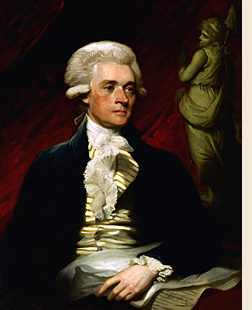
by Mather Brown. London,1786.

Thomas Jefferson, by Mather Brown. London,1786.

Also on the COR was the budding statesman James Madison, whose famous friendship with Jefferson had yet to develop. Even though Madison’s victory at the Convention set the stage for the dissenters’ campaign against religious establishments, his role in the House was overshadowed by his already distinguished colleague. As members of the Anglican Church these rationalists and their supporters led the dissenters cause from within the seat of power. As unlikely as this alliance between pious dissenters and rationalists may seem they shared similar goals, even if their motives were different, when it came to religious liberty. How closely these two groups worked together is unknown, but the frequent lobbying at the legislature by the dissenters would have brought them into frequent contact. This alliance was also aided by Madison’s outspoken objections to the persecution of dissenters, as well as his acquaintanceship with some members of the Hanover Presbytery, whom he knew from his time at the College of New Jersey. (12) After a protracted battle these allies eventually succeeded in bringing down establishments of religion in Virginia, but unbeknownst to them the battle in 1776 was just the beginning of a very long and taxing war between two competing visions of religious liberty.

As a member of the COR Jefferson drafted a far-reaching bill (“Resolutions for Disestablishing the Church of England and for Repealing Laws Interfering with Freedom of Worship”) to satisfy the requests from the dissenters. This bill would not only have dismantled the established Church and banned religious assessments, it also would have eliminated all laws on the subject of religion, including the total banishment of laws constraining free inquiry on the subject of religion. The extent of his separationist intent can be seen in this fragment of his draft calling for “<totally and eternally restraining the civil magistrate from all pretentions of interposing his authority or exercise in matters of religion>.” (13) Jefferson’s core views on religious liberty are already visible in this early work on the subject, which are best summarized by his famous metaphor (“a wall of separation between church and state”).

Thanks to conservative intransigence, the final version of the bill reflected more modest concessions for dissenters, as indicated by the new title: For exempting the different societies of dissenters from contributing to the support and maintenance of the church as by law established. This legislative act gave dissenters relief from paying taxes in support of religion but other burdens remained, including the existence of the established Church. It also called for the repeal of all acts or statutes “of England or of Great Britain” that “renders criminal the maintaining any opinions in matters of religion,” attendance at church, or the exercise of religion. (14) Virginia laws that had similar effects, which Jefferson also desired to either eliminate or severely weaken, were left intact.

The conservatives also managed to sneak in a suggestion for “a general assessment” to support “ministers and teachers of the gospel who are of different persuasions and denominations.” The implementation of any such assessment, according to the act, had been postponed until after “the opinions of the country in general may be better known.” (15) Understanding that the privileged status of the Anglican Church would eventually crumble under the weight of the republican principles of equality and freedom, the conservatives sought to establish a broader Christian establishment as a way to preserve some kind of establishment. They probably believed that this broader establishment would placate the dissenters since it would benefit them just as much as the Episcopal Church. If this was the case, they were mistaken, which shows that they fundamentally misunderstood the dissenters’ position.

The origins of the proposal are unknown but there is no doubt that Jefferson was adamantly opposed. In his Autobiography, Jefferson claimed that his camp was able only to hold off the creation of an actual assessment bill until 1779, which will be the subject of the next post. (16)

In the meantime, the bill “for dissenters” passed on December 9. While happy to be freed from the burden of taxes in support of religion, the dissenters were incensed by the suggestion of a religious assessment, and in response the Baptists and Presbyterians submitted another round of petitions. The focus of these petitions was slightly different from their earlier ones since they took aim at the general assessment, but the same basic principles of religious liberty can be seen in their opposition to the proposed general assessment.

The Hanover Presbyterians opened their petition declaring their hope that “their fellow subjects” would join them “to repel the assaults of tyranny and to maintain their common rights.” (17) They gave a “hearty approbation” to the DOR as the document that protected these rights. They also applauded the act “for dissenters,” which they saw as “declaring that equal liberty, as well religious as civil, shall be universally extended to the good people of this country.” (italics mine) Once again rights are front and center in their petition.

Angered by the suggestion for a general assessment, they felt compelled to repeat their previous request: “That dissenters of every denomination may be exempted from all taxes for the support of any church whatsoever, further than what may be agreeable to the private choice or voluntary obligation of every individual; while the civil magistrates no other wise interfere, than to protect them all in the full and free exercise of their several modes of worship.” (italics mine) Here we can clearly see their reasoning against this establishment of religion. The DOR promised them equal rights as individuals, including their religious rights that left them free to make their own choices concerning religion, which were threatened by the assessment scheme. To rectify this situation and to secure their rights they demanded that the government have no jurisdiction in matters of religion except to protect them in their “full and free exercise of their several modes of worship.” This is obviously a much broader prohibition against government involvement in religious affairs than simply the limit concerning “organized religion” proposed by Esbeck.

The opening paragraph ends with the reference to religious conscience. Here the Presbyterians, following the reasoning in Art. 16, argued “that the duty which we owe our Creator, and the manner of discharging it, can only be directed by reason and conviction, and is no where cognizable but at the tribunal of the universal Judge.” From here it follows that “all men are equally entitled to the free exercise of religion, according to the dictates of conscience.” In other words, religion is a matter between individuals and their God, and therefore not subject to government intervention. This reasoning is rooted in the historical legacy of Western Christendom in which states, with the prompting of the Church, had designated themselves as responsible for the salvation of their subjects. (18) Religious dissenters in post-Reformation Europe challenged this tradition by maintaining that they alone were responsible for their own salvation. Although not the originator of this argument, John Locke used this same line of thought in his well-known defense of toleration: “How great soever, in fine, may be the pretence of good-will and charity, and concern for the salvation of men’s souls, men cannot be forced to be saved whether they will or no. And therefore, when all is done, they must be left to their own consciences.” (19) We can see the same reasoning in the Hanover petition: “that to judge for ourselves, and to engage in the exercise of religion agreeable to the dictates of consciences is an unalienable right, which upon the principles that the gospel was first propagated…can never be transferred to another [i.e. the state].” This is the premise upon which the case against state intervention in religious affairs is built. Appeals to the rights of conscience cannot be dismissed as simply a matter of the free exercise of religion, and having nothing to do with demands to disestablish religion.

Unlike their previous petition, there is some indication that concern for “the church” motivated the Presbyterians to object to the proposed assessment. In laying out their objections, the Presbyterians claimed that the assessment would be “an injury to the society to which we belong.” On its own this seems to verify Esbeck’s claim, but examined in context this contention falls apart. This statement was part of an argument against the claim that assessments were needed to prop up religion. To counter their opponent’s argument, they denied that “the church of Christ” needed support from the state. Rather, they insisted that this support would “be an injury to the society to which we belong.” As a specific response to a specific argument, it does not support Esbeck’s contention that it was only organized religion which the dissenters were concerned about and wanted to put outside the bounds of government control. In fact, the Hanover Presbyterians followed the above argument with the conclusion that “the kingdom of Christ, and the concerns of religion, are beyond the limits of civil control.” (italics mine) And to be clear, they explained that for this reason they rejected “any emoluments [for themselves] from human establishments for the support of the gospel.”

There is an additional section that Esbeck has seized upon to support his claim that “organized religion” is the core concern of the dissenters. In this section, the Presbyterians pointed out that if the state had “any rightful authority over the ministers of the gospel in the exercise of their sacred office,” then they could decide “who shall preach, what they shall preach; or to impose any regulations and restrictions upon religious societies that they may judge expedient.” This particular argument was aimed at the proposed general assessment which would have given support directly to “ministers and teachers of the gospel who are of different persuasions and denominations.” While the dissenters expressed concern for the freedom of preachers of the gospel and religious societies, their goals were much broader than this specific complaint against the assessment. It does not change the fact that they also twice stated that “religion” should be completely outside the bounds of control by the civil government. In addition, they concluded their petition by twice stating that “any assessment for religious purposes” was “subversive of religious liberty.” (italics mine) On both points (they wanted the government limited only in matters of “organized religion” and that they were concerned only about harm to “the Presbyterian Church”) Esbeck is wrong.

What about the Baptists? The Baptists, like the Presbyterians, began their complaint with rights. They informed the legislature “that preachers should be supported only by voluntary contributions from the people, and that a general assessment (however harmless, yea useful some may conceive it to be) is pregnant with various Evils destructive to the Rights and Privileges of religious Society.” (20) Note that the rights they referred to were not the rights of religious societies but “religious Society” (i.e. society). The danger they saw was a danger not just to the church per se, but to their rights as individuals, as indicated by their reference to the “last article of the bill of rights” (Art. 16). Rather than being coerced by the state, they believed that contributions to religion should be given on the basis of “the freedom of their own will” (a freedom that belongs to individuals).

Echoing the Presbyterians, the Baptists asserted that the connection with the state set up by the assessment would have a corrupting effect on the clergy. It was obvious to them that “those whom the State employs in its Service, it has a Right to regulate and dictate to; it may judge and determine who shall preach; when and where they shall preach; and what they must preach.” They reminded the legislature that it had no business intervening in matters of religion. To them, the proposed assessment was an example of “civil Rulers go[ing] so far out of their Sphere as to take the Care and Management of religious Affairs upon them!” (italics in original) To the Baptists, it was “religious Affairs,” not organized religion, that was out of bounds for government intervention. This petition, like the others, grounded its claims against establishments on individual rights and individual choice.


It is already clear that Esbeck’s voluntaryism with its focus on protecting organized religion is not representative of the dissenters’ own views. Only by ignoring much of what the dissenters said can the principle of voluntaryism be claimed to represent their views on the relationship between church and state. In reality, the dissenters’ vision of religious freedom was much broader, and rights-based. And they consistently insisted that the government had no business interfering in matters of religion except to protect them in their religious rights. This vision will become even clearer as we go through the remaining history of disestablishment.

Next we will turn to the events of 1779, when the battle for religious liberty ended in a stalemate after both sides failed in their attempt to implement new legislation. On one side, the conservatives attempted to pass an actual bill establishing a general assessment while, while at the other end of the spectrum, Jefferson attempted to pass his celebrated Bill for Establishing Religious Freedom. This legislative clash of world views is revealing and will help us understand the dissenter/rationalist perspective.

Notes:

  1. Thos. Cary Johnson, Virginia Presbyterianism and Religious Liberty in Colonial and Revolutionary Times (Richmond, 1907), 57-74.
  2. Hanover Presbytery Petition (October 24, 1776), Library of Virginia: Digital Collection (hereafter LOVD). (accessed 12/14/16).
  3. The Virginia Declaration of Rights (1776), The Founders’ Constitution (Volume 1, Chapter 1, Document 3) The University of Chicago Press (accessed 12/14/16).
  4. Petition of the German Congregation of Culpepper County (October 22, 1776) LOVD.  (accessed 12/14/16)
  5. Petition from Albemarle and Amherst counties (November 1, 1776) LOVD.  (accessed 12/14/16)
  6. Petitions from Albemarle, Amherst and Buckingham counties (two on October 22 and one on November 1) LOVD. (accessed 12/14/16)
  7. Prince Edward County Petition (October 11, 1776) LOVD.  (accessed 12/14/16). And in the Journal of the House of Delegates of Virginia (Richmond: Samuel shepherd & Co., 1828), 7. Hereafter cited as JHD. All dates for these petitions are from the dates they were submitted to the Assembly.
  8. “Ten-thousand name” petition by Dissenters (October 16, 1776) LOVD.  (accessed 12/14/16).
  9. Berkeley County petition, Dissenters of Tuscarora Congregation (October 25, 1776) LOVD. (accessed 12/14/16) The Journal of the House of Delegates states that two petitions were presented on October 25 but only one petition appears in the LOVD collection. (26)
  10. Augusta County petition (November 9, 1776) LOVD.  (accessed 12/14/16).
  11. Thomas Jefferson, Autobiography, Founders Online.
  12. In a letter to William Bradford (January 24, 1774), Madison wrote in response to the persecution of some Baptist preachers: “That diabolical Hell conceived principle of persecution rages among some and to their eternal Infamy the Clergy can furnish their Quota of Imps for such business. This vexes me the most of any thing whatever. There are at this [time] in the adjacent County not less than 5 or 6 well meaning men in close Goal for publishing their religious Sentiments which in the main are very orthodox. I have neither patience to hear talk or think of any thing relative to this matter, for I have squabbled and scolded abused and ridiculed so long about it, to so little purpose that I am without common patience. So I leave you to pity me and pray for Liberty of Conscience to revive among us.” Founders Online.
  13. Thomas Jefferson, “Rough Draft of Jefferson’s Resolutions for Disestablishing the Church of England and for Repealing Laws Interfering with Freedom of Worship,” (written between October 11 and November 19, 1776) Founders Online.
  14. Journal of the House of Delegates of Virginia, 1776 (Richmond: Samuel Shepherd & Co., 1828), 63.
  15. William Waller Hening, ed. The Statutes at Large; being a Collection of all the Laws of Virginia, from the First Session of the Legislature in the Year 1619. vol. IX. (Virginia: 1808), 165.
  16. Thomas Jefferson, Autobiography, Founders Online.
  17. Petition of the Hanover Presbytery (June 3, 1777) LOVD.
  18. For example, many European states took steps to eradicate heresy, in part, because the Third Lateran Council (1179) threatened excommunication for those rulers who did not “extirpate” heresy. John Marshall, John Locke, Toleration and Early Enlightenment Culture (New York: Cambridge University Press, 2006), 216.
  19. John Locke, A Letter Concerning Toleration, translated by William Popple (1689). See Google Books (p. 33)
  20. “The SENTIMENTS of THE BAPTISTS with regard to a GENERAL ASSESMENT,” Virginia Gazette (Dixon & Hunter), 28 March 1777, pp. 6-7. See the Colonial Williamsburg Foundation: Digital Library.

 

First Amendment Folly: An Evaluation of Carl H. Esbeck’s “Protestant Dissent and the Virginia Disestablishment 1776-1786” (Part I)

Click here for the Introduction.

I. James Madison and the Virginia Declaration of Rights (1776)

After declaring independence from Britain in 1776, delegates at a special Convention took up the tasks of creating a state constitution and a Declaration of Rights (DOR). As one of the first bills of rights created by the newly independent states, Virginia’s DOR was held up as a model expressing the enlightened values that were to shape the new nation. The distinguished statesman George Mason had been enlisted to draft this foundational document, and Mason did not disappoint. His draft was greeted with overwhelming praise in and outside the Convention. (1) As a result, few changes would be made to Mason’s draft, but one of these changes was prompted by the young and idealistic James Madison. Determined to set Virginia on the path toward religious liberty, Madison succeeded in altering the article concerning religious rights (Article 16).

James Madison

James Madison

The original article promised that “all Men should enjoy the fullest Toleration in the Exercise of Religion, according to the Dictates of Conscience.” Aware of the implications of this wording, Madison vigorously objected. The word “toleration” implies a hierarchy of religions in which some groups (or only one) are privileged, while all others are merely tolerated. After several attempts, and with the help of his future nemesis Patrick Henry, Madison’s wording (“all men are equally entitled to the full and free exercise of it [religion] accordg to the dictates of Conscience”) replaced Mason’s. (2) Madison indicated that his change “declared the freedom of conscience to be a natural and absolute right.” (3) Madison’s modification had important implications for the established Church of England, which had not been not legally disestablished at the Convention of 1776.

Concerning these events at the Convention, Esbeck makes several claims:

  1. Madison believed that “a civil state had no jurisdiction in matters of organized religion.” (p. 67)
  2. the “equality” clause was about the equality of religions, not individual equality. (p. 69)
  3. there was a “bifurcation of the protection of individual religious conscience, on the one hand, and religious disestablishment on the other.” (p. 70)

How well do these claims hold up against the evidence?

1. Did Madison believe that “a civil state had no jurisdiction in matters of organized religion”?

By claiming that it was “organized religion” alone that Madison saw as outside the bounds of governmental powers, Esbeck gives a misleading characterization of Madison’s views. Rather than speaking in terms of “organized religion,” Madison consistently claimed that it was “Religion” that was “wholly exempt from its [government’s] cognizance.” (4) (italics mine) (see endnote for more examples from his writings) This is a much broader limit on government’s power. If religion in general is beyond the jurisdiction of government then the legislature cannot pass any laws on the subject of religion except those protecting rights, as Madison and the dissenters frequently professed. For example, a popular dissenter petition requested that “the Legislature interfere[] only to support them in their just Rights and equal privileges.” (5)

Madison’s broader limit also places all government support (financial, legal, or symbolic) of religion outside the bounds of governmental powers. This strict separation of religion and government was seen as necessary to protect the individual rights of conscience. In Madison’s Memorial & Remonstrance protesting against a proposed tax to support religion, he wrote, “The Religion then of every man must be left to the conviction and conscience of every man; and it is the right of every man to exercise it as these may dictate.” (M&R, point 1) Just as central to Madison’s case against “the establishment proposed by the Bill” was equality. It was Madison’s contention that

the Bill violates the equality which ought to be the basis of every law, and which is more indispensable, in proportion as the validity or expediency of any law is more liable to be impeached. If ‘all men are by nature equally free and independent,’ all men are to be considered as entering into Society on equal conditions; as relinquishing no more, and therefore retaining no less, one than another, of their natural rights. Above all are they to be considered as retaining an ‘equal title to the free exercise of Religion according to the dictates of Conscience.’ (M&R #4)

These two individual rights, which were enshrined in the Virginia DOR, were the foundation of Madison’s case against the establishment of a tax for religion. This cannot be squared with Esbeck’s “voluntaryism” principle, which denies that the movements against establishments were about protecting individual rights. Rather than speaking about establishments in terms of the relationship between two centers of power (“government and organized religion”), (6) Madison saw all establishments of religion as a threat to the natural rights of all men.

2. Did the new clause refer to individual equality or equality “among all religions”?

Consistent with his claim that establishment issues are not about individual rights, Esbeck claims that Madison’s equality clause “could be read to imply equality not with respect to individuals, but among all religions.” (p. 69) The only evidence presented in support of this claim comes from Edmund Randolph’s History of Virginia. In the relevant section, Randolph recounts that Patrick Henry was asked whether the article “was designed as a prelude to an attack on the established church, and he disclaimed such an object.” (7) There is seemingly nothing in this brief account of events that indicates that the clause was about the equality of religions. To understand how Esbeck sees proof in this simple statement for his position we need to keep in mind Esbeck’s conviction that objections to establishments were not about protecting rights. He therefore, insists that individual equality could not be the basis for “an attack on the established church,” and from there it follows that Madison’s clause had to be about the collective equality of all religions. To Esbeck only the equality of all religions “would disestablish the Church of England.” (p. 69)

The problem with Esbeck’s inference is that it rests on his own assumptions about the relationship between rights and establishments, for which he has not so far found any evidence in the eighteenth-century sources. In fact, all the evidence points in a different direction. The most obvious conclusion is that some were concerned that the individual right promised in Article 16 required the disestablishment of the Church of England, something the conservative Anglicans at the Convention were unwilling to do. They must have been reassured by Patrick Henry’s statement. Henry was most certainly unaware of the implications of the clause and, therefore, honestly saw no threat to the “established church.” Madison, aware that his proposal would fail if its implications had been known, seems to have decided to remain silent on the issue.

More problematic for Esbeck’s claim is the fact that the article itself undermines his claim. Here’s the entire final version Article 16:

That religion, or the duty which we owe to our CREATOR, and the manner of discharging it, can be directed only by reason and conviction, not by force or violence; and therefore, all men are equally entitled to the free exercise of religion, according to the dictates of conscience; and that it is the mutual duty of all to practice Christian forbearance, love, and charity towards each other. (8)

Notice that the equality of “all men” follows from the conscience of individuals. There is nothing in the passage about the equality of all religions or religious denominations. The article declares an individual right, which belongs to all equally.

The issue raised at the Convention was not about the distinction between individual and collective rights, but whether or not the individual right given in Article 16 necessitated the disestablishment of religion. To Madison and the dissenters, it certainly did. After the Convention, the dissenters immediately began their campaign demanding that “all Church establishments might be pulled down” on the on the grounds that it was contrary to the individual rights enshrined in the Declaration of Rights. (9)

The conservative delegates, who were Anglicans devoted to the establishment of their Church, failed to see the implications of Madison’s change to the article, and were, therefore, stunned when the dissenters began demanding the disestablishment of the Church of England. They had earlier rejected part of Madison’s first proposal (in italics below), but they failed to realize that this statement was a logical extension of Madison’s equality phraseology, as can be seen from his original proposal (the section in brackets is from Mason’s version):

[That Religion or the duty we owe to our Creator, and the manner of discharging it, being under the direction of reason and conviction only, not of violence or compulsion,] all men are equally entitled to the full and free exercise of it accordg to the dictates of Conscience; and therefore that no man or class of men ought, on account of religion to be invested with peculiar emoluments or privileges; nor subjected to any penalties or disabilities unless under &c. (10)

The “and therefore” makes it clear that the second (third if Mason’s opening clause is included) follows from the first (second). There is no way to see this as a statement about the equality of religions as opposed to the equality of individuals. This statement of individual rights would become the legal foundation of the dissenters’ case against all establishments of religion.

Once again Esbeck’s version of events does not hold up. The clause unequivocally places the individual at the center of its concern. The question now becomes, as it had at the Convention, about the relationship between this right and disestablishment.

3. Was there was a “bifurcation of the protection of individual religious conscience, on the one hand, and religious disestablishment on the other”?

Separating the individual right to the free exercise of religion from the issue of establishments is central to Esbeck’s project; his whole church-state theory rests on the assumption that individual rights have nothing to do with disestablishment. While it is true that states could and did grant all citizens the right to practice their religion while still maintaining an establishment, this arrangement is one of toleration and is not compatible with the religious liberty advocated by Madison and the dissenters. Maintaining establishments while granting the free exercise of religion creates a system of toleration, rather than religious freedom. Since this arrangement privileges the religious opinions of some citizens above others it is not compatible with religious liberty, which assumes individual equality. This is why, even without Madison’s “no privileges” clause, the dissenters began calling for the disestablishment of the Church of England, and all other privileging of a particular religion or denomination, on the grounds that establishments of religion are incompatible with Article 16. Esbeck’s assumption that the two issues are separate is undermined by this fact.

Conclusion:

So far there is little evidence supporting Esbeck’s voluntaryism principle. Given the minimal evidence associated with the Convention and the creation of the DOR, there is still the possibility that the dissenters advocated for a church-state arrangement along the lines of Esbeck’s principle. The real test of his claims will come with a review of the campaign against establishments that followed the enactment of the DOR. The first stage of this campaign begins with the closing of the Convention in 1776 and goes through 1779, when Jefferson attempts to pass his bill for Establishing Religious Freedom.

  1. Mason’s proposed DOR appeared in the Virginia Gazette (May 27, 1776).
  2. Madison’s Amendments to the Declaration of Rights, [29 May-12 June 1776],” Founders Online, National Archives (last update: 2014-12-01]). Source: The Papers of James Madison, vol. 1 16 March 1751-16 December 1779, ed. William T. Hutchinson and William M.E. Rachal. Chicago: The University of Chicago Press, 1962, pp. 174-175.
  3. James Madison, Autobiography (December 1830) at Founders Online.
  4. James Madison, “Memorial and Remonstrance Against Religious Assessments” (June 20, 1785) at Founders Online. Here are some other examples from Madison’s writings (italics mine):

“Because Religion be exempt from the authority of the Society at large, still less can it be subject to that of the Legislative Body. The latter are but the creatures and vicegerents of the former.” (Memorial & Remonstrance, Point # 2)

“The settled opinion here is that religion is essentially distinct from Civil Govt and exempt from its cognizance; that a connection between them is injurious to both…” (Madison to Edward Everett, March 19, 1823) at Founders Online.

“I observe with particular pleasure the view you have of the immunity of Religion from civil jurisdiction, in every case where it does not trespass on private rights or the public peace.” (Madison to Edward Livingston, July 10, 1822) at Founders Online.

“Strongly guarded as is the separation between Religion & Govt. in the Constitution of the United States the danger of encroachment by Ecclesiastical Bodies, may be illustrated by precedents already furnished in their short history.” (Detached Memoranda, ca. 31 Jan. 1820) at Founders Online.

  1. “‘Ten-thousand name’ petition by Dissenters from whole state, for ending established church, and for institution of religious equality.” (October 16, 1776) at Library of Virginia: Digital Collection.  (accessed November 2016). Since the original document is difficult to read a summary of the petition can be found in the Virginia Journal of the House of Delegates of Virginia, 1776 (Richmond: Samuel Shepherd & Co., 1828), 15.
  2. Esbeck asserts that “the Establishment Clause was not so much about protecting individual rights qua rights (the Free Exercise Clause serves that role), as it is about the proper structuring of the relationship between two centers of authority, government and organized religion.” (61)
  3. Moncure Daniel Conway, Omitted Chapters of History Disclosed in the Life and Papers of Edmund Randolph, 2d ed. (New York: G.P. Putnam’s Sons, The Knickerbocker Press, 1889), 30. The account by Randolph was written years after the event and was found among Randolph’s papers after his death. He also describes Patrick Henry as the author of the sixteenth article, which is contradictory to the majority of the evidence.
  4. Article on Religion Adopted by Convention, [12 June 1776],” Founders Online.
  5. The Virginia Journal of the House of Delegates (1776), 7.
  6. Madison’s Amendments to the Declaration of Rights, [29 May – 12 June, 1776]” at Founders Online.


First Amendment Folly: An Evaluation of Carl H. Esbeck’s “Protestant Dissent and the Virginia Disestablishment 1776-1786” (Introduction)

Several months ago I posted a blog on the abuse of history in constitutional law (“The Politics of Deception”), and this is the first of the promised evaluations exposing this abuse.

In the last several decades the Religious Right has cleverly repackaged itself as the champion of religious liberty. They have established law firms and organizations such as the Becket Fund for Religious Liberty that prominently display their religious liberty goals. (1) In 2009 numerous conservative religious and political leaders signed the Manhattan Declaration, which lists religious liberty among its other commitments to “human life,” marriage, and unjust laws. Among the victories of the phalanx of religious advocacy groups and their lawyers are state statutes modeled on the 1993 federal Religious Freedom Restoration Act (R.F.R.A.), which essentially allow businesses to discriminate in the name of religion. (2) As Linda Greenhouse rightly points out, this is a betrayal of the original mission of RFRA. It had been “embraced across the religious and political spectrum as a shield against the thoughtless oppression of religious minorities,” she asserts, “not [as] a sword in the hands of those who would invoke religion to carve a gaping hole in the fabric of civil society.” (3) This expansion of the free exercise of religion that benefits some at the expense of others has occurred at the same time that the powers of the Establishment Clause (EC) have been eroded. As a corrective, Greenhouse proposes a new piece of legislation: The Establishment Clause Restoration Act. Her suggestion is unlikely to go anywhere anytime soon, but it points to an often-overlooked aspect in the debates over the new religious liberty laws: the role of the EC. The combination of a strengthened Free Exercise Clause along with a weakened EC has gone a long way in tearing down Jefferson’s wall of separation. Under the guise of “religious liberty” the Religious Right has found a way to establish their religion in law, even if only partially.

First-Amendment-Religious-Freedom

The EC has been a target of the Religious Right since the Supreme Court handed down its 1947 decision in Everson v. Board of Education, which declared that the EC created “a wall of separation between church and state.” To those opposed to this ruling originalism seemed to provide the solution to challenging the interpretation. One of the most influential of the early originalist challenges to Everson came from “nonpreferentialists,” those who maintain that the EC allows government support of religion as long as all religions were treated equally. (4) This “nonpreferentialist” interpretation has recently declined in influence after several prominent scholars exposed its flawed reading of history. (5) Currently, the main “accommodationist” challenge comes from what today is known as the jurisdictional or federalist interpretation. The “federalists” argue that the intent of the framers was to prevent the federal government from interfering in the establishments in the states, while at the same time preventing the federal government from setting up an establishment. (6) Carl H. Esbeck makes a similar argument. (7) However, in “Protestant Dissent and the Virginia Disestablishment, 1776-1786,” Esbeck forgoes this interpretation in favor of a different originalist interpretation. (8) Accepting the Everson case and its reliance on Virginia, he argues that its guiding principle is what he calls “voluntaryism,” a concept which he insists expresses the religious dissenters’ thinking on church-state relations in eighteenth-century Virginia. In other words, he accepts an Everson decision that has been refashioned to suit his purposes.

Esbeck defines “voluntaryism” as “the active support of religion must be voluntary and thus at the behest of the private sector, which is to say, not by the government.” (9) While it may appear to be a simple claim that religion is voluntary, implying “that there is an absence of government compulsion or coercion,” this is not what he means. To concede this would undermine his claim that the EC is not about rights. As a result, he relegates this right of non-coercion to the realm of free exercise of religion. (p. 61) Questions concerning religious establishments are about fixing the nature and extent of the relationship between the state and “organized religion,” according to Esbeck. Voluntaryism, as expressed in eighteenth-century Virginia, was about banning state intervention in “organized religion,” but not the other way around. This goal was pursued by the dissenters, in Esbeck’s telling, “out of a common desire to protect the church from undue control by the government,” whereas, the rationalists took up the cause because they were concerned about “the unity of the body politic.” (p. 103)

It is a term, according to Esbeck, that “the new nation called (and) spelled voluntaryism.” (pp. 51-2) However, he gives no source(s) supporting this claim in either “Protestant Dissent” or “Dissent and Disestablishment.” After searching hundreds of petitions, pamphlets, letters, and newspaper articles written by rationalists and dissenters across the new nation I have been unable to locate the term. This does not necessarily mean that the concept itself did not exist. If it is true that both the rationalists and religious dissenters “embraced” this form of church-state arrangement, we should be able to find it in the historical record.

Why Esbeck’s “Protestant Dissent”?

Given the flood of originalist works challenging the Everson precedent it may seem surprising that I selected a work that narrowly focuses on Virginia. But given Virginia’s prominent place in the history of both religious liberty and the EC it seems appropriate to begin with Virginia. The history of disestablishment in this newly independent state offers a more revealing glimpse into the perspectives on religious liberty in eighteenth-century America, than do the brief and flawed records of the First Federal Congress.

I also chose “Protestant Dissent” because Esbeck is a distinguished and well-connected constitutional scholar, who has been influential in shaping the interpretation of the First Amendment. According to his profile, he was “the progenitor” of the “Charitable Choice” initiatives, which were part of the 1996 welfare reform bill that allows religious social-service providers to contract with the government without having to compromise their religious identity. More significantly, he was part of George W. Bush’s task-force on faith-based initiatives. In this work, he had ties with the Center for Public Justice, a think tank that seeks “to equip citizens, develop leaders, and shape policy in pursuit of our purpose to serve God, advance justice, and transform public life.” Esbeck was also director of the Center for Law & Religious Freedom (CLRF) from 1999 to 2002. CLRF describes itself as “America’s oldest Christian advocacy ministry for religious freedom,” which “argues high impact cases and advises Congress on vital legislation to protect religious freedom.” On their website they boast that they “are blessed to serve as America’s RELIGIOUS LIBERTY ADVOCATES®.” In addition, he has written numerous articles on the meaning of the First Amendment’s Religion Clauses. (10) Currently, Esbeck is a professor of law at the University of Missouri, where he continues to advocate for his unique interpretation of the First Amendment.

Why does it matter?

We all have a stake in upholding our commitment to religious liberty, and thus in the meaning and interpretation of the EC. The stakes are much higher for those whose beliefs do not conform to the religious opinions of the majority. But those in the majority should care if for no other reason than the fact that they may someday find themselves in the minority. Of course, everyone claims to be devoted to religious liberty, but it is the very meaning of “religious liberty” itself which is at issue in the debates over the EC.  Esbeck claims to be advancing religious freedom as the founders and religious dissenters understood it. Based on this understanding, he argues that the EC “does not require a showing of coercion of religion-based conscience or other religious harm.” (pp. 61-2)

This interpretation opens the way for the accommodation of religion in the public square in ways that violate the rights of some. It does so by stripping the EC of two of its most basic functions: 1) preventing the privileging of a particular religion or religious denomination; and 2) protecting individual rights. In addition to allowing religious groups to shape public policy in accordance with their own religious dogma, Esbeck’s rendering of the EC has also opened the way for laws and policies that provide financial support for religious organizations as long as the support is for things “not specifically religious.” In accordance with his understanding of the EC, Esbeck supports equal access to public forums for religious individuals and organizations, including schools, to promote their religious beliefs and agendas (fn. 200, p. 99); government aid to religious organizations providing public services (p. 101); and the use of public funds for school vouchers that will be used at private religious institutions (fn. 210, p. 101).

Driving Esbeck’s quest for an accommodationist interpretation of the First Amendment is the belief that separating government “from all that is arguably religious (or arguably has a religious foundation) … is hostile rather than neutral to the influence of religion on society.” (11) This oft repeated mantra rings true only for those who are in the majority; few others would agree that a check on the power of the majority to impose itself on others is hostile. It is also contrary to the conception of religious liberty of those very religious dissenters that Esbeck claims he is representing. As members of the minority, the religious dissenters knew all too well the tyranny of the majority. Petitioning against laws privileging the Episcopal Church, Baptists in Virginia protested, “As Religious Oppression, or the interfering with the Rights’ of Conscience, which God has made accountable to none but himself, is of all Oppression the most inhuman and insupportable, and as Partiality to any Religious Denomination is its genuine Offspring, your Memorialists have with Grief observed that Religious Liberty has not made a single Advance, in this Commonwealth, without some opposition.” (12) It is not hostility to religion that necessitates separating all that is religious from government, it is hostility to religious tyranny that mandates such an arrangement.

In addition to the perception of hostility, Esbeck is motivated by the belief that “[w]ithout church autonomy, civil society will lose organized religion as a check and limit on the pretensions of Caesar. And that would surely lead to a more authoritarian state. Whether one is personally religious or not, we all have a liberty stake in that not happening.” (p. 103) It is this genuinely held believe that underlies Esbeck’s push to accommodate religion, and as a result to abuse history. He is not alone in producing ideologically motivated scholarship; however, this is no excuse for the distortions, misleading interpretations, and omissions of inconvenient evidence. By making claims to “original intent” Esbeck and others, have been able to present themselves as objective intermediaries of the original meaning of the First Amendment without having to defend the religiously derived assumptions upon which their interpretations rest. Originalism has become a mask for specious arguments.


The examination of Esbeck’s claims will appear in four separate blog posts, following the main phases of disestablishment in Virginia. The first post will examine the creation of the religious liberty clause (Article 16) in the Virginia Declaration of Rights, which was enacted in 1776 after declaring independence from Great Britain. It was in the creation of this article that James Madison made his first significant contribution to the struggle for religious liberty. The significance of this contribution will become clear in the next post reviewing the petitions calling for an end to all establishments of religion. With the help of Thomas Jefferson, who was serving in the House of Delegates, the dissenters succeeded in freeing themselves from the burden of financially supported the still established Church of England, newly named the Episcopal Church. This victory was significant, but not enough for the dissenters who sought to end all unequal privileging based on religious opinions. Sharing the dissenters’ ultimate goal of religious liberty Thomas Jefferson introduced his Bill for Establishing Religious Freedom in 1779. This effort will be the subject of the third post. The bill failed, leaving the issue of disestablishment unsettled as Virginians dealt with the pressing concerns of war. The fourth, and most significant, phase, which began as the Revolutionary War came to a close, will be the subject of the fourth post. In the final showdown between the conservatives and the rationalist/dissenter coalition, a bill for a general assessment in support of the Christian religion was soundly defeated. It was during this phase that Madison wrote his celebrated Memorial and Remonstrance Against Religious Assessments. He also capitalized on the momentum and secured the passage of Jefferson’s religious freedom bill. The final post will summarize the results and declare the final verdict on Esbeck’s use of history.

  1. Gustav Niebuhr, “Conservatives’ New Frontier: Religious Liberty Law Firms,” The New York Times (July 8, 1995).
  2. David Cole, “The Angry New Frontier: Gay Rights vs. Religious Liberty,” The New York Review of Books (May 7, 2015).
  3. Linda Greenhouse, “Church, State, and the Supreme Court’s Moment of Truth,” The New York Times (Oct. 29, 2015).
  4. See Michael J. Malbin, Religion and Politics: The Intentions of the Authors of the First Amendment (The American Enterprise Institute for Public Policy Research) 1978.
  5. See Leonard W. Levy, The Establishment Clause: Religion and the First Amendment (Chapel Hill: The University of North Carolina Press), 1994.
  6. Steven D. Smith, Foreordained Failure 1995. For an extensive critic of this interpretation see Ellis West in The Religion Clauses of the First Amendment: Guarantees of States’ Rights? Lanham, Maryland: Lexington Books, 2011.
  7. Based on the debates from the First Federal Congress, Esbeck argues that the EC was designed to impose two limits on the powers of the federal government. First, it was meant to prevent the federal government from intervening in states’ church-state settlements. Second, it denied Congress only the power to legislate “respecting an establishment of religion,” thus leaving it free to legislate “respecting religion.” Esbeck, “Dissent and Disestablishment: The Church-State Settlement in the Early American Republic,” Brigham Young University Law Review (2004), 1576-7. There are many reasons why his argument is wrong, but here I will only briefly address the flaws in his claims. A more robust counter to this argument will have to wait until later. The first problem is with the primary sources from the First Federal Congress. James H. Hutson, in his study of the documentary evidence, warns that most of the documents are defective. He determined that many of them “have been compromised – perhaps fatally – by the editorial interventions of hirelings and partisans.” Therefore, he concludes that “[t]o recover original intent from these records may be an impossible hermeneutic assignment.” [“The Creation of the Constitution: The Integrity of the Documentary Record,” Texas Law Review 65 (1986): 2.] To get to what he calls a “structuralist” interpretation of the Establishment Clause (EC), Esbeck misconstrues and misinterprets the little evidence there is. In a future post I’ll more adequately address the flaws in his argument. Esbeck’s argument shares a lot in common with the “federalists” who argue that the EC was meant to prevent the federal government from intervening in the state establishments of religion. Ellis M. West in The Religion Clauses of the First Amendment: Guarantees of State’s Rights? (2011) exposes the flaws in this interpretation.
  8. Carl H. Esbeck, “Protestant Dissent and the Virginia Disestablishment, 1776-1786,” The Georgetown Journal of Law & Public Policy 7 (2009) 51-103.
  9. Esbeck, “Protestant Dissent,” 53 and 98. Esbeck makes the same claim in “Dissent and Disestablishment,” where he examines the history of disestablishment in the original thirteen colonies plus Vermont. (“Dissent and Disestablishment,” 1590-1)
  10. Some of Esbeck’s works on the First Amendment: “The First Federal Congress and the Formation of the Establishment Clause of the First Amendment,” in No Establishment of Religion: America’s original Contribution to Religious Liberty, edited by Jeremy T. Gunn & John Witte, Jr., 208-251. New York: Oxford University Press, 2012; “Protestant Dissent and the Virginia Disestablishment, 1776-1786,” The Georgetown Journal of Law & Public Policy 7 (2009): 51 – 103; “When Accommodations for Religion Violate the Establishment Clause: Regularizing the Supreme Court’s Analysis,” West Virginia Law Review 110 (2007); “Dissent and Disestablishment: The Church-State Settlement in the Early American Republic,” Brigham Young University Law Review (2004): 1385-1592; “Myths, Miscues, and Misconceptions: No-Aid Separationism and the Establishment Clause,” Notre Dame Journal of Law, Ethics & Public Policy 13 (1999): 285-319; and “Five Views of Church-State Relations in Contemporary American Thought,” Brigham Young University Law Review (1986): 371-404.
  11. Esbeck, “Myths, Miscues and Misconceptions,” 309-10.
  12. “Baptist Association: Petition” (November 8, 1780) at the Library of Virginia: Digital Collection.


John Leland’s Speech on the Fourth of July 1824: Continuing the Struggle for Religious Liberty

As one of the most significant religious dissenters in the fight against all religious establishments the Baptist preacher John Leland’s speech at Pittsfield, Massachusetts is particularly revealing. Almost two hundred years later his insights are just as relevant as they were in 1824. In the speech he attacked the remaining religious establishments in Massachusetts (a tax for the support of religion, Sunday laws, and other discriminations in law that privileged one religion or denomination over another). He, therefore, proposed the following amendment into the Massachusetts Declaration of Rights:

“The legislature have no right, and shall assume no power, to establish any religion – force any man to support any — give one religious sect any preference to another – proscribe any man for heresy – appoint any holy days for worship – compel any man to attend public worship, or cease from labor – give any legal reward for religious services, or require any religious test to qualify for office.”

In conclusion he reviewed Massachusetts sad history of religious oppression to support his claims against religious establishments:

“Almost two centuries past Roger Williams was ejected from Salem, and banished from Massachusetts, for contending for the same doctrine – that rulers, in their official capacity, had nothing to do with religion. The contrary opinion prevailed in the colony [Massachusetts]– that legislatures had a divine right to prescribe religion of the people; and, that magistrates had the same right to judge of doctrines and their tendencies. This claim occasioned the Baptists to be whipped, the Quakers to be hanged, and the witches to be gibbeted. Admit of the principle, that religious opinions are objects of civil government, or in any way under its control, and the broad stair is laid in the case that leads to the inquisition. Admit of the principle, and the rights of the people rest upon the good will of the legislature, and the benevolence of towns; whereas, they ought to rest upon a footing, out of the reach of the ill will of the legislature, and the malevolence of towns. Though the tree may be hewn down, yet, the just liberty of the people is not secure, while the stump is preserved with a band of iron and brass.
….
I close, by observing that here is an arm seventy years old, which, as long as it can rise to heaven in prayer, or wield a pen on earth, shall never be inactive, when the religious rights of men are in jeopardy.”

For more on Leland see my early post on him.

John Leland

John Leland, The Writings of the Late Elder John Leland: Including Some Events in His Life, edited by L.F. Greene (N.Y. 1845), pp. 506-7.

Why did a Pious Baptist Preacher Give Thomas Jefferson a Mammoth Cheese?

On January 1, 1802 an unusual gift arrived for the new president, Thomas Jefferson. It was a 1,235 pound hunk of cheese from the Elder John Leland and the Cheshire Baptists. Why would this devout Baptist preacher bestow such a conspicuous gift on the deistic Jefferson? The answer is simple: Leland saw Jefferson as one his ablest allies in the struggle for democracy and religious liberty. Delivering the cheese personally, Leland recited a message from a committee of five influential citizens from Cheshire, declaring that they were presenting him with the enormous cheese:

“as a token of the esteem we bear to our chief Magistrate and of the sense we entertain of the singular blessings that have been derived from the numerous services you have rendered to mankind in general and more especially to this favored nation, over which you preside. It is not the last stone of the Bastille, nor is it an article of great pecuniary worth, but as a freewill offering we hope it will be favorably received.”

From all accounts the cheese was “favorably received.” One account recalls that the cheese was carved “in the presence of the president and cabinet, foreign diplomats and many distinguished men and women of ancient note…and that it was the object of great curiosity.” Leland received special thanks and was “introduced person, by person by the president, to the entire gathering.” The celebration for Leland did not end with the ceremony; he celebrated all the way home in what “resembled a triumphant march.” (1) This little known event is a reminder of the great alliance between rationalists such as Jefferson, and the pious dissenters who helped establish religious liberty in the new nation.

thomasjefferson

John Leland grew up in New England, but he spent his early career in Virginia, where he came to admire Jefferson and Madison. In a popular sermon given soon after Jefferson’s inauguration in 1801, he declared, in reference to Jefferson:

Continue reading

“The strange, short career of Judeo-Christianity” | Aeon Opinions

It’s time to bury the charade of Judeo-Christianity. As Gene Zubovich points out, “The notion that the US is a nation bound together by civic principles enjoys a more distinguished history than the recently coined idea of the Judeo-Christian nation. It is also obvious that the US is more than a nation of many faiths. No wonder, then, that today Judeo-Christianity has few defenders apart from members of the Christian right, who use it to undermine the legitimacy of Muslims and the rapidly growing body of religiously unaffiliated Americans. The short career of Judeo-Christianity has already lasted too long.”

Read Zubovich’s brief overview of the history of this concept here: The strange, short career of Judeo-Christianity | Aeon Opinions

“The Pope Is Coming to Get Us — At Least That’s What We Used to Think” | Edward T. O’Donnell

It’s easy to forget our anti-Catholic past with six Catholic Supreme Court Justices (Alito, Thomas, Scalia, Roberts, Kennedy, and Sotomayor) and a significant Catholic presence (30.7%) in Congress.  “But it was not that long ago that word of the impending arrival of a pope on the shores of the United States would have triggered bloody riots and a call to arms. Indeed, for most of this nation’s history Americans saw the Pope as a sinister and dangerous leader who was determined to destroy America’s experiment in republican government,” as Edward T. O’Donnell reminds us.

It’s hard to over state the significance of this change in attitude. But rather than attribute this change to “the strength of religious tolerance in modern American society” in general, as O’Donnell claims. I think it has more to do with demographic changes (thanks to large numbers of Catholic immigrants) and the realization on the part of conservative Protestants that they have a lot in common with Catholics, who have become allies on many issues dear to Protestants. But for whatever reason, the new-found tolerance of Catholics is encouraging for the future of religious liberty.

The history of anti-Catholicism sentiment should remind us that the fears that drive intolerance are usually grounded in falsehoods and prejudices, not reality. Therefore, we should always be skeptical of  malicious claims hurled at any group. They are often false. And besides, we should treat individuals as individuals, not as representatives of a particular group.

And as O’Donnell reminds us, “we must not delude ourselves into thinking our work is done on this front [toleration]. For the history of United States makes clear that this tradition of religious tolerance is one that has evolved and expanded over time to include many faiths initially deemed beyond the pale, including not just Catholics but also Jews, Mormons, and Jehovah’s Witnesses. We would do well to keep this in mind as recent immigration continues to expand the nation’s religious diversity. This is especially true in the case is Islam, a religious tradition that polling data reveals many Americans view with fear and hostility not very different from that reserved for Catholics a few generations ago.”

Read the entire article here: The Pope Is Coming to Get Us — At Least That’s What We Used to Think | Edward T. O’Donnell

Why Kim Davis is Wrong: “Beliefs cannot trump rights” by George Panichas

It should be no surprise that many Americans have come to the defense of Kim Davis, believing that she is being denied her right to “live her religion.” A long-term strategy to restore what is perceived to be the rightful place of religion and/or Christianity in public life has been bearing fruit recently (most clearly in Hobby Lobby case). In doing so, they have inverted the relationship between the Establishment Clause (“Congress shall make no law respecting an establishment of religion”) and the Free Exercise Clause (“or prohibiting the free exercise their of”).

By weakening the power of the Establishment Clause and denying its purpose of protecting individual rights, conservatives can then ignore its power to protect the rights of individuals from government laws and/or other individuals, groups, corporations, etc. The other prong in this strategy has been to expand the right to free exercise to include the right to impose their religion on others, all in the name of religious liberty (hence all the Religious Freedom Restoration Acts, RFRA). This also allows them to present themselves as the defenders of “religious liberty,” when in fact they are undermining it.

George E. Panichas uses a story about “Old Jim,” who believes that his faith does not allow him to sell guns to women, to illustrate why Kim Davis and her supporters are wrong. Taking into account the protections of the Establishment Clause, he concludes, “The constitutional rights of Americans are protected against infringements emanating from even the most deeply held religious beliefs. Indeed, abandoning this commitment closes the door on a reasonable pluralistic democracy and opens it wide to an oppressive theocracy.”

Source: Beliefs cannot trump rights

A Rebuttal to Allen Guelzo’s “The Civil War and the Corruptive Effects of Religious Absolutism” – The Atlantic

In The Atlantic Allen Guelzo argues that “the Civil War made it impossible for religious absolutism to address problems in American life—especially economic and racial ones—where religious absolutism would in fact have done a very large measure of good.” This is an intriguing but deeply flawed argument. Leaving aside the dubious assumption that moral absolutes are good, I want to challenge only one aspect of his argument: his claim that

“From the Civil War onward, American Protestantism would be locked deeper and deeper into a state of cultural imprisonment, and in many cases, retreating to a world of private experience in which Christianity remained of little more significance to public life than stamp-collecting or bridge parties. Appeals to divine authority at the beginning of the Civil War fragmented in deadlock and contradiction, and ever since then, it has been difficult for deeply rooted religious conviction to assert a genuinely shaping influence over American public life.”

Guelzo provides very little evidence for this claim, as well as failing to connect the moral angst created by the Civil War to the retreat of religion in public life.

Continue reading

John Leland’s Speech on the Fourth of July 1824: Continuing the Struggle for Religious Liberty

As one of the most significant religious dissenters in the fight against all religious establishments the Baptist preacher John Leland’s speech at Pittsfield, Massachusetts is particularly revealing. Almost two hundred years later his insights are just as relevant as they were in 1824. In the speech he attacked the remaining religious establishments in Massachusetts (a tax for the support of religion, Sunday laws, and other discriminations in law that privileged one religion or denomination over another). He, therefore, proposed the following amendment into the Massachusetts Declaration of Rights:

“The legislature have no right, and shall assume no power, to establish any religion – force any man to support any — give one religious sect any preference to another – proscribe any man for heresy – appoint any holy days for worship – compel any man to attend public worship, or cease from labor – give any legal reward for religious services, or require any religious test to qualify for office.”

In conclusion he reviewed Massachusetts sad history of religious oppression to support his claims against religious establishments:

“Almost two centuries past Roger Williams was ejected from Salem, and banished from Massachusetts, for contending for the same doctrine – that rulers, in their official capacity, had nothing to do with religion. The contrary opinion prevailed in the colony [Massachusetts]– that legislatures had a divine right to prescribe religion of the people; and, that magistrates had the same right to judge of doctrines and their tendencies. This claim occasioned the Baptists to be whipped, the Quakers to be hanged, and the witches to be gibbeted. Admit of the principle, that religious opinions are objects of civil government, or in any way under its control, and the broad stair is laid in the case that leads to the inquisition. Admit of the principle, and the rights of the people rest upon the good will of the legislature, and the benevolence of towns; whereas, they ought to rest upon a footing, out of the reach of the ill will of the legislature, and the malevolence of towns. Though the tree may be hewn down, yet, the just liberty of the people is not secure, while the stump is preserved with a band of iron and brass.
….
I close, by observing that here is an arm seventy years old, which, as long as it can rise to heaven in prayer, or wield a pen on earth, shall never be inactive, when the religious rights of men are in jeopardy.”

For more on Leland see my early post on him.

John Leland

John Leland, The Writings of the Late Elder John Leland: Including Some Events in His Life, edited by L.F. Greene (N.Y. 1845), pp. 506-7.