“The case for finally building a memorial to James Madison”

Michael Signer, author of Becoming Madison, makes a great case for a memorial to honor our fourth president James Madison. For me it’s an easy sell. I’ve spent the last six years studying Madison’s substantial contributions to the struggle for religious liberty. But Madison’s contributions to the government and character of the United States goes way beyond this important right. Here’s just part of his impressive resume:

– He served in the Virginia Convention (1776) that created Virginia’s first constitution, where he made a major contribution to the future of religious liberty in Virginia (see earlier post on this topic).

– He served in the Continental Congress from 1780 to 1783

– He served in the Virginia House of Delegates (1784 to 1786), where he successfully defeated Patrick Henry’s bill for a general assessment to support teachers of the Christian religion and pushed through the passage of Jefferson’s famous Statute for Establishing Religious Freedom.

– In the fight against Henry’s assessment bill, he wrote the Memorial & Remonstrance Against Religious Assessments (1785), one of the most impressive statements in defense of religious liberty.

– He was the primary mover and author of the Constitution, earning him the designation as the Father of the Constitution (see earlier post on this topic)

– He wrote 29 of the Federalist papers in defense of the Constitution (John Jay wrote 5, and Hamilton wrote the remaining 51)

– He was also the primary mover and author of the amendments that became the Bill of Rights, making him also the Father of the Bill of Rights

– He served in the House of Representatives from 1789 to 1797

– He served as Secretary of State in the Jefferson administration

– He served as President of the United States from 1809 to 1817

And those are only his main accomplishments! So why is there no memorial in his honor? In light of his accomplishments it’s hard to understand why he has been denied this honor, but the most obvious answer is that he was overshadowed by the prominent profiles of the war hero (Washington) and the author of the Declaration of Independence (Jefferson).  In contrast to the tall and manly Jefferson and Washington, Madison was slight and timid. But as Signer points out, this is actually one of his strengths. “Indeed, in contrast to contemporaries like Jefferson, Washington, Hamilton, Franklin and Adams, who were constantly seeking to polish their legacies in an epochal time, Madison seemed to try to disappear into the background. It is the cruelest of ironies that history rewards a truly selfless leader by, well, ignoring him.”

Madison was not perfect, but neither is anyone else. “But think of what this true story offers: for a time of unbearable shallowness, depth; for a time of false heroes, reality; for a country grappling to rediscover leadership, a statesman.” It’s time to give Madison the memorial he deserves.

The case for finally building a memorial to James Madison.

James_Madison

Why the Claim that the Obergefell Decision is Undemocratic is Wrong

Does the Court ruling in Obergefell v. Hodges violate the principle of democracy as those writing in dissent (Chief Justice John Roberts and the Justices Scalia, Thomas, and Alito) have claimed? James Madison, the Father of the Constitution and Bill of Rights, would say no.

Bolstered by the legal arguments of the dissenting justices, those opposed to the Court’s decision will continue to campaign against same-sex marriages, even though they lost. It is therefore important that we examine the merits of the arguments from the dissenting justices. (1) One of the main charges brought against the majority is the claim is that this opinion is a threat to democracy and religious liberty. This allegation is based on a misunderstanding of the relationship between rights and majorities in a democracy. On this subject, James Madison had the greatest insights, and he is primarily responsible for our current understanding of how to best protect rights in a democracy.

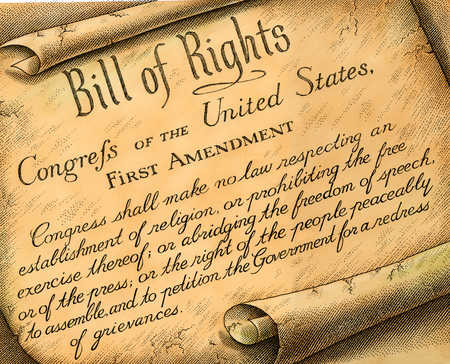
first-amendment

In his fight against religious establishments in Virginia, James Madison learned many lessons, one of the most significant of these lessons was that bills of rights were “parchment barriers” when facing overbearing majorities. Acting through their representatives, majorities will inevitably push through legislation that will violate the rights of others, even when expressly prohibited by a bill of rights as happened in Virginia when an attempt was made to pass a general assessment for the support of teachers of the Christian religion. The general assessment bill failed but it prompted Madison to reconsider the assumption that legislatures are the best protectors of the rights of the people. In his Vices of the Political System of the United States (1787), which was written in response to the failures of the Articles of Confederation, Madison questioned “the fundamental principle of republican Government, that the majority who rule in such Governments, are the safest Guardians both of public Good and of private rights.” In exploring the root of this problem, he concluded that the cause lay “in the people themselves.” It was for this reason that Madison originally opposed adding a bill of rights to the Constitution, although he later changed his mind and became the primary author and mover of the amendments that became our Bill of Rights. Even though he changed his mind and pushed the amendments through, Madison never changed his mind about the relationship between majorities and violation of individual rights. Continue reading

The Obergefell Ruling is a Victory for the LGBT Community, but it’s Also a Victory for James Madison and Religious Liberty

Does the Court ruling in Obergefell v. Hodges violate the principle of democracy as those writing in dissent (Chief Justice John Roberts and the Justices Scalia, Thomas, and Alito) have claimed? James Madison, the Father of the Constitution and Bill of Rights, would say no.

Bolstered by the legal arguments of the dissenting justices, those opposed to the Court’s decision will continue to campaign against same-sex marriages, even though they lost. It is therefore important that we examine the merits of the arguments from the dissenting justices. (1) One of the main charges brought against the majority is the claim is that this opinion is a threat to democracy and religious liberty. This allegation is based on a misunderstanding of the relationship between rights and majorities in a democracy. On this subject, James Madison had the greatest insights, and he is primarily responsible for our current understanding of how to best protect rights in a democracy.

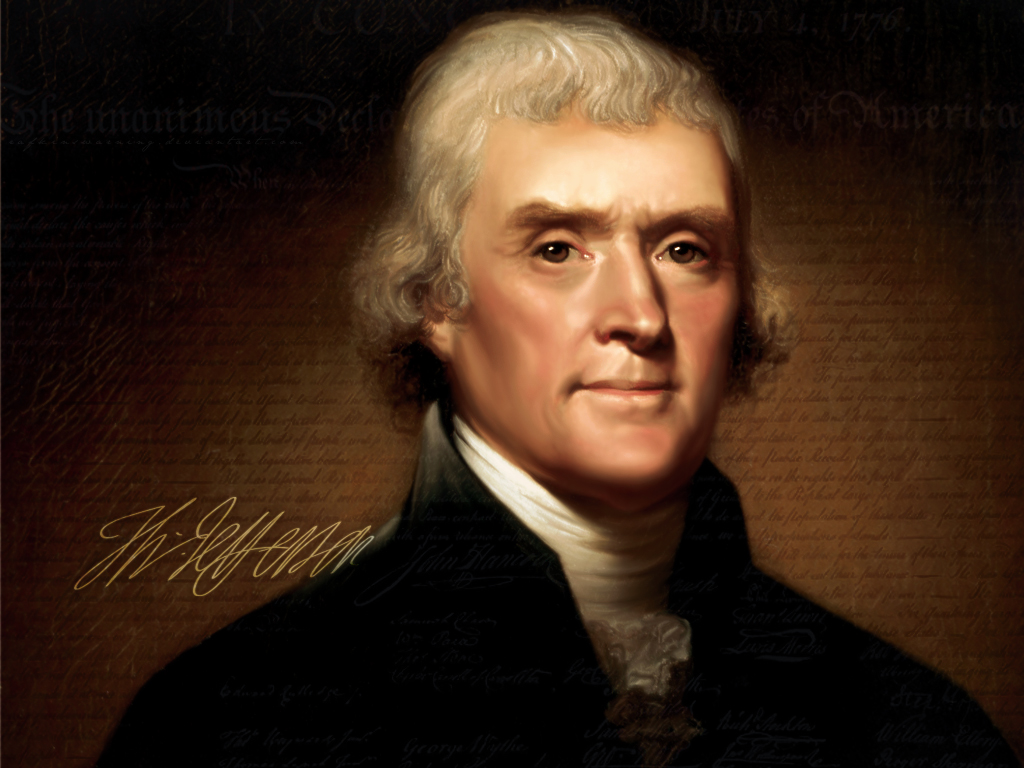
James Madison

James Madison

In his fight against religious establishments in Virginia, James Madison learned many lessons, one of the most significant of these lessons was that bills of rights were “parchment barriers” when facing overbearing majorities. Acting through their representatives, majorities will inevitably push through legislation that will violate the rights of others, even when expressly prohibited by a bill of rights as happened in Virginia when an attempt was made to pass a general assessment for the support of teachers of the Christian religion. The general assessment bill failed but it prompted Madison to reconsider the assumption that legislatures are the best protectors of the rights of the people. In his Vices of the Political System of the United States (1787), which was written in response to the failures of the Articles of Confederation, Madison questioned “the fundamental principle of republican Government, that the majority who rule in such Governments, are the safest Guardians both of public Good and of private rights.” In exploring the root of this problem, he concluded that the cause lay “in the people themselves.” It was for this reason that Madison originally opposed adding a bill of rights to the Constitution, although he later changed his mind and became the primary author and mover of the amendments that became our Bill of Rights. Even though he changed his mind and pushed the amendments through, Madison never changed his mind about the relationship between majorities and violation of individual rights. Continue reading

The Obergefell Ruling is a Victory for the LGBT Community, but it’s Also a Victory for James Madison and Religious Liberty

Does the Court ruling in Obergefell v. Hodges violate the principle of democracy as those writing in dissent (Chief Justice John Roberts and the Justices Scalia, Thomas, and Alito) have claimed? James Madison, the Father of the Constitution and Bill of Rights, would say no.

Bolstered by the legal arguments of the dissenting justices, those opposed to the Court’s decision will continue to campaign against same-sex marriages, even though they lost. It is therefore important that we examine the merits of the arguments from the dissenting justices. (1) One of the main charges brought against the majority is the claim is that this opinion is a threat to democracy and religious liberty. This allegation is based on a misunderstanding of the relationship between rights and majorities in a democracy. On this subject, James Madison had the greatest insights, and he is primarily responsible for our current understanding of how to best protect rights in a democracy.

James Madison

James Madison

In his fight against religious establishments in Virginia, James Madison learned many lessons, one of the most significant of these lessons was that bills of rights were “parchment barriers” when facing overbearing majorities. Acting through their representatives, majorities will inevitably push through legislation that will violate the rights of others, even when expressly prohibited by a bill of rights as happened in Virginia when an attempt was made to pass a general assessment for the support of teachers of the Christian religion. The general assessment bill failed but it prompted Madison to reconsider the assumption that legislatures are the best protectors of the rights of the people. In his Vices of the Political System of the United States (1787), which was written in response to the failures of the Articles of Confederation, Madison questioned “the fundamental principle of republican Government, that the majority who rule in such Governments, are the safest Guardians both of public Good and of private rights.” In exploring the root of this problem, he concluded that the cause lay “in the people themselves.” It was for this reason that Madison originally opposed adding a bill of rights to the Constitution, although he later changed his mind and became the primary author and mover of the amendments that became our Bill of Rights. Even though he changed his mind and pushed the amendments through, Madison never changed his mind about the relationship between majorities and violation of individual rights. Continue reading

“By the Bizarre Logic of Anti-Gay Marriage Zealots, the Supreme Court Should Allow Businesses to Discriminate Against Interracial Couples” | History News Network

At the History News Network the legal scholar Robert J. McWhirter calls out the “anti-gay zealots” for their rhetorical tricks, which they use as a cover for their bigotry.  Here’s an excerpt from his incisive piece:

“’Marriage is one of the ‘basic civil rights of man,’ fundamental to our very existence and survival. . . . To deny this fundamental freedom on so unsupportable a basis as the racial classifications embodied in these statutes, [is] … directly subversive … [to] the 14th Amendment . . ..’ Opponents of same-sex marriage can’t attack this head on.  So the first play is to argue definitions.  After all, said George W. Bush, ‘marriage is between a man and a woman.’  Subtext: ‘We don’t deny gay people a fundamental right, we just define them out of it.’” 
Read the entire article here:

History News Network | By the Bizarre Logic of Anti-Gay Marriage Zealots, the Supreme Court Should Allow Businesses to Discriminate Against Interracial Couples.

Bills, Quills, and Stills McWhirter

Why did a Pious Baptist Preacher Give Thomas Jefferson a Mammoth Cheese?

On January 1, 1802 an unusual gift arrived for the new president, Thomas Jefferson. It was a 1,235 pound hunk of cheese from the Elder John Leland and the Cheshire Baptists. Why would this devout Baptist preacher bestow such a conspicuous gift on the deistic Jefferson? The answer is simple: Leland saw Jefferson as one his ablest allies in the struggle for democracy and religious liberty. Delivering the cheese personally, Leland recited a message from a committee of five influential citizens from Cheshire, declaring that they were presenting him with the enormous cheese:

“as a token of the esteem we bear to our chief Magistrate and of the sense we entertain of the singular blessings that have been derived from the numerous services you have rendered to mankind in general and more especially to this favored nation, over which you preside. It is not the last stone of the Bastille, nor is it an article of great pecuniary worth, but as a freewill offering we hope it will be favorably received.”

From all accounts the cheese was “favorably received.” One account recalls that the cheese was carved “in the presence of the president and cabinet, foreign diplomats and many distinguished men and women of ancient note…and that it was the object of great curiosity.” Leland received special thanks and was “introduced person, by person by the president, to the entire gathering.” The celebration for Leland did not end with the ceremony; he celebrated all the way home in what “resembled a triumphant march.” (1) This little known event is a reminder of the great alliance between rationalists such as Jefferson, and the pious dissenters who helped establish religious liberty in the new nation.

thomasjefferson

John Leland grew up in New England, but he spent his early career in Virginia, where he came to admire Jefferson and Madison. In a popular sermon given soon after Jefferson’s inauguration in 1801, he declared, in reference to Jefferson:

Continue reading

Why did a Pious Baptist Preacher Give Thomas Jefferson a Mammoth Cheese?

On January 1, 1802 an unusual gift arrived for the new president, Thomas Jefferson. It was a 1,235 pound hunk of cheese from the Elder John Leland and the Cheshire Baptists. Why would this devout Baptist preacher bestow such a conspicuous gift on the deistic Jefferson? The answer is simple: Leland saw Jefferson as one his ablest allies in the struggle for democracy and religious liberty. Delivering the cheese personally, Leland recited a message from a committee of five influential citizens from Cheshire, declaring that they were presenting him with the enormous cheese:

“as a token of the esteem we bear to our chief Magistrate and of the sense we entertain of the singular blessings that have been derived from the numerous services you have rendered to mankind in general and more especially to this favored nation, over which you preside. It is not the last stone of the Bastille, nor is it an article of great pecuniary worth, but as a freewill offering we hope it will be favorably received.”

From all accounts the cheese was “favorably received.” One account recalls that the cheese was carved “in the presence of the president and cabinet, foreign diplomats and many distinguished men and women of ancient note…and that it was the object of great curiosity.” Leland received special thanks and was “introduced person, by person by the president, to the entire gathering.” The celebration for Leland did not end with the ceremony; he celebrated all the way home in what “resembled a triumphant march.” (1) This little known event is a reminder of the great alliance between rationalists such as Jefferson, and the pious dissenters who helped establish religious liberty in the new nation.

thomasjefferson

John Leland grew up in New England, but he spent his early career in Virginia, where he came to admire Jefferson and Madison. In a popular sermon given soon after Jefferson’s inauguration in 1801, he declared, in reference to Jefferson:

Continue reading

Is Traditional Baptist Marriage Under Threat If the Supreme Court Strikes Down Gay Marriage Bans?

At the HNN, Barry Hankins argues that Baptists are coming to the recognition that they may soon be in the same position as Muslim leaders who “acknowledge that their religious practices are at odds with some facets of American law.” The change that would make Baptists at odds with American law: gay marriage. He fears that if the Supreme Court strikes down the gay marriage bans that exist in some states, then the Baptist belief that marriage is between a man and a women would be under threat. First, he is concerned that the Baptists won’t remember their roots when they were outsiders who were willing to be “fined, horsewhipped, and jailed” for their beliefs. But more importantly he fears that their conception of marriage may be in danger through government intervention.

In an effort to protect marriage as they see it, Hankins explains that the Texas Baptist Christian Life Commission (CLC) has “urged churches to insert in their bylaws a clause specifically defining biblical marriage.” They fear that they may be forced to allow gay weddings to be held in their churches under anti-discrimination laws. To show that this is not wild paranoia, he points to the loss of tax exempt status at Bob Jones University because they refused to accept students who were inter-racially married.

It is doubtful that Hankins’s nightmare scenario will materialize, but it is within the realm of possibility. However, they would only be forced to comply if they were unwilling to give up their tax exempt status. And the loss of this privilege is not unjust, as Chief Justice Warren Burger explained in the Bob Jones case, “to warrant exemption under § 501(c)(3), an institution must fall within a category specified in that section and must demonstrably serve and be in harmony with the public interest. The institution’s purpose must not be so at odds with the common community conscience as to undermine any public benefit that might otherwise be conferred.”

Maybe Hankins, and Baptists in general, should follow the advice of their Baptist colleague, Bruce T. Gourley, who suggested that they reconsider the separationist principles of the Baptist preacher John Leland. While Gourley acknowledges that “the elimination of preferential tax treatment would likely result in weeping and gnashing of teeth among religious groups,” it would allow them “to address politics from the pulpit.” It would also free them from the burdens of tax exempt status. And it would free taxpayers from supporting religious societies that they are not members of. It’s a win, win!

History News Network | The Surprising Thing Baptists and Muslims Have in Common.

Baptists in America

From Hatred to Acceptance: Catholics in America

Many Americans would be shocked to learn about the long history of anti-Catholicism in the United States. The standard narrative of U.S. history is one of religious liberty and toleration. Unfortunately, this is far from the truth. From the beginning, the majority of the U.S. population has been composed of various Protestant sects. Protestantism’s roots were anti-Catholic in origin and the Protestant Reformation kicked off years of violent conflict between the two Christian rivals. This legacy of hatred was inherited by the Protestants that settled in America. Following independence many states banned Catholics from holding public offices out of fear that “Popery and the Inquisition may be established in America.”(1) Anti-Catholic sentiment only grew as Catholic Irish and Italian immigrants flocked to the U.S. during the nineteenth century. One of the more violent outbursts against Catholics came during the Kensington and Southwark Bible Riots in Philadelphia (1844).

Maura Jane Farrelly, in an interesting piece at Aeon, reminds us of that past. Noting the recent change in attitudes towards Catholics, she argues that “Americans no longer consider Catholicism to be a threat because the very idea of ‘freedom’ in the US has changed into something more compatible with the corporate approach to freedom that the Catholic Church has always insisted upon. The Catholic understanding of religious liberty and church-state relations has also changed, becoming more compatible with the US vision and the reality of religious pluralism.”

She also examines the shifting attitudes about the separation of church and state among evangelicals, Catholics, and Muslims. Based on polling, she concludes, “Only 28 per cent of US‑born Muslims think that mosque leaders should refrain from politics, but 60 per cent of Muslim immigrants recently told researchers at Pew that mosque leaders should ‘keep out of political matters’. It’s a directive that suggests Muslim immigrants in the US might be more ‘American’ than some of the Catholics and Protestants voting and campaigning in the US today.”

Given the importance of this topic in light of the increasing anti-Islamic attitudes, I think Farrelly’s review of our anti-Catholic past is apropos. Read her entire essay here.

Kensington Bible Riots 1844

Kensington Bible Riots 1844

(1) Major Thomas Lusk at the Massachusetts Ratification Convention (February 4, 1788) in The Documentary History of the Ratification of the Constitution, vol. 6, p. 1421.

Why are the Sephardic Jews Who Fled Intolerant Spain in the 15th Century Now Considering Returning?

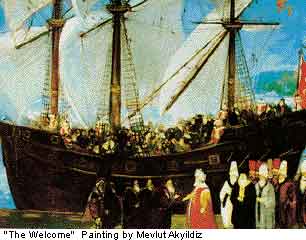
In 1492 the Jews of Spain were given the choice of converting to Christianity or leaving. Many fled to the Ottoman Empire, where they were welcomed by the Sultan Bayezid II. At the time it was the Muslim world that was tolerant in contrast to Catholic Europe. Now the tables have turned. While the Sephardic Jews in Turkey are not under the same threat they faced in 15th century Spain, they are concerned in the face of a rising antisemitism.  According to The New York Times, “[m]any Turks put the blame for the rise in anti-Jewish feelings on the actions of the Israeli government, particularly the killing of civilians during the Gaza war.” This is unfortunate. If anyone should be against generalizing from particular members of a group to the whole, it should be Muslims. It is a mistake to blame the Sephardic Jews in Turkey for what the Israeli government has done. The Israeli government does not represent all Jews or even all Israelis. Many Israelis disagree with the rhetoric and actions of the Israeli government. Similarly, it is a mistake to blame all Muslims for the actions of a few. This type of generalizing has been responsible for so much human suffering throughout human history. Will we ever learn?!

Sephardic Jews Feel Bigotry’s Sting in Turkey and a Pull Back to Spain – NYTimes.com.

Sultan Bayazid II welcomes Jews expelled from Spain

Sultan Bayazid II welcomes Jews expelled from Spain

              Sephardic migration