Why Kim Davis is Wrong: “Beliefs cannot trump rights” by George Panichas
It should be no surprise that many Americans have come to the defense of Kim Davis, believing that she is being denied her right to “live her religion.” A long-term strategy to restore what is perceived to be the rightful place of religion and/or Christianity in public life has been bearing fruit recently (most clearly in Hobby Lobby case). In doing so, they have inverted the relationship between the Establishment Clause (“Congress shall make no law respecting an establishment of religion”) and the Free Exercise Clause (“or prohibiting the free exercise their of”).
By weakening the power of the Establishment Clause and denying its purpose of protecting individual rights, conservatives can then ignore its power to protect the rights of individuals from government laws and/or other individuals, groups, corporations, etc. The other prong in this strategy has been to expand the right to free exercise to include the right to impose their religion on others, all in the name of religious liberty (hence all the Religious Freedom Restoration Acts, RFRA). This also allows them to present themselves as the defenders of “religious liberty,” when in fact they are undermining it.
George E. Panichas uses a story about “Old Jim,” who believes that his faith does not allow him to sell guns to women, to illustrate why Kim Davis and her supporters are wrong. Taking into account the protections of the Establishment Clause, he concludes, “The constitutional rights of Americans are protected against infringements emanating from even the most deeply held religious beliefs. Indeed, abandoning this commitment closes the door on a reasonable pluralistic democracy and opens it wide to an oppressive theocracy.”
Source: Beliefs cannot trump rights
A West Point Professor Accused other Law Professors of Treason in a Controversial Article
This is absolutely shocking! William C. Bradford, a West Point law professor, accused other law professors who disagreed with him of treason. He believes they are helping ISIS because their ideas would, in his mind, weaken the U.S. “Why, you might ask, would these law professors betray their country? Bradford offers a variety of unconvincing explanations. Among the nefarious acts CLOACA scholars (that never gets less ridiculous to type) are guilty of are “skepticism of executive power,” “professional socialization,” “pernicious pacifism,” and “cosmopolitanism.” None of these are criminal acts or behaviors, of course. But that seems to be a technicality when Western civilization is at stake. “This radical development,” Bradford declares, “is celebrated in the Islamic world as a portent of U.S. weakness and the coming triumph of Islamism.” (He cites no source for this claim.)”
Matt Ford at The Atlantic, gives a good summary of Bradford’s ignorant article. He also does a great job pointing out the many flaws and lapses of logic. Unfortunately, the views expressed in the article are probably shared by many. Bradford resigned after The Guardian exposed his exaggerated credentials used to get his job.
Read the entire article at The Atlantic, you’ll be stunned at the fact that someone in his position could be so ignorant (and stupid!).
An Act of Iconoclasm? “Where Adam Smith and Occupy Agree: Inequality” – Bloomberg View
Inequality: “The godfather of free markets feared it would undermine the system he loved.”
Adam Smith has become such an icon that few venture to shatter the simplistic version of his ideas (outside of academia) known to most Americans. Few who hold this vision dear have actually read Smith’s Wealth of Nations, and if they have they read it from a modern perspective outside of the context in which Smith wrote it. And as a result, they misunderstand Smith’s ideas and his goals.
When it is read in context and with his other great work The Theory of Moral Sentiments, a different narrative emerges. David Lay Williams, in his article at Bloomberg View, explains some of the challenges to the dominate theory of Smith’s capitalism (self-interest, lassie-fare, the invisible hand, etc.) when the complexities of Smith’s worldview are factored in. In this article, Williams focuses mainly on Smith’s concerns about inequality.
What does Williams hope to accomplish by looking back on Adam Smith’s philosophy?
“First, it challenges arguments made by those who insist that inequality wouldn’t have been problematic for the intellectual founder of free-market capitalism. Second, Smith offers insights into the nature of economic disparity that should guide a more enriched contemporary discussion of the issue. Many of today’s critiques of inequality center on how it can stifle economic growth. This may be true. But as a professor of moral philosopher, this wasn’t the focus of Smith’s commentary. Third, Smith’s attention to inequality as opposed to poverty is a rejoinder to those who suggest inequality isn’t problematic in itself. Finally, Smith’s inability to offer a solution, one may argue, is manifested in our own failure to address inequality and its accompanying troubles. We have inherited a system that has made no provisions for a dilemma apparent at its very foundations.”
Please read the entire article here: Where Adam Smith and Occupy Agree: Inequality – Bloomberg View
Republicans Don’t Understand the Lessons of the Iraq War – The Atlantic
“Having misunderstood the Iraq War, U.S. Republicans are taking a dangerously hawkish turn on foreign policy.”
In The Atlantic Peter Beinart debunks the surge myth and its contribution to one of the long-standing problems with our foreign policy: “The problem with the legend of the surge is that it reproduces the very hubris that led America into Iraq in the first place.”
Read the entire article here: Republicans Don’t Understand the Lessons of the Iraq War – The Atlantic 
“Long Journey Home: A Moment of Japan-Korea Remembrance and Reconciliation” | The Asia-Pacific Journal
Finally some good news in Japanese-Korean relations!
“The most important participants in this journey are not the living, but the dead: the bones of 115 Koreans brought to Japan as labourers during the Asia-Pacific War will be carried along the route, with ceremonies of remembrance along the way, to their final resting place in Korea. The itinerary they will trace in September follows, in reverse, the route they travelled in trucks and boats and trains when they were taken to remote mines and construction sites in wartime Japan, unaware that they would never see their homes or families again. More than seventy years on, they are at last going home.”
Source: Long Journey Home: A Moment of Japan-Korea Remembrance and Reconciliation | The Asia-Pacific Journal 

Early American History could be a thing of the past
Who was the worst Monarch in History? My Vote: King Leopold II of Belgium (1865–1909)
A group of historical writers voted Henry VIII the worst monarch in history. This is not surprising given Henry’s notorious habit of having people’s heads chopped off, including two of his six wifes. Personally, I think King Leopold of Belgium takes the cake!
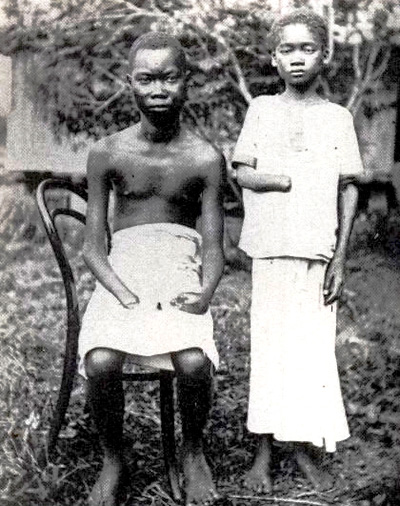
This Belgian King raped the Congo for his own personal gain. Under his supervision, hundreds of thousands of Africans were killed and many, many more died of disease and starvation as a result of Leopold’s efforts to extract valuable natural resources from the Congo. Adam Hoschschild aptly describes Leopold’s Congo as a “territory was awash in corpses, sometimes literally.” (1) The Congolese were often killed because they refused to be enslaved. At gunpoint they were forced to strip the Congo of its resources (mostly rubber). Since that didn’t always work they held the families of the laborers hostage and threatened to kill them if they did not produce the desired amount of natural rubber. And if they refused the whole village was massacred (men, women, and children). But in many cases instead of killing all of them they severed their hands as proof to show their bosses that they had used the bullets to kill Africans rather than “wasted” them on hunting.
Joseph Conrad’s In the Heart of Darkness was not the product of his imagination, it was the product of his actual experiences in King Leopold’s Congo. Based on the level of cruelty and the fact that Leopold’s legacy is still playing out in the Democratic Republic of Congo, I believe that he was the worst monarch in history.
Emma McFarnon voted these nine monarchs as the worst: Caligula; Pope John XII; King John of England; King Richard II of England; Ivan “the Terrible” of Russia, Mary, Queen of Scots; Emperor Rudolf II; Queen Tanavalona I of Madagascar; and King Leopold II of Belgium.
What do you think?
(1) Adam Hoschschild, King Leopold’s Ghost: A Story of Greed, Terror, and Heroism in Colonial Africa (1998) 227.
The Book that Helped Bring Tolerance to Europe: “Ceremonies and Religious Customs of Various Nations” (1723)
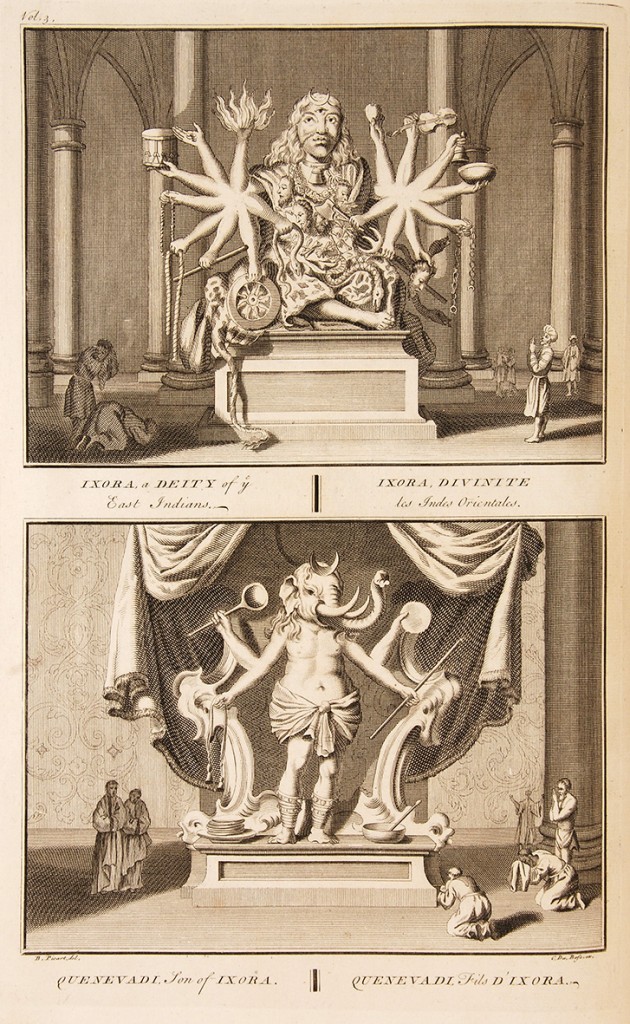
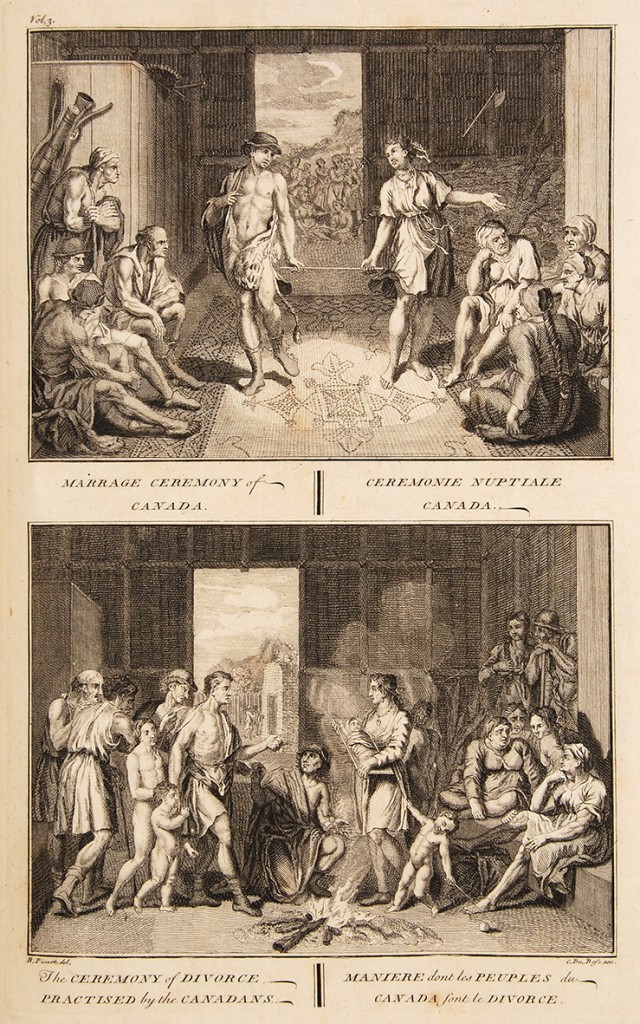
In preparing for a lecture on the Enlightenment, I was reminded of a little known work that “Changed Europe.” (from the title of the book: The Book that Changed Europe) What makes Ceremonies and Religious Customs of the Various Nations (1723) so special is its attempt to present all the world’s religions in an objective and fair way in a world that still largely believed that tolerance was a sin.
It was also a major intellectual achievement. It was written by the Huguenot (French Protestant) refugee in the relatively tolerant Dutch Republic. The project comprised seven volumes with more than 200 illustrations. The images rival the text as an intellectual achievement in its own right. (see two of the images below) Another Huguenot, Bernard Picart, designed all of the book’s illustrations.
It was a major victory for tolerance!