“The Long and Proud History of Charleston’s AME Church” |History News Network

“When twenty-one year old Dylann Roof opened fire at the historic Emanuel African Methodist Episcopal (A.M.E.) Church in Charleston, South Carolina on Wednesday night killing nine worshippers, including its pastor, Reverend Clementa Pinckney, he struck at the very heart of black America.” Manisha Sinha is right, but if it is blow at the “heart of black America,” it is also a blow to the entire nation. It is a reminder of a shameful past, a past that some don’t want to face. But we must if we are to ever to heal as a nation. It is a reminder that we all have a responsibility to call out the lies and prejudices that fuel all kinds of hatred.

And as Rev. Dr. Carolyn McKinstry, a survivor of the 1963 bombing of the Sixteenth Street Baptist Church in Birmingham, Alabama, implores: “Each of us is accountable for ourselves. Each of us must examine our lives and our treatment of others if we are going to have even a remote chance of living with the tremendous diversity that exists in our country. We still have not learned the simple principle of living next door to someone who may be different from us. We have not learned to treat others in the same manner that we ourselves want to be treated. We can begin changing America now, and continue one day at a time, if we have the will.” (Time magazine)

History News Network | The Long and Proud History of Charleston’s AME Church.

AME church S. Carolina

Bombshell Report from Common Cause: Privatizers Flood New York Politicians with Cash

Please read Diane Ravitch’s summary of a report on funding and lobbying in NY state. Even though the report is about NY, it is representative of what is happening all across the country.

Excerpt: “The current trend of market-based education proposals can be seen as interrelated to the ideology and policy goals that contributed to the pre-2008 deregulations of the financial industry and to the Supreme Court ruling in Citizens United v. FEC. Using a long term, multi-pronged strategy, the self-styled “education reform” organizations (whose boards are populated by the very hedge fund executives who have dominated Super PAC contributions since the Citizens United decision) are framing this issue. They have used their wealth to access and infiltrate the policy landscape on almost every front except one: the teachers’ unions. 13 In an increasingly polarized debate, these camps are battling for ideological control of the future of education policy at all levels of government.”

dianeravitch's avatarDiane Ravitch's blog

Please read this report and send it to everyone who cares about the future of public education in the United States. Send it to your friends, your school board, your legislators, your editorial boards, and to anyone else who needs to know about the money that is committed to demolishing public schools and turning the money over to private hands.

Common Cause has released an important new report about the dramatic increase in funding and lobbying by groups in New York State committed to privatization of public schools. The report contrasts the political spending of the privatizers to the political spending of the unions, and it is a fascinating contrast.

The report is titled: “Polishing the Apple: Examining Political Spending in New York to Influence Educational Policy.”

The report rejects the term “reformers” and uses the term “privatizers.” It explains here (p. 3):

We use the terms pro-privatization and privatizer…

View original post 1,233 more words

Mark Byrnes Defends the Magna Carta

In response to Tom Ginsburg (“Stop Revering the Magna Carta”) and David Allen Green (“The Destructive Myth of the Magna Carta”), Mark Byrnes argues that it’s “OK to celebrate Magna Carta.” Read his argument here:

History News Network | It’s Ok to Celebrate Magna Carta.

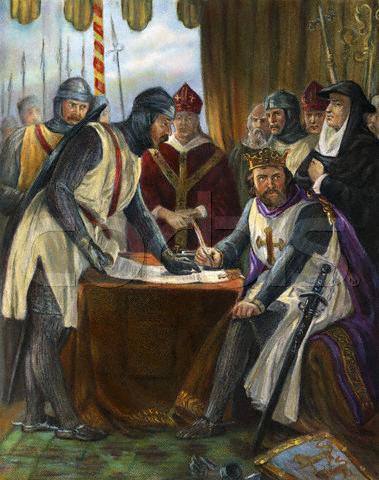
King John signing the Magna Carta (1215).  Undated illustration, after a painting by Chappel. --- Image by © Bettmann/CORBIS

King John signing the Magna Carta (1215). Undated illustration, after a painting by Chappel. — Image by © Bettmann/CORBIS

“Guns Were Much More Strictly Regulated in the 1920s and 1930s than They Are Today” | History News Network

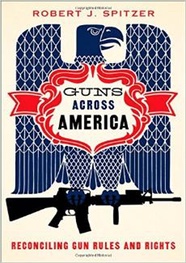
Robert J. Spitzer gives a brief overview of gun regulation in the 1920s and 1930s, and concludes that “guns were much more strictly regulated decades or even centuries ago than they are today.” This is a pretty narrow slice of gun control history on which to base such a broad conclusion, but looking at the “Table of Contents” from his book (Guns Across America) it looks like Spitzer’s conclusion is grounded in a much broader history of gun control from the founding to today.
Despite its brevity, Spitzer’s summary of gun control in the 1920s and 1930s is very interesting. To read his summary go here:

History News Network | Guns Were Much More Strictly Regulated in the 1920s and 1930s than They Are Today.

guns across america

“By the Bizarre Logic of Anti-Gay Marriage Zealots, the Supreme Court Should Allow Businesses to Discriminate Against Interracial Couples” | History News Network

At the History News Network the legal scholar Robert J. McWhirter calls out the “anti-gay zealots” for their rhetorical tricks, which they use as a cover for their bigotry.  Here’s an excerpt from his incisive piece:

“’Marriage is one of the ‘basic civil rights of man,’ fundamental to our very existence and survival. . . . To deny this fundamental freedom on so unsupportable a basis as the racial classifications embodied in these statutes, [is] … directly subversive … [to] the 14th Amendment . . ..’ Opponents of same-sex marriage can’t attack this head on.  So the first play is to argue definitions.  After all, said George W. Bush, ‘marriage is between a man and a woman.’  Subtext: ‘We don’t deny gay people a fundamental right, we just define them out of it.’” 
Read the entire article here:

History News Network | By the Bizarre Logic of Anti-Gay Marriage Zealots, the Supreme Court Should Allow Businesses to Discriminate Against Interracial Couples.

Bills, Quills, and Stills McWhirter

Stop Revering Magna Carta – NYTimes.com

“Magna Carta has everything going for it to be venerated in the United States: It is old, it is English and, because no one has actually read the text, it is easy to invoke to fit current needs.” So true!

Read Tom Ginsburg’s argument de-mythologizing the famous document:

Stop Revering Magna Carta – NYTimes.com.

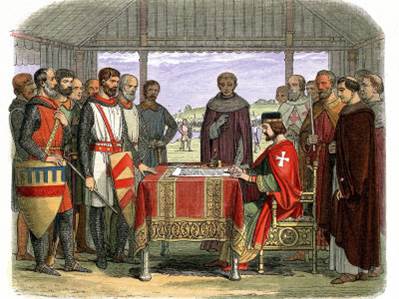
King John at Runnymede (1215) signing the Magna Carta

King John at Runnymede (1215) signing the Magna Carta

Why did a Pious Baptist Preacher Give Thomas Jefferson a Mammoth Cheese?

On January 1, 1802 an unusual gift arrived for the new president, Thomas Jefferson. It was a 1,235 pound hunk of cheese from the Elder John Leland and the Cheshire Baptists. Why would this devout Baptist preacher bestow such a conspicuous gift on the deistic Jefferson? The answer is simple: Leland saw Jefferson as one his ablest allies in the struggle for democracy and religious liberty. Delivering the cheese personally, Leland recited a message from a committee of five influential citizens from Cheshire, declaring that they were presenting him with the enormous cheese:

“as a token of the esteem we bear to our chief Magistrate and of the sense we entertain of the singular blessings that have been derived from the numerous services you have rendered to mankind in general and more especially to this favored nation, over which you preside. It is not the last stone of the Bastille, nor is it an article of great pecuniary worth, but as a freewill offering we hope it will be favorably received.”

From all accounts the cheese was “favorably received.” One account recalls that the cheese was carved “in the presence of the president and cabinet, foreign diplomats and many distinguished men and women of ancient note…and that it was the object of great curiosity.” Leland received special thanks and was “introduced person, by person by the president, to the entire gathering.” The celebration for Leland did not end with the ceremony; he celebrated all the way home in what “resembled a triumphant march.” (1) This little known event is a reminder of the great alliance between rationalists such as Jefferson, and the pious dissenters who helped establish religious liberty in the new nation.

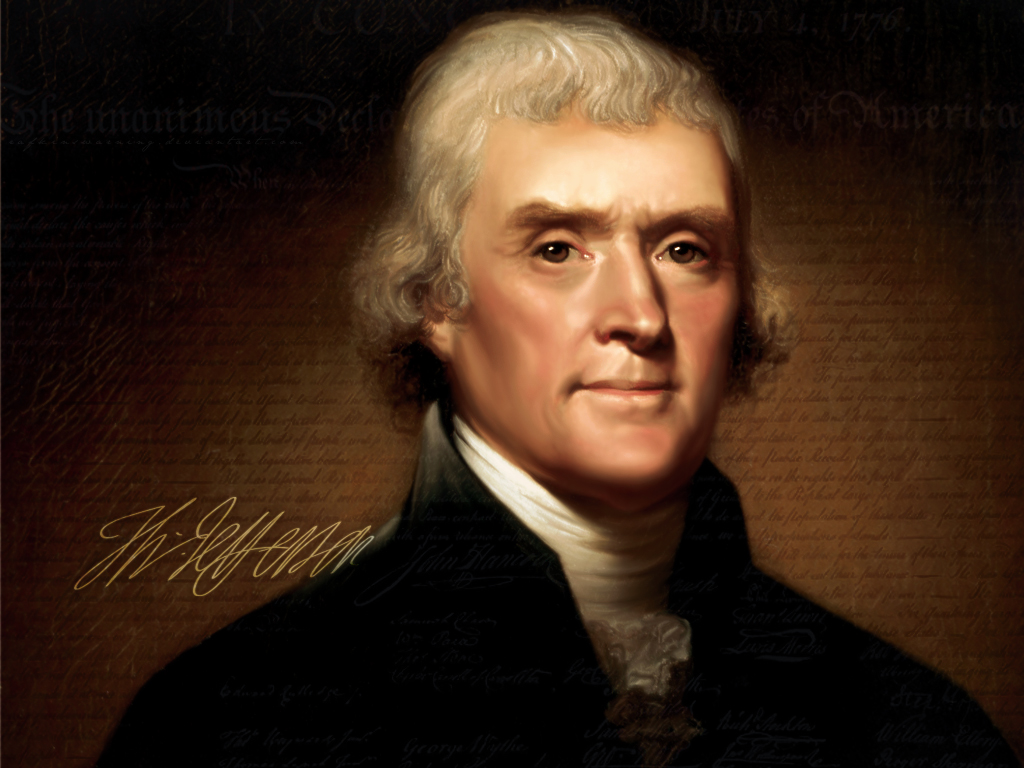
thomasjefferson

John Leland grew up in New England, but he spent his early career in Virginia, where he came to admire Jefferson and Madison. In a popular sermon given soon after Jefferson’s inauguration in 1801, he declared, in reference to Jefferson:

Continue reading

Why did a Pious Baptist Preacher Give Thomas Jefferson a Mammoth Cheese?

On January 1, 1802 an unusual gift arrived for the new president, Thomas Jefferson. It was a 1,235 pound hunk of cheese from the Elder John Leland and the Cheshire Baptists. Why would this devout Baptist preacher bestow such a conspicuous gift on the deistic Jefferson? The answer is simple: Leland saw Jefferson as one his ablest allies in the struggle for democracy and religious liberty. Delivering the cheese personally, Leland recited a message from a committee of five influential citizens from Cheshire, declaring that they were presenting him with the enormous cheese:

“as a token of the esteem we bear to our chief Magistrate and of the sense we entertain of the singular blessings that have been derived from the numerous services you have rendered to mankind in general and more especially to this favored nation, over which you preside. It is not the last stone of the Bastille, nor is it an article of great pecuniary worth, but as a freewill offering we hope it will be favorably received.”

From all accounts the cheese was “favorably received.” One account recalls that the cheese was carved “in the presence of the president and cabinet, foreign diplomats and many distinguished men and women of ancient note…and that it was the object of great curiosity.” Leland received special thanks and was “introduced person, by person by the president, to the entire gathering.” The celebration for Leland did not end with the ceremony; he celebrated all the way home in what “resembled a triumphant march.” (1) This little known event is a reminder of the great alliance between rationalists such as Jefferson, and the pious dissenters who helped establish religious liberty in the new nation.

thomasjefferson

John Leland grew up in New England, but he spent his early career in Virginia, where he came to admire Jefferson and Madison. In a popular sermon given soon after Jefferson’s inauguration in 1801, he declared, in reference to Jefferson:

Continue reading

“Two steps forward, one step back: how World War II changed how we do human research” | History News Network

James Bradley examines how medical research has changed since WWII and he cautions us against “portray[ing] World War II as a major turning point in the history of medical ethics. But it’s a portrayal we should resist because it blinds us to the troubles that persist to this day in matters of informed consent.” Read his thought-provoking piece on this important subject here:

History News Network | Two steps forward, one step back: how World War II changed how we do human research.

auschwitz mengle experiments

“The History & Legacy of Magna Carta Explained in Animated Videos by Monty Python’s Terry Jones” | History News Network

Do you need to brush up on your Magna Carta history? The British Museum has made a short video on the Magna Carta. It’s a great overview of the basic story of the document and its legacy.

History News Network | The History & Legacy of Magna Carta Explained in Animated Videos by Monty Python’s Terry Jones.