“One nation under God”? Not when it comes to distributing Gideon Bibles to public schools – Salon.com

Author of “One Nation Under God: How Corporate America Invented Christian America” Kevin M. Kruse reviews the history of Gideon bibles from their origins to their distribution in public schools. Based on this history, Kruse concludes that “[t]he concept of ‘one nation under God’ had seemed a simple, elegant way to bring together the citizens of a broadly religious country, but at the local level, as the Gideons had discovered, Americans were anything but united.” Read the entire article here:

“One nation under God”? Not when it comes to distributing Gideon Bibles to public schools – Salon.com.

gideon-bible_5

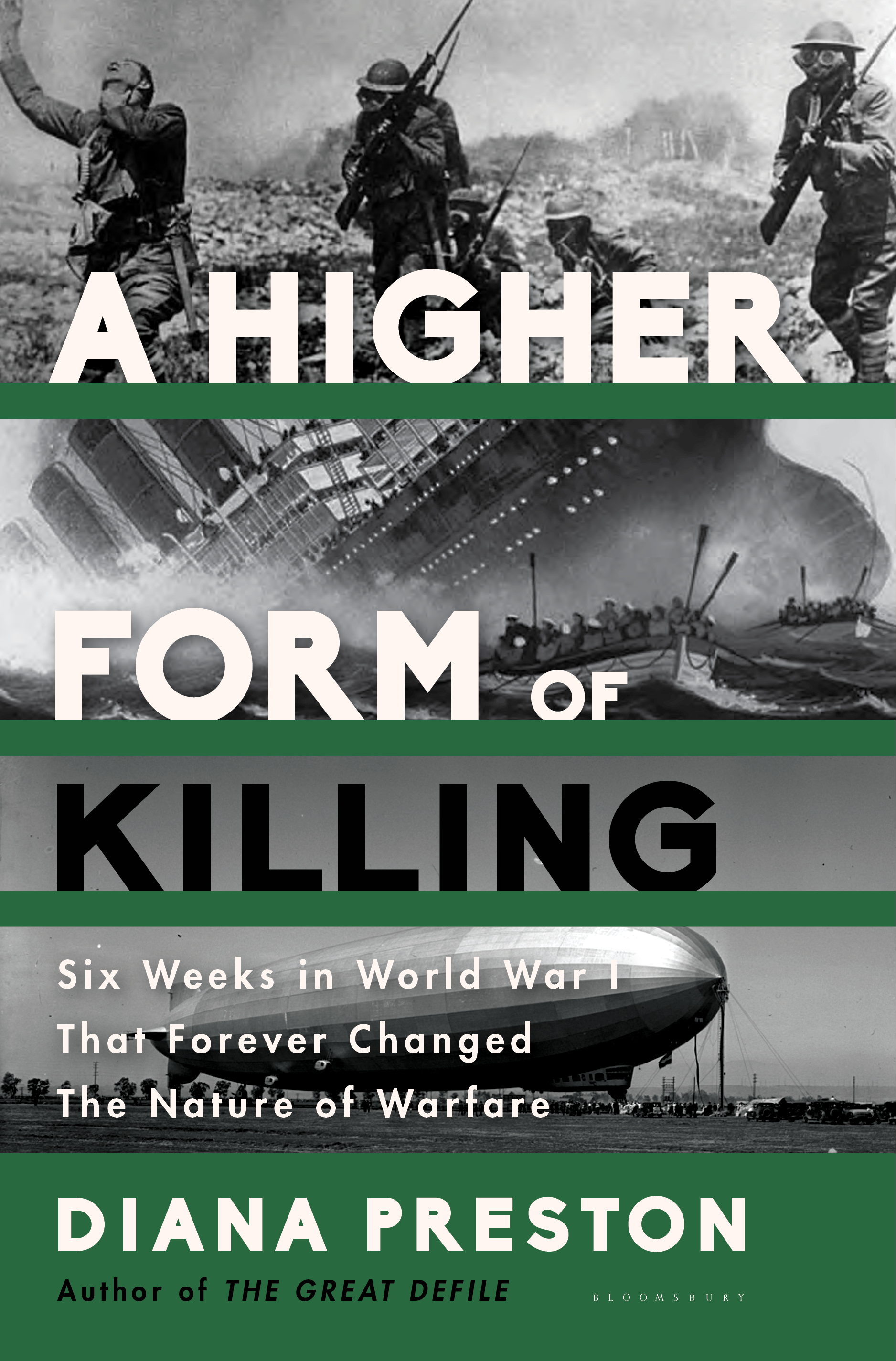
A Higher Form of Killing: Six Weeks in World War One That Forever Changed the Nature of Warfare by Diana Preston, review: ‘authoritative’ – Telegraph

This looks like a great book. Read Nigel Jones’ book review at the Telegraph:

A Higher Form of Killing: Six Weeks in World War One That Forever Changed the Nature of Warfare by Diana Preston, review: ‘authoritative’ – Telegraph.

A Higher Form of Killing

The Evolutionary Origins of Politics: An Interview with Avi Tuschman | History News Network

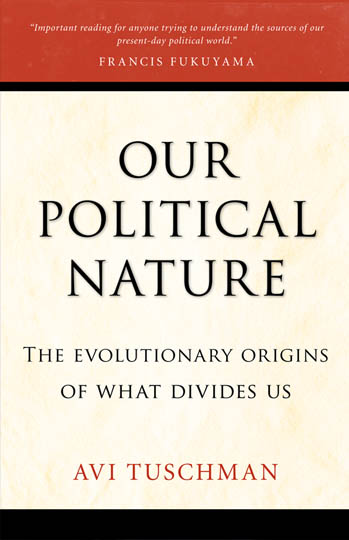
How important are genes in determining our political leanings? More and more research supports the claim that genes play a significant role. This is the subject of Avi Tuschman’s new book Our Political Nature. In a brief interview at the HNN, he summarizes his findings. He explains: “The left-right spectrums that run through countries around the world have a natural history and therefore a common structure (even though they widen and shift in response to environmental stress, like economic conditions). This common origin explains why many controversial issues – like gay marriage – invariably polarize political spectrums everywhere in the same direction. If the environment determined everything, there would be at least a few countries out of the nearly 200 where the left is fighting against gay rights and the right is fighting for them.” Read the full interview at:

History News Network | The Evolutionary Origins of Politics: An Interview with Avi Tuschman.

Our Political Nature

Thomas Cromwell, a Man for All Centuries – NYTimes.com

History is full of interesting stories, but few rival those surrounding the court of Henry VIII. Henry’s court was a place of intrigue and full of interesting characters but none so interesting as the king himself. Who could forget the king that had six wives and a penchant for chopping people’s heads off? A quick glance at the history section of any bookstore attests to the popularity of all things Henry VIII. Television has also gotten in on the Tudor dynasty fad. On Showtime the popular series The Tudors ran from 2007 to 2010. Now PBS is getting in on the action and last night aired a new Masterpiece theater series centered on Thomas Cromwell and the Tudor court appropriately named Wolf Hall. On Tuesday (April 7) PBS will also air a documentary Inside the Court of Henry VIII (I can’t wait!). Thomas Cromwell is not as well-known as his great-great-grandnephew Oliver Cromwell, but the role he played in Henry VIII’s court had important implications for English history. He was central in steering England toward Protestantism despite the King’s continued sympathy for Catholicism.

Cromwell is somewhat of a controversial figure, but few doubt his Machiavellian nature. This probably accounts for his current rise in popularity. As Jim Dwyer notes in The New York Times: “this is high season for him and his ilk. Dirty things done dirty, clean things done dirty — people who get stuff done, somehow or other, now rise in glory on stage and film. Perhaps the long stall of Washington politics has made us yearn for those grease-stained mechanics whose unseen guile, we imagine, would protect the engines of power from seizing up. Says Henry: ‘I keep you, Master Cromwell, because you are as cunning as a bag of serpents.’” Unfortunately today dirty tricks are put in the service of making sure nothing gets done. This all leads to cynicism and perhaps this is why we are attracted to the dirty politics of Henry’s court.

Thomas Cromwell, a Man for All Centuries – NYTimes.com.

For an overview of Cromwell’s life see: Who was the Real Thomas Cromwell? BBC

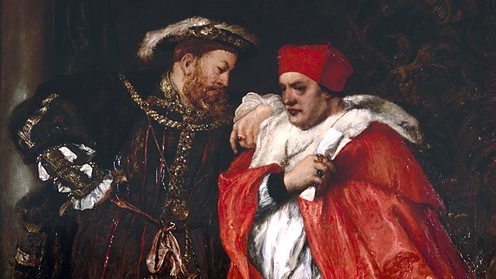
Henry VIII and Cardinal Wolsey

Henry VIII and Cardinal Wolsey

Did 1995 Change Everything? – The New Yorker

What is the “one-dot theory” of history? In his review of W. Joseph Campbell’s 1995: The Year the Future Began, Louis Menand explains that “the most enjoyable histories to read (and, probably, to write) are ‘the x that changed the world’ books. These are essentially one-dot explanations. They try to make the course of human events turn on a single phenomenon or a single year.” While enjoyable, he rightly points out that these narratives are “not completely persuasive” in convincing us that history has turned on this “x” (in this case: 1995). History is vastly complex and “all dots have dots of their own.”

But for all the flaws of “one-dot theories” they can be informative and entertaining. On that note, Menard’s review of 1995 was favorable. For me personally 1995 was a traumatic year and I’d rather forget it. But looking beyond my own troubles I can see that many events of note happened that year that are worthy of our attention, even if they are unpleasant.

We tend to look to the 1990s as a good decade, but a review of the history says otherwise: the Oklahoma City bombing, the O.J. Simpson trial, genocide in Rwanda and Bosnia, the siege in Waco, Black Hawk down in Somalia, etc.

To read Menand’s entire review go here:

Did 1995 Change Everything? – The New Yorker.

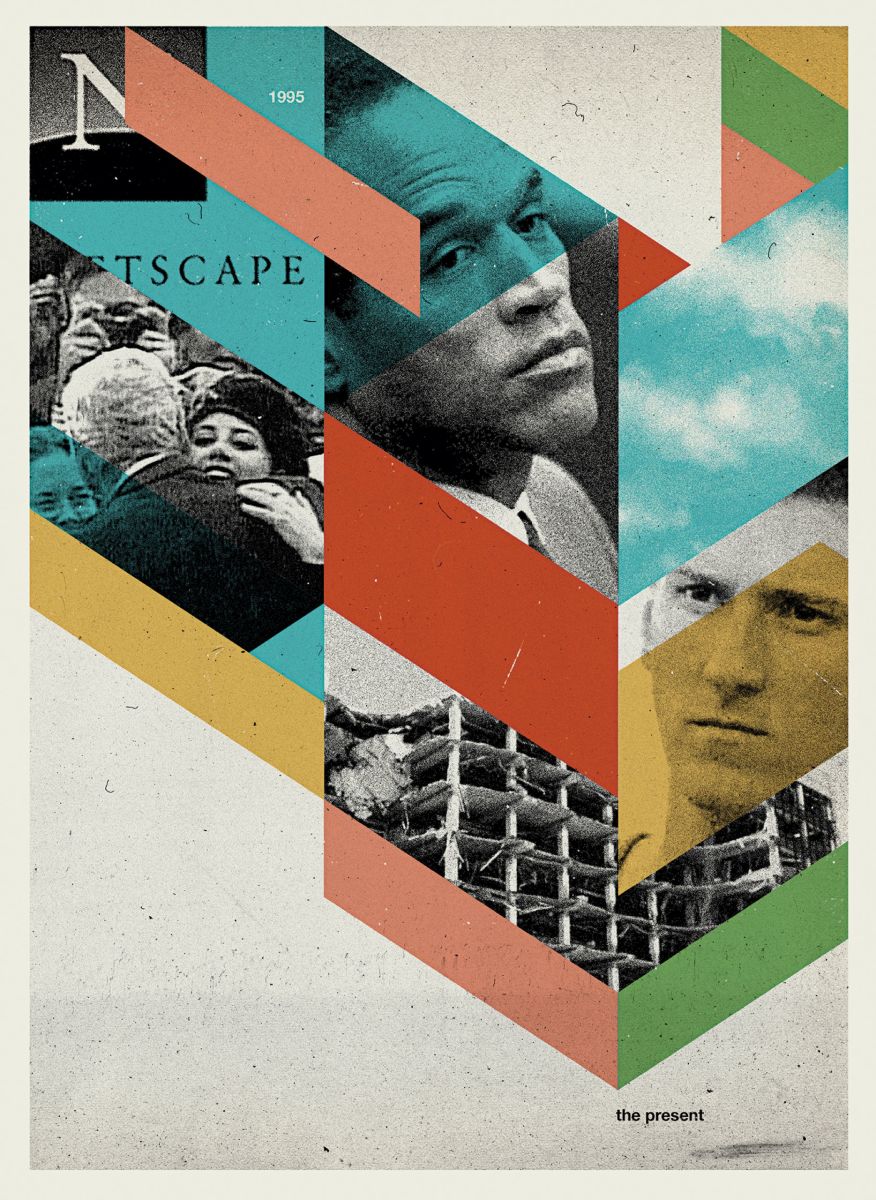
The New Yorker: O. J. Simpson, Monica Lewinsky, Timothy McVeigh—seeds of the present?Credit Illustration by Concepción Studios; Clockwise from top: Michael Nelson / AFP / Getty (Simpson); Reuters / CORBIS (McVeigh); Barbara Laing / The LIFE Images Collection / Getty (Building); APTV / AP (Lewinsky)

The New Yorker: O. J. Simpson, Monica Lewinsky, Timothy McVeigh—seeds of the present? Credit Illustration by Concepción Studios; Clockwise from top: Michael Nelson / AFP / Getty (Simpson); Reuters / CORBIS (McVeigh); Barbara Laing / The LIFE Images Collection / Getty (Building); APTV / AP (Lewinsky)

History as Propaganda: “Russian History Receives a Makeover That Starts With Ivan the Terrible” – NYTimes.com

Museums in Russia are collaborators in sparking the flames of nationalism.

“Irina Y. Velikanova, a former Moscow City Council member appointed to run the museum last year, said the mission of any historical museum should be rooted in patriotism. ‘We don’t hide the fact that we are interested in forming the patriotic and civic position of Russian youth,’ she said. ‘Our goal is that when leaving our museum, all Russians would feel proud of their country.’”

Pride is one thing but history has shown that nationalism is more likely to incite hatred, intolerance, and violence. And unfortunately Russia is not the only country where nationalism is on the rise.

Russian History Receives a Makeover That Starts With Ivan the Terrible – NYTimes.com.

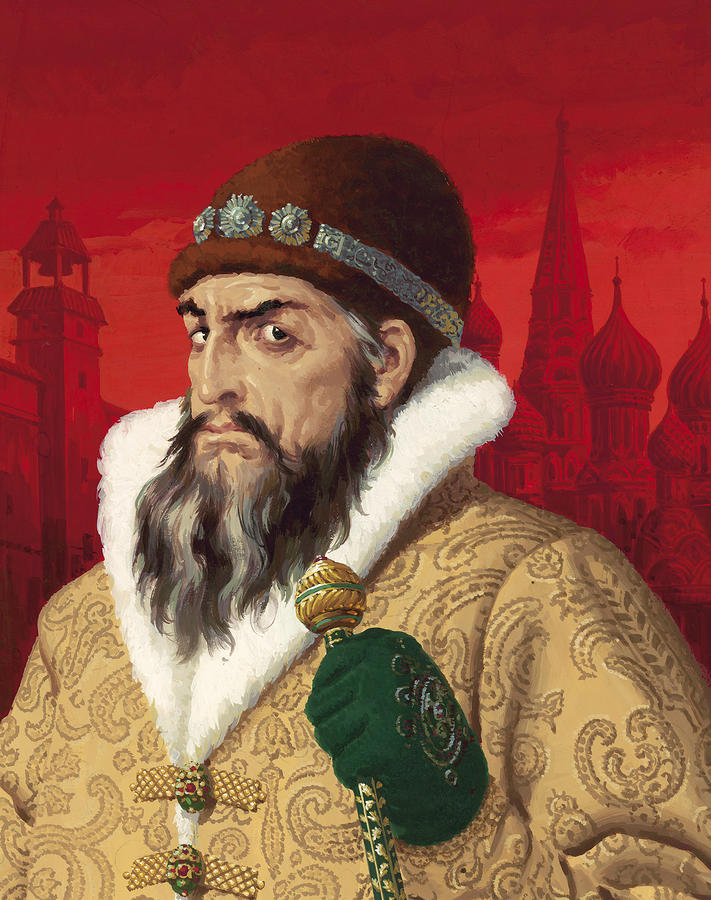
Ivan the Terrible

Ivan the Terrible

“Satellite images show ISIS, other groups destroying archaeological sites.”

Just when I thought it couldn’t get any worse! Stephen H. Savage uses satellite images to assess the damage from not just ISIS but others.

Satellite images show ISIS, other groups destroying archaeological sites.

Hatra, Iraq

Russia Fighting Information Wars with Borrowed Weapons | History News Network

More on Russia’s propaganda machine:

History News Network | Russia Fighting Information Wars with Borrowed Weapons.

Vladimir Putin

Moscow’s Twisted History Lessons – NYTimes.com

Nationalists of all stripes have been particularly adept at distorting history to serve their own purposes. Once again, nationalism and its sidekick “selective history” have been on the rise, most notably in Russia. Vladimir Putin is a master of exploiting nationalism in the pursuit of power. Recently, as noted by Maxim Trudolyubov, Putin declared: “‘It’s time to stop taking note only of the bad things in our history and berating ourselves more than even our opponents would do,’ he declared at the annual gathering of international Russia experts known as the Valdai Discussion Club in 2013. ‘We must be proud of our history.’” Sound familiar?

Read Trudolyubov’s entire article here:

Moscow’s Twisted History Lessons – NYTimes.com.

russia-president-vladimir-putin