History News Network | When Did Mandatory Vaccinations Become Common?.
Intellectual character of conspiracy theorists – Quassim Cassam – Aeon
Are conspiracy theorists prone to conspiracy thinking because they have a flawed “intellectual character”? The philosopher Quassim Cassam argues that they are. In a piece at Aeon, Cassam proposes that the “key to what they end up believing is how they interpret and respond to the vast quantities of relevant information at their disposal.” Rather than being a product of a particular environment or lacking sufficient information, he claims that the problem arises as a “result of the peculiarities of his intellectual constitution – in a word, of his intellectual character.” I think Cassam’s proposal is a welcome counter to the purely situationalist theory. But I think it is better seen as a complement to the situationalist explanation rather than a replacement for it. Read the entire article at:
Intellectual character of conspiracy theorists – Quassim Cassam – Aeon.
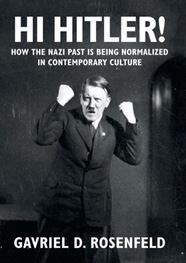
Was Hitler a Normal Leader? | History News Network
History News Network | The Nonsense Myth About Grant and Lee
Some of you might find this interesting:
History News Network | The Nonsense Myth About Grant and Lee.
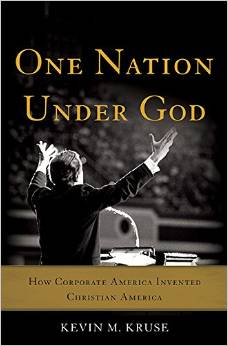
A Christian Nation? Since When? – NYTimes.com
Kevin M. Kruse traces the evolution of the myth that America was founded as a Christian nation from the 1920s through the Cold War. As he points out, “During these years, Americans were told, time and time again, not just that the country should be a Christian nation, but that it always had been one. They soon came to think of the United States as ‘one nation under God.’ They’ve believed it ever since.” I’ll post a review of the book as soon as I read it, but if you want a brief summary of his argument you can find it here:
History News Network | More than 80,000 People Died and Hardly Anyone Paid Attention?
On March 10, 1945 the Japanese in Tokyo awoke to what would become a nightmare. It was the beginning of what was the single deadliest non-nuclear bombing campaign during World War II (between 80,000 to 100,000 civilians were killed). It was part of a larger firebombing campaign undertaken by the U.S. in which 66 Japanese cities were targeted in an effort to break the morale of Japanese civilians in the hopes that they would press their leadership to surrender unconditionally. This strategy had been largely rejected by the US leadership on the European front in contrast to their British allies. But under the leadership of Curtis LeMay the morale bombing strategy was pursued in Japan despite its failure in Germany. These firebombing campaigns never broke the morale of the Japanese people.
History News Network | More than 80,000 People Died and Hardly Anyone Paid Attention?
Georgia Senate targets AP history courses as too ‘radically revisionist’ | www.ajc.com
Following Oklahoma‘s example, Georgia conservatives are trying to undercut the Advanced Placement US history courses in their state. On March 11 the Georgia Senate passed a bill (SR80) that threatens to defund the program if they do not get what they want: a mythic history promoting American “exceptionalism” and the unfounded assumption that this is a Christian nation. They complain that the AP course as it stands “glosses over or inaccurately reflects people and ideas including the nation’s Founding Fathers, the Judeo-Christian influences on the country’s development and U.S. foreign policy as outlined in the Monroe Doctrine.” If they get their way, this would set a very bad precedent in which an ideologically driven legislature can dictate what counts as history. We all need to speak out against this blatantly partisan attempt to hijack education for ideological purposes!
Senate targets AP history courses as too ‘radically revisionist’ | www.ajc.com.
11 Freedoms That Drunks, Slackers, Prostitutes and Pirates Pioneered—and the Founding Fathers Opposed | Alternet
Thaddeus Russell investigates an interesting part of American history that is often ignored. He argues that the Founding Fathers disapproved of the revelry on display in eighteenth-century America. “On nearly every block…there was a public place where one could drink, sing, dance, have sex, argue politics, gamble, play games, or generally carouse with men, women, children, whites, blacks, Indians, the rich, the poor, and the middling. Rarely have Americans had more fun.”
I have not read the book, but his summary at Alternet is noteworthy. However, to come to his conclusion it seems that he has relied too heavily on John Adams and on Puritan leaders to make his case. It would have been more accurate to say “some early U.S. leaders.”
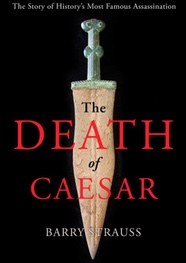
Things Shakespeare Got Wrong About the Ides of March | History News Network
In a new article Barry Strauss explains what Shakespeare got wrong in his play the Ides of March.
“Why did Shakespeare get so much wrong? He did not have access to the full range of ancient sources and all their details that we have today. Yet even had he known more, the Bard would surely not have told all. The dramatist was thinking about the footlights, not the footnotes. And maybe that is for the best. Without Shakespeare’s immortal verses the assassination of Julius Caesar might be no better known today than the assassination of Aurelian (who?). Hooray for poetry, for making us care about the story of Julius Caesar, and hooray for history, for getting it right.”
To read the full article go here:
History News Network | Things Shakespeare Got Wrong About the Ides of March.