Some of you might find this interesting: History News Network | Did the Pentagon Learn from Vietnam?

Some of you might find this interesting: History News Network | Did the Pentagon Learn from Vietnam?
Yesterday was the first day of classes at ASU and I spent most of that day trying to explain to my students why studying history is important. Most of them are freshmen and are taking the course as a requirement, so I’m not sure how successful I was. But I’ll keep trying.
I know what you’re thinking. What does this have to do with “Drift and Disorder in World Affairs”?
Polk identifies other important factors that contribute to the drift and disorder of the world, but I find this one particularly compelling. We cannot change what kind of leaders we get if we don’t first change ourselves. We all need to take our responsibilities as citizens of the U.S. and the world more seriously.
Please read Polk’s thought-provoking piece: History News Network | Coping with the Sense of Drift and Disorder in World Affairs, Part 1.
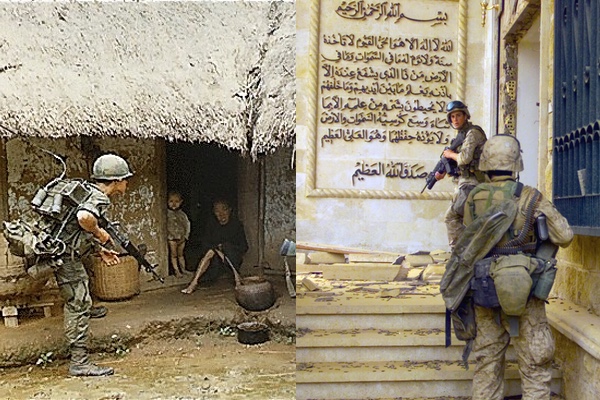
Walter G. Moss proposes that “[a]ny effective U.S. foreign policy must not just vilify leaders, whether Saddam Hussein or Putin, but recognize and try to understand why so many foreign citizens think differently than we do.” I half agree with him. We too often fail to take into account the views of other peoples in formulating our foreign policy. If our foreign policy is to be effective we must understand how others view the world and their place in it. However, I disagree with Moss’s contention that we should not “demonize” the leaders that they admire. Well, maybe we shouldn’t demonize them, but we should call them out for their outrageous behavior.
I would still recommend reading Moss’s article. He makes some good points concerning the history of our foreign policy. History News Network | We Need to Come to Terms with the Russian People’s Support Today of both Stalin and Putin.
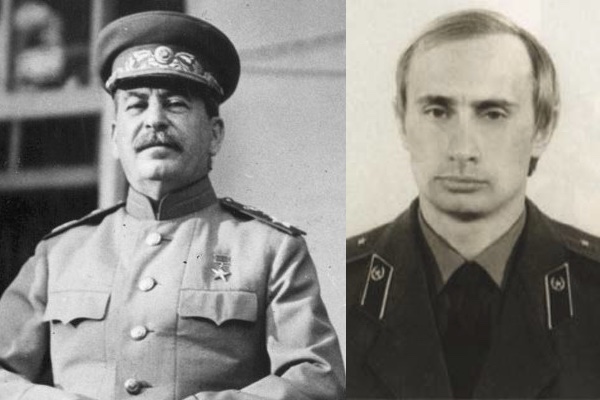
Optimism is all the rage today, but Roger Cohen reminds us that pessimism can be “a useful prism through which to view the affairs of states.” The problem with optimism is that it often blinds us to the warning signs of looming catastrophes. Too much pessimism has its dangers as well, but today we seem to be wearing rose colored glasses when considering the possibility of another major world war. Not to mention that the fear of terrorism has consumed all our attention when it comes to world affairs. But this is a mistake. It is important, but it is not existential threat that it has been made out to be. There are events in other parts of the world that are more concerning in terms of their destabilizing potential across the globe. The potential for large-scale land wars has not disappeared, despite appearances.
You’re probably tired of me ranting about nationalism, but the threat it poses is real and deserves our attention. I’m glad to see that Cohen has taken it seriously. As he points out, “It is already clear that the nationalist fervor unleashed by Putin after a quarter century of Russia’s perceived post–Cold War decline is far from exhausted. Russians are sure that the dignity of their nation has been trampled by an American and European strategic advance to their border dressed up in talk of democracy, the rule of law, and human rights. Whether this is true is irrelevant; they believe it. National humiliation, real or not, is a tremendous catalyst for war.” And this type of national fervor and perceived humiliation is not limited to Russia. It can be found across the globe from Japan to Israel and eastern Europe.
I would recommend reading Cohen’s thoughtful consideration of this very important topic. I somewhat disagree with his solution concerning the need for U.S. power projection, but overall his diagnosis of the problem is well-grounded in historical precedent. Read the entire piece here: Yes, It Could Happen Again – The Atlantic.
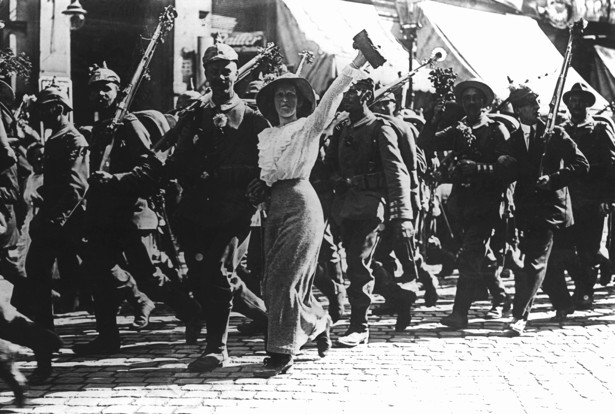
Our political discourse is dominated by hyperbolic discourse that simplifies the world in an emotionally appealing way. Therein lies its power. It is emotionally gratifying and makes us feel like we’re in the know when we’re not. We would like the world to be black and white, but it isn’t. Unfortunately, theses false and/or deceptive narratives harden into “facts” as they are perpetuated via the media, the blogosphere, and social media. This rhetoric has poisoned our political discourse and has hampered our efforts to deal with our problems.
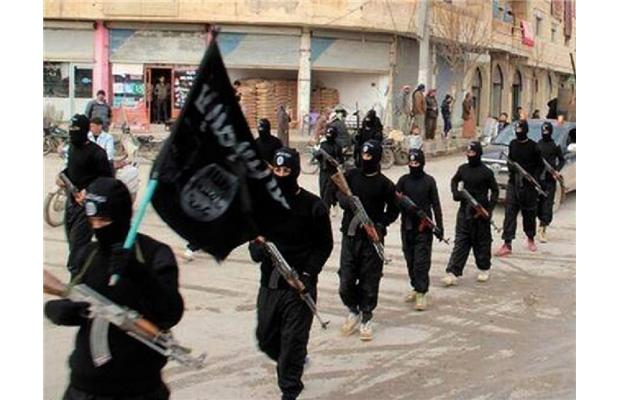
Some of the most despicable rhetoric has been reserved for President Obama. Once the rhetoric has established the general feeling that Obama is “incompetent” and “weak” (or “tyrannical” depending on the context) all further charges against him then “ring true” (no fact checking needed!). One of the recent charges against Obama accuses him of “cutting and running” from Iraq, leading directly to the creation of ISIS. With extensive knowledge of the situation, Brian Glyn Williams takes on this claim and concludes that “Maliki’s anti-Sunni policies directly led to the rise of ISIS. He, along with Paul Bremer, is the man most responsible for creating ISIS.” But he doesn’t let Obama off the hook completely.
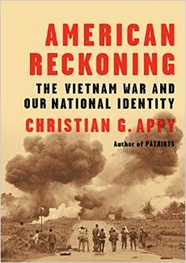
History News Network | The American Military Uncontained.

Examining the history of the Ottoman Empire, Eugene Rogan concludes: “With the fall of the Ottomans after the First World War, the Arab world entered a century of conflict. Caught between foreign domination and the rival appeals of nationalism and Islamism, the Middle East has yet to emerge from the shadow of jihad. But perhaps there is a caution in this narrative. In a striking parallel to events a century ago, the threat of far-reaching jihad — most recently in the name of the Islamic State — continues to play on the minds of Western leaders. But it does so far beyond any evidence of wide appeal among a vast majority of the globe’s Muslims. So Western leaders can learn from the experience of a century ago. When they overreact to the threat of religious war, they concede power to the very enemies they seek to overcome, with consequences impossible to predict.” Read the entire article here:
A War to End Jihad – NYTimes.com.

The historian Mark Byrnes warns against the “unconditional surrender” mentality that has taken hold on the right: “Like the uncompromising Tea Party Congressional caucus does with domestic issues, Cotton seems to think that in diplomacy, any kind of compromise with an adversary, anything less than total victory, is abject failure. As I’ve written before, this attitude is dangerous enough when it shuts down the U.S. government or blocks meaningful action in Congress. When it is brought to bear on the world stage, it can be catastrophic.” Read his entire article:
History News Network | “Unconditional Surrender” in Iran.
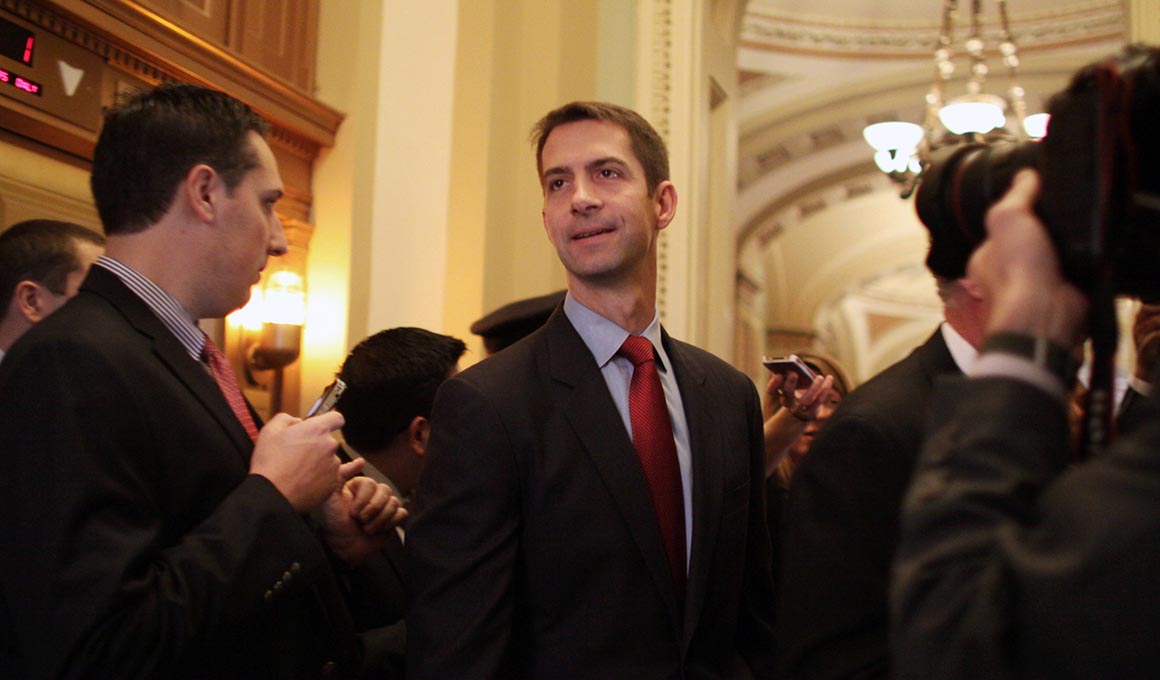
Arkansas Senator Tom Cotton
History News Network | John Bolton’s Love of Bombs.

 History Chick in AZ