Ronald Reagan Would Have Loved Rory Kennedy’s “Last Days in Vietnam” |History News Network

Last month PBS aired a documentary on the evacuation of Saigon as the North Vietnamese closed in. I just recently watched it and I was captivated by this part of the Vietnam era that I knew so little about. But knowing so little about this episode I wasn’t sure how accurate the story was. The reviews were mostly positive. The New York Times called it “concise and gripping.” Stephani Merry from The Washington Post described the documentary as being “like an intricate piece of woodwork. It’s painstakingly crafted, sturdy and incredible to look at.”
But Ron Briley, reviewing the documentary for the History News Network, took a more critical view of film. He claims that it as a heroic version of events, missing the broader context of American brutality. He ruefully declares that “the harsh reality of the Vietnam War was far more complex, and commemorating the conflict by depicting the war as a noble cause in which Americans were saving the Vietnamese people from communism does little to help the nation cope with what really happened to America and its ideas in the jungles of Southeast Asia. Last Days in Vietnam is an intriguing look at the fall of Saigon, but it is often quite misleading in its larger depiction of the Vietnam War and its meaning.”
I agree that the larger context is important, but I would still recommend watching the documentary. It raises important questions about how we engage with the world, especially in the places where we bear some level of responsibility for the chaos and violence. In Saigon the Americans were forced to leave behind many Vietnamese who had loyally served them. This is the same issue that we in Iraq and Afghanistan, in addition to many others. What obligation do we owe to those foreign nationals that have made great sacrifices and risked their own lives to help us?

History News Network | Ronald Reagan Would Have Loved Rory Kennedy’s “Last Days in Vietnam”.

Last Days in Vietnam

“How Did Asians, Long Reviled, Become America’s Model Immigrants?” |History News Network

This is interesting:

History News Network | How Did Asians, Long Reviled, Become America’s Model Immigrants?.

The Good Immigrant

There Is One More Thing We Need to Remember About the Civil War | History News Network

Those who played music during the war. Timothy Walch entreats us to remember them. See his argument at:

History News Network | There Is One More Thing We Need to Remember About the Civil War.

Band of the 10th Veteran Reserve Corps. Washington, D.C. April, 1865 -- Wikipedia

Band of the 10th Veteran Reserve Corps. Washington, D.C. April, 1865 — Wikipedia

History News Network | What We now Know About the Birth of Israel Thanks to the Opening of British MI5 Archives

This is an interesting interview with Bruce Hoffman, author of Anonymous Soldiers. Here is one of the questions he answers: “In the preface to Anonymous Soldiers, you ask the question, ‘does terrorism work?’ What are the circumstances and factors that enable some terrorist campaigns to succeed and others to fail based on the lessons from the Irgun and Lehi’s campaigns?” Read the entire interview here:

History News Network | What We now Know About the Birth of Israel Thanks to the Opening of British MI5 Archives.

Anonymous Soldiers the Struggle for Israel

“Austrian Economics: Made in the USA” | History News Network

Janek Wasserman explains how Austrian economics was reduced to a simplified ideology as it was popularized in the U.S. “While the US trip did wonders for Hayek’s public profile, his long-time Austrian friends and colleagues had misgivings about Hayek Lite. The condensedversion—about which Hayek initially had some reservations but ultimately appreciated—lost most of the book’s nuance, becoming a dogmatic defense of free markets and an ill-defined liberty.” Read the entire article here:

History News Network | Austrian Economics: Made in the USA.

Hayek

“The War over War” |History News Network

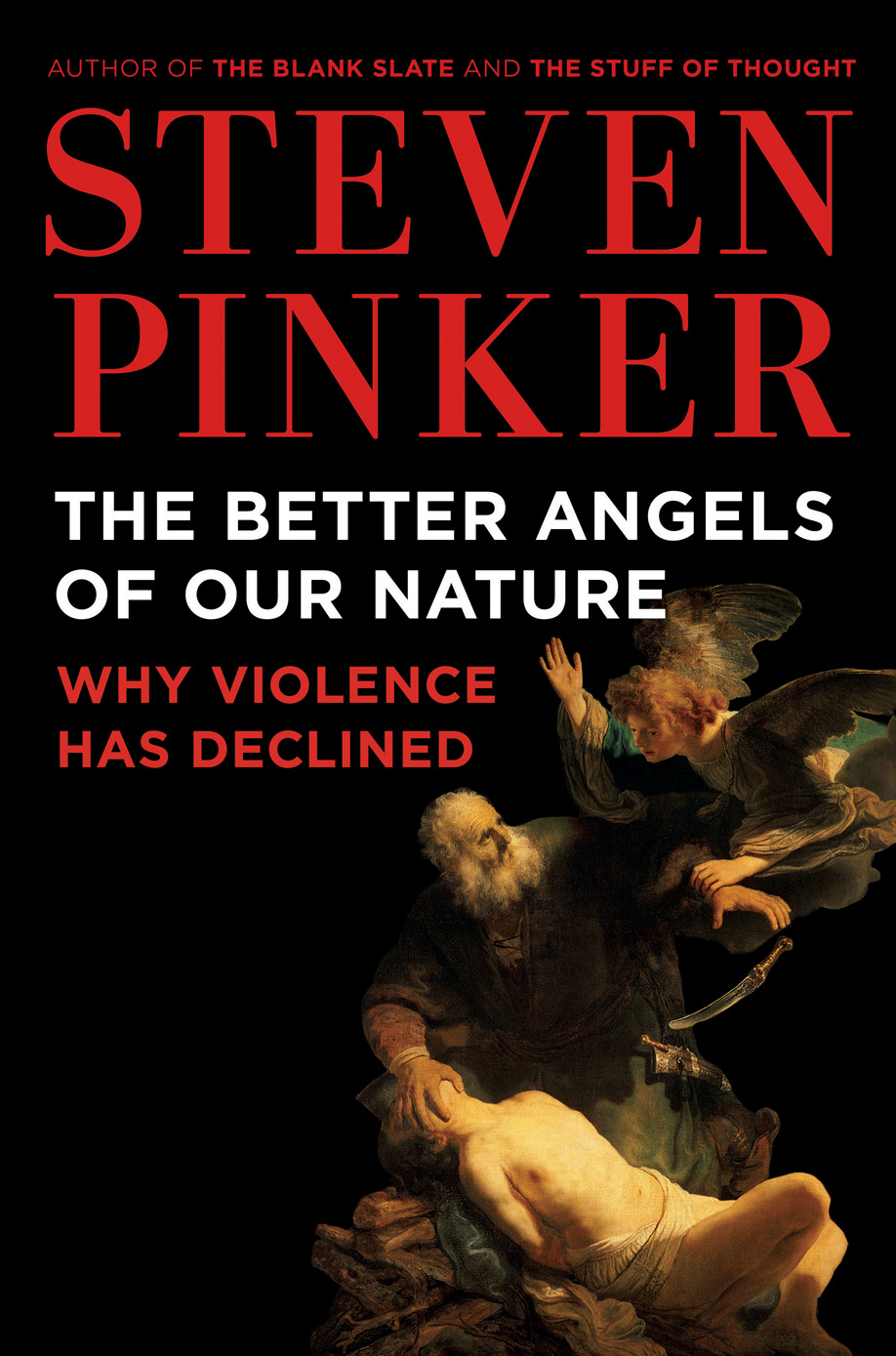
Peter Turchin, professor of Ecology and Evolution at the University of Connecticut, weighs in on the debate over Steven Pinker’s claim that “we may be living in the most peaceable era in our species’ existence” (The Better Angels of Our Nature). Read part one of his critique:

History News Network | The War over War.

the_better_angels_cover


The Evolutionary Origins of Politics: An Interview with Avi Tuschman | History News Network

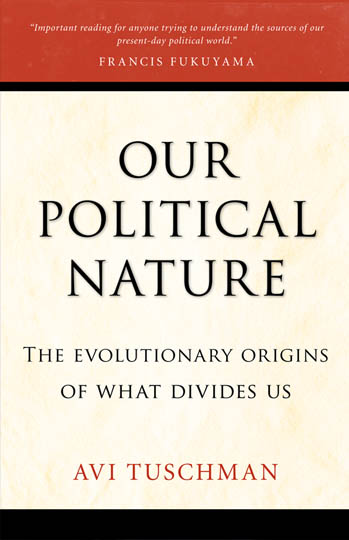
How important are genes in determining our political leanings? More and more research supports the claim that genes play a significant role. This is the subject of Avi Tuschman’s new book Our Political Nature. In a brief interview at the HNN, he summarizes his findings. He explains: “The left-right spectrums that run through countries around the world have a natural history and therefore a common structure (even though they widen and shift in response to environmental stress, like economic conditions). This common origin explains why many controversial issues – like gay marriage – invariably polarize political spectrums everywhere in the same direction. If the environment determined everything, there would be at least a few countries out of the nearly 200 where the left is fighting against gay rights and the right is fighting for them.” Read the full interview at:

History News Network | The Evolutionary Origins of Politics: An Interview with Avi Tuschman.

Our Political Nature

From fascism to parking tickets – some odd Magna Carta moments| History News Network

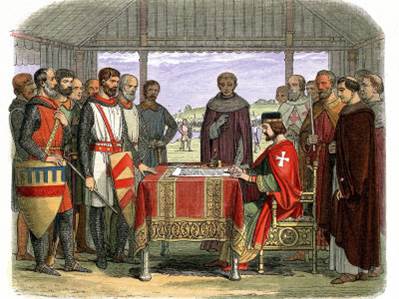
The British Library currently has an exhibition to mark the 800th anniversary of the Magna Carta (Magna Carta: Law, Liberty, and Legacy). One of the exhibit’s curators discusses some interesting things he has learned while preparing the exhibition:

History News Network | From fascism to parking tickets – some odd Magna Carta moments.

King John at Runnymede (1215) signing the Magna Carta

King John at Runnymede (1215) signing the Magna Carta

History News Network | Did Bombers Win the War in WW Two?

Robert Huddleston, who served as a combat pilot in World War II, dispels the popular assumption that air power won the war against Nazi Germany. “The Allied strategic bombing campaign did not produce victory as propaganda promised: Defeat of the enemy came from a combination of sea, air, but mainly ground forces.”

History News Network | Did Bombers Win the War in WW Two?

Allied bombing WWII

When Did Mandatory Vaccinations Become Common? | History News Network

Cristina Valldejuli summarizes the history of mandatory vaccinations in the U.S. Given the current situation with the growth of anti-vaccers this history offers some important lessons. Here’s an excerpt: “Chapman states that few founders contested the federal government’s responsibility to protect the population from epidemics like yellow fever. The real issue, he reports, “was which level of government should enact and enforce quarantine.” This was the same question that arose years later when vaccination gained popularity in the medical field. Wendy K. Marine, George J. Annas, and Leonard Glantz explain that while Jeffersonians were uncomfortable with a strong federal role, Jefferson himself favored a bill that required the federal government to “guarantee and distribute effective vaccine” and signed it into law in 1813. Ultimately, Congress decided that the best approach was to leave the implementation of vaccination efforts up to state and local authorities.” Read the entire article here:

History News Network | When Did Mandatory Vaccinations Become Common?.

vaccines