“What History Can Teach Us About The Worst Refugee Crisis Since WWII” The World Post

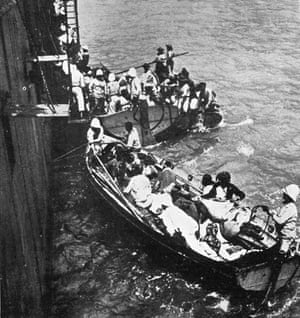
Watching the tragedy of Syrian refugees unfold makes me wonder if we’ve learned anything from the past refugee crises. It seemed that Europe had learned some lessons as they dealt with the refugee crisis from the wars in Bosnia and Kosovo during the 1990s. But the combination of economic crisis, anti-Islamic sentiments, and inter-E.U. bickering has set this latest crisis up to be a disaster.  The U.S. response has been lackluster as well. We are better able to handle large numbers of refugees, and given the fact that we bear some responsibility for the crisis we have a moral obligation to help the victims fleeing Syria.

Maybe it’s too late, but for what it’s worth Alexander Betts,  professor of Refugee and Forced Migration Studies, discusses the history of refugee crises and lays out five history lessons.

“Toward a National Strategy to Cope With a New World: Part 2” | History News Network

After listening to so much bluster (and idiocy) from The Donald on how he would solve the ISIS problem, it was really refreshing to read William R. Polk’s second essay on foreign policy. The essay is long, but I think well worth reading. His analysis reflects his experience and knowledge of history and U.S. foreign policy.
What most people miss in their deliberations on how the US should act in the world is any consideration for how other peoples see us and our actions. For a long time I have thought that one of the major flaws in our Realpoltik foreign policy has been its shortsightedness. We have been stoking hatred and desires for revenge for a long time and we’re paying the price for it now. In the short-term, Realpoltik may have served us, but in the long-term it has made us less safe. This strategy has also undermined our moral standing in the world, and exposed us as hypocrites. We have failed to live up to our own principles! I could go on, but I think Polk did an excellent job laying out some of my own grievances. I hope you read the entire essay, but if not I have put a few excerpts below that will hopefully provoke your interest, or at least provide food for thought.

“The “pacification” that counterinsurgency advocates claim is precisely what did not happen; rather anger intensified and desire for revenge grew.   Such activities are  not only self-defeating but also are self-propagating: strikes breed revenge which justify further strikes.  War becomes unending.”

“As I pointed out in the previous essay, Americans have carried out hundreds of military actions in other countries over the course of our history and in just the last 25 years have engaged in an average of six a year.[15] To Americans, such statistics mean something different from what they mean to others.  Leave aside such issues as legality, nationalism and purpose and consider only war itself.  The last time Americans personally suffered its reality – the destruction, the hunger, the draining fear – was the Civil War in the 1860s.     So when we read that we were complicit in Vietnam, Iraq and Afghanistan in the deaths of hundreds of thousands,  uncounted injured and the “stunting” of a whole generation of children, they are just statistics.  We cannot emotionally relate to them.  Many other peoples, of course, do relate to them. For some, the memories are fresh, intimate and painful.”

“Since they assumed and hoped that we would live in a republic where the opinion of citizens has some ability to control government decision making,[92] they believed, that to have a chance to combine liberty and responsibility, citizens needed to be educated.  Enhancing the intellectual quality of our citizenry thus became essential in securing of “\’The Blessings of Liberty to ourselves and our Posterity.’”

“In conclusion, we must come to terms with the reality that we live in a multicultural, multinational world.  Our assertion of uniqueness, of unipower domination and of military power has been enormously expensive and has created a world reaction against us; in the period ahead it will become unsustainable and is likely to lead precisely to what we should not want to happen — armed conflict.  Moderation, peace-seeking and open-mindedness  need to become our national mottos.”

History News Network | Toward a National Strategy to Cope With a New World: Part 2.

US and World


“New Documentary on Nazi Propaganda Films to Debut” |History News Network

Many of the propaganda films produced by the Nazis have never been shown in the U.S. or Europe over fears that they may incite hatred, particularly against Jews. But a new documentary (Forbidden Fruit: The Hidden Legacy of Nazi Film), which opens today in N.Y., takes excerpts from the forty films that had been considered too offensive to show publicly and compiles them into one film. The director, Felix Moeller, is unsure about the consequences of the film. He wonders, “Are they nothing but historical documents at this point or still effective ideological messages?”

I think this documentary will be of interest to many, but rather than hatred, I hope this documentary prompts us to reflect on our own susceptibility as human beings to hate other who are different from us. It’s easy to criticize the Germans for being duped by Nazi propaganda, but must remember that we have the same vulnerabilities and that we could just as easily be duped. The same human dynamics that played out in Nazi Germany continue to fuel hatred and violence all across the globe. If we are to learn anything from this period of history, we should be skeptical of claims that inspire us to hate others. We should be wary of negative stereotypes and dubious claims that vilify others. If some one or some group asks us to hate, we should say “no”!

Read Bruce Chadwick’s review of the film here:

History News Network | New Documentary on Nazi Propaganda Films to Debut.

nazi-germany

Review of Barry Eichengreen’s “Hall of Mirrors: The Great Depression, the Great Recession, and the Uses – and Misuses – of History” |History News Network

Robert Brent Toplin reviews Barry Eichengreen’s Hall of Mirrors and concludes, “He makes that valuable contribution by addressing the subject uniquely, asking what we have learned and failed to learn from the record of the Great Depression. His investigation offers many useful hints about ways policymakers can avoid repeating the mistakes of the past.” Read the entire review here:

History News Network | Review of Barry Eichengreen’s “Hall of Mirrors: The Great Depression, the Great Recession, and the Uses – and Misuses – of History”.

Hall of Mirrors Great Depression

Lessons From History: “A War to End Jihad” – NYTimes.com

Examining the history of the Ottoman Empire, Eugene Rogan concludes:  “With the fall of the Ottomans after the First World War, the Arab world entered a century of conflict. Caught between foreign domination and the rival appeals of nationalism and Islamism, the Middle East has yet to emerge from the shadow of jihad. But perhaps there is a caution in this narrative. In a striking parallel to events a century ago, the threat of far-reaching jihad — most recently in the name of the Islamic State — continues to play on the minds of Western leaders. But it does so far beyond any evidence of wide appeal among a vast majority of the globe’s Muslims. So Western leaders can learn from the experience of a century ago. When they overreact to the threat of religious war, they concede power to the very enemies they seek to overcome, with consequences impossible to predict.” Read the entire article here:

A War to End Jihad – NYTimes.com.

The Ottoman Empire

How ‘Wolf Hall’ will entertain millions — and threaten to distort history in the process – The Washington Post

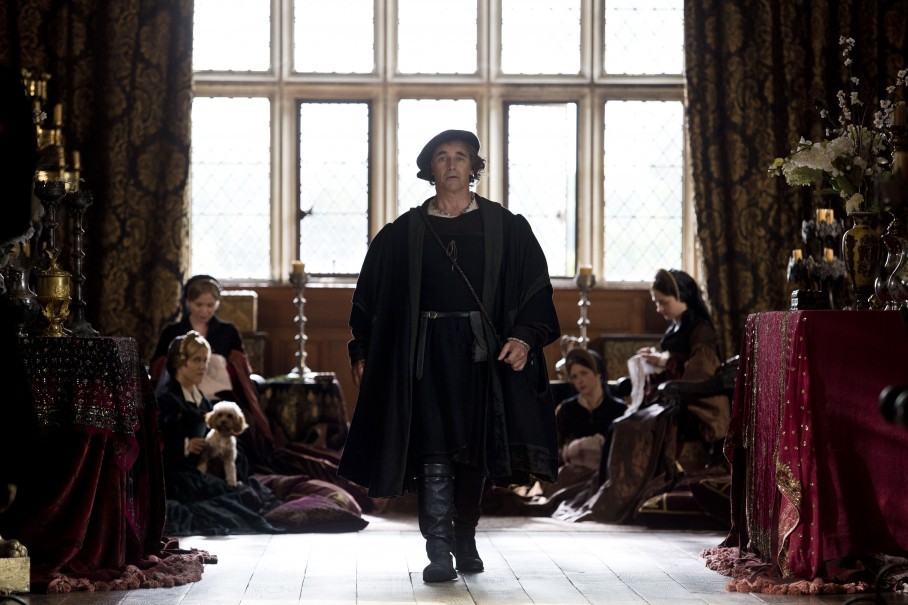
The new BBC Masterpiece theater “Wolf Hall” once again raises questions about the boundaries of artistic license in the portrayal of real historical events. argues that “Wolf Hall,” which is based on of a series of novels written by Hilary Mantel, went too far in its distortions of history. As a result Wolfe believes that “Mantel’s version could obscure important lessons from that dark period that have continuing relevance for the present moment.” Read his entire augment here:

How ‘Wolf Hall’ will entertain millions — and threaten to distort history in the process – The Washington Post.

Mark Rylance plays Thomas Cromwell in “Wolf Hall.” (Giles (Keyte/Playground & Company Pictures for MASTERPIECE/BBC)

Mark Rylance plays Thomas Cromwell in “Wolf Hall.” (Giles (Keyte/Playground & Company Pictures for MASTERPIECE/BBC)

Three Lessons from the French Revolution European Policymakers Should Keep in Mind | History News Network

We don’t usually think about learning economic lessons from the French Revolution, but Rebecca L. Spang offers some interesting lessons from this unlikely source. As she explains: “The moment has come to diversify our analogy portfolio.” For her lessons go here:

History News Network | 3 Lessons from the French Revolution European Policymakers Should Keep in Mind.

Stuff and Money French Revolution

History News Network | What Can We Learn from History?

At the History News Network, Robert Zaretsky argues that the popular perception of history as “a how-to manual for avoiding past errors” is mistaken. In practice applying the “lessons of history” has rarely been successful. False analogies, faulty interpretations, and inadequate understanding of the past and present all contribute to the problem. Zaretsky points out, correctly I believe, that we turn “to the past for platitudes that parade as lessons.”

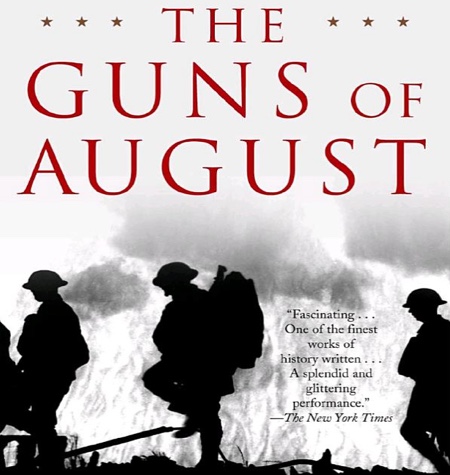
Despite his pessimism concerning history lessons Zaretsky still believes that history can be a useful guide in the present. Instead of turning to history as “a how-to manual,” Zaretsky believes that it is the stories offered by history that are valuable. Stories of the past, he insists, “offer, in effect, exercises in political and moral judgment.” As an example he turns to the lessons learned from Barbara Tuchman’s book The Guns of August by John F. Kennedy. According to Zaretsky, it taught Kennedy “that the greatest danger a political leader could run in time of crisis was ‘a mistake in judgment.’”

History News Network | What Can We Learn from History?.

The Guns of August