“The Renaissance of the Sultans by William Dalrymple” | The New York Review of Books

William Dalrymple examines the seventeenth-century Indian ruler, Sultan Ibrahim, and his obsession with art. In many ways his reign ushered in a renaissance,”[b]ringing together Hindu and Muslim traditions in an atmosphere of heterodox learning, and uniting Persians, Africans, and Europeans in a cosmopolitan artistic meritocracy, Ibrahim presided over a freethinking court in which art was a defining passion. For Ibrahim was literally obsessed with the power of art. In his poems he dwells on its ability to bring people together, and on the way that art, and particularly music, acted on the body and was capable of moving an individual to tears, or ecstasy, or a deep melancholic sadness.”

Read Dalrymple’s interesting review of Deborah Hutton and Rebecca Tucker’s The Visual World of Muslim India, and the “Sultans of Deccan India, 1500-1700: Opulence and Fantasy” (exhibition at the Metropolitan Museum of Art, New York City, April 20–July 26, 2015) here:

The Renaissance of the Sultans by William Dalrymple | The New York Review of Books.

"Ashmolean Museum, Oxford, lent by Howard Hodgkin Sultan Ibrahim ‘Adil Shah II in Procession; painting by the school of ‘Ali Riza, Bijapur, early seventeenth century"

“Ashmolean Museum, Oxford, lent by Howard Hodgkin
Sultan Ibrahim ‘Adil Shah II in Procession; painting by the school of ‘Ali Riza, Bijapur, early seventeenth century”

History News Network | Did the Bush Invasion of Iraq “Create” ISIS?

Brian Glyn Williams weighs in on the “who created ISIS” debate. He concludes that it was the policy of disenfranchising the Baathists (civilian and military) that “fulfilled the Law of Unintended Consequences,” and “opened the Pandora’s Box that would ultimately lead to creation of ISIS.”

Here’s an excerpt from the essay: “The Iraqi military, which consisted of 385,000 men in the army and 285,000 in the Ministry of Defense, was a much respected institution in Iraq and its disbandment shocked Iraqi society. The tens of thousands of Iraqi soldiers who had taken their weapons home instead of fighting the American invasion felt betrayed when they were fired. This created a recruitment pool of armed, organized and disaffected soldiers. In one fell swoop these Iraqi soldiers lost their careers, their paychecks, their pensions and their source of pride. General Daniel Bolger would claim that de-Baathification ‘guaranteed Sunni outrage.’[6]

Read Williams’ entire argument here:

History News Network | Did the Bush Invasion of Iraq “Create” ISIS?

predators the CIA drone war

The Textbook Wars: An Historical Perspective

The Texas Textbook controversy has recently received a lot of attention, but it is only the most recent chapter in a long struggle over what our children should be learning. It is this history that Christopher Babits examines in order to add perspective to the current polemics. Babits found that debates over the content of textbooks goes back at least 130 years, but one episode in particular stood out as the most instructive in the current textbook wars. This episode began in the late 1920s.
The Great Depression brought great social change and a willingness to critically examine the causes of the crisis, even if it wasn’t pretty. Therefore, according to Babits, “many Americans embraced what came to be called the social reconstructionist curriculum. Observing the consequences of capitalism run amok, Americans became more comfortable with curricula that not only critiqued economic inequality but also encouraged students to ask critical questions about the American past.” In the schools the “[s]ocial reconstructionist curricula focused on the economic challenges facing the United States and the ways that schools could improve society.” This curricula came under attack from conservatives in the 1930s, but it wasn’t until the 1940s that this approach was replaced with a patriotic focused curriculum in response the rise of fascism and World War II.
Read the entire history of the textbooks wars here:

History News Network | The Texas Textbook Controversy. It’s Part of a Long, Awful, Tradition.

textbook wars

“Kissinger Memo from 1972: Make the North Vietnamese think Nixon and I are crazy” | History News Network

This is interesting!

History News Network | Kissinger Memo from 1972: Make the North Vietnamese think Nixon and I are crazy.

Kissinger memo 1972

Kissinger memo 1972

“Was Robert Kennedy Really the Dove He and Arthur Schlesinger Jr. Made Him Out to Be During the Cuban Missile Crisis?” | History News Network

This might be of interest to some of you:

History News Network | Was Robert Kennedy Really the Dove He and Arthur Schlesinger Jr. Made Him Out to Be During the Cuban Missile Crisis?.

The Cuban Missle Crisis in American Memory

Is Traditional Baptist Marriage Under Threat If the Supreme Court Strikes Down Gay Marriage Bans?

At the HNN, Barry Hankins argues that Baptists are coming to the recognition that they may soon be in the same position as Muslim leaders who “acknowledge that their religious practices are at odds with some facets of American law.” The change that would make Baptists at odds with American law: gay marriage. He fears that if the Supreme Court strikes down the gay marriage bans that exist in some states, then the Baptist belief that marriage is between a man and a women would be under threat. First, he is concerned that the Baptists won’t remember their roots when they were outsiders who were willing to be “fined, horsewhipped, and jailed” for their beliefs. But more importantly he fears that their conception of marriage may be in danger through government intervention.

In an effort to protect marriage as they see it, Hankins explains that the Texas Baptist Christian Life Commission (CLC) has “urged churches to insert in their bylaws a clause specifically defining biblical marriage.” They fear that they may be forced to allow gay weddings to be held in their churches under anti-discrimination laws. To show that this is not wild paranoia, he points to the loss of tax exempt status at Bob Jones University because they refused to accept students who were inter-racially married.

It is doubtful that Hankins’s nightmare scenario will materialize, but it is within the realm of possibility. However, they would only be forced to comply if they were unwilling to give up their tax exempt status. And the loss of this privilege is not unjust, as Chief Justice Warren Burger explained in the Bob Jones case, “to warrant exemption under § 501(c)(3), an institution must fall within a category specified in that section and must demonstrably serve and be in harmony with the public interest. The institution’s purpose must not be so at odds with the common community conscience as to undermine any public benefit that might otherwise be conferred.”

Maybe Hankins, and Baptists in general, should follow the advice of their Baptist colleague, Bruce T. Gourley, who suggested that they reconsider the separationist principles of the Baptist preacher John Leland. While Gourley acknowledges that “the elimination of preferential tax treatment would likely result in weeping and gnashing of teeth among religious groups,” it would allow them “to address politics from the pulpit.” It would also free them from the burdens of tax exempt status. And it would free taxpayers from supporting religious societies that they are not members of. It’s a win, win!

History News Network | The Surprising Thing Baptists and Muslims Have in Common.
Baptists in America

“Sex, Mischief And Witches: Dark Side Of Life Discovered In A Medieval Oxford Nunnery”

Hardly the ideal of chastity, pray, and hard work. But not too surprising.

Sex, Mischief And Witches: Dark Side Of Life Discovered In A Medieval Oxford Nunnery.

Remains at LITTLEMORE-PRIORY

Did the “right to privacy” Argument in Griswold v. Connecticut Hinder the Advancement of Women’s Rights?

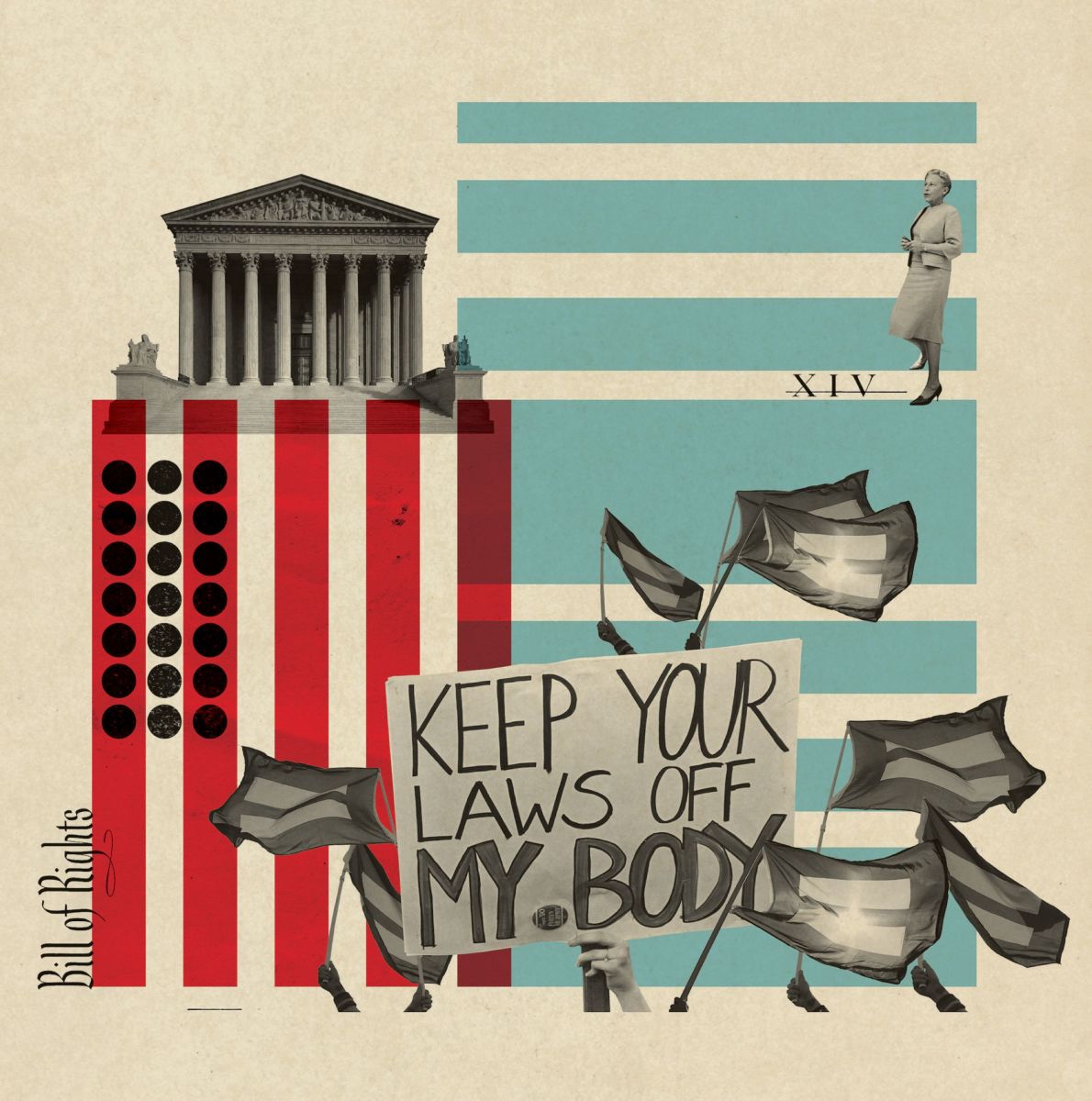
Jill Lepore examines the complex history of women’s rights as it played out in the courts from Griswold v. Connecticut (1965), which ruled Connecticut’s law banning contraception was unconstitutional, to the present. Griswold was decided on the basis of a couple’s right to privacy, rather than a woman’s right to determine her own path in life. Lepore argues that this precedent carried forward in later judicial decisions to the detriment of women’s struggle for full equality as citizens. “There is a lesson in the past fifty years of litigation. When the fight for equal rights for women narrowed to a fight for reproductive rights, defended on the ground of privacy, it weakened. But when the fight for gay rights became a fight for same-sex marriage, asserted on the ground of equality, it got stronger and stronger.” Read her entire argument here:

From Griswold v. Connecticut to Gay Marriage – The New Yorker.

"Illustration by Cristiana Couceiro; Clockwise from Top Right: Lee Lockwood / The LIFE Images Collection / Getty (Griswold); Paul Morigi / Getty Images for HRC and Bill Clark / CQ Roll Call / Getty (Flags); Barbara Alper / Getty (Sign); Purestock / Getty (Supreme Court)"

“Illustration by Cristiana Couceiro; Clockwise from Top Right: Lee Lockwood / The LIFE Images Collection / Getty (Griswold); Paul Morigi / Getty Images for HRC and Bill Clark / CQ Roll Call / Getty (Flags); Barbara Alper / Getty (Sign); Purestock / Getty (Supreme Court)”