“Japanese historian upends the familiar narrative of WW 2 by taking a bottom up approach, focusing on fascism from the grassroots” | History News Network

We’re used to viewing the rise of Japanese fascism/imperialism in the 1930s from the perspective of the leaders who took Japan down this path.  But this is a limited perspective. If we really want to understand why Japan turned towards fascism, we need to understand the role that ordinary Japanese played as well. This much needed perspective is found in Yoshimi Yoshiaki’s Grassroots Fascism, which has recently been translated into English.

grassroots fascism Japan

“Germany’s history explains why it’s so accepting of refugees and wants austerity for Greece” – Business Insider

Mike Bird explains Germany’s seeming contradictory behavior through the lens of history: Germany’s history explains why it’s so accepting of refugees and wants austerity for Greece – Business Insider

“Don’t let ‘the market’ dominate the debate on university teaching” | Higher Education Network | The Guardian

“We applaud the government’s plan to bring in a Teaching Excellence Framework, but the language of business devalues it”

The author of this piece is referring to education in the UK, but it equally applies here:
“The traditional role of universities was, in many ways, to offer a counterbalance to the market, with an emphasis on social value rather than economics. The risk, however, is that with the introduction of the Tef, yet another regulatory regime will squeeze the intellectual dynamism, risk-taking, original thinking and vitality out of universities”

Source: Don’t let ‘the market’ dominate the debate on university teaching | Higher Education Network | The Guardian

“A history professor explains why Americans are so prone to conspiracy theories” – Business Insider

In an interview with Alysia Santo, Robert Goldberg explains why Americans are prone to conspiratorial thinking.

Here’s an excerpt: “And add another piece to this: the Internet. You go into this echo chamber, all saying that this is true, that this is possible. And what I argue is that people go onto the web, not for information, but for confirmation. If they’re already suspicious, they’re going to find their suspicions validated, and what the psychologists say is the more and more you are presented with the truth of your opinion, the stronger you hold onto those opinions and the more extreme you get.”

Read the entire interview here: A history professor explains why Americans are so prone to conspiracy theories – Business Insider

The Destruction of Our Public Education System: “Splintering And Shattering Our Communities” Ed Berger

“There are forces at work that are so destructive they can shatter the hopes and dreams of our citizens and splinter our communities. Our communities serve the needs of citizens via good schools, good medical facilities, good policing, good and […]”

Ed Berger gives an impassioned plea to save our public education system from the corporate “reformers.” Please read his thoughtful piece:  Splintering And Shattering Our Communities

(Thanks Diane Ravitch for the pointer!)

education

“Why Clear Thinking About the Big Events of Our Time Becomes More Difficult Around this Time of Year” | History News Network

Robert Goldberg explains why we need to take conspiracy theories seriously and challenge their problematic claims. “In a conspiratorial frame of mind, we open ourselves to the rants of liars and demagogues. Perhaps, it is now time, in this season, to end denial and quit dismissing conspiracy theories as merely harmless or foolish or the work of the uninformed. Confrontation and refutation offer more valuable strategies for defeating the real enemy within.” I agree!

“Barack Obama, Whatever His Faults, Shouldn’t Be Criticized for Showing Empathy toward Iran” |History News Network

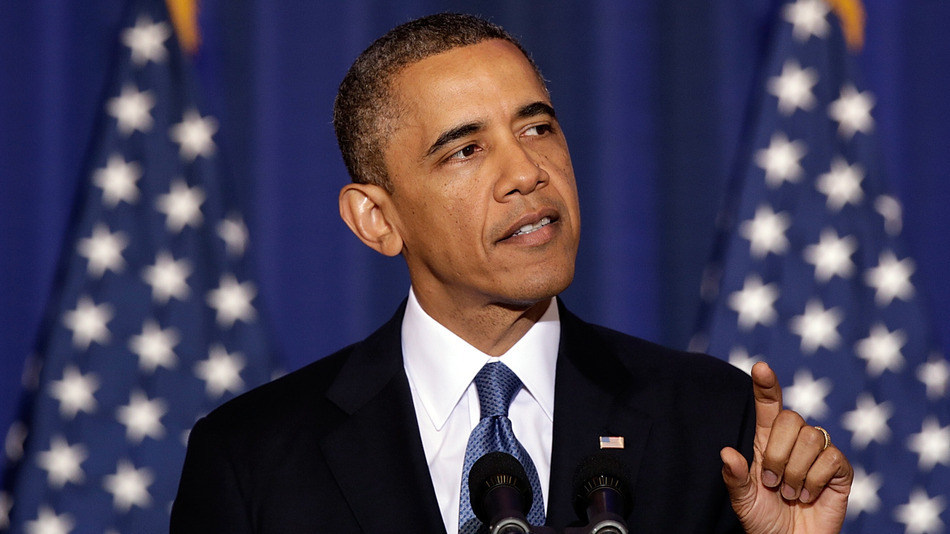
Walter G. Moss challenges those who criticize the President for showing empathy toward Iran. “Rather than empathy clouding the president’s judgment, as Herf maintains, it is (as I have argued elsewhere) an important characteristic of political wisdom. Contrary to much of our macho political rhetoric, it is not a sign of weakness. It does not prevent a realistic assessment of the “enemy,” but can enhance it. And most importantly, the diplomacy it forwards can help prevent, as the president insists in his American University speech, “the drumbeat of war.”
barack-obama

Why Kim Davis is Wrong: “Beliefs cannot trump rights” by George Panichas

It should be no surprise that many Americans have come to the defense of Kim Davis, believing that she is being denied her right to “live her religion.” A long-term strategy to restore what is perceived to be the rightful place of religion and/or Christianity in public life has been bearing fruit recently (most clearly in Hobby Lobby case). In doing so, they have inverted the relationship between the Establishment Clause (“Congress shall make no law respecting an establishment of religion”) and the Free Exercise Clause (“or prohibiting the free exercise their of”).

By weakening the power of the Establishment Clause and denying its purpose of protecting individual rights, conservatives can then ignore its power to protect the rights of individuals from government laws and/or other individuals, groups, corporations, etc. The other prong in this strategy has been to expand the right to free exercise to include the right to impose their religion on others, all in the name of religious liberty (hence all the Religious Freedom Restoration Acts, RFRA). This also allows them to present themselves as the defenders of “religious liberty,” when in fact they are undermining it.

George E. Panichas uses a story about “Old Jim,” who believes that his faith does not allow him to sell guns to women, to illustrate why Kim Davis and her supporters are wrong. Taking into account the protections of the Establishment Clause, he concludes, “The constitutional rights of Americans are protected against infringements emanating from even the most deeply held religious beliefs. Indeed, abandoning this commitment closes the door on a reasonable pluralistic democracy and opens it wide to an oppressive theocracy.”

Source: Beliefs cannot trump rights

A West Point Professor Accused other Law Professors of Treason in a Controversial Article

This is absolutely shocking! William C. Bradford, a West Point law professor, accused other law professors who disagreed with him of treason. He believes they are helping ISIS because their ideas would, in his mind, weaken the U.S.  “Why, you might ask, would these law professors betray their country? Bradford offers a variety of unconvincing explanations. Among the nefarious acts CLOACA scholars (that never gets less ridiculous to type) are guilty of are “skepticism of executive power,” “professional socialization,” “pernicious pacifism,” and “cosmopolitanism.” None of these are criminal acts or behaviors, of course. But that seems to be a technicality when Western civilization is at stake. “This radical development,” Bradford declares, “is celebrated in the Islamic world as a portent of U.S. weakness and the coming triumph of Islamism.” (He cites no source for this claim.)”

Matt Ford at The Atlantic, gives a good summary of Bradford’s ignorant article. He also does a great job pointing out the many flaws and lapses of logic. Unfortunately, the views expressed in the article are probably shared by many. Bradford resigned after The Guardian exposed his exaggerated credentials used to get his job.

Read the entire article at The Atlantic, you’ll be stunned at the fact that someone in his position could be so ignorant (and stupid!).

An Act of Iconoclasm? “Where Adam Smith and Occupy Agree: Inequality” – Bloomberg View

Inequality: “The godfather of free markets feared it would undermine the system he loved.”

Adam Smith has become such an icon that few venture to shatter the simplistic version of his ideas (outside of academia) known to most Americans. Few who hold this vision dear have actually read Smith’s Wealth of Nations, and if they have they read it from a modern perspective outside of the context in which Smith wrote it. And as a result, they misunderstand Smith’s ideas and his goals.

When it is read in context and with his other great work The Theory of Moral Sentiments, a different narrative emerges. David Lay Williams, in his article at Bloomberg View, explains some of the challenges to the dominate theory of Smith’s capitalism (self-interest, lassie-fare, the invisible hand, etc.)  when the complexities of Smith’s worldview are factored in. In this article, Williams focuses mainly on Smith’s concerns about inequality.

What does Williams hope to accomplish by looking back on Adam Smith’s philosophy?

“First, it challenges arguments made by those who insist that inequality wouldn’t have been problematic for the intellectual founder of free-market capitalism. Second, Smith offers insights into the nature of economic disparity that should guide a more enriched contemporary discussion of the issue. Many of today’s critiques of inequality center on how it can stifle economic growth. This may be true. But as a professor of moral philosopher, this wasn’t the focus of Smith’s commentary. Third, Smith’s attention to inequality as opposed to poverty is a rejoinder to those who suggest inequality isn’t problematic in itself. Finally, Smith’s inability to offer a solution, one may argue, is manifested in our own failure to address inequality and its accompanying troubles. We have inherited a system that has made no provisions for a dilemma apparent at its very foundations.”

Please read the entire article here: Where Adam Smith and Occupy Agree: Inequality – Bloomberg View

adam smith