Republicans Don’t Understand the Lessons of the Iraq War – The Atlantic

“Having misunderstood the Iraq War, U.S. Republicans are taking a dangerously hawkish turn on foreign policy.”


In The Atlantic Peter Beinart debunks the surge myth and its contribution to one of the long-standing problems with our foreign policy:  “The problem with the legend of the surge is that it reproduces the very hubris that led America into Iraq in the first place.”

Read the entire article here:  Republicans Don’t Understand the Lessons of the Iraq War – The Atlantic

Why Republicans Reject the Iran Deal — and All Diplomacy – The New York Times

“Conservative hostility to this agreement is nothing new. G.O.P. hardliners denounced Nixon and Reagan’s diplomatic achievements too.”

In trying to understand the Republican rage against the Iran Deal I found this article very helpful. I don’t agree with it, but knowing this history helps to make sense of their hostility to all diplomacy. But I think this is only part of the story. Their hostility is so extreme I think there is something else going on to intensify their ideological stance: an irrational opposition to anything Obama does.

Source: Why Republicans Reject the Iran Deal — and All Diplomacy – The New York Times

“Toward a National Strategy to Cope With a New World: Part 2” | History News Network

After listening to so much bluster (and idiocy) from The Donald on how he would solve the ISIS problem, it was really refreshing to read William R. Polk’s second essay on foreign policy. The essay is long, but I think well worth reading. His analysis reflects his experience and knowledge of history and U.S. foreign policy.
What most people miss in their deliberations on how the US should act in the world is any consideration for how other peoples see us and our actions. For a long time I have thought that one of the major flaws in our Realpoltik foreign policy has been its shortsightedness. We have been stoking hatred and desires for revenge for a long time and we’re paying the price for it now. In the short-term, Realpoltik may have served us, but in the long-term it has made us less safe. This strategy has also undermined our moral standing in the world, and exposed us as hypocrites. We have failed to live up to our own principles! I could go on, but I think Polk did an excellent job laying out some of my own grievances. I hope you read the entire essay, but if not I have put a few excerpts below that will hopefully provoke your interest, or at least provide food for thought.

“The “pacification” that counterinsurgency advocates claim is precisely what did not happen; rather anger intensified and desire for revenge grew.   Such activities are  not only self-defeating but also are self-propagating: strikes breed revenge which justify further strikes.  War becomes unending.”

“As I pointed out in the previous essay, Americans have carried out hundreds of military actions in other countries over the course of our history and in just the last 25 years have engaged in an average of six a year.[15] To Americans, such statistics mean something different from what they mean to others.  Leave aside such issues as legality, nationalism and purpose and consider only war itself.  The last time Americans personally suffered its reality – the destruction, the hunger, the draining fear – was the Civil War in the 1860s.     So when we read that we were complicit in Vietnam, Iraq and Afghanistan in the deaths of hundreds of thousands,  uncounted injured and the “stunting” of a whole generation of children, they are just statistics.  We cannot emotionally relate to them.  Many other peoples, of course, do relate to them. For some, the memories are fresh, intimate and painful.”

“Since they assumed and hoped that we would live in a republic where the opinion of citizens has some ability to control government decision making,[92] they believed, that to have a chance to combine liberty and responsibility, citizens needed to be educated.  Enhancing the intellectual quality of our citizenry thus became essential in securing of “\’The Blessings of Liberty to ourselves and our Posterity.’”

“In conclusion, we must come to terms with the reality that we live in a multicultural, multinational world.  Our assertion of uniqueness, of unipower domination and of military power has been enormously expensive and has created a world reaction against us; in the period ahead it will become unsustainable and is likely to lead precisely to what we should not want to happen — armed conflict.  Moderation, peace-seeking and open-mindedness  need to become our national mottos.”

History News Network | Toward a National Strategy to Cope With a New World: Part 2.

US and World


“Coping with the Sense of Drift and Disorder in World Affairs, Part 1” | History News Network

Yesterday was the first day of classes at ASU and I spent most of that day trying to explain to my students why studying history is important. Most of them are freshmen and are taking the course as a requirement, so I’m not sure how successful I was. But I’ll keep trying.

I know what you’re thinking. What does this have to do with “Drift and Disorder in World Affairs”?

In grappling with the issue of the U.S.’s lack of a coherent foreign policy William R. Polk points to an important factor that very few people acknowledge: us. Most citizens, and even many of the leaders, in this country are ignorant of the basic history and issues that impact their lives and the lives of others.
“Is this ignorance important? The French conservative philosopher, Josef de Maistre answered that it is because ‘every nation gets the government it deserves,’ If citizens are uneducated or passive, they can be controlled, as the Roman emperors controlled their peoples with bread and circuses, or as other dictatorships have with ‘patriotic’ demonstrations or manufactured threats. Indeed, a people can make themselves willing dupes as the Germans did when they voted Hitler into power in a free election. Ignorance and apathy are the pathogenes of representative government. Under their influence, constitutions are weakened or set aside, legislatures become rubber stamps, courts pervert the law and the media becomes a tool. So, even in a democracy, when we duck our civic duties in favor of entertainment and do not inform ourselves, the political process is endangered.” So true!

Polk identifies other important factors that contribute to the drift and disorder of the world, but I find this one particularly compelling. We cannot change what kind of leaders we get if we don’t first change ourselves. We all need to take our responsibilities as citizens of the U.S. and the world more seriously.

Please read Polk’s thought-provoking piece: History News Network | Coping with the Sense of Drift and Disorder in World Affairs, Part 1.

Iraq

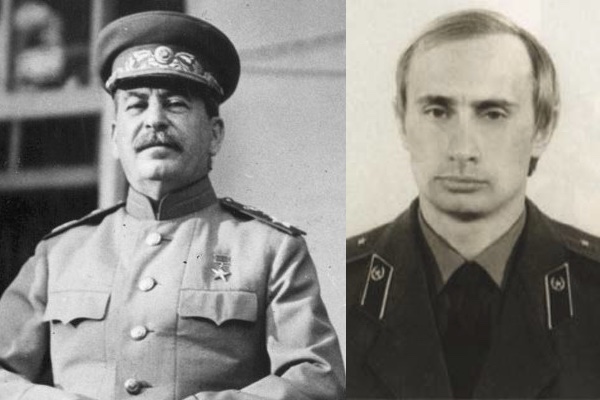
“We Need to Come to Terms with the Russian People’s Support Today of both Stalin and Putin” | History News Network

Walter G. Moss proposes that “[a]ny effective U.S. foreign policy must not just vilify leaders, whether Saddam Hussein or Putin, but recognize and try to understand why so many foreign citizens think differently than we do.” I half agree with him. We too often fail to take into account the views of other peoples in formulating our foreign policy. If our foreign policy is to be effective we must understand how others view the world and their place in it. However, I disagree with Moss’s contention that we should not “demonize” the leaders that they admire. Well, maybe we shouldn’t demonize them, but we should call them out for their outrageous behavior.

I would still recommend reading Moss’s article. He makes some good points concerning the history of our foreign policy. History News Network | We Need to Come to Terms with the Russian People’s Support Today of both Stalin and Putin.

Stalin Putin

“Did Obama Really ‘Cut and Run’ and ‘Abandon’ Iraq to ISIS?” | History News Network

Our political discourse is dominated by hyperbolic discourse that simplifies the world in an emotionally appealing way. Therein lies its power. It is emotionally gratifying and makes us feel like we’re in the know when we’re not. We would like the world to be black and white, but it isn’t. Unfortunately, theses false and/or deceptive narratives harden into “facts” as they are perpetuated via the media, the blogosphere, and social media. This rhetoric has poisoned our political discourse and has hampered our efforts to deal with our problems.

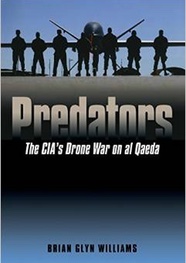
Some of the most despicable rhetoric has been reserved for President Obama. Once the rhetoric has established the general feeling that Obama is “incompetent” and “weak” (or “tyrannical” depending on the context) all further charges against him then “ring true” (no fact checking needed!). One of the recent charges against Obama accuses him of “cutting and running” from Iraq, leading directly to the creation of ISIS. With extensive knowledge of the situation, Brian Glyn Williams takes on this claim and concludes that “Maliki’s anti-Sunni policies directly led to the rise of ISIS. He, along with Paul Bremer, is the man most responsible for creating ISIS.” But he doesn’t let Obama off the hook completely.

Read Williams’ well-researched examination of the rise of ISIS here: History News Network | Did Obama Really “Cut and Run” and “Abandon” Iraq to ISIS?
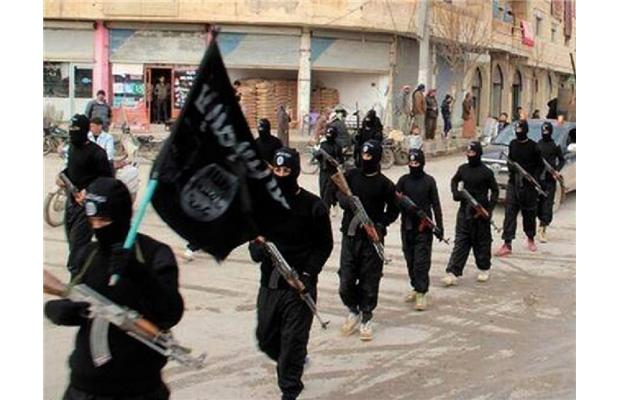
ISIS

History News Network | Did the Bush Invasion of Iraq “Create” ISIS?

Brian Glyn Williams weighs in on the “who created ISIS” debate. He concludes that it was the policy of disenfranchising the Baathists (civilian and military) that “fulfilled the Law of Unintended Consequences,” and “opened the Pandora’s Box that would ultimately lead to creation of ISIS.”

Here’s an excerpt from the essay: “The Iraqi military, which consisted of 385,000 men in the army and 285,000 in the Ministry of Defense, was a much respected institution in Iraq and its disbandment shocked Iraqi society. The tens of thousands of Iraqi soldiers who had taken their weapons home instead of fighting the American invasion felt betrayed when they were fired. This created a recruitment pool of armed, organized and disaffected soldiers. In one fell swoop these Iraqi soldiers lost their careers, their paychecks, their pensions and their source of pride. General Daniel Bolger would claim that de-Baathification ‘guaranteed Sunni outrage.’[6]

Read Williams’ entire argument here:

History News Network | Did the Bush Invasion of Iraq “Create” ISIS?

predators the CIA drone war

“Kissinger Memo from 1972: Make the North Vietnamese think Nixon and I are crazy” | History News Network

This is interesting!

History News Network | Kissinger Memo from 1972: Make the North Vietnamese think Nixon and I are crazy.

Kissinger memo 1972

Kissinger memo 1972

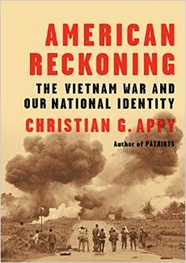
Book Review: Ron Briley Reviews Christian G. Appy’s “American Reckoning: The Vietnam War and Our National Identity” HNN

In his review of Appy’s book, Ron Briley concludes that it “is a provocative read and presents a convincing argument regarding the Vietnam War as exposing the myth of American innocence. Yet, the concept of American exceptionalism continues to exercise a strong hold upon the nation’s belief system, and the fiftieth anniversary of the Vietnam War may not provide the national reckoning so passionately called for by Appy.” Read the entire review here:

History News Network | Review of Christian G. Appy’s “American Reckoning: The Vietnam War and Our National Identity”

American Reckoning

“The American Military Uncontained” | History News Network

The retired lieutenant colonel (USAF) William J. Astore examines the current role of the U.S. military from the perspective of the 1990s, after we emerged victorious from the Cold War. Rather than gearing down for peacetime Astore shows that the military retained it Cold War size and attitude. But crucially, according to Astore, it also became uncontained as the sole superpower. He argues that after the fall of the Soviet Union the attitude that emerged was one of “go[ing] for broke.” After laying out the consequences of this situation, he warns, “No military should ever be trusted and no military should ever be left uncontained.  Our nation’s founders knew this lesson.  Five-star general Dwight D. Eisenhower took pains in his farewell address in 1961 to remind us of it again.  How did we as a people come to forget it?  WTF, America?”
I agree with much of what Astore says, but I see the transition to the present situation a little differently. He makes no differentiation between the humanitarian efforts (or non-efforts to be more accurate) in places like Bosnia, Somalia, and Rwanda in the 1990s, and the so-called “national security” interests in places like Iraq, Afghanistan, Iraq, Pakistan, and Yemen in the twenty-first century.
“Yet even as civilian leaders hankered to flex America’s military muscle in unpromising places like Bosnia and Somalia in the 1990s, and Afghanistan, Iraq, Libya, Pakistan, and Yemen in this century, the military itself has remained remarkably mired in Cold War thinking.”
I think it is a mistake to see this trend beginning in the 1990s. We did NOT “go all in” for the 1990s humanitarian situations. In fact, trying to persuade the Bush (papa) administration and then the Clinton administration to do anything in these situations was like pulling teeth. We only intervened belatedly in the Bosnian War with very little cost or effort after thousands of Bosnian Muslims (Bosniaks) were slaughtered. We did successfully intervene in Kosovo, but mostly out of guilt for what we didn’t do in Bosnia. We shamefully did nothing in Rwanda. And we pulled out of Somalia, where we were engaged in humanitarian aid, after the first sign of trouble (Black Hawk Down), which played right into the hands of the Somalian warlords. So, I think it is misleading to include Madeleine Albright’s plea to send in troops to the former Yugoslavia as evidence of the “all in” attitude in regards to the military. In all these cases, those in power did everything they could to make sure we didn’t use the military. Why? Because these were humanitarian causes and the “Vietnam Syndrome” was still alive and well. These were the cases we should have intervened, but didn’t. So much for “never again”!
The hawks that Astore refers to care little for humanitarian interventions and were happy to intervene in what they saw as “national security” situations (e.g. The Gulf War). But I think it was something else that turned the tide toward the intervention everywhere attitude: 9/11. Presently the fear of terrorism ensures that this attitude will continue to prevail.
However, I agree with his conclusion “Take an uncontained, mutating military, sprinkle it with unconditional love and plenty of dough, and you have a recipe for disaster.” Read the entire article here:

History News Network | The American Military Uncontained.

rice.cheney.bush.rumsfeld