Politics
Why Republicans Reject the Iran Deal — and All Diplomacy – The New York Times
“Conservative hostility to this agreement is nothing new. G.O.P. hardliners denounced Nixon and Reagan’s diplomatic achievements too.”
In trying to understand the Republican rage against the Iran Deal I found this article very helpful. I don’t agree with it, but knowing this history helps to make sense of their hostility to all diplomacy. But I think this is only part of the story. Their hostility is so extreme I think there is something else going on to intensify their ideological stance: an irrational opposition to anything Obama does.
Source: Why Republicans Reject the Iran Deal — and All Diplomacy – The New York Times
“Coping with the Sense of Drift and Disorder in World Affairs, Part 1” | History News Network
Yesterday was the first day of classes at ASU and I spent most of that day trying to explain to my students why studying history is important. Most of them are freshmen and are taking the course as a requirement, so I’m not sure how successful I was. But I’ll keep trying.
I know what you’re thinking. What does this have to do with “Drift and Disorder in World Affairs”?
Polk identifies other important factors that contribute to the drift and disorder of the world, but I find this one particularly compelling. We cannot change what kind of leaders we get if we don’t first change ourselves. We all need to take our responsibilities as citizens of the U.S. and the world more seriously.
Please read Polk’s thought-provoking piece: History News Network | Coping with the Sense of Drift and Disorder in World Affairs, Part 1.
“The Neoliberal Arts,” by William Deresiewicz | Harper’s Magazine
What is the purpose of higher education? To create informed, critical thinkers who are engaged, thoughtful citizens? To create workers based on the needs of the market?
The latter reflects the thinking of the new neoliberalism, which now enjoys a broad popularity. The neoliberalist view of higher education is no longer just rhetoric. Colleges and universities have been transforming themselves for at least the last twenty years in alignment with this ideology. William Deresiewicz delves into the troubling consequences of this type of higher education on our society.
Deresiewicz defines neoliberalism as “an ideology that reduces all values to money values. The worth of a thing is the price of the thing. The worth of a person is the wealth of the person. Neoliberalism tells you that you are valuable exclusively in terms of your activity in the marketplace — in Wordsworth’s phrase, your [sic] getting and spending.”
Alternatively, he asserts, “we need to treat it [education] as a right. Instead of seeing it in terms of market purposes, we need to see it once again in terms of intellectual and moral purposes. That means resurrecting one of the great achievements of postwar American society: high-quality, low- or no-cost mass public higher education. An end to the artificial scarcity of educational resources. An end to the idea that students must compete for the privilege of going to a decent college, and that they then must pay for it.” I agree!
Please read Deresiewicz deliberative essay on this very important topic:
[Essay] | The Neoliberal Arts, by William Deresiewicz | Harper’s Magazine.
Here’s another worthwhile article on the subject of neoliberalism and education: “Organized Lightning: The liberal arts against neoliberalism.”
Book Review: David Sehat’s “The Jefferson Rule: How the Founding Fathers Became Infallible and Our Politics Inflexible” |History News Network
“argument that the Founders were ‘a querulous and divided group that did not and cannot offer the guidance that we might wish’ (241),” and his conclusion “that we should ‘dispense with the talk of the Founders in order to make a straightforward case for whatever policy is under discussion. Doing so would not solve all of the problems. But it would be a first step to a better political debate’ (243).”
“The Long History of Political Idiocy” – The New York Times
Hyperbole in political discourse may seem to be a recent phenomenon, but as the historian Joanne B. Freeman reminds us “none of this is new. Politicians have always resorted to dumb claims, blatant insults, bold exaggerations and baldfaced lies to gain press coverage and win votes.” And we can’t just blame politicians or the media for this sad state of affairs. The truth is, we the people love it. Just as now, in the nineteenth century “Legislators who went to extremes were virtually guaranteed press coverage.”
Read Freeman’s entertaining history of “political idiocy” here: The Long History of Political Idiocy – The New York Times.
Jonas Persson Explores the History of School Choice: What He Finds Isn’t Pretty
After reviewing the history of vouchers, Jonas Persson at PR Watch concludes “‘choice’ was always predicated on parents choosing private—sometimes even segregated—schools. Vouchers were not proposed with equity in mind; they were cooked up out of an ideological disdain for public schools and teachers’ unions.”
Persson article is enlightening, if not sad. We all need to understand the real motives and purposes of the school choice movement if we want to save our public education system. Here’s an excerpt from Persson informative piece:
“As if hit by a collective wake-up call, voucher advocates suddenly realized that the pipe dream of a free market “utopia,” where public schools and democratic school boards were consigned to the dustheap of history, could actually be realized. All it took was some posturing and a great deal of cynicism.
‘In today’s world,’ the rightwing quarterly The Public Interest suggested in a 1988 article, ‘those who would expand choice programs face many legal and political obstacles. Linking choice programs and integration may be their best bet.’ The New Right had, as The Black Commentator eloquently explained in a 2004 article, found its missing link:
Former Reagan Education Secretary William Bennett understood what was missing from the voucher political chemistry: minorities. If visible elements of the Black and Latino community could be ensnared in what was then a lily-white scheme, then the Right’s dream of a universal vouchers system to subsidize general privatization of education, might become a practical political project. More urgently, Bennett and other rightwing strategists saw that vouchers had the potential to drive a wedge between Blacks and teachers unions, cracking the Democratic Party coalition. In 1988, Bennett urged the Catholic Church to “seek out the poor, the disadvantaged…and take them in, educate them, and then ask society for fair recompense for your efforts”–vouchers. The game was on.
In the late ’80s, conservative think tanks and advocacy groups across the nation launched massive whitewashing campaigns; they started churning out policy reports and books purporting to show how school vouchers would actually benefit minority students. Examples include: We Can Rescue Our Children: The Cure for Chicago’s Public School Crisis (Heartland Institute, 1988) and Liberating Schools: Education in the Inner City (Cato Institute, 1990).
“This Research Suggests Why Historians Have to Begin Acknowledging that Biology Is a Key Factor in a Person’s Politics” | History News Network
Two political scientists, John R. Hibbing and Kevin B. Smith, propose that historians acknowledge “that biology is a key factor in a person’s politics.” There has been a lot of recent research that confirms this. But the real issue is not whether historians should acknowledge these findings (they should if the evidence supports them), it is whether or not this knowledge is useful to them in understanding the past. I’m not convinced that it is. While history may be useful in confirming (or dis-confirming) the pattern of conflicts “between innovation and tradition, between stability and progress” that is an expression of these biological predispositions, it offers little help to the historian in understanding particular historical events. And it may even lead us to misleading and false conclusions without any tools, beyond a person’s behavior, to determine someone’s biological predispositions. Given the type of evidence that we have, a person’s social, cultural, and political environment is more useful when it comes to understanding human motivations and behaviors.
This is not to dismiss the grow body of evidence that supports a biological component in human politics as useless. But it seems to be more relevant for human behavior today. This knowledge may be useful to changing human behavior, if it leads us to recognize that “[p]eople are different; they experience the world differently; they do not see, feel, and sense identical stimuli in the same way.” An appreciation of this could possibly “soften the edges of political disputes that are so detrimental.” One can only hope!
“The US Is the Only Advanced Country on Earth that Doesn’t Guarantee Paid Maternity Leave. Why Is that?” | History News Network
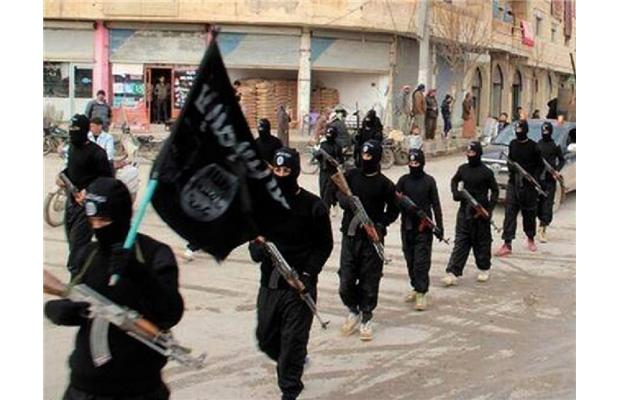
“Did Obama Really ‘Cut and Run’ and ‘Abandon’ Iraq to ISIS?” | History News Network
Our political discourse is dominated by hyperbolic discourse that simplifies the world in an emotionally appealing way. Therein lies its power. It is emotionally gratifying and makes us feel like we’re in the know when we’re not. We would like the world to be black and white, but it isn’t. Unfortunately, theses false and/or deceptive narratives harden into “facts” as they are perpetuated via the media, the blogosphere, and social media. This rhetoric has poisoned our political discourse and has hampered our efforts to deal with our problems.
Some of the most despicable rhetoric has been reserved for President Obama. Once the rhetoric has established the general feeling that Obama is “incompetent” and “weak” (or “tyrannical” depending on the context) all further charges against him then “ring true” (no fact checking needed!). One of the recent charges against Obama accuses him of “cutting and running” from Iraq, leading directly to the creation of ISIS. With extensive knowledge of the situation, Brian Glyn Williams takes on this claim and concludes that “Maliki’s anti-Sunni policies directly led to the rise of ISIS. He, along with Paul Bremer, is the man most responsible for creating ISIS.” But he doesn’t let Obama off the hook completely.