A Rebuttal to Allen Guelzo’s “The Civil War and the Corruptive Effects of Religious Absolutism” – The Atlantic

In The Atlantic Allen Guelzo argues that “the Civil War made it impossible for religious absolutism to address problems in American life—especially economic and racial ones—where religious absolutism would in fact have done a very large measure of good.” This is an intriguing but deeply flawed argument. Leaving aside the dubious assumption that moral absolutes are good, I want to challenge only one aspect of his argument: his claim that

“From the Civil War onward, American Protestantism would be locked deeper and deeper into a state of cultural imprisonment, and in many cases, retreating to a world of private experience in which Christianity remained of little more significance to public life than stamp-collecting or bridge parties. Appeals to divine authority at the beginning of the Civil War fragmented in deadlock and contradiction, and ever since then, it has been difficult for deeply rooted religious conviction to assert a genuinely shaping influence over American public life.”

Guelzo provides very little evidence for this claim, as well as failing to connect the moral angst created by the Civil War to the retreat of religion in public life.

Continue reading

“Secret Catholics at Jamestown” – The Atlantic

No one could have predicted that! Archaeologists found Catholic relics in the coffin of one of the most important leaders of the Jamestown settlement: Captain Gabriel Archer. The history of Jamestown was already interesting but it just got a whole lot more interesting.

Read about the discovery here: Secret Catholics at Jamestown – The Atlantic.

Jamestown burial

“This is One Reason the World Is on Fire” | History News Network

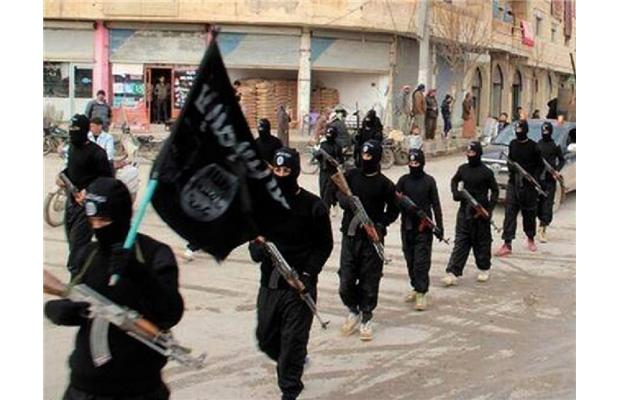
I don’t think “the world is on fire,” but Lawrence Davidson’s essay does hold some relevance to the violence that we see in some parts of the world. He argues that “there are millions of people, Muslims, Jews and Christians and others who not only still idealize a religiously imagined past, but want, in one way or another, to import that past into the present – and not only their present but everyone else’s as well.” This desire for some kind of mythical, ideal past is not new. These kind of golden age myths can be found throughout history, indicating a human affinity for them. They are particularly appealing in times of trouble, and Davidson is right to call them “downright dangerous.”
The problem is that while appealing, these mythical pasts never existed. They were created by scrubbing the particular period of interest of all its blemishes while embellishing the good. All attempts to recreate a mythical past have ended in human tragedy. Just as Procrustes was made to fit his bed by chopping off his legs, humanity is made to fit in an unattainable utopian box by destroying all that does not fit the ideal.
While Davidson focuses solely on the religious versions that are particularly prevalent at the moment, but this kind of golden age thinking can be found in other types of ideologies such as nationalism. We must all resist the siren song of these kinds of golden age narratives no matter how enticing they are.

History News Network | This is One Reason the World Is on Fire.

ISIS

“Why Aren’t Pro-Life Evangelical Christians Appalled by America’s Record of Gun Violence?”|History News Network

Lawrence Wittner’s answer: “The embrace of guns by many white Protestants is bolstered by a number of arguments linked to their religious assumptions. One contention is that the United States was established by God and, therefore, the Second Amendment to the Constitution (which they allege guarantees individual gun ownership) is sacred. Another is that depriving people of ‘self-defense’ deprives them of a God-given right. In addition, they tend to believe that corrupt, un-Christian values, rather than the easy availability of guns, lie behind the frequency of gun massacres.” This sounds about right to me. But now what? There is no amount of reasoning or evidence that would convince them to change their mind on gun control.
Wittner also speculates on the reason why the U.S. has such a high gun death rate.
Read the entire article here:

History News Network | Why Aren’t Pro-Life Evangelical Christians Appalled by America’s Record of Gun Violence?

guns_god_country_flag


Why did a Pious Baptist Preacher Give Thomas Jefferson a Mammoth Cheese?

On January 1, 1802 an unusual gift arrived for the new president, Thomas Jefferson. It was a 1,235 pound hunk of cheese from the Elder John Leland and the Cheshire Baptists. Why would this devout Baptist preacher bestow such a conspicuous gift on the deistic Jefferson? The answer is simple: Leland saw Jefferson as one his ablest allies in the struggle for democracy and religious liberty. Delivering the cheese personally, Leland recited a message from a committee of five influential citizens from Cheshire, declaring that they were presenting him with the enormous cheese:

“as a token of the esteem we bear to our chief Magistrate and of the sense we entertain of the singular blessings that have been derived from the numerous services you have rendered to mankind in general and more especially to this favored nation, over which you preside. It is not the last stone of the Bastille, nor is it an article of great pecuniary worth, but as a freewill offering we hope it will be favorably received.”

From all accounts the cheese was “favorably received.” One account recalls that the cheese was carved “in the presence of the president and cabinet, foreign diplomats and many distinguished men and women of ancient note…and that it was the object of great curiosity.” Leland received special thanks and was “introduced person, by person by the president, to the entire gathering.” The celebration for Leland did not end with the ceremony; he celebrated all the way home in what “resembled a triumphant march.” (1) This little known event is a reminder of the great alliance between rationalists such as Jefferson, and the pious dissenters who helped establish religious liberty in the new nation.

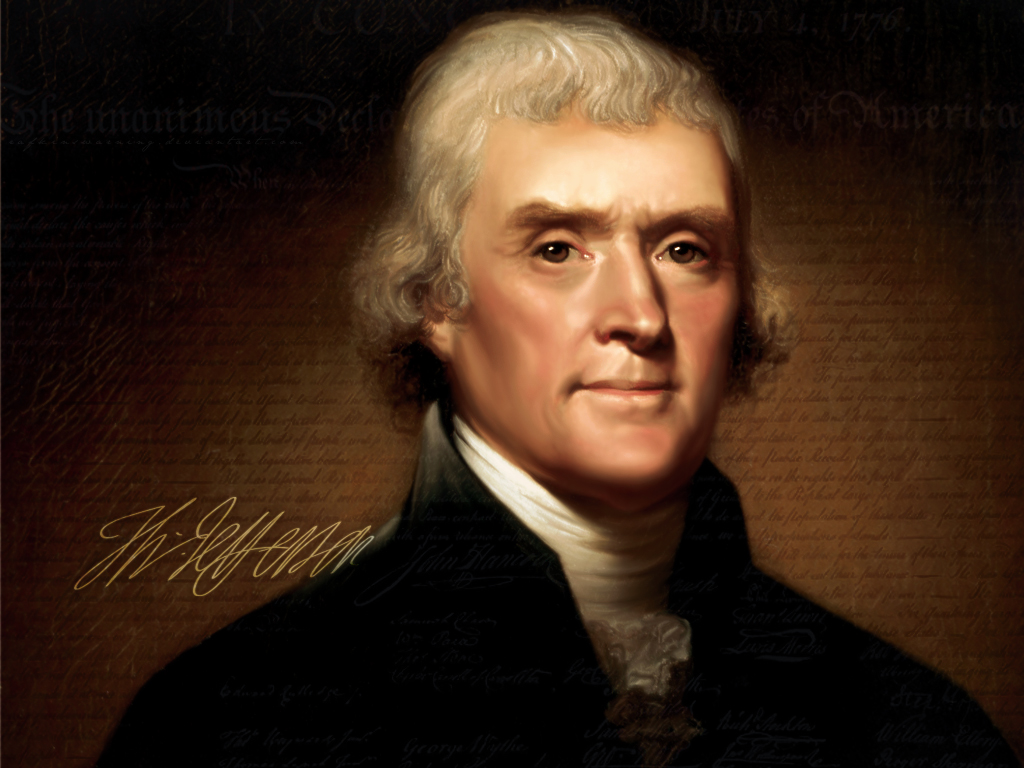
thomasjefferson

John Leland grew up in New England, but he spent his early career in Virginia, where he came to admire Jefferson and Madison. In a popular sermon given soon after Jefferson’s inauguration in 1801, he declared, in reference to Jefferson:

Continue reading

Why did a Pious Baptist Preacher Give Thomas Jefferson a Mammoth Cheese?

On January 1, 1802 an unusual gift arrived for the new president, Thomas Jefferson. It was a 1,235 pound hunk of cheese from the Elder John Leland and the Cheshire Baptists. Why would this devout Baptist preacher bestow such a conspicuous gift on the deistic Jefferson? The answer is simple: Leland saw Jefferson as one his ablest allies in the struggle for democracy and religious liberty. Delivering the cheese personally, Leland recited a message from a committee of five influential citizens from Cheshire, declaring that they were presenting him with the enormous cheese:

“as a token of the esteem we bear to our chief Magistrate and of the sense we entertain of the singular blessings that have been derived from the numerous services you have rendered to mankind in general and more especially to this favored nation, over which you preside. It is not the last stone of the Bastille, nor is it an article of great pecuniary worth, but as a freewill offering we hope it will be favorably received.”

From all accounts the cheese was “favorably received.” One account recalls that the cheese was carved “in the presence of the president and cabinet, foreign diplomats and many distinguished men and women of ancient note…and that it was the object of great curiosity.” Leland received special thanks and was “introduced person, by person by the president, to the entire gathering.” The celebration for Leland did not end with the ceremony; he celebrated all the way home in what “resembled a triumphant march.” (1) This little known event is a reminder of the great alliance between rationalists such as Jefferson, and the pious dissenters who helped establish religious liberty in the new nation.

thomasjefferson

John Leland grew up in New England, but he spent his early career in Virginia, where he came to admire Jefferson and Madison. In a popular sermon given soon after Jefferson’s inauguration in 1801, he declared, in reference to Jefferson:

Continue reading

“The Secret History of American Religion: Christian Fundamentalism Started As a Capitalist Ad Campaign” | Alternet

Timothy Gloege in Guaranteed Pure: The Moody Bible Institute, Business, and the Making of Modern Evangelicalism tells the story of Henry Parsons Crowell, the founder of Quaker Oats, and his role in the creation of modern fundamentalism. Gloege is not the first to point out that religion was enlisted in the service in capitalism beginning with the Gilded Age, but in telling a little known part of this story he enriches our understanding of this alliance. Daniel Silliman describes Gleoge’s book as a “fascinating narrative of the origins of modern evangelicalism.” Read Silliman’s interview with Gloge here:

The Secret History of American Religion: Christian Fundamentalism Started As a Capitalist Ad Campaign | Alternet.

Quaker Oats and Henry Parsons Crowell

Quaker Oats and Henry Parsons Crowell

“One nation under God”? Not when it comes to distributing Gideon Bibles to public schools – Salon.com

Author of “One Nation Under God: How Corporate America Invented Christian America” Kevin M. Kruse reviews the history of Gideon bibles from their origins to their distribution in public schools. Based on this history, Kruse concludes that “[t]he concept of ‘one nation under God’ had seemed a simple, elegant way to bring together the citizens of a broadly religious country, but at the local level, as the Gideons had discovered, Americans were anything but united.” Read the entire article here:

“One nation under God”? Not when it comes to distributing Gideon Bibles to public schools – Salon.com.

gideon-bible_5

History News Network | The Fall of Rome and All that

The historian Douglas Boin argues that we have misread the fall of Rome and its relevance to today because we have ignored religious beliefs. “Anxious notions about the last days, notions of spiritual warfare, and a righteous belief that a divine hand was endorsing a specific law or policy were ideas in Rome that crossed the theological aisle. But that doesn’t make them any less ‘religious.’”

“That’s why today’s ghost stories are ultimately so revealing. We keep pretending we’re doing Roman history when what we’re really masking is our own severe anxiety about the fast-changing changing world—using the same ideas that our ancestors did, two thousand years ago. It’s time we put these beliefs back into our history books instead of doing as Gibbon did: ignoring them or, worse, pretending they were never there. What people believe—and what people are taught to believe—can’t be left out of history.” I agree. I have long argued that ideas and beliefs are key to understanding the past. Of course they must be understood within the particular circumstances in which they are found, but to ignore them completely has too often led us to misunderstand the past and the present.

History News Network | The Fall of Rome and All that.

Sacking of Rome

One Standard, Not Two, for Christianity and Islam – The American Interest

Obama’s refusal to call ISIS (or ISIL) a radical Islamic organization has sparked a debate over the relationship between religion and violence. The controversy escalated after he reminded Americans of Christianity’s violent past at the recent national prayer breakfast. Much of the outrage over his comments was motivated by the belief that Obama had fabricated the claims and insulted Christianity. At the same time many in this camp also believe that Islam is responsible for the violent behavior of ISIS. To them Christianity is the good religion and Islam is the bad one. This opinion is grounded in bias rather than evidence and we can safely dismiss it. That leaves us with the two contradictory views presented by Obama: 1) religion has no relationship to ISIS, or 2) religion, at least in part, is responsible for the violent behavior of Christians in medieval and early modern Europe as well as ISIS in the Middle East today. In the above cited essay, the historian Jeffrey Herf argues that both are culpable in the same way. Different traditions and selective use of sacred texts result in different behaviors and versions of the same religion. As Herf points out,

“Western governments have tied themselves in knots to the point of foolishness because they refuse to state what is obvious to many millions of people about the importance not of the religion of Islam per se but of interpretations of Islam in this era of terror. Just as it makes no historical sense to discuss slavery or the Holocaust without examining Christianity’s contributions, so it is ridiculous to assert that the Islamic State, the Hamas Covenant, the fanaticism of the Iranian mullahs, al-Qaeda, Hezbollah, and the Muslim Brotherhood have nothing to do with Islam. It amounts to saying that its adherents either do not mean what they say or that they don’t know what they are doing. Both assumptions are condescending. To be sure, these varieties of Islamism differ from one another, but they all engage in the labors of selective tradition. They did not invent the texts that they quote but they have selected and emphasized some rather than other components of the tradition. They can all point to passages in the Koran and in the commentaries about it that in their view justify attacks on the Jews, on Muslims of whom they disapprove, on Christians and on other assorted ‘infidels.’”(“One Standard, Not Two, for Christianity and Islam”)

the crusades

Continue reading