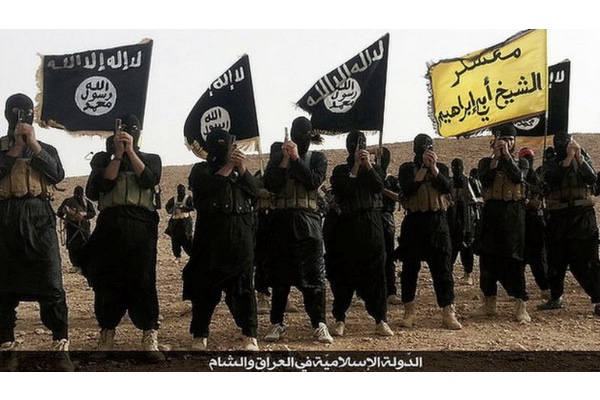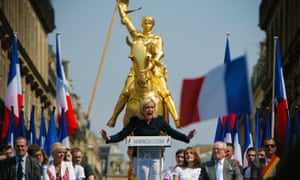
“Croatia’s Far Right Weaponizes the Past” | Foreign Policy

Unbelievable! How can Croats think that this is a good idea? Weren’t the first two times bad enough? This is also likely to provoke an equally nationalistic response from Serbia, which then will further provoke Croats leading to an ever-increasing radical nationalism. Let’s hope the story doesn’t end like it

“The EU’s newest member, Croatia, has an unabashed and strong-willed fascist in its new cabinet — one who makes the right-wingers in power in Hungary and Poland look like wimps.”

Source: Croatia’s Far Right Weaponizes the Past | Foreign Policy

Excellent Article on Race Relations by Quartz: “The scientific way to train white people to stop being racist — Quartz

No one wants to be called fragile. And if you’re white, what you feel reading the title of this article may be indicative of the term. “White fragility” refers to white people’s low emotional tolerance for discussing topics of race and racism. The term was coined by Dr. Robin DiAngelo in a 2011 article discussing…

via The scientific way to train white people to stop being racist — Quartz

Rebuttal to “The cult of memory: when history does more harm than good” | David Rieff | Education | The Guardian

Is Santayana’s truism that we are doomed to repeat the past if we don’t remember it? This is the question David Rieff set out to answer. It is a question worth asking. I myself have given the issue a lot of thought. In fact, I addressed this very subject in my research as a graduate student.

Rieff argues that “there are times when some things are best forgotten.” He doesn’t argue that all history should be forgotten he argues that in cases in which “collective memory condemns communities to feel the pain of their historical wounds and the bitterness of their historical grievances it is not the duty to remember but a duty to forget that should be honoured.” Why? Because this type of collective memory often leads to violence. On this I agree, but I don’t think it follows that  history is the problem.

In fact, I don’t think what he claims as history is not history at all. He actually referring to what he himself identifies as collective memory. Collective memories are constructed and, therefore, ripe for the abuse of history.  The problem with these constructed narratives is that they are created for political purposes. Rather than trying to understand the past, certain individuals or groups intentionally construct narratives that glorify the particular group. While they often unify the group they often do so at the expensive of other groups, often exploiting people’s fears and prejudices. Therefore, they are intentionally designed as “us” vs. “them” narratives. And they are particularly effective during times of instability or uncertainty.

Sobodan Milosovic, the Serbian president, gives a speech at the Kosovo battlefield where on June 28,1389 the Serbs were defeated by the Ottoman Turks.

Sobodan Milosovic, the Serbian president, gives a speech at the Kosovo battlefield where on June 28,1389 the Serbs were defeated by the Ottoman Turks.

To explain, let’s look at one of Rieff’s own examples and one I know very well: Yugoslavia. The breakup of Yugoslavia from 1991 to 1995 (not including later events in Kosovo) was a horrific, brutal, and violent affair. Watching from afar the war appeared to be nothing more than a continuation of “ancient ethnic hatreds,” a rationale that played into the hands of both president Bush (papa), and president Clinton, neither of which wanted to get involved. And the rhetoric and images coming out of the former Yugoslavia seemed to confirm such a conclusion (see image above).

The problem was that the rising tide of nationalism in Yugoslavia was built on the manipulation of history, as all nationalist narratives are. They were constructed in opposition to other national groups. They, like all nationalist narratives, glorified their own nation and demonized others. These narratives were mostly distortions or outright fabrications. History become a weapon.

Rieff is right to conclude that these narratives stoked hatred and a desire for revenge. But to conclude that therefore it would be better to just forget past violence and injustices is well-meaning but mistaken. The nationalist rhetoric that created the hatred was built on false narratives intentionally constructed to stoke hatred. The problem is not history, but false history.

And, as I argued in my dissertation, the rise and appeal of nationalism at that time was partly the result of the suppression of the past. There has been so much horrific violence committed between the ethnic groups that made up Yugoslavia during WWII (particularly between the Serbs and Croats) that the new leader of Yugoslavia, Broze Tito,  banned all commemoration and/or discussion of the violence committed during the war against each other.

This strategy ended in complete failure. First, because those who had been victims of this violence did not forget. Second, the suppression of the truth only created resentment, and the victims were never given the opportunity  allowed to reconcile and heal from their horrendous experiences.

Soon after Tito’s death the the taboo was lifted, and at just the time when Yugoslavia was suffering an economic crisis from a world-wide recession made worse by punitive austerity measures imposed on them by the IMF. The people of Yugoslavia were ripe to hear a nationalist message that explained their suffering. It offered them certainty, pride, and a scapegoat. Perceptive demagogues like Slobodan Milosovic skillfully exploited the situation for his own political gain (he was not a true believer in his rhetoric, but his followers were). Violence against those they considered the source of all that was wrong in their lives would soon follow.

But the problem was not history itself. Instead, it was the abuse of history. It was distorted nationalist narratives that glorified one’s own group while demonizing others. And this is why we need real history based on a genuine commitment to understand the past and to the truth as best we can know it. This is what was lacking in Yugoslavia and in constructed national narratives. If we want to combat the magical powers of nationalism or any exclusionary, self-aggrandizing narrative we need an educated population that can recognize these narratives for what they are: political spin.

Read Rieff’s entire essay here: The cult of memory: when history does more harm than good | David Rieff | Education | The Guardian
“Thomas Piketty to India’s Elite: ‘Learn From History’” – The New York Times

“On a visit to Mumbai, the economist and author hopes India’s elite can ‘learn from the stupid mistakes of the other elites.’” Will they? I doubt it! But I applaud Piketty for trying.

Source: Thomas Piketty to India’s Elite: ‘Learn From History’ – The New York Times

“America’s Reckless War Against Evil” | History News Network

“In other words, even as we stoke the Islamic State, we stoke ourselves as well. The longer we fight, the more deeply we are seized by fear. The more we fear, the more fiercely we are determined to fight. Perhaps the point is not to win the war but to remain trapped in this vicious circle, which feels perversely comforting because it offers a sense of unified national identity as nothing else can in our otherwise deeply divided nation.”


The historian Ira Chernus, who also studies conflict, has come to many of the same conclusions that I have, although he has summarized the dilemma much better than I ever could have. My fear is that we will never learn this historical lesson given that it is not as emotionally gratifying nor as easily grasped as the black and white, good vs. evil narrative that is so appealing.

Read Chernus’s trenchant piece here: History News Network | America’s Reckless War Against Evil

160848-asbfiu

Textbook Wars, cont.: “South Korea’s Textbook Whitewash” – The New York Times

Sadly, the South Korean government will now mandate the use of their specially created textbook. “Issued by the government, the new books will rewrite history to bolster the president’s conservative cause.”

Beyond the implications for the education of South Korea’s students, this move has geopolitical implications. As Se-Woong Koo points out: “In geopolitical terms, the Park administration is undermining efforts to confront Japan over its crimes in the wartime era, especially the issue of comfort women. If South Korea can promote its own incomplete history among children, why should Japan not be able to do the same and obscure its dark past?”

This is an unfortunate trend seen across the globe!

Source: South Korea’s Textbook Whitewash – The New York Times

The Reformers’ War on Language and on Democracy

Diane Ravitch exposes the double think of the education “reform” movement!

dianeravitch's avatarDiane Ravitch's blog

Maybe it is just me, but I find myself outraged by the “reformers'” incessant manipulation of language.

“Reform” seldom refers to reform.

“Reform” means privatization.

“Reform” means assaults on the teaching profession.

“Reform” means eliminating teachers’ unions, which fight for better salaries and working conditions.

“Reform” means boasting about test scores by schools that have carefully excluded the students who might get low scores.

“Reform” means using test scores to evaluate teachers even though this practice has negative effects on teacher morale and fails to identify better or worse teachers.

“Reform” means stripping teachers of due process rights or any other job security.

“Reform” means that schools should operate for-profit and that private corporations should be encouraged to profit from school spending.

“Reform” means acceptance of privately managed schools that operate without accountability or transparency.

“Reform” means the incremental destruction of public education.

I am reminded of George Orwell’s lines…

View original post 423 more words

Professors in Poverty

I’ve lived the life of an adjunct and it’s not fun. The use of adjuncts and full-time temporary faculty (which is what I am) continues to grow as universities and colleges try to save money in the face of ever diminishing public funds. You spent a lot of time and money to get a PhD believing that you’ll make a decent living, but that reality seems to be a thing of the past for most of us! Please watch this brief overview of the reality facing adjunct faculty. This situation isn’t good for anyone!

Gwendolyn Bradley's avatarACADEME BLOG

As part of Campus Equity Week, Brave New Films has released this terrific short film about the very real poverty of many faculty in contingent positions:

Contains some illuminating stats comparing presidential salaries to adjunct wages, and personal stories from adjuncts–mostly women, which reflects the reality that contingent labor issues are also women’s issues. It’s definitely worth watching and sharing this week as we focus on the working conditions of what’s now the majority of faculty.

View original post

What’s So Radical about Defending Public Education?

Martin Kich gives a great overview of some of the problems caused by the corporatization of public higher education.

martinkich's avatarACADEME BLOG

Being antagonistic to corporatization should not necessarily be conflated with being broadly antagonistic to corporations. Universities and corporations have long had mutually beneficial relationships that have caused relatively infrequent controversies. And, just to be clear, although some faculty with more progressive political values have been very skeptical of those relationships between their universities and corporate interests, very, very few faculty have been categorically opposed to the development of such relationships because, for the most part, they have clearly been mutually beneficial.

Corporatization, on the other hand, is the recent manifestation of a historically recurring attempt to redefine public higher education as a business enterprise. In the 1980s, it started with the premise that universities had become such complex institutions, with very large budgets and multifaceted operations, that they would benefit from the adoption of more formal, and perhaps some cutting-edge, business-management practices. American corporations were beginning to respond to post-industrial…

View original post 967 more words

Academic Freedom Is Ultimately Tied to the Right to Vote

Please read this post with commentary from Jesse Jackson, Sr. on the latest attempt in Alabama to make it very difficult for African Americans to vote!

martinkich's avatarACADEME BLOG

Cecil Canton, my colleague on the CBC Executive Committee, has passed along this “Weekly Commentary” from Jesse Jackson, Sr., about the erosion of voting rights in Alabama. Very ironically but very predictably, once the Supreme Court ruled that the states subject to federal monitoring under the Voting Rights Act had moved beyond the need for such oversight, their state governments have quickly resurrected many of the strategies that they had employed to suppress the African-American vote during the Jim Crow period.

And as Cecil states in his e-mail, “Clearly, as academics we justify protecting what we do by saying that we teach our students to be able to more effectively participate in our democracy. If that is true, then we need to be first in the fight to protect the most essential part of that democracy: the franchise! Especially in those places where it is most under attack and for…

View original post 613 more words