A Letter Concerning Muslim Toleration – NYTimes.com

Mustafa Akyol  argues in The New York Times that it is time for Muslims to have their own Letter Concerning Toleration. I couldn’t agree more! He points out that many Muslims support harsh punishments for “heresy,” “blasphemy,” and other practices that are deemed offenses against Islam. However, within Western Christendom it took more than Locke’s influential Letter. Locke was only one (albeit an important one) of hundreds who wrote passionately against intolerance, both before and after him. And it took years of bloodshed, violence, and oppression before the idea of toleration took hold, and then only begrudgingly at first. This is not to say that Muslims should not take up the cause of toleration, but to say that it is going to take more than a Muslim John Locke. It will take a determined movement over a long period of time. I hope some Muslims will take up the challenge! Thanks for the suggestion Akyol!

A Letter Concerning Muslim Toleration – NYTimes.com.

Locke A Letter Concerning Toleration

Oklahoma Lawmakers Vote Overwhelmingly To Ban Advanced Placement U.S. History | ThinkProgress

Oklahoma makes Arizona seem reasonable (at least for now!). There is a new bill in Oklahoma intended to defund AP U.S. History. Conservatives complain that students are taught only a negative view of America.  Apparently they want students to be indoctrinated in a patriotic history that ignores what actually happened!

From Think Progress: “Oklahoma Rep. Dan Fisher (R) has introduced ’emergency’ legislation ‘prohibiting the expenditure of funds on the Advanced Placement United States History course.’ Fisher is part of a group called the “Black Robe Regiment” which argues ‘the church and God himself has been under assault, marginalized, and diminished by the progressives and secularists.’ The group attacks the ‘false wall of separation of church and state.’ The Black Robe Regiment claims that a ‘growing tide of special interest groups indoctrinating our youth at the exclusion of the Christian perspective.’”

Oklahoma Lawmakers Vote Overwhelmingly To Ban Advanced Placement U.S. History | ThinkProgress.

apush

Rick Perry’s Wrong About Lincoln – Josh Zeitz – POLITICO Magazine

The historian Josh Zeitz takes Rick Perry to task over his claim that Lincoln loved the tenth amendment that limits the powers of the federal government. He even manages to get in a jab at the Texas Board of Education: “Maybe Rick Perry spent too much time reading from those widely disputed history and government standards that the Texas Board of Education, in its infinite wisdom, foisted on textbook publishers. Whatever the cause, he’s confusing Abraham Lincoln—erstwhile Whig and promoter of a strong central government—for a strict Tenth Amendment devotee. That, he certainly was not.”

Rick Perry’s Wrong About Lincoln – Josh Zeitz – POLITICO Magazine.

Rick Perry 2015

History News Network | Why It’s Time for a New Wave of Constitutional Amendments

David O. Stewart rather than advocating a new constitution recommends a “new wave” of amendments to fix some of our current political woes. Here are some of his recommended amendments:
1) an amendment that would “require that House districts have compact, regular shapes that respect city and county lines, without regard to residences of incumbents.”
2) an amendment that would “restore to Congress and state legislatures the power to limit campaign spending.”
3) “An amendment should provide that the president shall be the candidate who wins a popular majority.”
4) “A constitutional amendment should establish that a citizen’s right to vote shall not be abridged unless that person is incarcerated for a crime.”
I think this is a great start! What do you think?

History News Network | Why It’s Time for a New Wave of Constitutional Amendments.

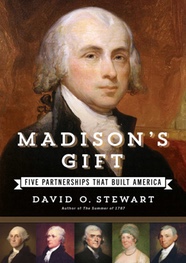
Madison's Gift Stewart

History News Network | Why Aren’t People Up in Arms About Capitalism these Days?

Steve Fraser believes he has found the reason for the non-response to the current Gilded Age: “Can these two diverging political economies – one resting on industry, the other on finance – and these two polarized sensibilities – one fearing God, the other living in an impromptu moment to moment – explain the Great Noise of the first Gilded Age and the Great Silence of the second?” Read the entire article at:

The Age of Acquiescence

The First Victims of the First Crusade – NYTimes.com

Reflecting on the current religious violence Susan Jacoby turns to the history of the Crusades for insight. But it is not the Christian conflict with the Muslims that she finds most useful; instead she turns to the Crusades first victims: the Jews. To Jacoby, the Christian attack on the Jews “highlights several elements analogous to the actions of modern terrorist groups. These include attempts at forced conversion; the murders of women and children; and the imposition of financial penalties on coerced converts who try to remain in their homes.” From this comparison she concludes: “What we actually see today is a standard of medieval behavior upheld by modern fanatics who, like the crusaders, seek both religious and political power through violent means. They offer a ghastly and ghostly reminder of what the Western world might look like had there never been religious reformations, the Enlightenment and, above all, the separation of church and state.” You can read the entire article at The New York Times:

The First Victims of the First Crusade – NYTimes.com.

CRUSADES

History News Network | “So Help Me God” and the Presidential Oath

In an article at the History News Network David B. Parker debunks the “so help me God” myth. He notes that it was created “[t]o shore up our Godly credentials.” And this is only one of the Cold War inventions to shore up our religious bona fides in our battle with the godless Soviet Union. “It joined “one nation, under God” and “In God we trust” to create a trinity of Cold War religious phrases. And like several other legacies of our Cold War heritage, this one has stuck with us.”

History News Network | “So Help Me God” and the Presidential Oath.

George_Washington_taking_oath_crNA

What’s the purpose of education in the 21st century? – The Washington Post

Governor Scott Walker’s attempt to change the mission statement of the University of Wisconsin by replacing “search for truth” and “improve the human condition” with “meet the state’s workforce needs” has provoked a backlash. Many Republicans like Walker see  higher education solely in terms of job training. This narrow and myopic view of education has gained traction recently and has made colleges and universities the target of increased criticism. There has already been some pressure on institutions of higher education to conform to this model, but for the most part the traditional model has prevailed, as it should. If the narrow, worker model of education triumphs we will all lose. To advocate for a broader intellectual education does not mean that we cannot also prepare students for the workforce. As Arthur H. Camins notes “it doesn’t have to be either-or.” Instead, he argues, “[e]ducation should prepare young people for life, work and citizenship.” Read Camins’ defense of higher education at:

What’s the purpose of education in the 21st century? – The Washington Post.

(AP Photo/The Sentinel, Dennis R.J. Geppert)

(AP Photo/The Sentinel, Dennis R.J. Geppert)


History News Network | President Obama, the National Prayer Breakfast, and Slavery

Obama’s recent remarks at the National Prayer Breakfast about the connection between Christianity and slavery may have been provocative given the setting (a setting that is of dubious constitutionality, I might add!), but they were not incorrect.  As the historian Joshua D. Rothman points out: “So vital was Christianity to the southern defense of slavery that some historians have estimated that ministers penned roughly half of all proslavery literature in the decades after 1830, though it was hardly only ministers like Baptist leader Richard Furman who one might have heard state that ‘the right of holding slaves is clearly established in the Holy Scriptures.’ Secular politicians drew upon such arguments as well. Jefferson Davis, for example, claimed that slavery ‘was established by decree of Almighty God’ and was ‘sanctioned in the Bible, in both Testaments, from Genesis to Revelation,’ while his contemporary, South Carolina Senator James Henry Hammond, blasted opponents of slavery by arguing that ‘the doom of Ham has been branded on the form and features of his African descendants’ and that ‘man cannot separate what God hath joined.'” Read the entire article here:

History News Network | President Obama, the National Prayer Breakfast, and Slavery.

Obama-at-2015-National-Prayer-Breakfast

Why Movie ‘Facts’ Prevail – NYTimes.com

Based on several studies the psychologist Jeffery M. Zacks concludes that “if you watch a film — even one concerning historical events about which you are informed — your beliefs may be reshaped by ‘facts’ that are not factual.” This is not good news! And it gets even worse. In one of the studies they asked the viewers to watch the movies for inaccuracies, but instead of changing their views it made them more likely to accept the incorrect facts! Is there any hope? They did find that “[h]aving the misinformation explicitly pointed out and corrected at the time it was encountered substantially reduced its influence.” The only problem with this technique, as Zacks points out,  “could be a challenge.” Based on this information, it is even more critical that we call out those in the movie industry who irresponsibly misrepresent historical events in ways that go beyond artistic license. Some misrepresentations are probably of no consequence (Queen Elizabeth’s “affair” with Sir Walter Raleigh in Elizabeth: The Golden Age) but others can have profound consequences (JFK).

Why Movie ‘Facts’ Prevail – NYTimes.com.

Movie-Industry_6986017