Was Jefferson a Pessimist?

This is the contention of Maurizio Valsania in his new book The Limits of Optimism. Anyone familiar with Jefferson would probably find this a dubious claim, including myself. It is an interesting thesis, but after careful examination of Valsania’s argument M. Andrew Holowchak, an expert on Jefferson, concludes: “Valsania’s Jefferson is a figure unrecognizable to one amply acquainted with Jefferson’s writings.”

Valsania’s thesis may be a dud, but Holowchak’s considered review of the book is worthwhile if you’re at all interested in Jefferson: History News Network | Review of Maurizio Valsania’s “The Limits of Optimism: Thomas Jefferson’s Dualistic Enlightenment (Jeffersonian America)”

Here is an excerpt from the review: “Valsania’s imprecise usage of language throughout the book lends itself to vagueness, or at least, ambiguity. Many times he seems to sanction a strong thesis—namely, every Jeffersonian utterance of optimism betrays plainly an equal (or nearly so) amount of pessimism. At other times, he seems to countenance a weak thesis—namely, utterances of optimism often (or sometimes) betrays plainly an equal (or nearly so) amount of pessimism. Valsania never unequivocally settles on one thesis or the other throughout the book—everything rides on him doing so—therefore, at day’s end, chary readers are confounded.”
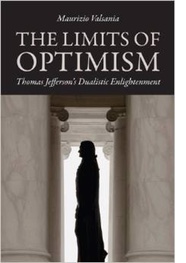
The limits of optimism

Why did a Pious Baptist Preacher Give Thomas Jefferson a Mammoth Cheese?

On January 1, 1802 an unusual gift arrived for the new president, Thomas Jefferson. It was a 1,235 pound hunk of cheese from the Elder John Leland and the Cheshire Baptists. Why would this devout Baptist preacher bestow such a conspicuous gift on the deistic Jefferson? The answer is simple: Leland saw Jefferson as one his ablest allies in the struggle for democracy and religious liberty. Delivering the cheese personally, Leland recited a message from a committee of five influential citizens from Cheshire, declaring that they were presenting him with the enormous cheese:

“as a token of the esteem we bear to our chief Magistrate and of the sense we entertain of the singular blessings that have been derived from the numerous services you have rendered to mankind in general and more especially to this favored nation, over which you preside. It is not the last stone of the Bastille, nor is it an article of great pecuniary worth, but as a freewill offering we hope it will be favorably received.”

From all accounts the cheese was “favorably received.” One account recalls that the cheese was carved “in the presence of the president and cabinet, foreign diplomats and many distinguished men and women of ancient note…and that it was the object of great curiosity.” Leland received special thanks and was “introduced person, by person by the president, to the entire gathering.” The celebration for Leland did not end with the ceremony; he celebrated all the way home in what “resembled a triumphant march.” (1) This little known event is a reminder of the great alliance between rationalists such as Jefferson, and the pious dissenters who helped establish religious liberty in the new nation.

thomasjefferson

John Leland grew up in New England, but he spent his early career in Virginia, where he came to admire Jefferson and Madison. In a popular sermon given soon after Jefferson’s inauguration in 1801, he declared, in reference to Jefferson:

Continue reading

Why did a Pious Baptist Preacher Give Thomas Jefferson a Mammoth Cheese?

On January 1, 1802 an unusual gift arrived for the new president, Thomas Jefferson. It was a 1,235 pound hunk of cheese from the Elder John Leland and the Cheshire Baptists. Why would this devout Baptist preacher bestow such a conspicuous gift on the deistic Jefferson? The answer is simple: Leland saw Jefferson as one his ablest allies in the struggle for democracy and religious liberty. Delivering the cheese personally, Leland recited a message from a committee of five influential citizens from Cheshire, declaring that they were presenting him with the enormous cheese:

“as a token of the esteem we bear to our chief Magistrate and of the sense we entertain of the singular blessings that have been derived from the numerous services you have rendered to mankind in general and more especially to this favored nation, over which you preside. It is not the last stone of the Bastille, nor is it an article of great pecuniary worth, but as a freewill offering we hope it will be favorably received.”

From all accounts the cheese was “favorably received.” One account recalls that the cheese was carved “in the presence of the president and cabinet, foreign diplomats and many distinguished men and women of ancient note…and that it was the object of great curiosity.” Leland received special thanks and was “introduced person, by person by the president, to the entire gathering.” The celebration for Leland did not end with the ceremony; he celebrated all the way home in what “resembled a triumphant march.” (1) This little known event is a reminder of the great alliance between rationalists such as Jefferson, and the pious dissenters who helped establish religious liberty in the new nation.

thomasjefferson

John Leland grew up in New England, but he spent his early career in Virginia, where he came to admire Jefferson and Madison. In a popular sermon given soon after Jefferson’s inauguration in 1801, he declared, in reference to Jefferson:

Continue reading

The Many Uses of Thomas Jefferson: “Once a Liberal Icon, Jefferson’s Now Claimed by Both Left and Right” |History News Network

Who owns Jefferson? The historian Andrew Burstein examines the many uses and abuses of Jefferson’s legacy in our nation’s ongoing culture wars. He concludes: “Distortion of the historical Jefferson reminds us that people believe what they want to believe. Our democratic politics actually depends on a mass psychology that advances through artful manipulation. We may protest the “long train of abuses” (to quote from the Declaration) that attach to statements made in Jefferson’s name; but he continues to occupy a privileged position as we converse with the past and seek to reconcile it, somehow, with our relatively disorganized present. Whoever “owns” Jefferson (or the collective founders) takes themselves to be inheritors of America’s essential ideals.” Read the entire article here:

History News Network | Once a Liberal Icon, Jefferson’s Now Claimed by Both Left and Right.

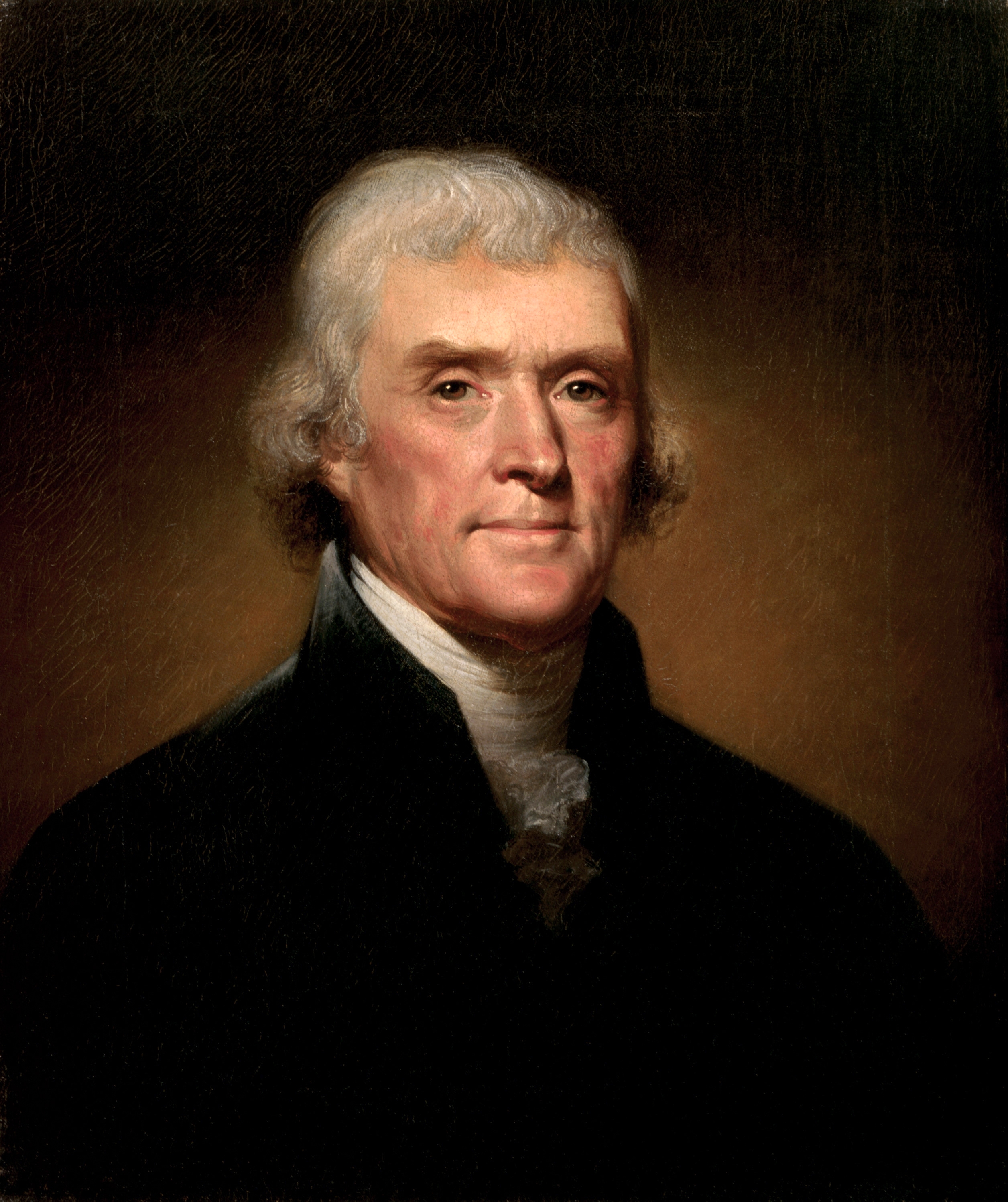
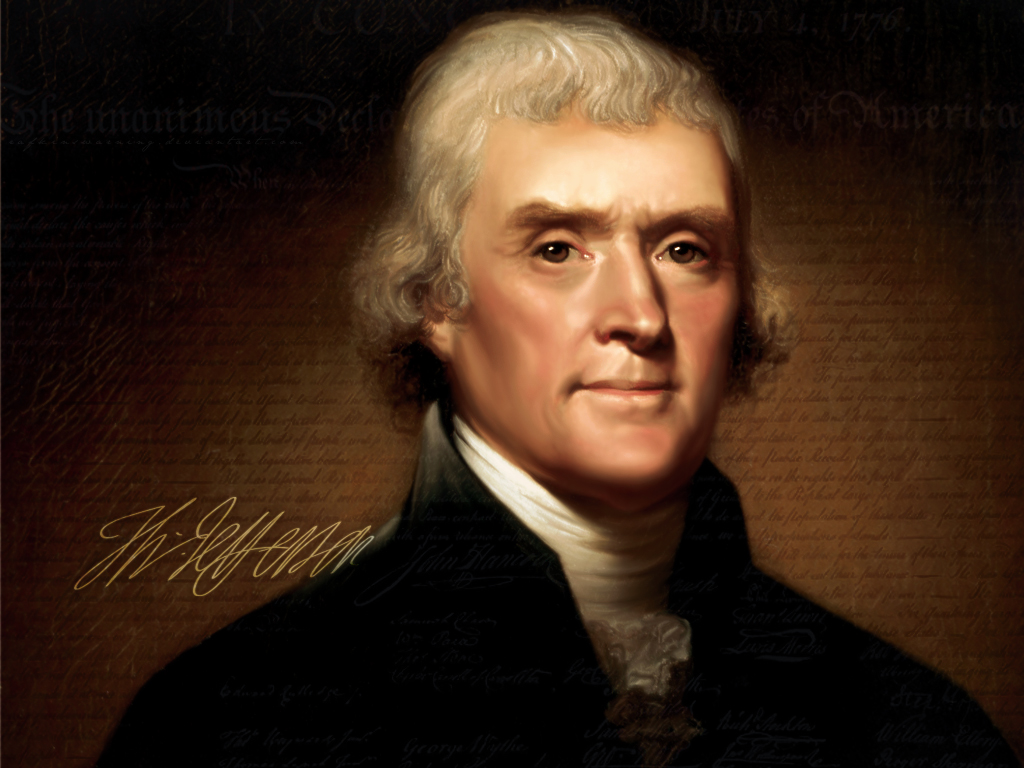
Thomas_Jefferson_by_Rembrandt_Peale,_1800

What Is Deism? | Patheos.com

In a recent blog post at Patheos, Thomas Kidd argues that during the eighteenth century “[m]ost deists really did consider themselves serious theists, and…devotees of Jesus and his teachings” and therefore “[t]heir deism was not just a convenient cloak for atheism.” From that assumption he concludes, “The deists’ closest descendants today are not the ‘new atheists’ who have stirred up so much media chatter in recent years.”  Instead, “Their closest descendants are probably liberal mainline Christians who see Jesus as their model but who eschew (or even deny) the particular, exclusive doctrines that have been associated with Christian orthodoxy for millennia.”

In defending this position Kidd overstates the Deists’ connection to Christianity in order to claim that they were theists. They believed in God, otherwise they would not have been Deists, but their god was not the theistic god of Christianity, even if they had an affinity for the moral precepts of the man Jesus as Jefferson did. (For a more in-depth discussion of Jefferson’s religious beliefs and whether or not he was a Deist see my previous post on the subject: Was Jefferson a Christian?). But once Kidd establishes their theistic credentials he believes that therefore they could not possibly have been the forerunners of the “new atheists.”

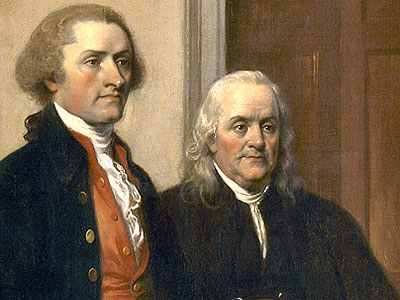
Thomas Jefferson & Benjamin Franklin

Thomas Jefferson & Benjamin Franklin


Continue reading

History News Network | Can Timothy McVeigh and His Ilk Claim Jefferson as a Hero of Liberty?

M. AndrewHolowchak explains why Conor Cruise O’Brien’s claim that Jefferson favored an anarchic freedom that must be maintained with the blood of martyrs is a misreading of Jefferson’s vision. It is this reading of Jefferson that has been championed by some to justify their own pursuit of an absolute freedom from all governmental constraint. It was also this vision that, in part, inspired Timothy McVeigh to bomb the federal building in Oklahoma City. He was wearing a t-shirt on the day of the bombing with the famous quote from Jefferson:”The tree of liberty must be refreshed from time to time with the blood of patriots and tyrants.” ButHolowchak argues that this is a misreading of Jefferson. Jefferson’s ideal of liberty was more nuanced and progressive.  “O’Brien commits Jefferson only to “negative liberty” of a radical sort, which amounts to freedom from governmental intervention in any activities whatsoever. Jefferson’s embrace of negative liberty, however, is freedom from the encroachments and corruptions of government—i.e., freedom of all citizens from the tyranny of one or some group of humans with power—not freedom from all encroachments. Some encroachments are needed to preserve freedom. Government must act in ways to maximize opportunities for human flourishing—e.g., advocacy of freedom of religion, repeal of entails and primogeniture, and push for general education of all citizens.”

“In sum, Jefferson was never committed to liberty per se, but always committed to liberty in the service of intellectual and moral advance.”

See his entire argument here:

History News Network | Can Timothy McVeigh and His Ilk Claim Jefferson as a Hero of Liberty?.

Thomas_Jefferson_by_Rembrandt_Peale,_1800

The Great Confrontation of 2012: David Barton and the Evangelical Historians

Warren Throckmorton, author of Getting Jefferson Right, calls out the Christian Right for supporting David Barton when they know that his work is not credible.

“The awareness of Barton’s systematic distortion of the nation’s founding is well known at the highest levels of the Christian political right and yet many such groups continue to promote Barton as an exemplary historian.  Because the Christian right is aware of the problems but continues to feature Barton as an historian, the ‘great confrontation of 2012’ has turned into the ‘great cover-up of the present.’”

Read the entire article at http://www.patheos.com:
Getting Jefferson Right

The Declaration of Independence: Founded on Judeo-Christian Principles? Book Review (Part II): Thomas Jefferson: Roots of Religious Freedom by John Harding Peach

The Declaration of Independence has become a sacred document for the Religious Right because they believe that it supports their claim that the United States is a Christian nation. John Harding Peach is no exception. In Thomas Jefferson: Roots of Religious Freedom, Peach claims that the Declaration is an expression of Judeo-Christian principles. The only evidence Peach provides for this assertion is an excerpt from an online essay written by Bo Perrin. Who is Bo Perrin? He is a minister and conservative blogger. Who needs an expert when you can find a random blogger to support your desired conclusion! The fact that Peach relies on a person with no expertise on the subject is enough to make his claim dubious, but just for fun let’s see what Bo has to say.

Bo makes his argument in a commentary for the American Heritage Project, a blog site run by Bo and created for the purpose of “Defending the Biblical Foundation of the Declaration,” to celebrate the Declaration on the Fourth of July 2011. It is a brief hagiographic piece touting the Judeo-Christian foundations of the revered document. There are many historical inaccuracies in his narrative, which is clearly ideologically driven. While there are many factual errors in the posting, I’ll focus solely on the claims related to the religious implications of the Declaration.

The first piece of evidence that Bo finds in the Declaration to support his claim comes from the statement: “all men are created equal, that they are endowed by their Creator with certain unalienable Rights.”

Declaration of Independence

Claim: Bo insists that the “Creator” mentioned in the Declaration “is the God of Abraham, Isaac and Jacob,” and that “[t]he only possible way to make the term Creator mean anything other than the God of the Bible is to rip the Declaration from its historical moorings.”

Continue reading

Book Review (Part I): Thomas Jefferson: Roots of Religious Freedom by John Harding Peach Was Jefferson a Christian?

In Thomas Jefferson: Roots of Religious Freedom, John Harding Peach claims that Thomas Jefferson was a Protestant Christian whose vision of religious liberty was grounded in his passionate desire to protect religion. Peach can perhaps defend this misleading portrayal of Jefferson under the guise that it is “a biographical novel,” but given that he also insists that “all historical events and places were provided as they factually occurred” (xii) this excuse is not credible. He may wish Jefferson was the person that he presents in his “novel” but he cannot honestly claim that Jefferson was that person. Unfortunately, his followers, who, no doubt, also want to believe that Jefferson was the Christian in Peach’s narrative, will uncritically accept his version of events. These distortions of history are not innocent ventures; they are part of a larger movement intent on re-writing history to support their claim that the United States is a Christian nation.

9781462720521_cover.indd

The wannabe historian David Barton has been at the forefront of this movement. His book (The Jefferson Lies) is the latest in a series of books dedicated to the goal of making this a Christian nation. But Jefferson’s well-known “infidelism” doesn’t fit this narrative, so rather than ignore the writer of the Declaration of Independence Barton and others have decided to remake Jefferson into a devout Christian. This is not an easy task and the only way to achieve it is through deception, dishonesty, and willful ignorance. In fact, Barton’s book is so egregiously dishonest that it was discontinued by his publisher after a group of conservative historians exposed it as misleading and “unsupportable.”1 Unlike Barton, Peach may not have gone as far as Barton, but it is still a dishonest and misleading portrayal of Jefferson. In his desire to see Jefferson as an upstanding Christian, Peach has cherry-picked, distorted, and misinterpreted the evidence.

Peach’s “novel” begins with Jefferson’s education with his childhood teacher the Rev. James Maury, who Peach claims “lit his fire,” (1) and ends with Jefferson’s death in 1826. The book highlights events in Jefferson’s life, large and small, which serve to present Jefferson as “practice[ing] his core conviction of basic Protestantism.” (xiii) This book review will challenge Peach’s portrayal of Jefferson. This post will be dedicated to Jefferson’s religious beliefs in general before turning to the Declaration of Independence and Jefferson’s views on religious liberty in future posts.

Continue reading

History News Network | How Would You Change the Constitution? Here’s My Proposal.

This is an interesting article and I admire Al Carroll for making such a bold proposal. While I don’t agree will all his suggestions, I agree that “nothing should be so revered that one cannot question it, change it, or discard it, and blind worship is always to be avoided.” We should be able to debate, discuss, and even criticize the Constitution. Jefferson may have had went too far in advocating a new constitution for every new generation, but he correctly saw the value of experience. Jefferson wisely advocated “that laws and institutions must go hand in hand with progress of the human mind. As that becomes more developed, more enlightened, as new discoveries are made, new truths disclosed, and manners and opinions change with the change of circumstances, institutions must advance also, and keep pace with the times.”[1]


[1] Thomas Jefferson to Samuel Kercheval (July 12, 1816) in The Life and Selected Writings of Thomas Jefferson: Including the Autobiography, the Declaration of Independence & His Public and Private Letters, edited with an Introduction by Adrienne Koch and William Peden. (New York: The Modern Library, 2004.writings): 615-16.

History News Network | How Would You Change the Constitution? Here’s My Proposal..

constitution_quill_pen