Another ancient treasure is under threat from ISIS. Once these treasures are gone, they are gone forever! This is sickening!!
History News Network | ISIS is threatening Palmyra, the Venice of Syria.
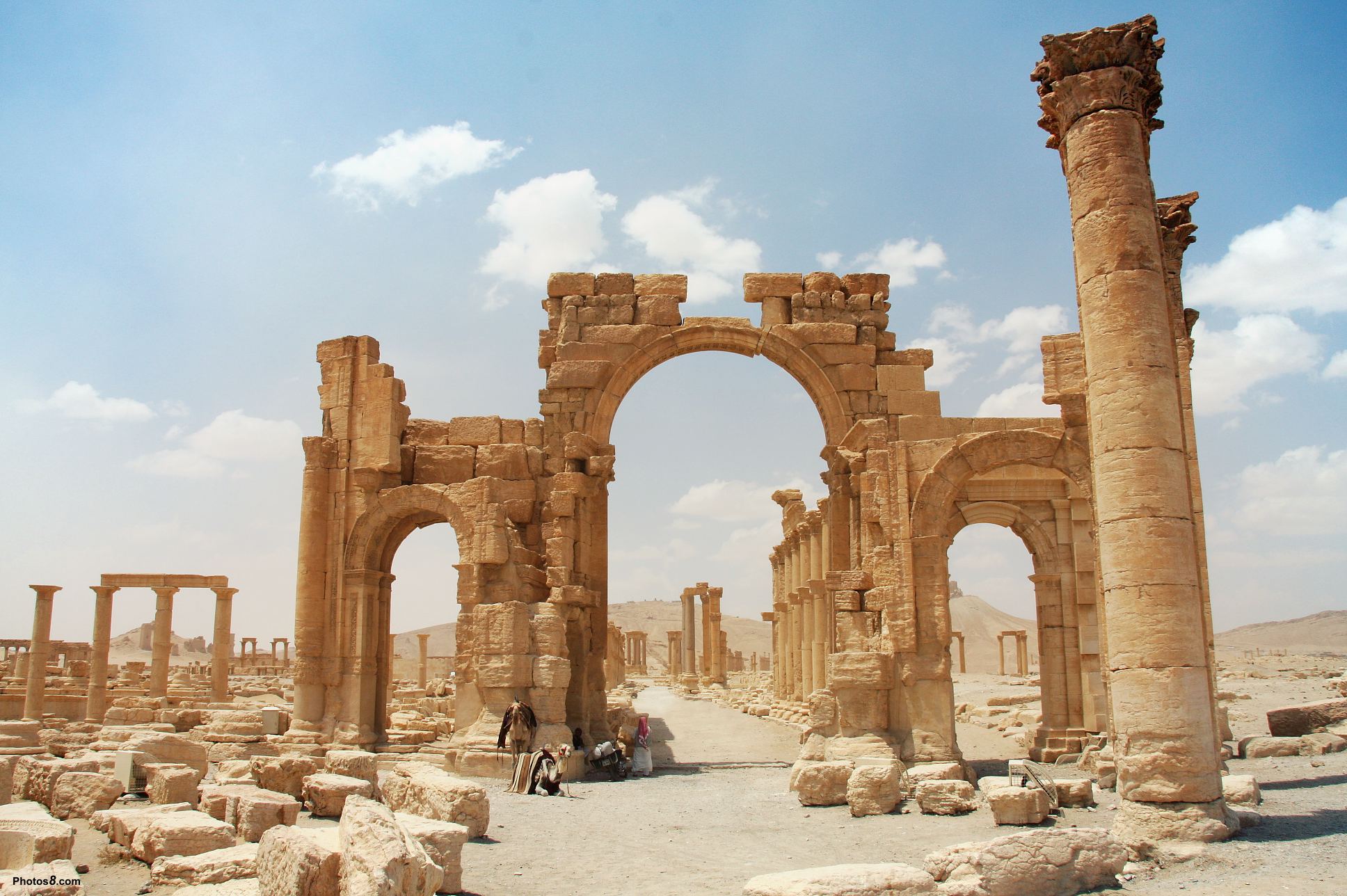
Palmyra
Another ancient treasure is under threat from ISIS. Once these treasures are gone, they are gone forever! This is sickening!!
History News Network | ISIS is threatening Palmyra, the Venice of Syria.
Palmyra
The debate between the “religion is the culprit” camp and the “circumstances” camp continues. As I’ve said before I don’t think it’s an either/or problem. Particular circumstances drive people toward certain kinds of beliefs. Or, to put it another way, certain circumstances, such as lack of opportunity, perceived or real oppression, etc., make certain ideas appealing. This does not mean that those who take up those beliefs do not hold them wholeheartedly. For example, the post-war conditions in Germany made Nazi ideology appealing. Without the Great Depression, the Nazis may have remained a fringe group.
But unfortunately the current debate over Islamic terrorism is driven by the it’s either religion or its circumstances narrative. Those putting forward the circumstances are rightly concerned that some will blame all Muslims if we attribute the violence to religion. But the solution to this problem is not to ignore the evidence that those associated with terrorist organizations like ISIS are not motivated by a particular interpretation of Islam (one that most Muslims reject!). Instead we must make it clear that it is wrong to indict an entire group of people based on the actions of a few of them.
At the History News Network, Timothy R. Furnish describes the polemics between these two camps at a recent conference (“Apocalyptic Hopes, Millennial Dreams and Global Jihad”). In doing so, he gave some great advice on how to deal with the problem of the eschatological thinking characteristic of the current Islamic terrorist groups. He argues that “modern attempts to de-fang apocalyptic groups (overt ones like ISIS; quasi-eschatological ones like Syria’s Jabhat al-Nusrah) need to emulate the Ottoman example: that is, actually employ Islamic religious texts (Qur’an, hadiths, scholarly works) to undermine eschatological jihadists (as I first called for in August 2014). Simply labeling them “non-Muslim” will not do the trick.” Read the entire article here:
History News Network | Talking Honestly About Islamic Hate Speech.

This is an interesting interview with Bruce Hoffman, author of Anonymous Soldiers. Here is one of the questions he answers: “In the preface to Anonymous Soldiers, you ask the question, ‘does terrorism work?’ What are the circumstances and factors that enable some terrorist campaigns to succeed and others to fail based on the lessons from the Irgun and Lehi’s campaigns?” Read the entire interview here:

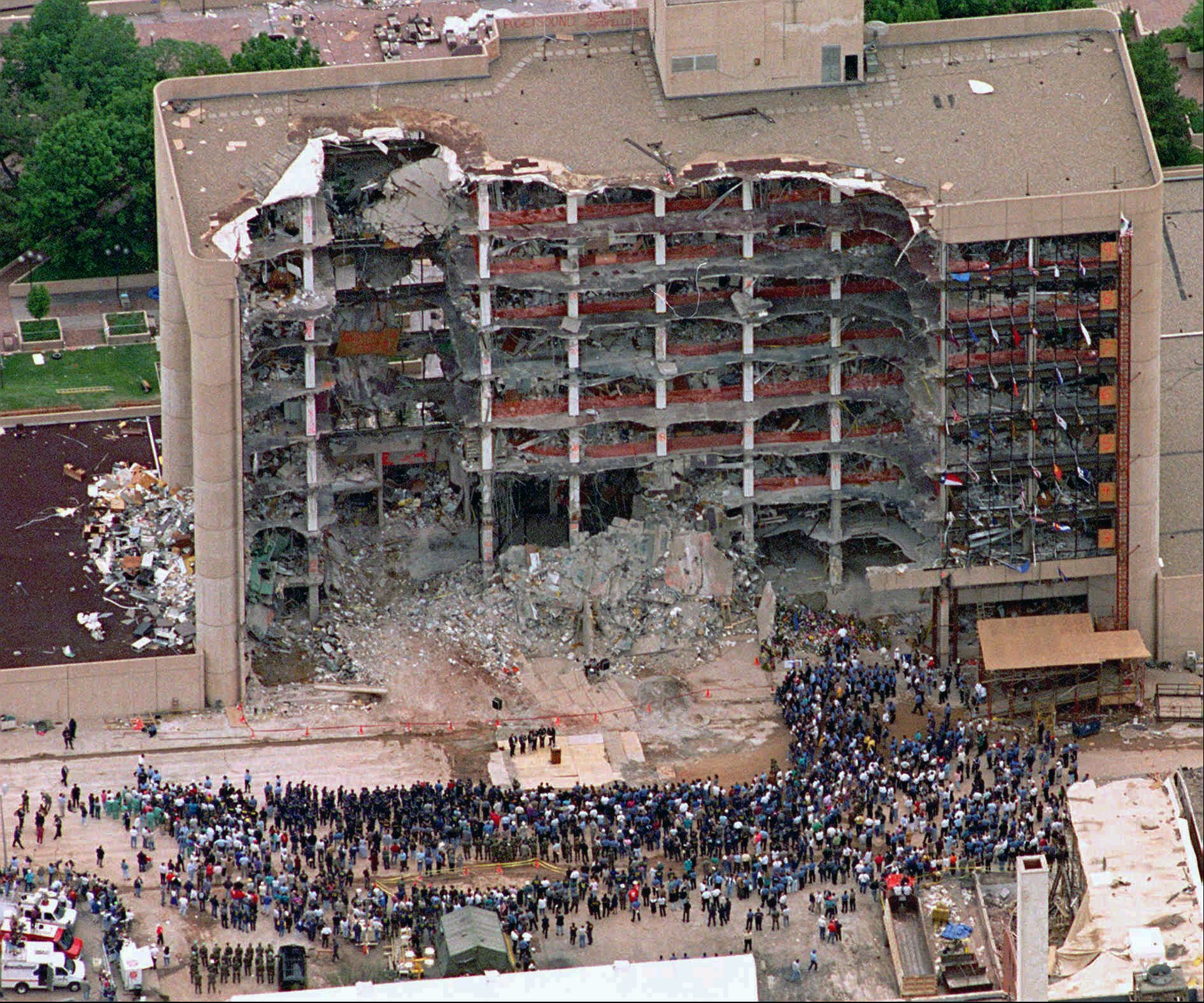
My hope is that the memory of this event will serve as a constant reminder of the consequences of hatred and revenge.
Twenty years ago today Timothy McVeigh drove up to the Alfred P. Murrah Federal Building in Oklahoma City with a truck full of explosives. When the bomb detonated it killed 168 people, 19 of which were children. Before 9/11 this was the single most deadly act of terrorism in the United States. When this happened, I was getting ready to graduate from ASU with my B.S. What should have been an exciting time suddenly became a time of despair. I had already become cynical as a result of the hate-filled radio shows and the nasty politics that I had recently become aware of and I was certain that there was a connection between the hate mongering and this act of terror. McVeigh’s hatred of the federal government was not the result of just the blunder at Waco, where David Koresh and many of his followers were killed, it was just the final straw in a series perceived threats. He was part of a culture that saw the world divided between themselves with their guns and the government that was trying to take their guns away. In his hatred McVeigh couldn’t see that the “evil” federal government was made up of average Americans just trying to live their lives.
Remembering the Oklahoma City bombing 20 years later – Yahoo News.
History News Network | This Is When Muslims in the Middle East Turned to Extremism.

The Big Four at the Paris Peace Conference (1919)
Robert Zaretsky argues that teaching patriotism and national values in France could make a difference in dealing with their Muslim population. Although he admits, “Singing ‘a Marseillaise’ or reciting the Pledge of Allegiance may not be enough. But if teachers can help students want to live up to those ideals, and live together, it may be some kind of beginning.” I think that Zaretsky has confused the universal ideals (Liberté, égalité, fraternité) championed during the French Revolution with patriotism/nationalism. Fostering nationalism in schools is the exact opposite of what they need to do! Instead they need to start living up to their professed universal values (something we need to work on as well). Anyone familiar with the history of nationalism would balk at the suggestion that patriotism is the solution.
Can teaching patriotism protect France? – Ideas – The Boston Globe.

Obama’s refusal to call ISIS (or ISIL) a radical Islamic organization has sparked a debate over the relationship between religion and violence. The controversy escalated after he reminded Americans of Christianity’s violent past at the recent national prayer breakfast. Much of the outrage over his comments was motivated by the belief that Obama had fabricated the claims and insulted Christianity. At the same time many in this camp also believe that Islam is responsible for the violent behavior of ISIS. To them Christianity is the good religion and Islam is the bad one. This opinion is grounded in bias rather than evidence and we can safely dismiss it. That leaves us with the two contradictory views presented by Obama: 1) religion has no relationship to ISIS, or 2) religion, at least in part, is responsible for the violent behavior of Christians in medieval and early modern Europe as well as ISIS in the Middle East today. In the above cited essay, the historian Jeffrey Herf argues that both are culpable in the same way. Different traditions and selective use of sacred texts result in different behaviors and versions of the same religion. As Herf points out,
“Western governments have tied themselves in knots to the point of foolishness because they refuse to state what is obvious to many millions of people about the importance not of the religion of Islam per se but of interpretations of Islam in this era of terror. Just as it makes no historical sense to discuss slavery or the Holocaust without examining Christianity’s contributions, so it is ridiculous to assert that the Islamic State, the Hamas Covenant, the fanaticism of the Iranian mullahs, al-Qaeda, Hezbollah, and the Muslim Brotherhood have nothing to do with Islam. It amounts to saying that its adherents either do not mean what they say or that they don’t know what they are doing. Both assumptions are condescending. To be sure, these varieties of Islamism differ from one another, but they all engage in the labors of selective tradition. They did not invent the texts that they quote but they have selected and emphasized some rather than other components of the tradition. They can all point to passages in the Koran and in the commentaries about it that in their view justify attacks on the Jews, on Muslims of whom they disapprove, on Christians and on other assorted ‘infidels.’”(“One Standard, Not Two, for Christianity and Islam”)

Reflecting on the current religious violence Susan Jacoby turns to the history of the Crusades for insight. But it is not the Christian conflict with the Muslims that she finds most useful; instead she turns to the Crusades first victims: the Jews. To Jacoby, the Christian attack on the Jews “highlights several elements analogous to the actions of modern terrorist groups. These include attempts at forced conversion; the murders of women and children; and the imposition of financial penalties on coerced converts who try to remain in their homes.” From this comparison she concludes: “What we actually see today is a standard of medieval behavior upheld by modern fanatics who, like the crusaders, seek both religious and political power through violent means. They offer a ghastly and ghostly reminder of what the Western world might look like had there never been religious reformations, the Enlightenment and, above all, the separation of church and state.” You can read the entire article at The New York Times:
The First Victims of the First Crusade – NYTimes.com.

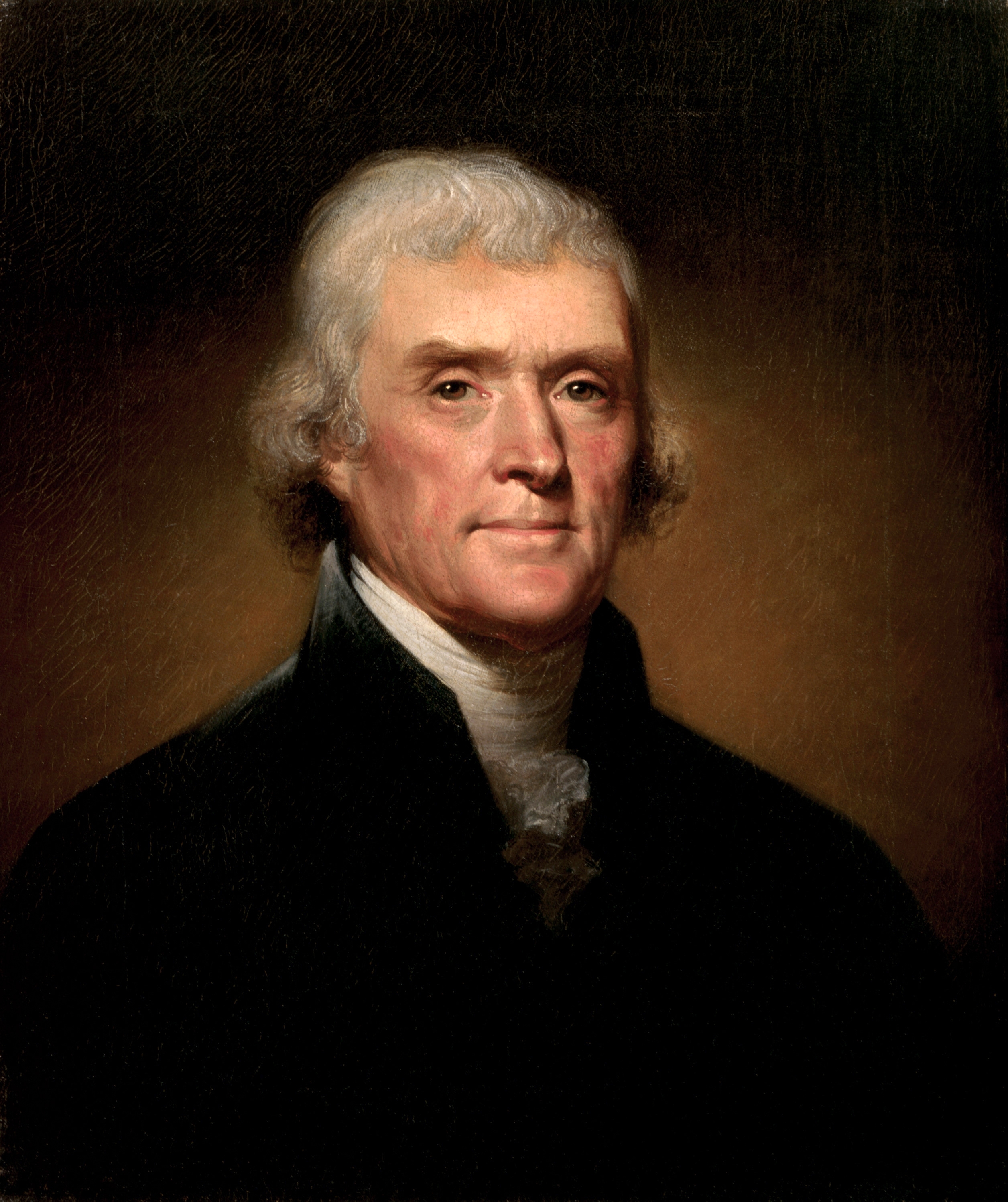
See his entire argument here:
History News Network | Can Timothy McVeigh and His Ilk Claim Jefferson as a Hero of Liberty?.
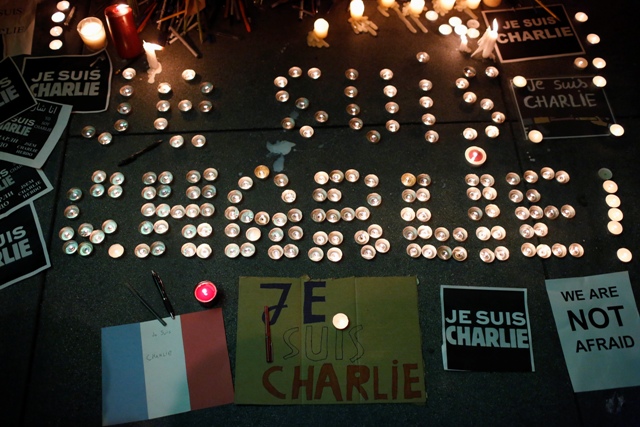
History News Network | Terror in Paris – An Analysis.
 History Chick in AZ